Rent the Runway turns to marketplace, other sideline businesses to stoke revenue

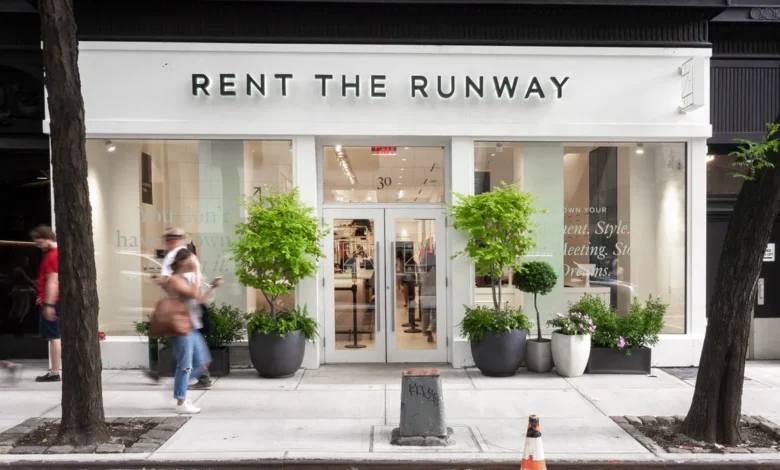
Rent the Runway, a pioneer in the fashion rental subscription space, is embarking on a significant strategic transformation, as announced on April 14, 2026. The company is dramatically expanding its "everyday" and "workwear" assortments, introducing over 30 new brands, and launching an innovative marketplace designed to offer complementary items for purchase. This multi-pronged initiative signals a clear pivot for the subscription site, aiming to broaden its appeal, enhance customer value, and solidify its market position amidst intensifying competition, particularly from the consistently profitable Nuuly business owned by Urban Outfitters. The move also highlights Rent the Runway’s continued reliance on artificial intelligence to drive both customer experience and operational efficiency, underscoring a sophisticated approach to navigating the complexities of the circular fashion economy.
The Evolving Landscape of Fashion Rental: Rent the Runway’s Journey
Founded in 2009 by Jennifer Hyman and Jenny Fleiss, Rent the Runway revolutionized access to high-end fashion, initially focusing on designer dresses and accessories for special occasions. The premise was simple yet groundbreaking: allowing women to rent luxury items for a fraction of their retail price, offering variety without ownership. This model resonated with consumers seeking sustainable fashion alternatives and access to aspirational brands for events like weddings, galas, and parties. Over the years, the company evolved from a per-rental service to a comprehensive subscription model, offering subscribers a rotating wardrobe of designer apparel.
Despite its innovative approach and early success in carving out a niche, Rent the Runway has historically grappled with its bottom line. The operational complexities of cleaning, repairing, tracking, and shipping thousands of designer garments across the country proved to be a significant logistical challenge. The company navigated various funding rounds and market shifts, eventually making its public debut on the Nasdaq in October 2021. Its initial public offering (IPO) valued the company at over $1.2 billion, reflecting investor confidence in the burgeoning circular fashion movement. However, like many growth-oriented tech companies, profitability remained elusive in its early public life, marked by significant investments in infrastructure and customer acquisition.
The COVID-19 pandemic, which curtailed social gatherings and shifted work patterns, presented an existential threat to Rent the Runway’s occasion-wear-centric model. As demand for formal attire plummeted, the company was forced to adapt, accelerating a pre-existing shift towards more versatile, everyday fashion. This period of intense pressure also led to significant cost-cutting measures and operational optimizations. Remarkably, Rent the Runway reported turning a profit last year, a critical milestone that validated its resilience and strategic adjustments, providing a foundation for its latest expansion efforts. This hard-won profitability, however, remains delicate and necessitates continuous innovation and market responsiveness.
Intensifying Competition: The Nuuly Factor
A significant driver behind Rent the Runway’s latest strategic adjustments is the ascendant presence of Nuuly, the apparel rental service launched by Urban Outfitters in 2019. Nuuly entered the market with a distinct advantage: the backing of a major retail conglomerate with established supply chains, brand relationships, and a deep understanding of mainstream fashion trends. Unlike Rent the Runway’s initial focus on luxury occasion wear, Nuuly strategically targeted the everyday and casual wear segment from its inception, offering a curated selection of contemporary brands, including Urban Outfitters’ own labels, Free People, and Anthropologie, alongside other popular brands.
Nuuly’s business model, emphasizing a broader, more accessible range of styles suitable for daily life, quickly gained traction. Its consistent profitability has made it a standout success story within the often-challenging fashion rental sector. This financial stability, contrasted with Rent the Runway’s more volatile journey to profitability, places considerable pressure on the incumbent. Nuuly’s subscriber base has grown steadily, appealing to consumers looking to refresh their casual wardrobes without the commitment of purchase, and its robust operational framework has allowed it to scale efficiently. The success of Nuuly has unequivocally demonstrated the viability and significant market demand for rental services beyond special occasions, directly influencing Rent the Runway’s decision to aggressively expand into these categories. The direct competition with a consistently profitable rival like Nuuly underscores the urgency and strategic importance of Rent the Runway’s current diversification efforts.
A Strategic Pivot: Embracing the Everyday and Workwear
In a direct response to evolving consumer habits and competitive pressures, Rent the Runway is significantly expanding its "everyday" and "workwear" assortments, with each category seeing an approximate 20% increase in offerings. This strategic pivot marks a profound departure from its legacy as primarily an occasion-wear provider and solidifies its transition into a comprehensive wardrobe solution. The rationale behind this move is multi-faceted.
Firstly, the post-pandemic landscape has permanently altered fashion consumption. The rise of hybrid work models, increased remote work, and a general casualization of society have diminished the frequency of formal events while increasing the demand for versatile, comfortable, yet stylish clothing suitable for both professional and personal settings. Consumers are increasingly seeking wardrobes that can transition seamlessly from a virtual meeting to a casual outing, or from the office to a weekend brunch. By expanding its everyday and workwear options, Rent the Runway aims to tap into this broader, more frequent use-case demand, making its subscription service more relevant and indispensable to a wider demographic.
Secondly, offering more everyday and work-appropriate clothing enhances the perceived value and utility of a Rent the Runway subscription. Subscribers are more likely to utilize their rentals frequently if the items fit into their daily lives, thereby justifying the recurring subscription cost. This increased utility is crucial for improving subscriber retention and reducing churn, which has historically been a challenge for many subscription services. The focus on "elevated, versatile styles" for every aspect of a customer’s life – "from office to weekend and everywhere in between" – reflects a nuanced understanding of modern consumer needs, moving beyond singular event-driven rentals to integrate fashion rental into daily routines. This strategic expansion is not merely about increasing inventory; it is about fundamentally redefining Rent the Runway’s value proposition to become an essential, flexible extension of its customers’ personal wardrobes.
The Launch of a Complementary Marketplace

Further diversifying its offerings and aiming to capture a larger share of its customers’ fashion spending, Rent the Runway is launching an innovative marketplace. This new venture is a direct answer to overwhelming customer demand, with CEO Jennifer Hyman revealing that nearly 90% of customers express interest in purchasing items to complement their rented outfits. The marketplace is designed to bridge the gap between a customer’s rental assortment and her desired "total look."
The marketplace will offer a highly curated selection of items available for purchase, including shoes, shapewear, basics, beauty products, and other accessories. This move is strategic on several levels. From a customer experience perspective, it provides a seamless, one-stop-shop solution, eliminating the need to search elsewhere for items that complete an ensemble. It enhances convenience and reinforces Rent the Runway as a comprehensive fashion destination. As Jennifer Hyman articulated, "The marketplace is designed to fill the gap that exists in our customers’ wardrobe, between her rental assortment and the total look she desires, by providing a highly curated assortment of shoes, shapewear, basics, beauty products and more available for purchase. The goal is to increase the attach rate of orders by providing the wardrobe essentials that complete her rental look."
Operationally, the marketplace represents a significant expansion beyond the pure rental model, introducing a retail component that can generate additional revenue streams and potentially improve profit margins. While rental logistics are complex, traditional retail sales of complementary items typically involve different inventory management, warehousing, and shipping processes. Rent the Runway will need to carefully integrate these new retail operations into its existing infrastructure, leveraging its established customer base and data insights to curate a highly relevant product assortment. The success of this marketplace will hinge on its ability to offer desirable, high-quality complementary products that genuinely enhance the rental experience and encourage additional purchases, thereby increasing the average order value and lifetime value of its subscribers. This hybrid model, combining rental and retail, positions Rent the Runway to cater more holistically to its customers’ diverse fashion needs.
Innovation Through Brand Expansion
A critical component of Rent the Runway’s refreshed strategy is its commitment to continuously update and expand its brand portfolio. The company plans to launch more than 30 new brands this year, with a specific focus on "elevated, versatile styles that work for every aspect of our customer’s life." This ongoing infusion of new brands is essential for maintaining subscriber engagement and attracting new customers. In the fast-paced world of fashion, variety and novelty are key drivers of demand.
By partnering with a diverse range of designers and labels, Rent the Runway can offer a constantly evolving selection that reflects current trends while also providing timeless staples. This strategy not only keeps the offering fresh and exciting for existing subscribers but also allows the company to cater to a broader spectrum of tastes and preferences. Brand partnerships are also crucial for the rental model itself, as access to desirable labels is a primary draw for many subscribers. Successfully integrating over 30 new brands requires robust supply chain management, careful curation, and efficient onboarding processes to ensure that these new additions seamlessly enhance the overall customer experience. The focus on "elevated, versatile styles" further reinforces the company’s pivot towards providing a more practical and adaptable wardrobe solution for its diverse customer base.
AI at the Forefront: Enhancing Experience and Efficiency

At the heart of Rent the Runway’s strategic overhaul is a deep commitment to leveraging artificial intelligence to drive both customer experience and operational efficiency. The company has been steadily integrating AI across various facets of its business, yielding tangible improvements. A significant success story is the search algorithm launched in February, which has already improved the subscription conversion rate by approximately 10%. This indicates that AI-driven personalization and relevance are directly translating into increased customer acquisition.
Looking ahead, Rent the Runway is actively developing an "AI-powered discovery model" slated for rollout this year. This advanced model promises to revolutionize how customers interact with the platform. It will enable users to "browse in outfit groupings," offering curated looks rather than individual items, thereby inspiring style combinations and making decision-making easier. Furthermore, it will "improve conversational search," allowing customers to use more natural language queries to find desired items, akin to interacting with a personal stylist. Perhaps most impressively, the AI will facilitate "robust [product detail pages] with visual versatility, including seeing the item in motion and in her size." This feature addresses a critical pain point in online fashion retail: the inability to accurately visualize how an item will look and fit. By providing dynamic, size-specific visual representations, Rent the Runway aims to significantly enhance customer confidence and reduce returns.
Beyond the front-end customer experience, AI is playing a crucial role in optimizing Rent the Runway’s complex back-end operations. The company has deployed AI to help determine the condition of its rental items. This is a critical function for a business built on circulating garments, as accurate assessment of wear and tear directly impacts inventory management and customer satisfaction. By intelligently evaluating item condition, AI is "helping us salvage inventory and keep more units in peak rotation for longer," as highlighted in the company’s earnings presentation. This translates to reduced waste, extended product lifecycles, and significant cost savings by minimizing the need to replace inventory prematurely. The comprehensive application of AI, from enhancing discovery to optimizing logistics, positions Rent the Runway as a leader in applying cutting-edge technology to the unique challenges of the circular fashion industry.
Financial Outlook and Market Implications
Rent the Runway’s announcement comes at a pivotal moment for the company, having recently achieved profitability after years of financial struggle. While this profitability is a testament to previous restructuring and operational improvements, the scale of competition, particularly from Nuuly, necessitates aggressive, well-executed strategic moves. The expansion into everyday wear and workwear, coupled with the marketplace launch, aims to diversify revenue streams, increase customer lifetime value, and expand the total addressable market.
Industry analysts are likely to view these strategic initiatives with cautious optimism. The pivot towards everyday wear is a sensible response to market trends, and the marketplace addresses a clear customer need, potentially boosting average transaction values. However, successful execution will be paramount. Integrating a retail marketplace into an already complex rental logistics operation presents its own set of challenges, requiring careful inventory management, marketing, and customer service strategies. The ability to attract and retain new brands, especially those appealing to the everyday wear segment, will also be key.
The broader implications for the fashion industry are significant. Rent the Runway’s renewed emphasis on sustainability through extended garment lifecycles, aided by AI-driven efficiency, aligns with growing consumer and regulatory demands for more environmentally responsible practices. The success of its hybrid rental-retail model could serve as a blueprint for other fashion companies looking to embrace circularity while maintaining profitability. As the fashion rental market continues to mature and consolidate, Rent the Runway’s ability to innovate, adapt to consumer preferences, and leverage technology will determine its long-term viability and leadership position in a rapidly evolving retail landscape. These strategic moves represent a bold commitment to securing a dominant future in the circular fashion economy, demonstrating an agile response to both market dynamics and competitive pressures.
Related posts: