We have to decide on what our core competency is going to be: Why the Estée Lauder Companies is outsourcing its e-commerce operations

The modern beauty landscape is undergoing a profound structural evolution, driven by shifting consumer habits, rapid technological advancements, and the overwhelming dominance of digital ecosystems. At the center of this transformation is The Estée Lauder Companies (ELC), one of the world’s leading prestige beauty conglomerates, which has made the strategic decision to outsource its e-commerce infrastructure to the retail technology giant Shopify. This move signals a major shift in how legacy beauty brands operate, moving away from maintaining expensive, proprietary digital platforms and toward leveraging established technological ecosystems to achieve operational agility.
For decades, major retail and beauty corporations invested heavily in building and maintaining custom, in-house e-commerce software. These proprietary systems allowed companies to exercise absolute control over their digital storefronts, customer data, and online user experiences. However, as the digital retail environment accelerated—spurred by mobile shopping, social commerce, and artificial intelligence—maintaining these custom platforms became increasingly unsustainable.
According to Omer Iqbal, Senior Vice President of Omnichannel and Consumer Technology at The Estée Lauder Companies, the conglomerate’s legacy systems, while effective for the past fifteen to twenty years, could no longer keep pace with modern digital innovation. The maintenance of these custom architectures grew prohibitively expensive and demanded massive internal engineering resources that could otherwise be allocated toward brand storytelling, product development, and customer engagement.
"We have to decide on what our core competency is going to be," Iqbal stated, outlining the philosophy behind the pivot. "Are we going to be an organization that’s competing with the Salesforces, the Shopifys on checkout? No, we’re going to leverage them."
The partnership between ELC and Shopify represents a calculated gamble that outsourcing checkout optimization, payment processing, and inventory fulfillment will free the beauty giant to focus on what it does best: crafting exceptional prestige consumer experiences.
The Integration Timeline and Strategic Rollout
The collaboration between The Estée Lauder Companies and Shopify did not happen overnight; it represents a phased, deliberate multi-year roadmap designed to minimize disruption while maximizing technological modernization.
The partnership was officially announced in October, setting into motion a comprehensive digital migration strategy. Initially, ELC tested the waters by migrating the e-commerce operations of its more targeted, agile portfolios—specifically the Tom Ford and Lab Series digital storefronts. Following the success of these pilot integrations, the company set its sights on one of its crown jewels: MAC Cosmetics.
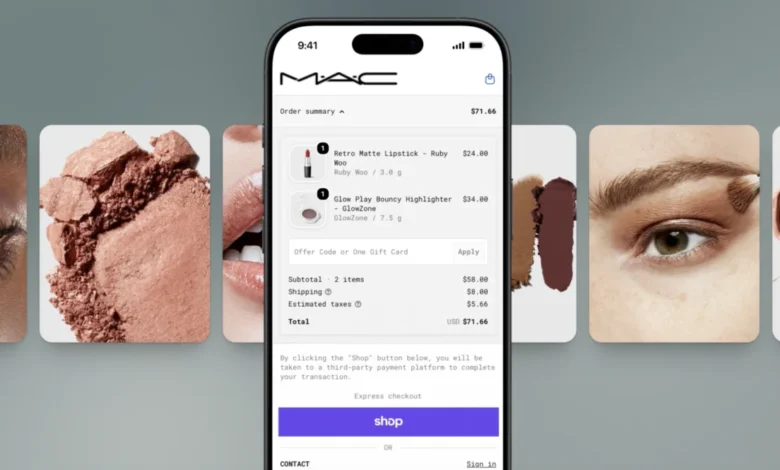
In August, ELC announced the official launch of MAC’s overhauled e-commerce site powered by Shopify. The transition of MAC, which boasts one of the largest and most complex beauty operations globally, was executed in approximately 120 days—a testament to Shopify’s growing capability to handle enterprise-level merchants at scale.
Sandy Jeong, Director of Enterprise Solutions Engineering at Shopify, emphasized the sheer complexity of migrating a global brand like MAC. "It’s not just about a website," Jeong explained. "You’re really talking about all the nuts and bolts that go behind that: promotions and loyalty and checkout rules and fulfillment and payments and tax."
Beyond digital storefronts, ELC is bridging the gap between physical and digital retail. The company has already implemented Shopify at the checkout terminals of five physical MAC retail stores. The overarching corporate strategy dictates that the vast majority of ELC’s brand e-commerce sites, alongside additional freestanding brick-and-mortar retail locations, will be migrated to the Shopify platform by the end of fiscal year 2027.
The "Beauty Reimagined" Master Plan
This extensive digital overhaul is a cornerstone of "Beauty Reimagined," a sweeping corporate restructuring plan announced by ELC to prioritize operational agility, streamline distribution networks, and return the conglomerate to sustainable financial growth.
Following pandemic-era disruptions and shifting consumer demographics, ELC faced mounting pressure from investors to revitalize its sales growth and adapt to modern retail channels. As part of this broader strategy, the company has aggressively recalibrated its distribution footprint. In March, ELC launched MAC products within U.S. Sephora stores, tapping into a high-traffic retail environment that attracts younger, highly engaged beauty consumers. Concurrently, in May, the company announced plans to reduce its traditional department store footprint—a retail channel that has faced declining foot traffic in recent years—to concentrate resources on high-growth online and specialty multi-retailer channels.
The financial results of these strategic pivots indicate early success. In ELC’s fiscal year earnings report released in August, the company posted a notable 5% sales growth, bringing total annual revenue to $15 billion. Furthermore, key prestige portfolios like Jo Malone London and Tom Ford officially crossed the threshold into billion-dollar brand status, validating the company’s refined channel strategy.
Frictionless Consumer Experience and the Power of Shop Pay
One of the primary drivers behind ELC’s migration to Shopify is the immediate alignment with consumer behavior. In modern e-commerce, cart abandonment is often driven by cumbersome checkout procedures, forced account creations, and mismatched payment gateways.
By adopting Shopify, ELC instantly plugs into a pre-existing consumer network. According to company metrics, roughly 60% of ELC’s online consumer base already utilizes Shop Pay, Shopify’s accelerated checkout system. Shop Pay allows shoppers to securely save their credit card information, billing addresses, and shipping preferences, enabling one-click checkouts across multiple distinct merchant websites.
For MAC and other ELC brands, removing friction at the final stage of the purchase funnel is expected to yield higher conversion rates. Consumers no longer need to manually enter lengthy payment details or set up entirely new profile passwords when transitioning between different brand sites within the ELC family.
Preparing for the Era of Agentic Commerce and AI
Looking beyond traditional web and mobile shopping, ELC and Shopify are positioning their partnership to capitalize on the next frontier of digital retail: agentic commerce and artificial intelligence.
While widespread public sentiment surrounding generative artificial intelligence can often lean skeptical, enterprise tech platforms are recording a distinct shift in consumer behavior. Shopify data indicates that shoppers arriving via AI-driven recommendation channels or digital shopping assistants exhibit a 14% higher average order value compared to traditional web traffic.
However, maximizing the potential of AI-driven shopping requires a sophisticated backend infrastructure, specifically concerning product data management. Sandy Jeong of Shopify underscored the importance of clean, structured product data in an environment where consumers increasingly rely on automated digital agents to make purchasing decisions.
"What you don’t want to rely on is an agent just scraping your website or crawling the internet for information on your brand," Jeong noted. "So Shopify has given brands a very structured way through our catalog to send your product data directly to the agents through APIs."
By standardizing product data catalogs through Shopify’s API framework, ELC ensures that its luxury product descriptions, shade ranges, pricing, and inventory levels are accurately communicated to third-party AI shopping assistants without data corruption or lag.
The Broader Beauty Industry Shift Toward Tech Collaboration
The Estée Lauder Companies is not alone in its realization that prestige beauty brands must partner with, rather than compete against, major technology infrastructure providers. Across the cosmetics and personal care sectors, legacy brands are rethinking their digital distribution models to meet consumers where they spend their time.
Competitors and peers are similarly ceding certain operational controls to tech giants to maintain a competitive edge. For instance, Orveon—the parent company behind prestige brands like Laura Mercier and Bare Minerals—has integrated Amazon’s "Buy with Prime" feature into its direct-to-consumer websites, allowing shoppers to leverage Amazon’s trusted logistics and fulfillment network directly from independent brand stores.
Meanwhile, the social commerce boom has forced traditional beauty powerhouses to rethink their social media strategies. Both Sephora and Ulta Beauty have announced strategic integrations with TikTok Shop, acknowledging that the platform’s hyper-engaged user base, algorithmic product discovery, and livestream-fueled shopping capabilities are rapidly capturing market share from traditional search engines and department store counters.
For ELC, partnering with a tech giant like Shopify offers an additional strategic advantage: the ability to influence product roadmaps and technological development.
"We want to drive some of [Shopify’s] roadmap," Omer Iqbal explained. "Right now, we’re a preferred client of theirs. We’re trying to push them into markets that are important to us."
By acting as a marquee enterprise partner for Shopify, ELC can advocate for specialized features tailored specifically to the nuances of global luxury beauty retail—such as complex multi-item promotional bundling, shade-matching augmented reality integrations, and localized compliance standards across international markets—ensuring that the underlying technology scales smoothly alongside the conglomerate’s global ambitions.
Financial Milestones and Industry Indicators
The broader beauty and wellness sector continues to demonstrate robust financial health, underscored by significant corporate milestones and shifting market trends. Victoria Beckham Holdings recently reported a historic financial milestone, posting a profitable fiscal year for the first time in the company’s history. Driven by a 15% increase in revenue to £129.8 million ($175 million), the company revealed that the former Spice Girl’s dedicated beauty line was responsible for an impressive two-thirds of the brand’s overall revenue, highlighting the unmatched profitability of high-end cosmetics extensions.
Concurrently, corporate restructuring continues to reshape the landscape. OPI’s parent company has recently filed to go public, signaling renewed investor confidence in the cosmetics sector’s capacity for public market capitalization.
As digital transformation accelerates, the boundary lines between retail, technology, and entertainment continue to blur. Whether through gym chains launching entertainment-centric social platforms, television programming serving as immediate catalysts for beauty product sales, or luxury conglomerates completely overhauling their digital architecture, the message to the market is clear. In the modern consumer economy, agility, strategic technological outsourcing, and deep data integration are no longer optional—they are the mandatory price of admission for long-term survival and growth.