An In-Depth Review: Is Borax Safe for Cleaning, and What You Need to Know About Its Regulation and Alternatives?


The debate surrounding borax, a once-ubiquitous household cleaning agent, has intensified in recent years, particularly within the European Union and the United Kingdom where its retail sale has been restricted. Consumers navigating the complex landscape of "green cleaning" often encounter conflicting information regarding its safety, leading to confusion and a demand for clarity. This comprehensive review aims to dissect the chemical properties of borax, examine the regulatory decisions that have shaped its availability, and evaluate the scientific evidence concerning its safety profile, particularly when contrasted with its common substitute.
The Enduring Presence of Borax in Household Cleaning
For generations, borax, chemically known as sodium tetraborate, has been a staple in homes across the globe. Revered for its versatility, it has been employed in a myriad of applications, from laundry boosting and stain removal to pest control and general surface cleaning. Its efficacy stems from its alkaline properties, which help to soften water, emulsify grease, and inhibit the growth of mold and mildew. Its natural origin, typically found in evaporite mineral deposits formed from the repeated evaporation of seasonal lakes, has historically lent it an aura of being a "natural" and therefore inherently safe cleaning solution. This perception has contributed to its widespread adoption in eco-conscious cleaning kits, where it is often paired with other natural ingredients like vinegar and baking soda.
However, this traditional trust in borax has been challenged by growing public awareness and evolving regulatory standards concerning chemical safety. A significant number of consumers, influenced by public health advisories and environmental concerns, have begun to question the safety of borax, particularly regarding potential reproductive health impacts. This scrutiny underscores a broader societal shift towards greater transparency and caution in the use of household chemicals, regardless of their natural provenance.
Regulatory Decisions: The EU and UK Ban on Retail Borax
A pivotal moment in the borax debate occurred in 2010 when the European Union initiated a reclassification of borates. Under the stringent framework of the European Chemicals Agency (ECHA) and the REACH (Registration, Evaluation, Authorisation and Restriction of Chemicals) regulation, the ‘Borate’ group of chemicals, which includes borax (sodium tetraborate), was reclassified. Specifically, borates were identified as substances potentially hazardous to reproductive health, earning them a classification as "Reprotoxic Category 1B." This designation signifies that the substance is presumed to have adverse effects on sexual function and fertility or on development, based on animal studies, in the absence of convincing human data to the contrary.
Following this classification, the retail sale of borax as a cleaning product to general consumers was prohibited across all EU member states. The rationale behind this decision was rooted in the precautionary principle, a cornerstone of European environmental and health policy. This principle dictates that if there is a plausible risk of harm, even if scientific certainty is not yet established, protective measures should be taken to prevent potential adverse effects on human health or the environment.
Post-Brexit, the United Kingdom largely adopted the existing EU chemical regulations into its own legal framework, ensuring that the ban on retail borax remains in effect. Consequently, consumers in the UK and EU can no longer purchase pure borax for general household use. Its availability is now strictly limited to professional capacities, requiring specific licensing and adherence to industrial safety protocols, underscoring the serious nature of its reclassification. This regulatory shift has necessitated a re-evaluation of cleaning practices and ingredients for countless households and businesses.
The Rise of Borax Substitute: Sodium Sesquicarbonate
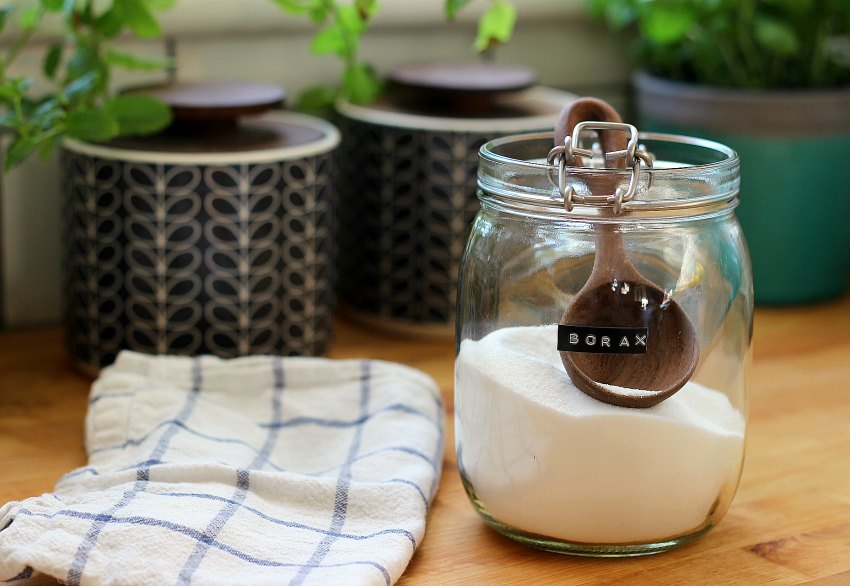
In response to the borax restrictions, a different product, commonly marketed as "Borax Substitute," has emerged as the primary alternative for consumers in the UK and EU. This substitute is chemically distinct from borax, being identified as sodium sesquicarbonate. Unlike sodium tetraborate, which is a naturally occurring mineral compound related to boric acid, sodium sesquicarbonate is a compound derived from a combination of washing soda (sodium carbonate) and bicarbonate of soda (sodium bicarbonate).
While it lacks the "borate" chemical structure, sodium sesquicarbonate offers similar functional properties in cleaning applications. It is an effective alkali, meaning it can raise the pH of water, making it a powerful degreaser and stain remover. It also acts as a water softener, enhancing the efficacy of detergents, much like traditional borax. Its ability to mimic borax’s cleaning performance without containing boric acid derivatives has made it an acceptable and widely available alternative under current regulations. The distinction is crucial: consumers purchasing a product labeled "borax" in the EU or UK are almost certainly acquiring sodium sesquicarbonate, not the original sodium tetraborate.
Safety Profile of Borax Substitute (Sodium Sesquicarbonate)
The good news for consumers is that borax substitute, or sodium sesquicarbonate, is generally considered safe for household use and poses a low risk to human health and the environment. Its safety profile is supported by its extensive use across various industries for decades. Beyond cleaning products, sodium sesquicarbonate is found in water treatment processes, swimming pool chemicals, and even holds a place on the INCI (International Nomenclature of Cosmetic Ingredients) list as an approved cosmetic ingredient. It frequently appears in personal care items such as bath bombs, bath salts, shampoos, and deodorants, indicating a broad acceptance of its low toxicity for topical applications.
In the United States, the Food and Drug Administration (FDA) has even approved sodium sesquicarbonate in small amounts as a food additive, a testament to its perceived safety, although this approval does not extend to the UK or EU, where food additive regulations are often more conservative.
Leading environmental and health advocacy groups, such as the Environmental Working Group (EWG), have also assessed sodium sesquicarbonate. Despite acknowledging some data gaps, the EWG has classified borax substitute as "low risk," indicating that no serious health concerns or environmental issues have been consistently identified with its use. Its environmental impact is also considered relatively low compared to many harsher conventional cleaning chemicals, aligning with the principles of green cleaning.
However, as with any cleaning product, sensible precautions are advised. Sodium sesquicarbonate, like many alkaline substances, can be an irritant to sensitive skin and eyes upon direct contact. It should always be handled with care, stored in clearly labeled containers, and kept out of reach of children and pets. When used according to product instructions and with basic safety measures (e.g., gloves for prolonged contact), the risks associated with borax substitute are minimal.

The Nuance of Borax (Sodium Tetraborate) Safety Outside the EU/UK
For consumers outside the EU and UK, particularly in regions where genuine borax (sodium tetraborate) remains available for purchase, the safety question becomes more complex. The regulatory stance in the EU/UK is largely preventative, driven by the precautionary principle rather than definitive proof of harm at typical exposure levels.
Scientific research on borax and related boron compounds, particularly regarding reproductive effects, has predominantly relied on animal studies. These studies, while crucial for identifying potential hazards, often involve administering extremely high doses of the substance, far exceeding typical human exposure during household cleaning. For instance, studies might expose rodents to levels of borates that would be physically impossible to replicate through casual contact with cleaning products. Critics of the EU’s blanket ban argue that extrapolating these high-dose animal findings directly to low-level human exposure in a domestic setting might overstate the risk.
Interestingly, several human epidemiological studies have investigated occupational exposure to boron compounds in industrial settings. A notable 2011 study published in Environmental Health Perspectives examined workers in Turkish boron mines and processing plants, where exposure to boron compounds was significantly higher and more prolonged than in a typical household. The study concluded that even under these "worst-case exposure conditions," the levels of boron absorbed by workers were "considerably lower than exposures which have previously led to reproductive effects in experimental animals." It further stated that "dose levels of boron associated with developmental and reproductive toxic effects in animals are by far not reachable for humans under conditions of normal handling and use." This conclusion was reinforced by a more recent study published in Current Opinion in Toxicology in 2023, which reported similar findings, suggesting a substantial safety margin between typical human exposure and levels causing harm in animal models.
Beyond reproductive concerns, borax is not classified as a known carcinogen by major international health organizations. However, similar to its substitute, pure borax can cause irritation to sensitive skin and eyes, and inhalation of its dust can irritate airways. Therefore, proper ventilation and skin protection are advisable during its use. Concerns about borax residue on clothes after washing have also been raised. However, studies indicate that borax is poorly absorbed through undamaged skin. Furthermore, the rinse cycle in a washing machine should effectively remove any excess borax, minimizing potential skin contact.
Broader Implications: Precautionary Principle vs. Risk Assessment
The divergence in regulatory approaches to borax highlights a fundamental debate in chemical safety: the application of the precautionary principle versus a strict risk assessment model. The EU/UK model leans heavily on precaution, opting to restrict a substance if there is a plausible, even if unproven, risk, particularly concerning sensitive endpoints like reproductive health. This approach aims to prevent harm before it occurs.
In contrast, other jurisdictions, notably the United States, often rely more on a risk assessment model, which considers not just the inherent hazard of a substance but also the likelihood and extent of exposure. If the exposure levels in typical use are deemed to be far below the hazardous threshold, the substance might remain available to consumers, albeit with appropriate warnings. The US Environmental Protection Agency (EPA), for example, regulates borates, but its stance on consumer products containing borax is less restrictive than the EU/UK.

This global disparity in regulation creates a complex landscape for consumers and manufacturers alike. For consumers, it means that a product considered unsafe for retail in one region might be readily available in another, leading to confusion and the need for individual research. For manufacturers, it necessitates tailored product formulations and labeling strategies for different markets.
Conclusion: Informed Choice in a Nuanced Landscape
Ultimately, the question of borax safety is not a simple yes or no, especially for those outside the EU and UK where it remains available. For residents of the UK and EU, the regulatory decision is clear: only borax substitute (sodium sesquicarbonate) is legally available for retail cleaning purposes, and current evidence strongly supports its safety under normal use.
For consumers elsewhere, the situation is more ambiguous. While animal studies suggest potential reproductive hazards at very high doses, human occupational studies indicate that typical household exposure levels are far below those associated with adverse effects. Borax is not a carcinogen, but it can be an irritant. The regulatory bodies that have banned it have done so based on a precautionary principle, prioritizing potential risk over proven harm at low exposure.
This complex scenario necessitates an informed decision-making process for individual consumers. Some may find the regulatory uncertainty concerning borax (sodium tetraborate) sufficient reason to opt for alternatives, even if it means foregoing a traditional cleaning ingredient. Others, after reviewing the scientific data, might feel comfortable continuing its use in moderation, adhering to strict safety precautions such as wearing gloves, ensuring good ventilation, and preventing ingestion.
In an era of increasing awareness about environmental and health impacts, understanding the chemical distinctions, regulatory frameworks, and scientific evidence behind common household products is paramount. This review serves as a starting point for individuals to conduct their own further research and make choices that align with their personal comfort levels and safety priorities.