Forest Edge House Represents a Paradigm Shift in Sustainable Architecture and Energy Independence in the Catskill Mountains

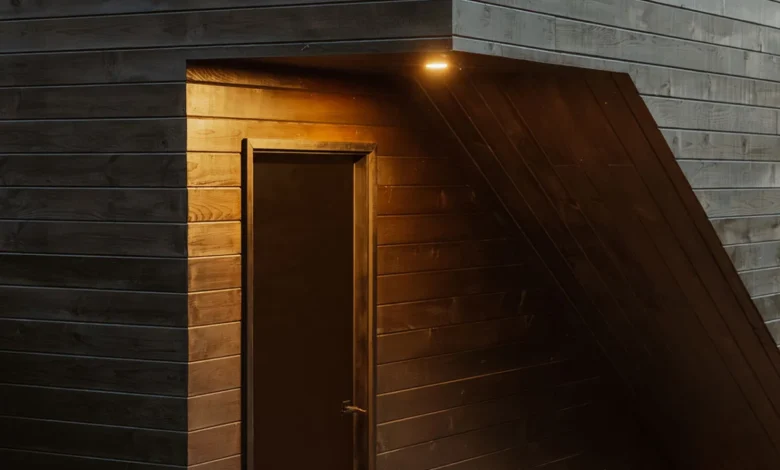
The completion of the Forest Edge House in the western Catskill Mountains marks a significant milestone in the evolution of sustainable residential design. Situated on a secluded three-acre forested parcel, this 1,500-square-foot residence is not merely a dwelling but a functional manifesto on self-reliance. Designed by Marc Thorpe and realized through Edifice Upstate—the design-and-build agency cofounded by Thorpe and his partner, Claire Pijoulat—the project serves as the fifth installment in a series of solar-powered homes intended to redefine contemporary living through the lens of environmental stewardship and architectural restraint.

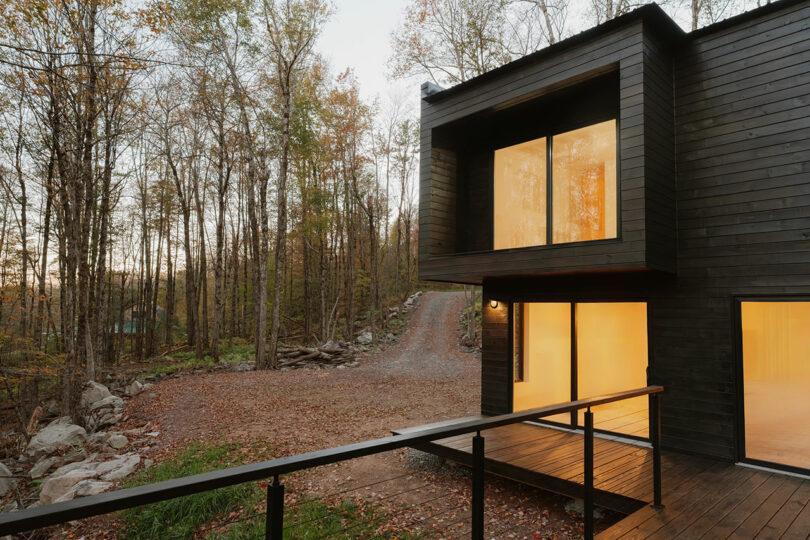
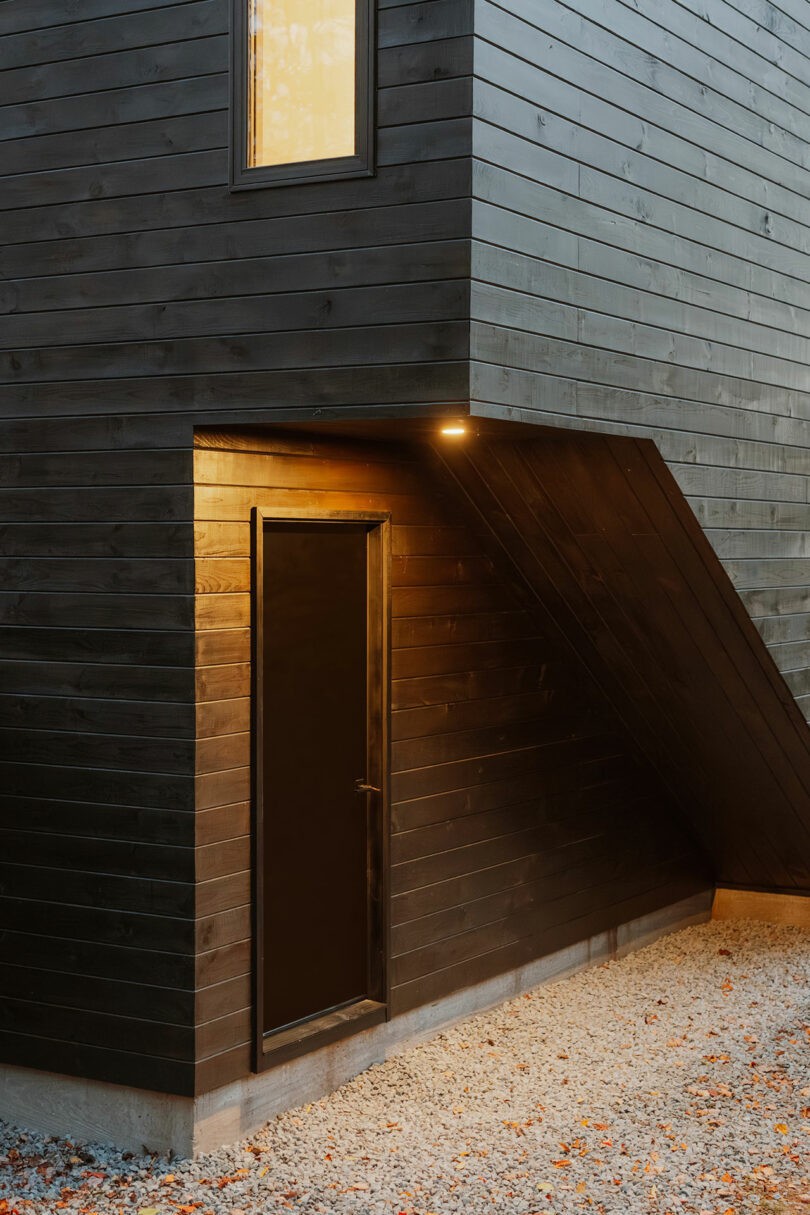
The structure, often described as a "little black box," is nestled into a gentle slope, where its dark pine cladding allows it to recede into the shadows of the surrounding timber. However, its most striking feature is the southern facade, which hosts a rigorous grid of solar panels. These panels do more than harvest energy; they communicate the building’s core philosophy, bridging the gap between aesthetic form and mechanical necessity.
A Vision of Autonomy: The Philosophy Behind the Project
At the heart of the Forest Edge House is a critique of modern existence. Architect Marc Thorpe argues that the contemporary "system" has eroded individual identity by outsourcing the fundamental aspects of life that provide purpose and meaning. By delegating energy production, food sourcing, and waste management to distant, invisible infrastructures, Thorpe suggests that humanity has lost its connection to the physical world and its own agency.
"The system is eroding our individuality by outsourcing every aspect of our lives that enables our sense of purpose and ability to construct meaning," Thorpe stated during the project’s unveiling. He posits that the first and most critical step in reclaiming this lost autonomy is energy independence. By integrating energy production directly into the architectural fabric of the home, the Forest Edge House forces a confrontation with consumption habits, transforming the act of living into a conscious participation in ecological systems.
This worldview is manifested through what Thorpe calls "descriptive function." In this approach, every element of the building—from the orientation of the windows to the placement of the solar arrays—is a direct byproduct of environmental forces and use. There is no decorative surplus; instead, the architecture is a honest reflection of what is required to sustain life in its specific geographic context.
Technical Specifications and Energy Infrastructure
The Forest Edge House is engineered to operate with a high degree of efficiency, utilizing both passive and active solar strategies. The technical heart of the residence is its sophisticated power generation and storage system, which allows the home to remain resilient against the fluctuations of the traditional power grid.
Solar Power Generation
The southern facade features 24 monocrystalline solar units, supplemented by an additional array situated on the rooftop. This dual-system approach is designed to capture the slanting rays of the northern sun during winter months while maximizing overhead exposure during the summer. Together, these arrays generate approximately 38 kWh of electricity per day, a figure that significantly exceeds the average daily consumption of a highly efficient 1,500-square-foot home.
Storage and Conversion
To manage this energy, the home is equipped with a 15K Sol-Ark inverter and a high-capacity Lithium Ion LifePo (Lithium Iron Phosphate) battery bank. This setup ensures that energy harvested during peak daylight hours is available for use during the night or during periods of heavy cloud cover. The choice of LifePo technology reflects a commitment to safety and longevity, as these batteries offer a more stable thermal profile and a longer cycle life than traditional lithium-ion alternatives.
Thermal Management
The interior environment is regulated through a combination of high-performance insulation and full-floor radiant heating. By heating the thermal mass of the floor, the home maintains a consistent temperature with lower energy input than forced-air systems. Furthermore, the strategic placement of windows facilitates cross-ventilation, reducing the need for mechanical cooling during the summer months.
Chronology of Development: The Edifice Upstate Series
The Forest Edge House is the culmination of years of iterative design by Marc Thorpe and Claire Pijoulat. The Edifice Upstate series was born out of a desire to create a "turnkey" model for sustainable living, providing homeowners with a pre-designed, ecologically responsible alternative to the traditional custom-build process.
- Project Conception (2018-2019): Thorpe and Pijoulat founded Edifice Upstate with the goal of merging high-end architectural design with off-grid capabilities. They began scouting locations in the Catskills and Hudson Valley, regions known for their rugged beauty and challenging climates.
- The Early Prototypes (2020-2021): The first three homes in the series established the visual language of the firm: minimalist volumes, dark exteriors, and a focus on site-specific orientation. These projects tested various sustainable materials and construction methods.
- The Fourth Iteration (2022): This project introduced more advanced solar integration and explored the "descriptive function" philosophy more deeply, moving away from traditional agrarian aesthetics toward a more industrial-modernist hybrid.
- Forest Edge House Completion (2024): As the fifth project, Forest Edge House refined the solar-facade integration and maximized the use of interior space. It represents the most technologically advanced and philosophically cohesive entry in the series to date.
Interior Design: The Concept of "Enough"
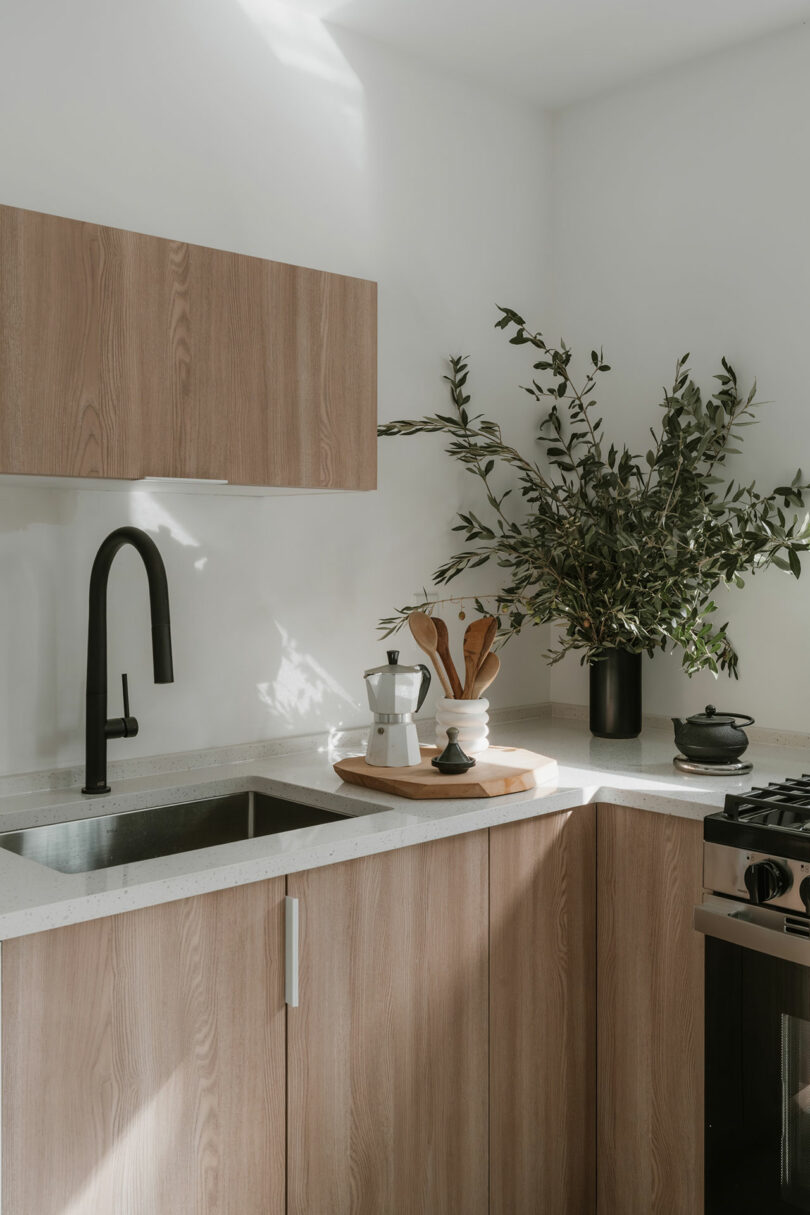
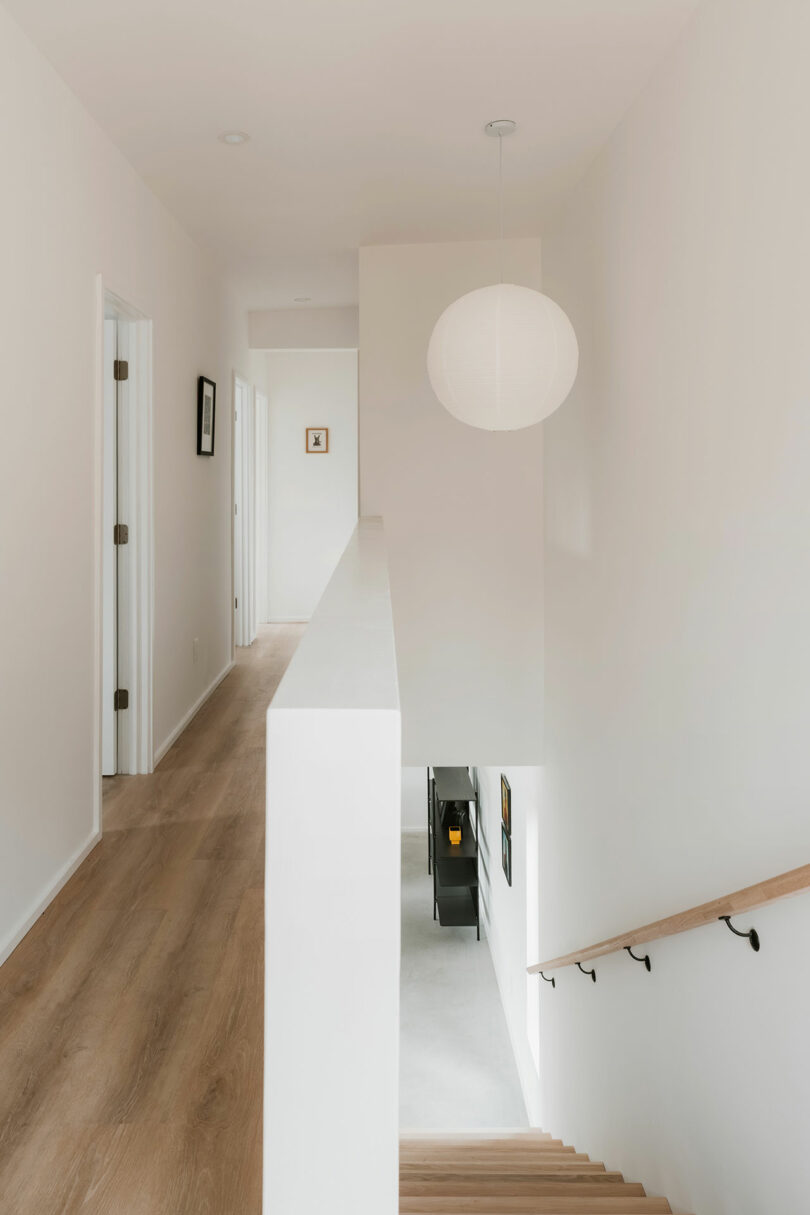
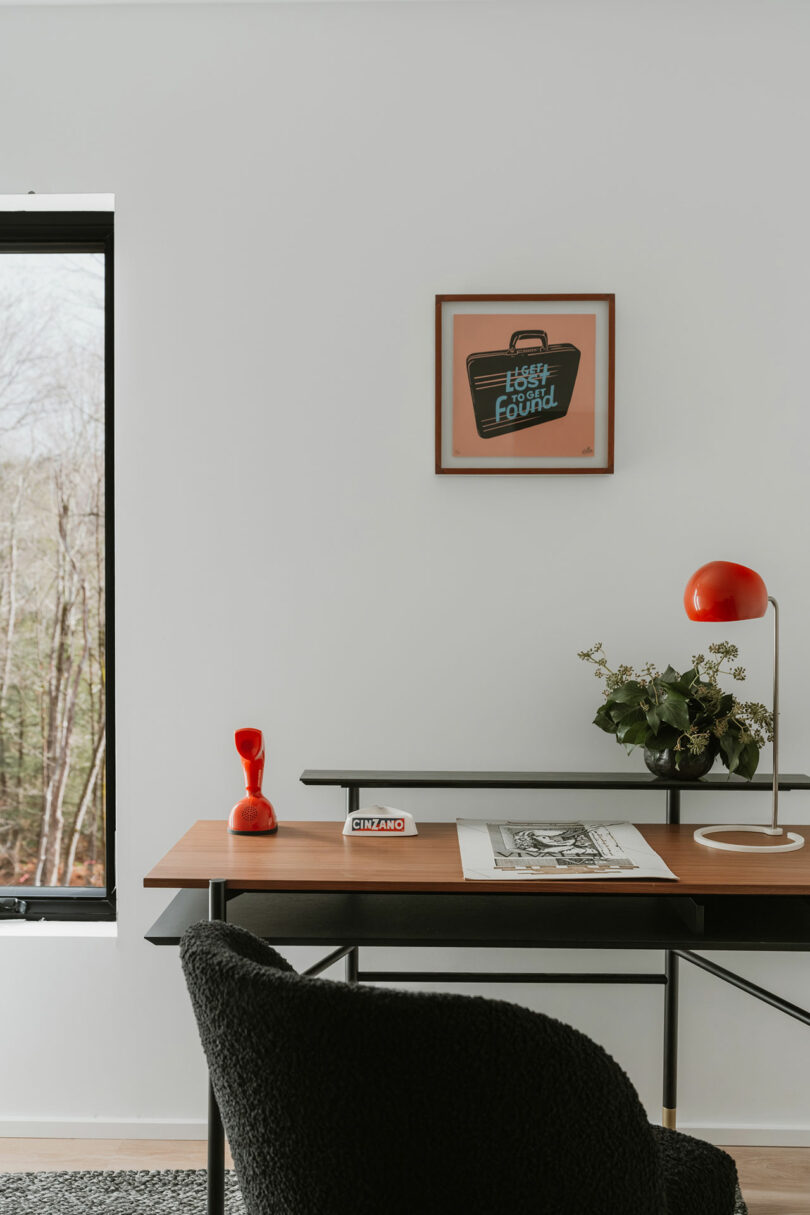
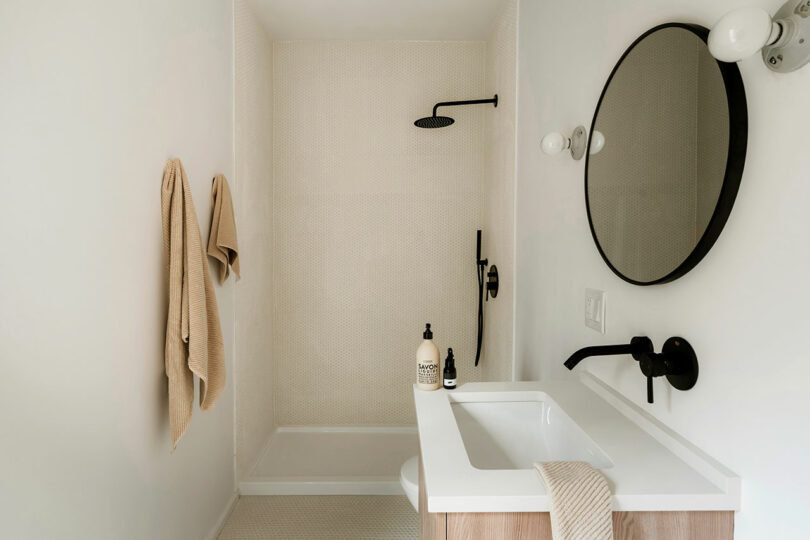
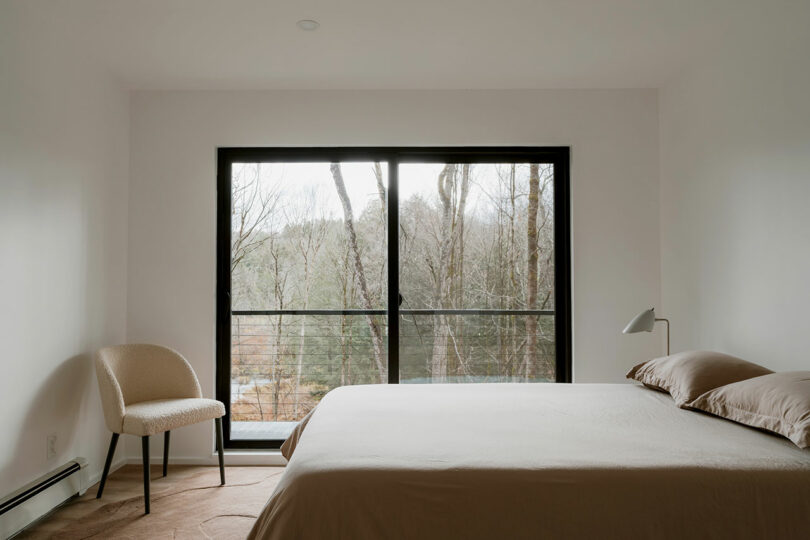
The interior of the Forest Edge House serves as a counterbalance to its dark, protective exterior. Inside, the spaces are light-filled and airy, defined by a palette of white surfaces, light wood flooring, and black fixtures. The layout follows a clear programmatic split: the ground floor is dedicated to collective living, featuring an open-plan kitchen, dining, and living area, while the upper level houses three private bedrooms and two full bathrooms.
Thorpe describes the home as "an exercise in Enough." While the footprint is compact, the house does not sacrifice comfort. The selection of furniture and fixtures reinforces this balance. A long-standing collaboration with the French brand Ligne Roset is evident throughout the home. Notable pieces include the iconic tan leather Togo chairs, designed by Michel Ducaroy. These pieces were chosen for their ergonomic excellence and their alignment with the project’s ethos of quality over quantity.
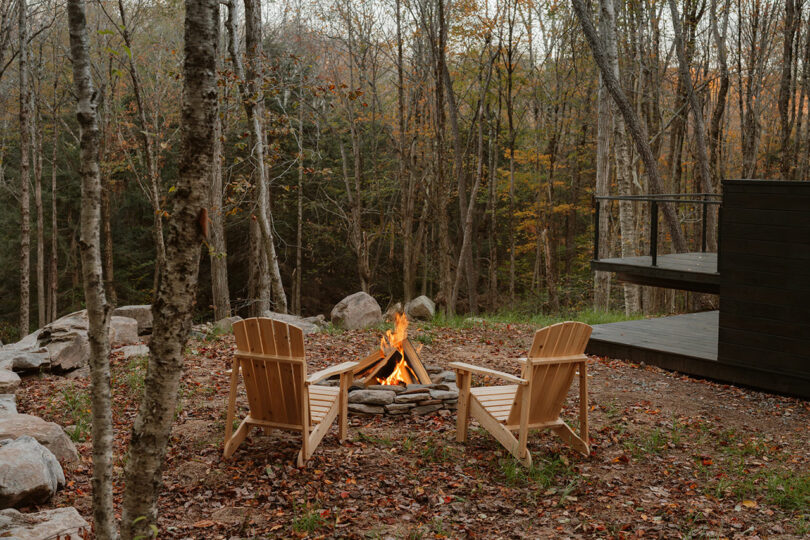
The windows are perhaps the most vital "interior" element. Positioned to frame specific views of the forest, they act as living paintings that change with the seasons. This connection to the outdoors is further emphasized by a 25-foot cantilevered deck constructed of black steel. This deck extends into the tree canopy, providing a singular point of outreach where the boundary between the built environment and the natural world dissolves.
Broader Impact and Environmental Analysis
The Forest Edge House arrives at a time when the architectural community is increasingly focused on "embodied carbon" and "operational carbon." By utilizing a wood-frame construction with pine cladding—a renewable resource—and achieving net-positive energy production, the project serves as a blueprint for reducing the carbon footprint of the residential sector.
Economic and Ecological Implications
From a socio-economic perspective, the Edifice Upstate model addresses the growing demand for "resilient housing." As climate change leads to more frequent grid failures and rising energy costs, homes that can function independently of centralized utilities become increasingly valuable. While the initial investment in solar arrays and battery storage is higher than traditional builds, the long-term operational savings and the psychological benefit of energy security present a compelling case for this model.
Architectural Legacy
Architecturally, the project draws from the agrarian vernacular of the Catskill region—barns, sheds, and silos—where form was historically dictated by necessity. However, Thorpe elevates this tradition by integrating 21st-century technology. The result is a structure that feels both timeless and futuristic. It avoids the "campiness" of faux-rustic cabins, opting instead for a sophisticated minimalism that respects the landscape without attempting to mimic it.
Conclusion: A Call for Humility
The ultimate success of the Forest Edge House may not be measured in kilowatts or square footage, but in the shift in perspective it demands from its inhabitants. By making energy production visible and tangible, the home encourages a daily ritual of resource awareness.
"This planet offers us a choice: to be one with nature or not," Thorpe says. "Designing with sustainable systems is the first step. Humility is what comes after."
As the fifth successful project for Edifice Upstate, the Forest Edge House stands as a testament to the fact that beauty and self-sufficiency are not mutually exclusive. It is a quiet, powerful reminder that architecture has the capacity to transcend its physical form, becoming a framework for a more intentional and harmonious way of living. For those looking to the future of residential design, the lessons learned in this 1,500-square-foot "black box" in the woods may prove to be some of the most vital of the decade.
Related posts: