Operationalizing Design: Bo Lupo on the Future of Digital Product Creation in Fashion and Footwear

The burgeoning field of digital product creation (DPC) is undergoing a significant transformation, with industry leaders increasingly recognizing design not merely as an aesthetic pursuit but as a critical operational challenge. This shift, driven by advancements in 3D modeling and artificial intelligence (AI), necessitates a conscious effort to build robust workflows, cultivate adaptive cultures, and leverage sophisticated toolsets capable of consistently translating creative sparks into tangible product outcomes – whether measured by performance, quality, fit, or style. This operationalization of design has become paramount in recent years, distinguishing companies that merely experiment with innovation from those that embed it as a core working principle across sectors like apparel and footwear.
A leading voice in this evolving landscape is Bo Lupo, a veteran in digital design and innovation. With a career spanning decades, including 28 years at Nike, Lupo has been at the forefront of building systems and processes that empower global teams, streamline work, and elevate creative output across diverse product categories. His unique vantage point offers invaluable insights into the changing nature of design, particularly as brands of all sizes re-evaluate the interplay between technology and design.
Bo Lupo’s Journey: A Pioneer in Digital Design
Lupo’s extensive career at Nike began as a footwear designer, grounded in industrial design principles and an early adoption of 3D design tools. This foundational expertise in hands-on product creation, from initial sketches and concepts through development, merchandising, and ultimately to the consumer, laid the groundwork for his later leadership roles. His early acumen in 3D technology quickly positioned him to participate in Nike’s nascent 3D pilot programs, fueling a natural interest in the intersection of design and technology.
As he transitioned into design director roles, Lupo spearheaded initiatives to integrate 3D tools more seriously into footwear development. He successfully led his design team in adopting these technologies, leveraging his deep understanding of 3D capabilities and limitations to guide designers through the learning curve. This culminated in the delivery of Nike’s first fully 3D-designed product review, showcasing rendered images and generating significant internal excitement.
This initial success propelled Lupo into a broader role as a digital product creation design leader. His responsibilities expanded to design operations, focusing on scaling 3D implementation across all footwear categories and product types. This phase involved extensive process mapping, prototyping, and collaboration with development leadership to understand the challenges of enterprise-wide adoption. While early attempts at full-scale integration faced hurdles and some initiatives "fizzled out," Lupo emphasizes that these experiences were crucial for understanding the complexities of large-scale digital transformation within a company the size of Nike.
Subsequently, Lupo moved into an official digital product creation role, building dedicated 3D expert teams to augment existing design processes. This strategic move aimed to provide specialized horsepower, acknowledging the significant lift required for broader design teams to master new tools. As the de facto leader of this burgeoning 3D studio, his influence expanded to encompass both footwear and apparel, overseeing the integration of 3D methodologies across these distinct product categories.
The Evolution of 3D: From Tool to Collaborator
Lupo identifies a critical "tipping point" in the adoption of 3D, moving beyond its initial perception as a mere downstream step. Early 3D implementations were often patchy due to imperfect tools, unintegrated workflows, and a lack of clear quantifiable benefits for designers. The pivotal shift occurred when the industry began asking, "Why digital? Why 3D? And why in design?" The answer emerged not in replacing traditional methods but in leveraging computing power to explore ideas previously impossible to conceive.
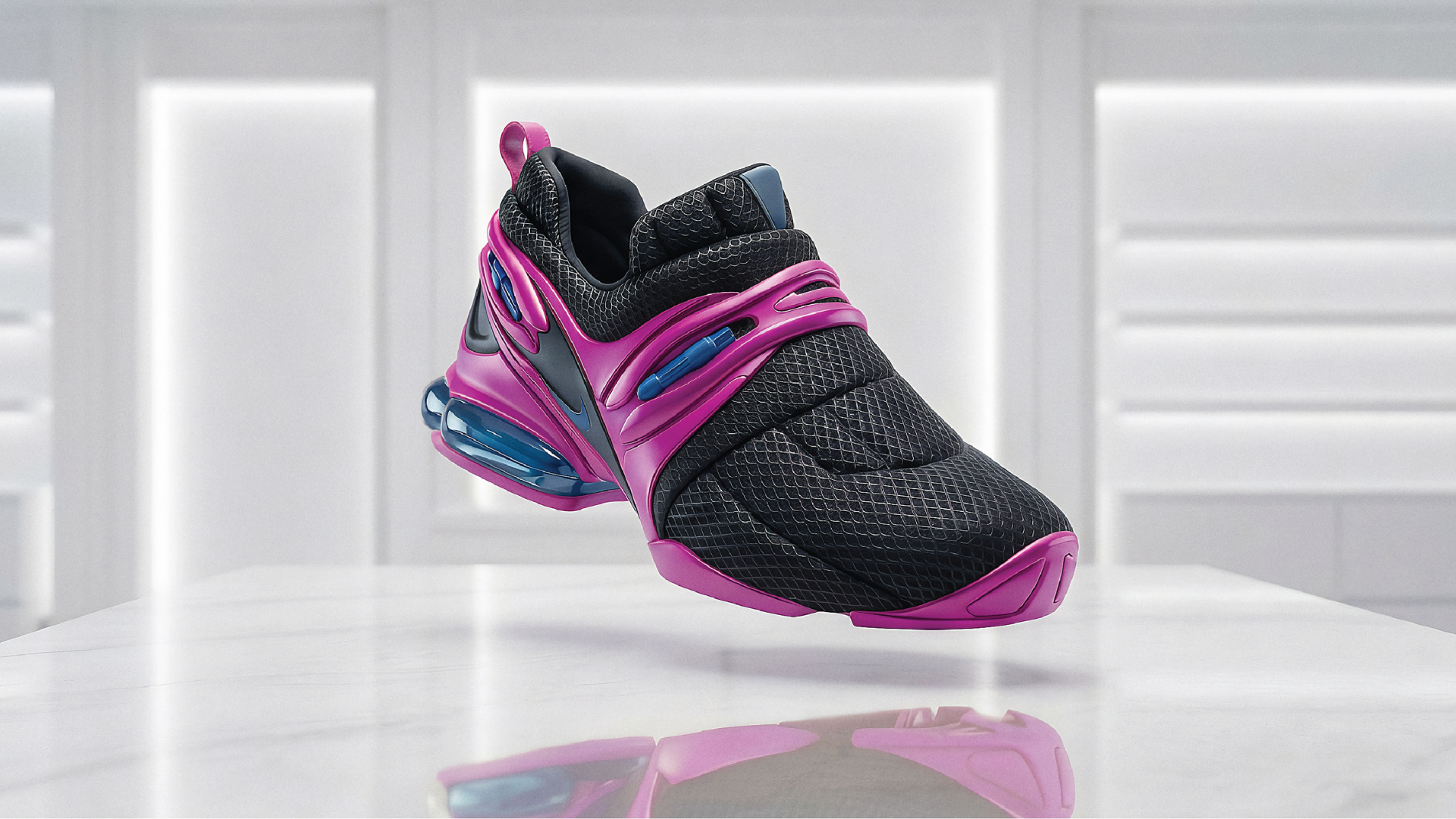
This paradigm shift was embodied by the rise of computational design, where data-driven approaches enabled the generation of complex structures and geometries that designers could not have drawn or imagined manually. Lupo highlights this moment as the recognition of the "computer as a creative collaborator." Designers witnessed the power of a tool that expanded their creative horizons, allowing for hundreds of variations where traditional processes permitted only a few. This fundamentally altered design decision-making and necessitated a deeper engagement with 3D design from the broader creative teams, fostering a new language and integration with computational design partners.
Bridging Creative and Technical: The Designer’s Role
Lupo views himself, and other experienced 3D designers, primarily as problem-solvers rather than narrow specialists tied to a particular product category. While his work often involved footwear or engineered products like backpacks and tents, the core skill set — identifying and solving design challenges — transcends specific lanes. This "problem-solver" orientation has remained consistent throughout his career, whether leading design teams or driving Nike’s 3D transformation. Good design, he asserts, is fundamentally about correctly identifying the problem before attempting a solution.
Industry Benchmarking: Footwear vs. Apparel in DPC
The long-standing assumption that more rigid, engineered products like footwear are further ahead in digital adoption than soft goods and apparel warrants re-examination. Lupo offers a nuanced perspective, acknowledging some validity to the notion that the "hard goods" aspects of footwear (e.g., midsoles, outsoles) make certain 3D applications more straightforward, particularly when a direct through-line to manufacturing information exists.
However, he suggests that apparel currently holds a distinct advantage due to its digital process and tools being more closely aligned with physical production. The ability to use existing physical patterns to create digital and simulated garments, coupled with realistic stitching and draping capabilities, mirrors the physical workflow more directly. In contrast, footwear, with its combination of hard components and flat pattern uppers wrapped around a last, presents greater complexity in digital representation, often requiring extensive modeling simply for visual accuracy rather than direct leveraging of manufacturing assets. This closer mirroring of physical and digital in apparel also benefits physics-based simulations, especially for products in motion.
Navigating Digital Transformation: The "Why" Behind DPC Initiatives
A critical issue facing the industry is the scaling back of DPC initiatives by some organizations, including major players. Lupo contends that most DPC failures are not technological but rather organizational and strategic. Companies often lose sight of the fundamental "why" behind their digital efforts, leading to a disconnect between expectations and realized value. This can result in teams "pushing the rock up the hill" without a clear purpose beyond generating digital assets.
However, Lupo also frames "scaling back" as a potential sign of legitimate maturity and organizational learning. Moving from a "3D everywhere" approach to strategically deploying it where it creates the most value is a positive recalibration. The real danger lies in discarding DPC capabilities entirely, particularly the specialized talent that understands both the creative process and digital tools. These "rare ones" take years to develop, and disbanding such teams represents a significant cost and delay when the market inevitably shifts towards renewed digital ambition. The upswing in consumer demand for configurable products, enhanced communication, and product excellence at the materials and R&D levels will inevitably require robust DPC capabilities, making talent retention paramount.
Furthermore, these pauses for reassessment are not solely driven by economic factors but also by the rapid pace of technological advancement, such as the integration of AI. Organizations need to strategically reflect on their technological position and re-strategize accordingly.
The Elusive Digital Twin: Vision vs. Reality
The concept of the "digital twin" has been a pervasive, yet often misunderstood, term in DPC discussions. Lupo highlights that the definition of a digital twin varies widely, from a high-fidelity render for a vendor to a sampling replacement for a designer or a build specification for a manufacturing director. He stresses the importance of organizational clarity on what "digital twin" truly signifies.
While the ultimate goal is a synchronized digital representation carrying full specifications (geometry, material behavior, fit data, manufacturing tolerances, component relationships, lifecycle data), Lupo questions the practical necessity of achieving this comprehensive level for every product in industries like footwear and apparel. Unlike aerospace or automotive, where products have long lifecycles and highly complex, fixed-position components making 3D CAD a direct manufacturing specification, fashion and footwear products have shorter lifecycles, thousands of SKUs, and different manufacturing processes. The financial and logistical feasibility of embodying all data in a digital twin for such products may not always make sense. The vision of the digital twin might be directionally correct, but the extent to which it needs to be pursued for these industries remains an open and crucial conversation.
Balancing Creativity and Engineering in 3D Workflows
A significant concern aired in the design community is the "compression argument" – that 3D tools, by bringing engineering considerations earlier into the design process, can inadvertently tilt the work away from pure creativity. Lupo acknowledges this as a "real one," noting that 3D does introduce engineering considerations sooner, creating a different kind of creative pressure.
However, he posits that this is primarily a workflow and leadership problem, not a technology problem. While early exposure to engineering constraints is inevitable and ultimately useful, the issue arises when engineering concerns dominate the creative conversation before sufficient exploration. Design leaders must be acutely aware of what 3D adoption demands of their teams. If the goal is creativity, the user experience of the tools — whether VR, computer screen, mouse, or stylus — should empower designers to be better at their craft.
Lupo champions the concept of a "creative sandbox" early in the design process. In this space, designers can utilize any digital tool they choose without the immediate expectation of producing an "engineered anything." This upfront exploration, detached from strict manufacturing specifications, allows for uninhibited creativity while still generating outputs that can later inform downstream engineering discussions.
The Imperative of Design Operations
Design operations (DesignOps), often narrowly perceived as project management, is defined by Lupo as the discipline of "designing the conditions under which creative and technical work happens." This encompasses people, process, and tools, including workflows, calendars, gates, team structures, and cultural norms that dictate an organization’s ability to consistently convert ideas into market-ready products at speed and scale. This comprehensive definition allows DesignOps principles to be transferable across industries.
However, direct "copy-and-paste" approaches from industries like automotive or architecture are often ineffective. The critical variables of timeline, volume, and complexity differ drastically. Fashion and footwear operate at opposite extremes in these aspects, with shorter lifecycles, higher volumes, and unique complexities. Similarly, comparing to gaming or VFX operations is limited, as their digital work is the final output, without physical production concerns. Therefore, DesignOps in fashion and footwear must be adapted and customized to the specific industry, organizational size, scale of operation, and business objectives.
Lupo observes that a sufficient understanding of DesignOps’ importance is often lacking, especially given the increased complexity of integrating traditional design with business environments and advanced technology layers. Challenges include cross-functional alignment (particularly at handoffs to development or sourcing), data governance, and change management in a fast-paced industry. Optimistically, brands investing in robust operational infrastructure, not just tools, are gaining a competitive edge. The discipline of DesignOps is becoming more, not less, important, particularly as AI introduces new opportunities and complexities.
AI’s Transformative Potential in Product Creation
The integration of AI into DPC workflows is generating significant attention, with visible applications ranging from generative image models for early-stage creative exploration (replacing sketching) to leveraging 3D renders with image generation models for high-speed e-commerce pixel creation. However, Lupo points to the "middle of the funnel" as the most interesting and least resolved area for AI. This is where decisions carry the most downstream consequence and technical demands are highest.
While generative AI excels at producing convincing images and visual forms, its current limitations lie in simulating physical behaviors, material properties, structural integrity, and manufacturing feasibility. This is precisely where DPC, with its robust 3D modeling and simulation capabilities, retains irreplaceable value. While AI is expected to advance in these areas, it is not yet capable of replacing comprehensive simulation.
Lupo highlights two under-discussed applications of AI in DPC workflows. Firstly, AI’s role in the "translation" of design artifacts. In the creative sandbox, designers can create any artifact, and AI could facilitate its transformation into more engineered artifacts for manufacturing-based scenarios. This capability for translating and transforming digital assets throughout the pipeline addresses a significant point of friction.
Secondly, the "rise of the Claude coders" is a fascinating development. Traditional computational design requires scripting knowledge, which has been a barrier for many designers. Now, designers are using AI to write code, enabling them to influence computational design processes or even create bespoke 3D tools for themselves without a background in engineering or software development. This AI-assisted tool-building capability is empowering designers to automate specific tasks and extract more from their 3D tools, further blurring the lines between creative and technical roles.
The journey of digital product creation is dynamic and complex. As Bo Lupo’s insights underscore, success hinges not just on adopting cutting-edge technology but on strategically operationalizing design processes, fostering adaptability, retaining specialized talent, and maintaining a clear vision of "why" these transformations are undertaken. The future of design in fashion and footwear will be defined by how effectively organizations navigate these technological and operational challenges, leveraging tools like 3D and AI as collaborators to unlock unprecedented creative and commercial potential.
Related posts: