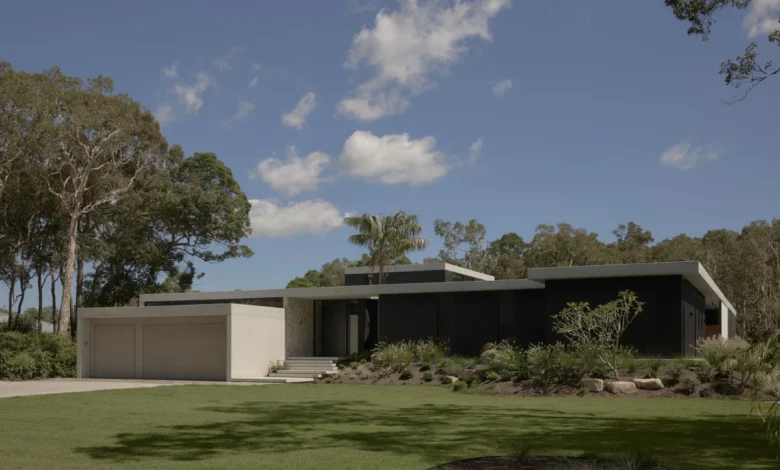
Situated amidst the verdant landscapes of Australia’s Sunshine Coast, Nojoor stands as a testament to the symbiotic relationship between contemporary residential design and the rugged elegance of the Australian bushland. Designed by the Brisbane-based firm Hive Architecture, the project represents a sophisticated response to a client brief that prioritized both an uncompromising connection to the natural environment and the creation of a private sanctuary. Completed and documented through the lens of architectural photographer Brock Beazley, the residence has emerged as a significant addition to the regional architectural discourse, highlighting the evolution of sub-tropical modernism in Queensland.
The project’s inception was driven by a client with a profound appreciation for design aesthetics and a site characterized by dense vegetation and a distinct sense of seclusion. The name "Nojoor," often associated with the coastal reaches of the Maroochy River region, reflects a deep-seated respect for local geography. In navigating the complexities of the site, Hive Architecture sought to balance the dual requirements of "exposure" to the beauty of the bush and "enclosure" for the family’s daily life.
Architectural Philosophy and Design Intent
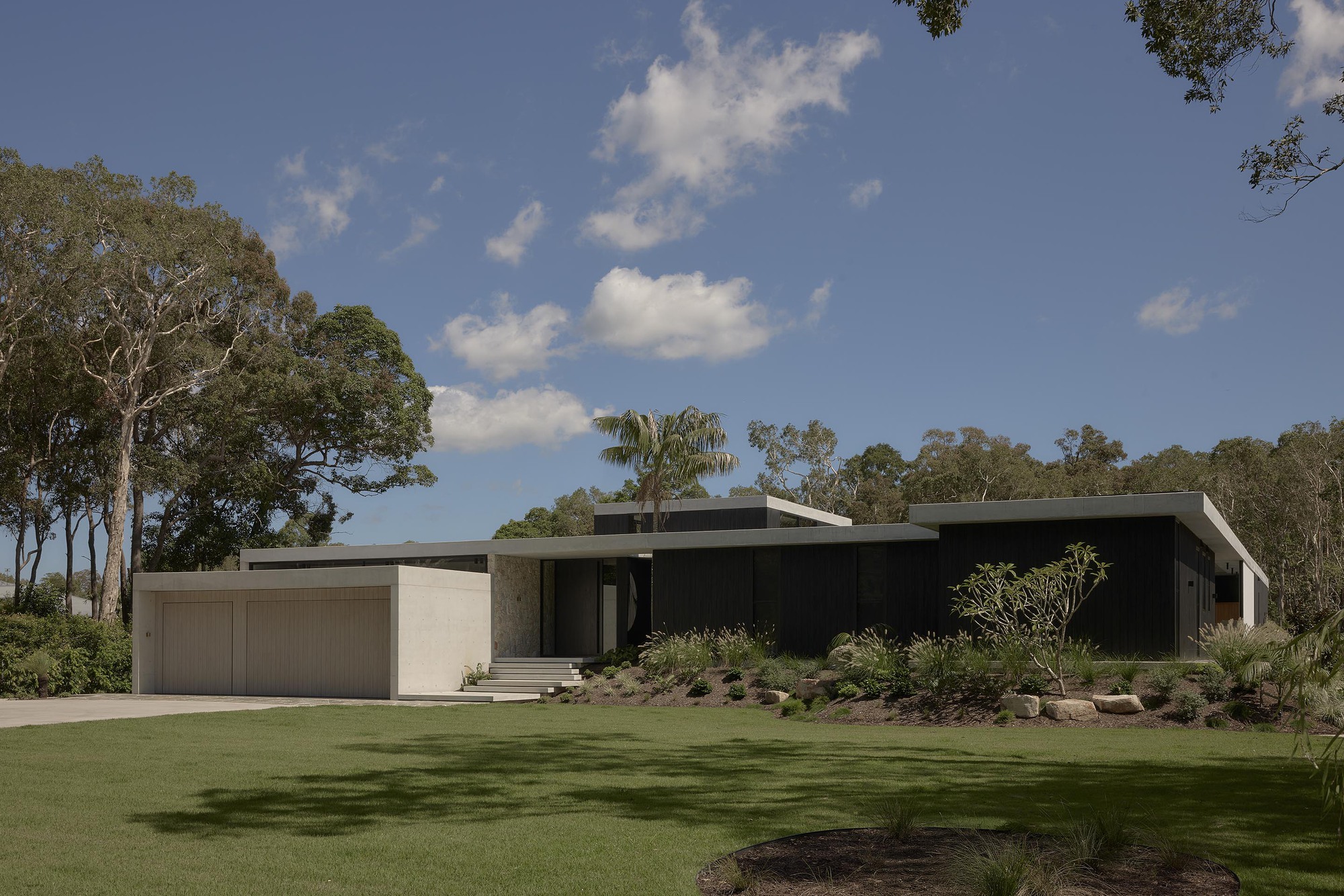
The design philosophy underpinning Nojoor is rooted in the concept of "refuge and prospect." In architectural theory, this involves providing a sense of safety and shelter (refuge) while allowing the inhabitants to look out over a vast or stimulating environment (prospect). At Nojoor, this is achieved through a meticulous arrangement of volumes that frame specific views of the surrounding eucalyptus and banksia trees while shielding the interior from external observation.
Hive Architecture’s approach focused on the tactile qualities of materials. The use of off-form concrete serves as the project’s structural and aesthetic backbone. Concrete was selected not only for its durability and resistance to the harsh Australian climate—including the high humidity of the Sunshine Coast and the potential threat of bushfires—but also for its thermal mass properties. By utilizing concrete walls and floors, the residence can naturally regulate internal temperatures, absorbing heat during the day and releasing it as the air cools at night, a critical feature for sustainable living in sub-tropical zones.
The architects describe the project as being "deeply connected to its place." This connection is not merely visual; it is experiential. The layout encourages a lifestyle that transitions seamlessly between indoor and outdoor spaces, a hallmark of Queensland architecture that has been refined here into a more permanent, grounded expression through the use of heavy masonry and strategic apertures.
Site Context and Environmental Integration
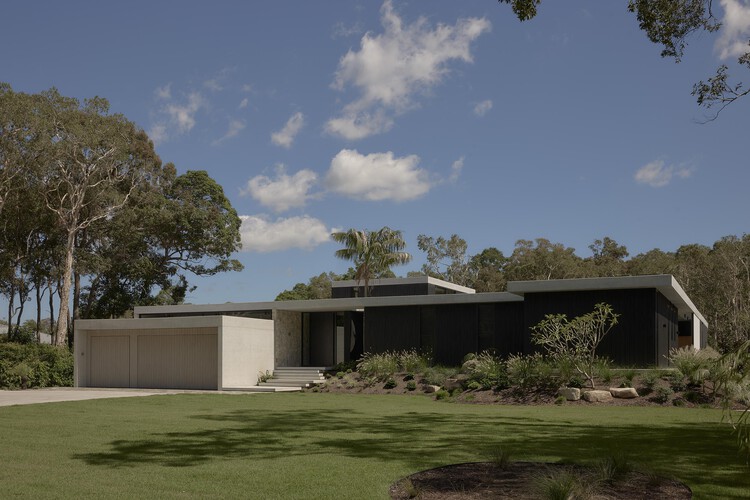
The Sunshine Coast is characterized by its diverse topography, ranging from coastal dunes to hinterland rainforests. Nojoor is located in a transitionary zone where the bushland provides a dense canopy and a rich palette of greens and greys. Integrating a modern structure into such a sensitive environment required a careful analysis of the site’s natural contours and solar orientation.
To minimize the impact on the existing ecosystem, the footprint of the house was carefully positioned to preserve significant trees. This decision informs the building’s geometry, resulting in a form that feels as though it is weaving through the landscape rather than imposing itself upon it. The integration of the building into the slope of the land allows for varied floor levels, which define different functional zones within the home without the need for restrictive internal walls.
Furthermore, the project addresses the environmental challenges inherent in Australian bushland sites. The choice of non-combustible materials like concrete and glass is a direct response to Bushfire Attack Level (BAL) requirements, ensuring that the home is resilient against the natural cycles of the landscape. The design also prioritizes natural ventilation, utilizing the prevailing coastal breezes to reduce the reliance on mechanical cooling systems.
Spatial Organization and Interior Materiality
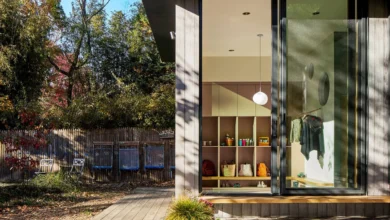
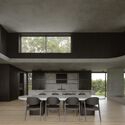
Internally, Nojoor is organized to facilitate a sense of calm and order. The heart of the home is the open-plan kitchen and dining area, which serves as the primary gathering space for the family. As noted in the photographic documentation, these areas are characterized by high-reaching concrete walls and expansive glazing that dissolves the boundary between the dining room and the forest outside.
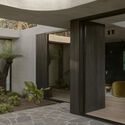
The interior palette is deliberately restrained, allowing the textures of the raw materials to take center stage. The coolness of the grey concrete is balanced by the warmth of timber accents and the play of light and shadow. Large pivot doors and sliding glass panels allow entire sections of the house to open up, effectively turning the living areas into a covered pavilion.
Privacy is managed through a series of "buffer zones." The street-facing facade is more monolithic and closed, providing a barrier against the outside world. As one moves deeper into the site, the architecture opens up, revealing private courtyards and terraces that are shielded from neighbors but open to the sky and the trees. This sequence of spaces creates a journey from the public realm to a deeply personal "hive" of family activity.
Chronology of Development
The development of Nojoor followed a rigorous timeline of design and construction, typical of high-end bespoke residential projects in Australia:
- Conceptual Phase: The architects engaged in extensive workshops with the clients to translate their "enthusiasm for design" into a functional brief. This phase involved site mapping and solar studies to determine the optimal placement of the building.
- Design Development: During this stage, the material palette was finalized. The decision to use off-form concrete required precise engineering and coordination with specialized contractors. Plans were submitted to the local council, ensuring compliance with environmental and bushfire regulations.
- Construction Phase: The build was a labor-intensive process, particularly the pouring of the concrete elements which require significant formwork and a high degree of craftsmanship. The installation of large-scale glazing was another critical milestone, requiring specialized equipment to navigate the bushland site.
- Completion and Landscaping: The final stage involved the integration of native landscaping, designed to blur the edges of the construction and encourage local fauna to return to the immediate vicinity of the house.
- Documentation: In early 2026, the project was fully documented and photographed, subsequently being published by major architectural platforms like ArchDaily in April 2026.
Supporting Data and Technical Specifications
The success of Nojoor is supported by technical data that underscores its efficiency and design excellence:
- Climate Resilience: The use of concrete provides a high thermal mass index, contributing to a significant reduction in annual energy consumption for cooling.
- Glazing Technology: High-performance, low-E glass was utilized to minimize heat gain while maximizing natural light.
- Water Management: The site incorporates advanced stormwater management systems to prevent erosion on the sloped bushland terrain, including on-site rainwater harvesting for irrigation.
- Local Sourcing: Where possible, materials and trades were sourced from the Sunshine Coast and South East Queensland regions, reducing the carbon footprint associated with transport and supporting the local economy.
Broader Impact and Architectural Implications
Nojoor represents a broader trend in Australian residential architecture where the "beach house" archetype is being replaced by more permanent, "fortress-like" sanctuaries that offer protection from both the elements and the increasing density of coastal suburbs. The project demonstrates that high-density materials like concrete, often associated with urban brutalism, can be softened and rendered "organic" when placed in dialogue with the natural environment.
Architectural critics and industry observers have noted that projects like Nojoor set a benchmark for how to build in sensitive bushland areas. By prioritizing the preservation of the canopy and using a palette that mirrors the tones of the earth and bark, Hive Architecture has shown that modern luxury and ecological sensitivity are not mutually exclusive.
The project also highlights the importance of the architect-client relationship. The "enthusiasm" noted in the brief suggests a collaborative process where the owners were willing to invest in a bespoke, site-specific solution rather than a standardized luxury home. This has resulted in a building that is not only a functional residence but a piece of "slow architecture"—a structure designed to age gracefully and become part of the landscape over decades.
As the Sunshine Coast continues to grow as a hub for design and innovation, Nojoor stands as a quiet but powerful reminder of the value of architectural restraint. It is a home that does not shout for attention but instead invites its inhabitants to pause and connect with the ancient beauty of the Australian bush. Through its masterful use of concrete, its clever spatial planning, and its deep respect for its site, Nojoor provides a blueprint for the future of regional residential design.
Related posts: