Florida Boys: Josh Aronson Reimagines Belonging in the American Landscape

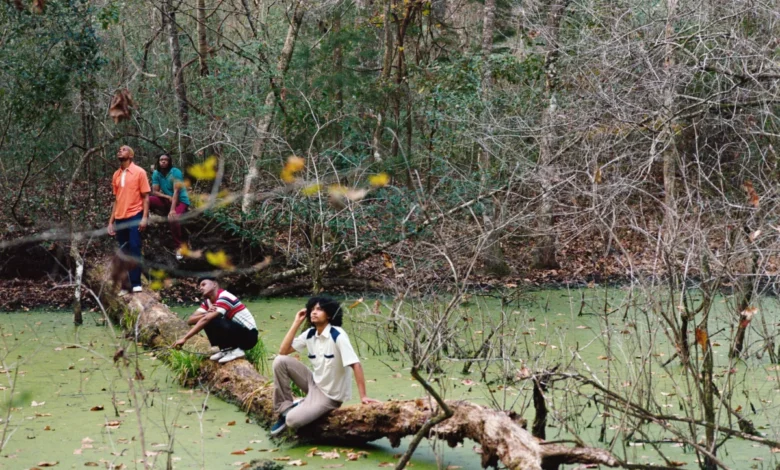
Josh Aronson, born in 1994 in Toronto and now based in Miami, is an artist whose photographic work has garnered significant attention in publications such as The New York Times, The Paris Review, Financial Times, Frieze, Italian Vogue, Teen Vogue, Dazed, i-D, and The Guardian. His evocative imagery, often set against the backdrop of Florida’s diverse natural landscapes – from dense forests to sprawling swamps – captures intimate moments of young people connecting, playing, and demonstrating care for one another. Aronson is also the visionary behind Photo Book Speed Date, a public program designed to foster community and dialogue around photography books through a dynamic, rapid-fire format.
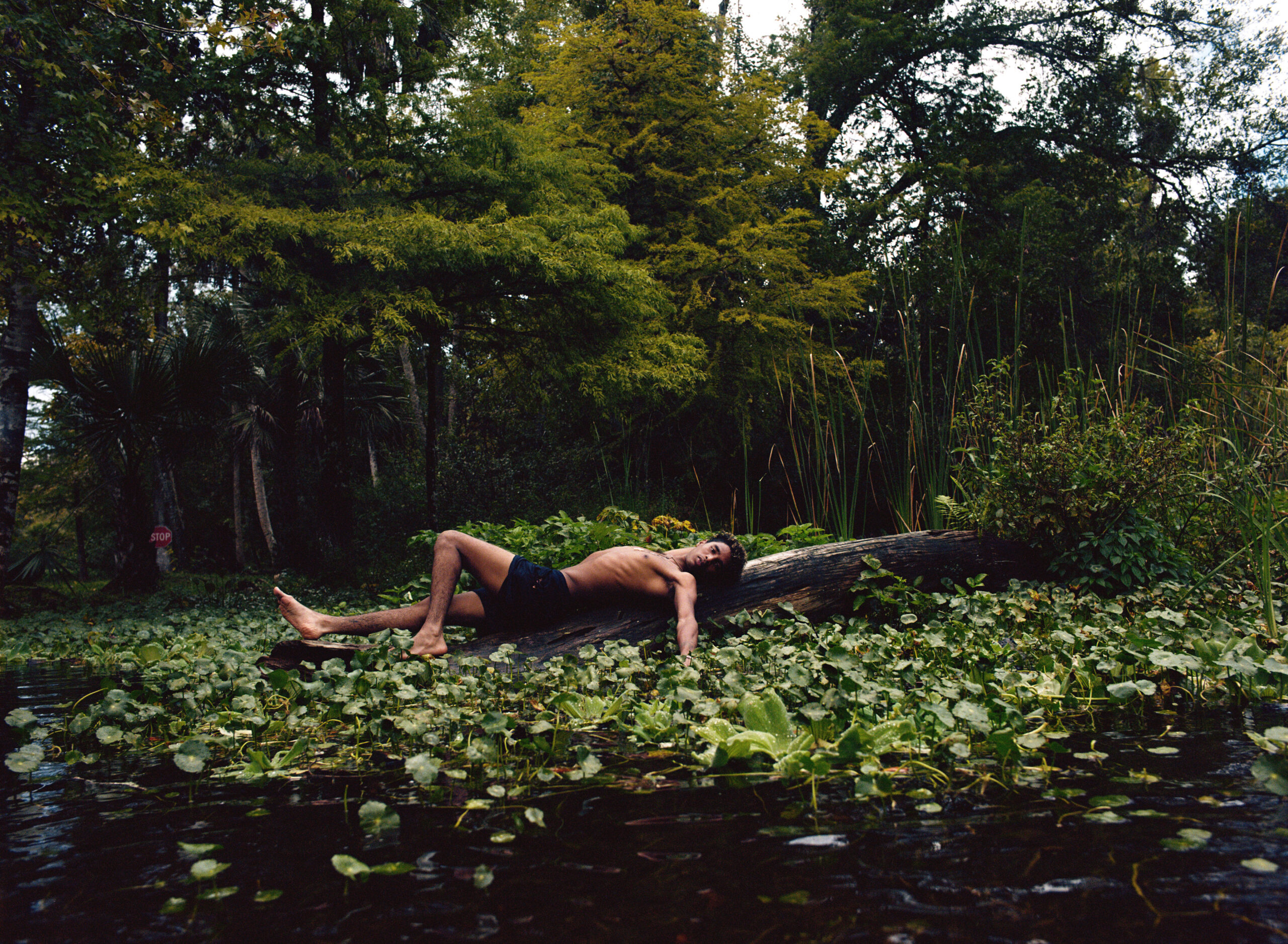
This article delves into Aronson’s compelling series, Florida Boys, a project that intricately explores the multifaceted experiences of coming-of-age within the often-overlooked natural expanses of Florida. Through candid conversations, Aronson unpacks the profound personal and societal themes embedded within his work, revealing a deeper narrative about identity, belonging, and the redefinition of American iconography.
The Genesis of Belonging: Photography as Reclamation
Aronson’s artistic practice is deeply rooted in a personal quest for belonging, a sentiment he articulated in an article for Vogue: "Making photographs is, for me, a way to reclaim a sense of belonging. Photography allows me to imagine belonging somewhere and to make that fantasy a bit more real through the act of visualizing it." He elaborates on this intrinsic motivation, explaining his lifelong feeling of being an "insider-outsider" in Florida, the state where he was raised despite his Canadian birth and lack of deep family roots there. This nuanced perspective fuels his artistic drive to visually assert his place and the place of others who may feel similarly on the periphery.

"Growing up, I never saw myself in the images of Americana or coming-of-age stories I encountered," Aronson states. "Through photography, I’ve been able to expand that language. To place myself and people like me inside it." This realization led him to cast young men, whom he describes as surrogates for himself, and immerse them in the rural and natural settings of Florida. Many of these individuals are first-generation Americans or children of immigrants, sharing his experience of lacking the archetypal "outdoorsy" coming-of-age narratives often depicted in mainstream media. Together, they engage in a form of collective "make-believe," portraying young men at ease in nature, in harmony with one another. This act of performance, Aronson suggests, transforms imagination into a tangible feeling of belonging, embodying the adage, "Fake it ’til you make it."
Nature as a Haven and a Contested Space
The series often places its subjects in environments that might evoke apprehension in many, particularly those from urban backgrounds who may fear the wilderness’s perceived dangers. When questioned about whether this presented a hurdle, Aronson counters that nature has consistently been a personal sanctuary. "Despite the mosquitoes and the reptiles, there’s a calm that overrides my discomfort. Nature activates my imagination; it brings me back to a time before urbanization. That experience feels foundational and worth sharing."

However, Aronson is acutely aware of the complex historical and social dimensions of natural spaces. He acknowledges that while his subjects are often eager to explore the outdoors, the perception of nature as universally welcoming is a fallacy. "America’s idea of ‘wilderness’ was built on the displacement of Indigenous people, of Black and Brown communities," he observes. "The conservation movement has roots in eugenics, and that legacy lingers. I hope this work helps expand who feels they belong in nature." This critical perspective underscores the series’ ambition to challenge established notions of who is permitted to inhabit and feel safe within the American landscape.
The Emotional Resonance of Florida Boys
The creation of Florida Boys was a deeply emotional and exhilarating undertaking for Aronson and his collaborators. "Some days felt like making the best pictures of my life. Other days, it was quieter, more reflective," he recalls. The project evolved into a profound "love letter to Florida, to my own coming-of-age, and to the people I collaborate with." Beyond artistic expression, the process offered a therapeutic dimension. "There’s also something healing about it. Photography is my excuse to gather people, to show them places they’ve never seen, and to create memories together. That’s the point of all this. To use photography as a tool for connection, for joy, for belonging."

Intentional Casting: Representing Diverse Youth
Aronson’s deliberate choice to focus on "Florida Boys" stemmed from a desire to represent a specific demographic often marginalized in traditional narratives. The series primarily features young men from the greater Miami area, encompassing a spectrum of sexual orientations and backgrounds, with a significant number being first-generation individuals. "When casting, I look for people who remind me of myself, or who feel emblematic of Florida’s cultural DNA: creative, curious, resilient," Aronson explains. He emphasizes that he is not merely documenting spontaneous encounters but actively staging scenes, bringing individuals from the city into rural settings to construct new narratives. "That act of staging matters. By recreating boyhood and coming-of-age scenes in quintessentially Americana settings, I can open up those narratives and make them more tender, strange, inclusive, and real to my experience."
A Research-Driven Exploration of Florida’s Landscapes
The meticulous process of location scouting was integral to the development of Florida Boys. Aronson’s approach is heavily research-based, involving extensive exploration of hashtags like #VisitFlorida and #FloridaWild, delving into vintage travel guides, and studying archival materials. His own limited exploration of Florida during his youth made this project an opportunity for personal discovery. "I’d plot multi-day routes, scout alone, make test compositions, and collect ephemera. Maps, postcards, brochures. Some of that research and found material ended up in my Florida Boys exhibition at Baker–Hall, alongside my photographs."

During these explorations, Aronson encountered a rich tapestry of Florida’s natural and cultural elements. While surprisingly devoid of alligators, his expeditions yielded encounters with owls, turtles, cypress trees emerging from lakes, and beaches characterized by lunar-like rock formations. He also documented the more prosaic, yet culturally significant, elements of the landscape: state parks accessible only by boat, local diners, the prevalence of Trump and Confederate flags, gas stations, and the vast expanse of stars. These observations, coupled with the camaraderie of his subjects, forged what he describes as "core memories."
The Significance of Delayed Development
A distinctive aspect of Aronson’s creative process for Florida Boys was his decision to delay developing the film for three years. This unconventional approach, he explains, is a deliberate strategy to maintain a clear separation between his roles as a creator and an editor. "I don’t like to mix them," he states. "While I’m in the maker’s mode, I don’t want to analyze or judge what I’ve made." This temporal distance allowed him to remain curious and uninhibited, sustaining the project for five years without premature self-critique. The eventual development of the film was akin to "rediscovering a diary I’d forgotten I was writing," bringing a sense of relief and validation that his imagined scenes had indeed materialized.

Reception and Artistic Lineage
Since the release of Florida Boys, the response has been deeply moving for Aronson. The series has resonated with viewers, many of whom see themselves reflected in the imagery. He has particularly appreciated hearing from Floridians who grew up in earlier decades, finding that the work evokes a sense of familiarity and connection.
Aronson also acknowledges the significant influence of fellow artists on his practice. He credits Justine Kurland’s Girl Pictures with inspiring his engagement with group portraiture and challenging himself with larger-scale photographic endeavors. The work of Ryan McGinley has also been a profound influence, shaping Aronson’s understanding of photography as a medium that can embody freedom and foster collaboration.

The exhibition of Florida Boys provided Aronson with opportunities for artistic growth, prompting him to experiment with scale, installation techniques, and new materials. He created large outdoor works, an assemblage wall, and intricate grids. Each exhibition, he notes, serves as a learning experience. He is particularly gratified by the recognition of his background in filmmaking, evident in the "cinematic" quality of his photographs, which he describes as straddling the line between the cinematic and the real. He has embraced the term "film stills" to characterize his work, finding it a fitting descriptor for its narrative depth and evocative atmosphere.
Related posts: