Circularity and Memory in London Architecture Bureau de Change Unveils Trace Residential Retrofit

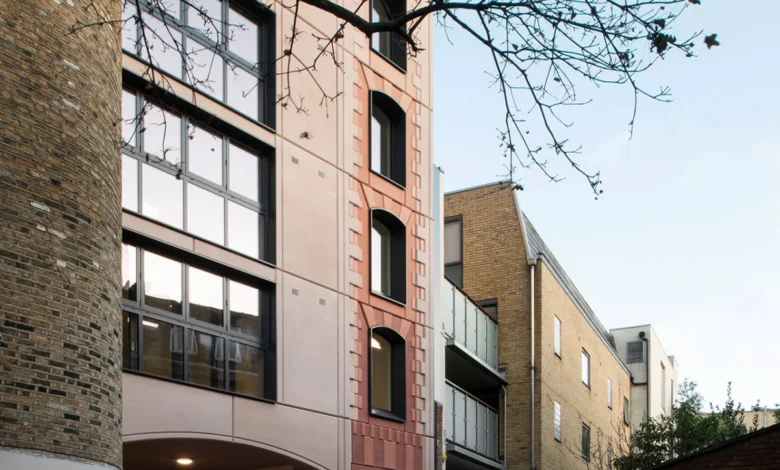
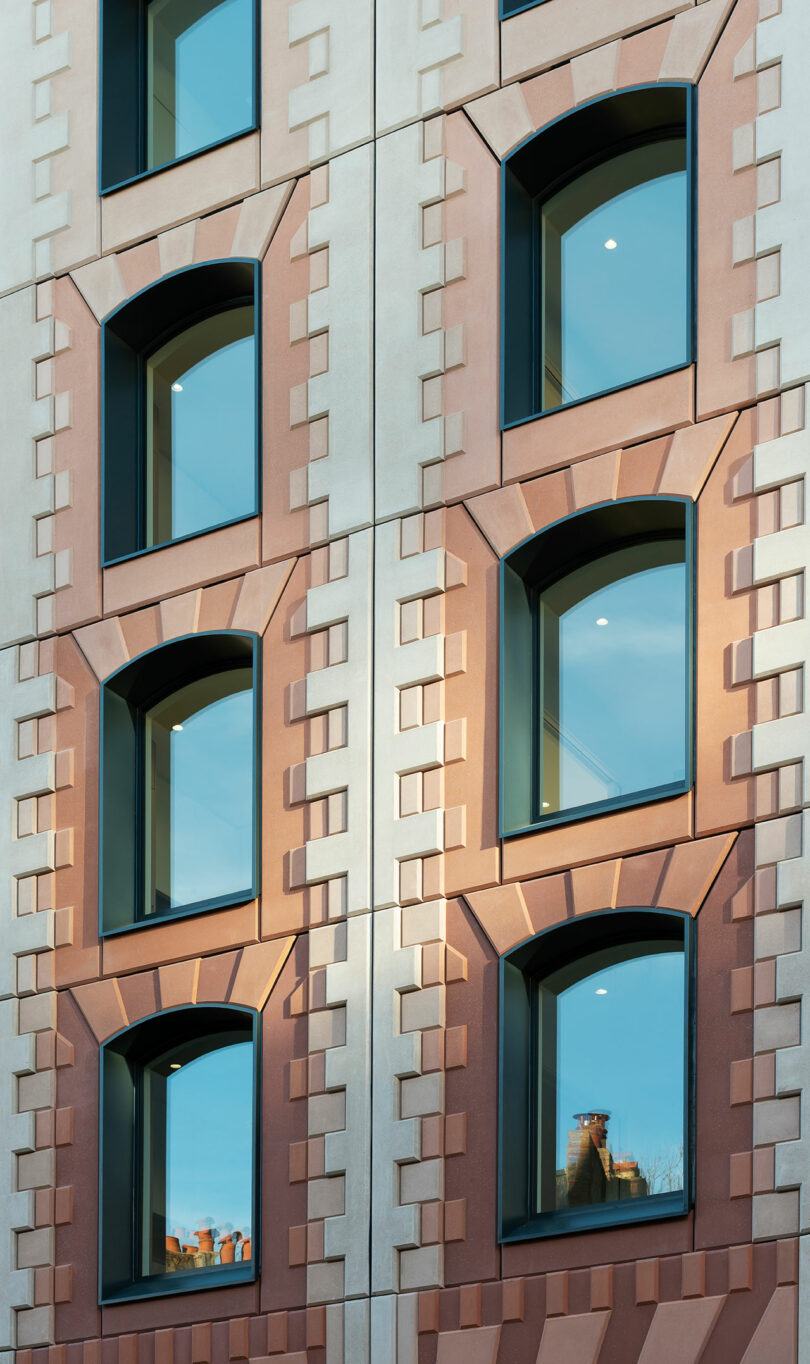
In the heart of London’s Euston district, the architectural firm Bureau de Change has completed a transformative residential project that challenges the prevailing industry preference for demolition and new-build construction. Known as Trace, the project represents a deep retrofit of a tired 1980s brick building located on Drummond Street, effectively reimagining the structure as five light-filled apartments. Rather than erasing the site’s history, the architects have employed a circular design philosophy that physically incorporates the building’s past into its future. By crushing the original brick facade and reincorporating it as aggregate within a new glass-reinforced concrete (GRC) cladding system, the firm has created a textured, rusticated exterior that serves as a literal record of time. This approach not only addresses the urgent environmental need to reduce embodied carbon but also offers a sophisticated architectural response to the layered urban fabric of the Euston area.
The Evolution of Drummond Street: A Contextual History
The site of the Trace project sits within a complex urban environment defined by a collision of historical eras. Drummond Street is located near the massive transit hub of Euston Station and is flanked by traditional Georgian terraces and post-war developments. For decades, the Euston area has been characterized by a sense of transition, heightened in recent years by the massive infrastructure shifts surrounding the High Speed 2 (HS2) rail project and the broader Euston Area Plan.
The original structure at 155 Drummond Street was a modest, arguably unremarkable, 1980s brick building. In many contemporary development scenarios, such a building would be viewed as a candidate for total demolition to make way for a high-density, glass-and-steel replacement. However, Bureau de Change, led by directors Katerina Dionysopoulou and Billy Mavropoulos, opted for a more difficult and nuanced path. They viewed the building not as a "clean slate" but as an archaeological site containing valuable material and historical data.
The project began with a rigorous assessment of the existing structural capacity. By retaining the primary frame and foundations, the team was able to minimize the environmental impact of the construction process. The decision to add two additional floors required careful engineering to ensure the existing footings could support the increased load, a feat achieved through the use of lightweight materials and strategic structural reinforcement.
Material Innovation and the Circular Economy in Construction
The most striking feature of Trace is its facade, which serves as a manifesto for circularity in the built environment. In the United Kingdom, the construction, demolition, and excavation industry is responsible for approximately 62% of the nation’s total waste. Bureau de Change sought to subvert this trend by treating the "waste" of the old building as the primary "raw material" for the new one.
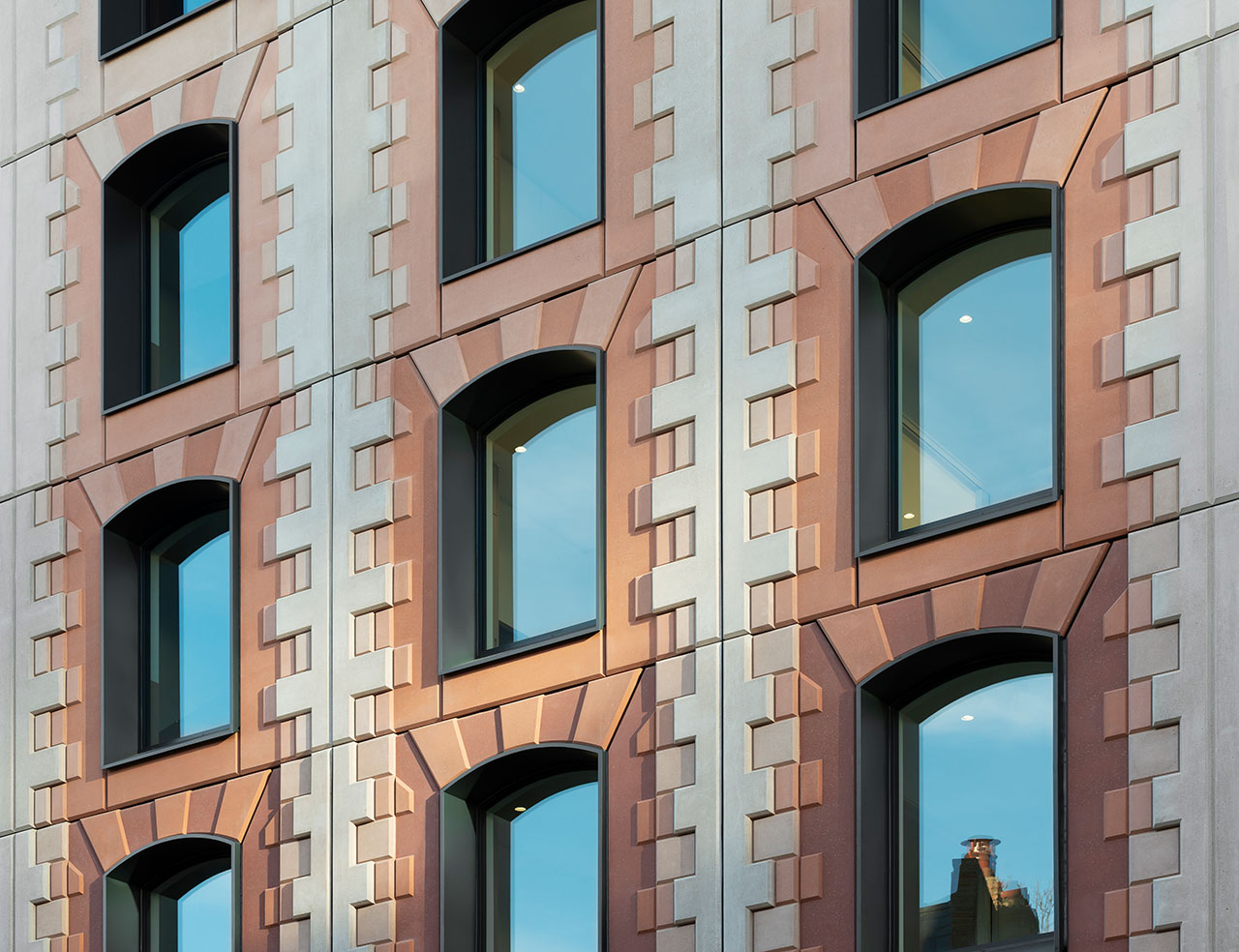
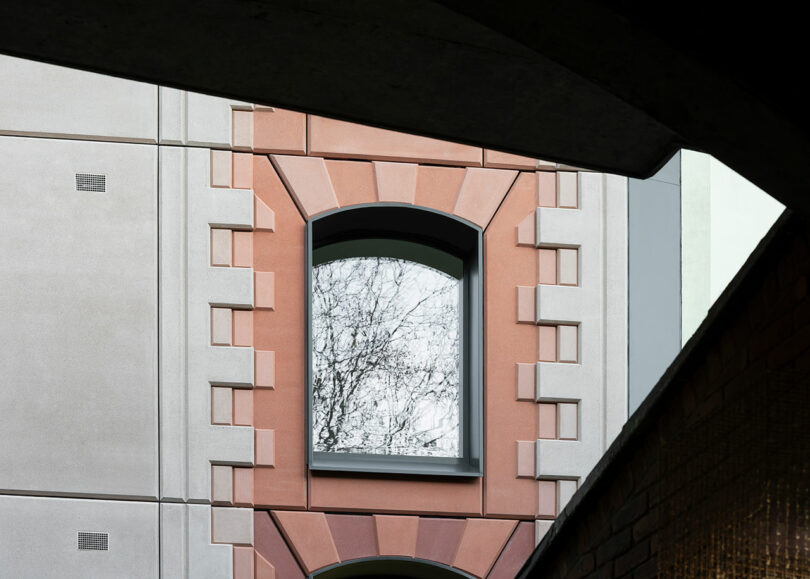
The process involved the careful dismantling of the original 1980s brickwork. This material was then crushed into varying grades of aggregate and cast into the new glass-reinforced concrete panels. The resulting surface is a rich tapestry of tones and textures, with the reddish-pink hues of the old brick creating a warm, variegated aesthetic that changes depending on the light and weather conditions.
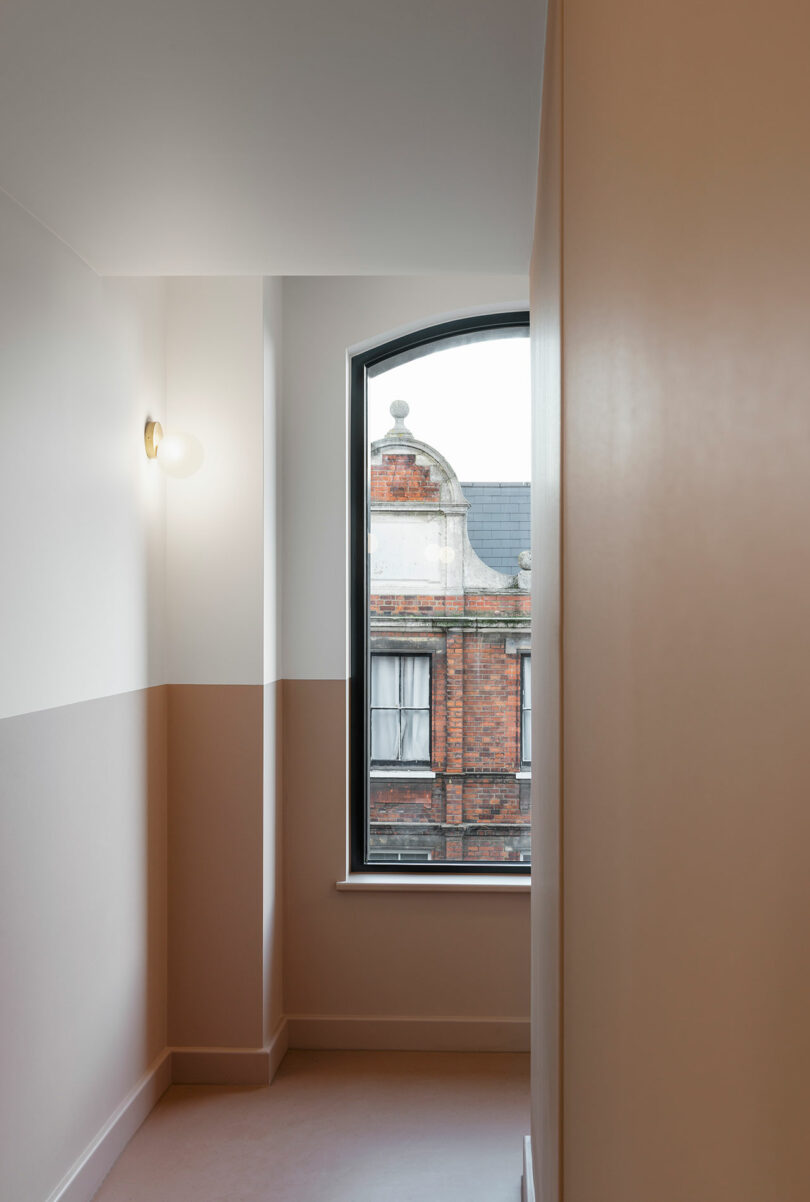
From a technical perspective, the use of GRC allowed for a high degree of formal expression while remaining relatively lightweight—a critical factor when building atop an existing structure. The facade features a series of segmental arches and a disciplined grid of openings that reference the proportions of nearby Georgian windows but scale them for contemporary living. These "stretched" arches allow for significantly more natural light to penetrate the interior spaces compared to the original 1980s apertures.

Chronology of Development and Design Implementation
The development of Trace followed a multi-stage timeline that emphasized research and material experimentation:
- Site Analysis and Structural Audit: The team conducted a deep dive into the 1980s structure, identifying the limits of its load-bearing capacity and the quality of its materials.
- Conceptual Archaeological Phase: The architects developed the "Trace" concept, deciding to use the building’s own remains as a cladding aggregate.
- Material Prototyping: Extensive testing was conducted to determine the ideal ratio of crushed brick to concrete, ensuring structural integrity while achieving the desired aesthetic texture.
- Structural Augmentation: The existing building was stripped back to its core, and the two-story vertical extension was integrated using a lightweight steel and timber frame.
- Facade Installation: The pre-cast GRC panels were fitted onto the building, creating a seamless transition between the old volumes and the new additions.
- Interior Fit-out: The internal spaces were reconfigured into five distinct residential units, focusing on double-aspect layouts and "winter gardens" to enhance the quality of urban life.
Spatial Strategy and Interior Living Environments
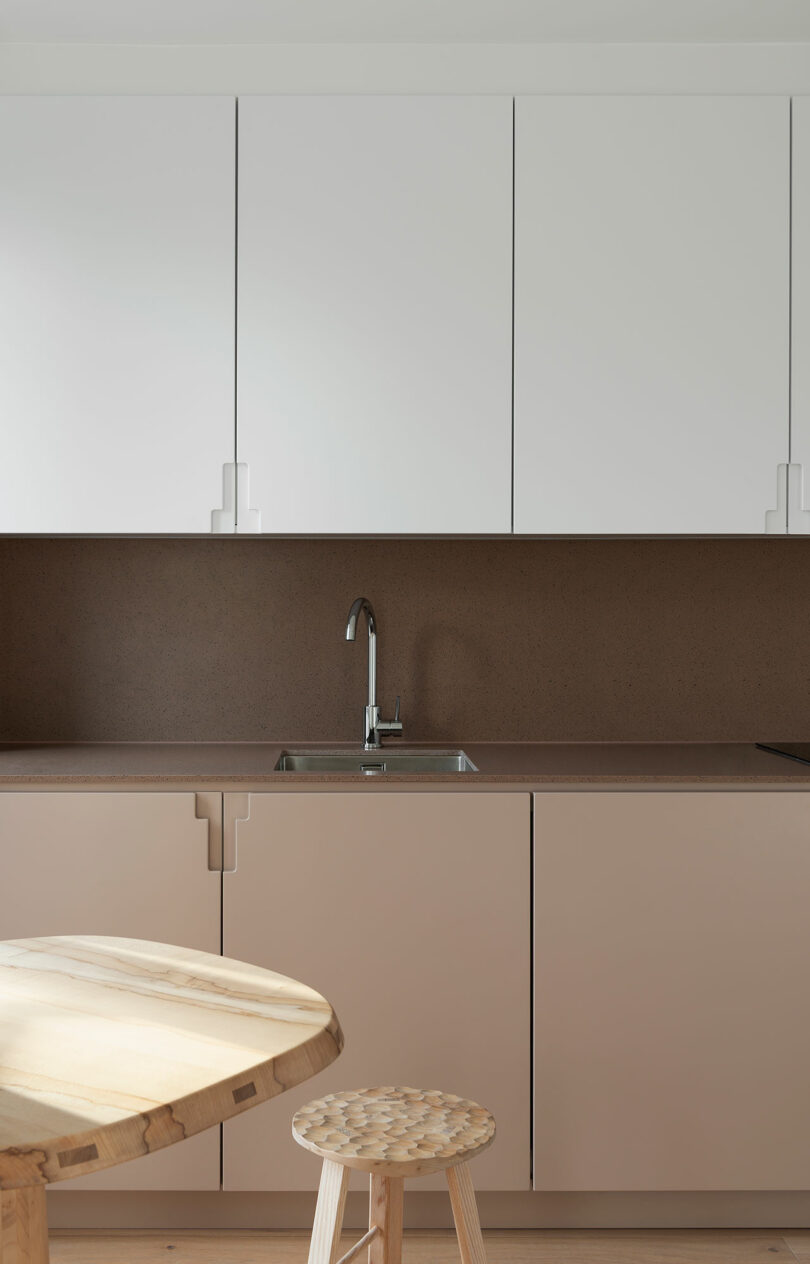
Internally, Trace moves away from the cramped, compartmentalized layouts typical of many 1980s conversions. The architects utilized a spatial strategy of "stepped" plans. By subtly varying the floor levels and using furniture or architectural shifts rather than solid partitions, they have created distinct zones for cooking, dining, and lounging while maintaining an overall sense of openness.
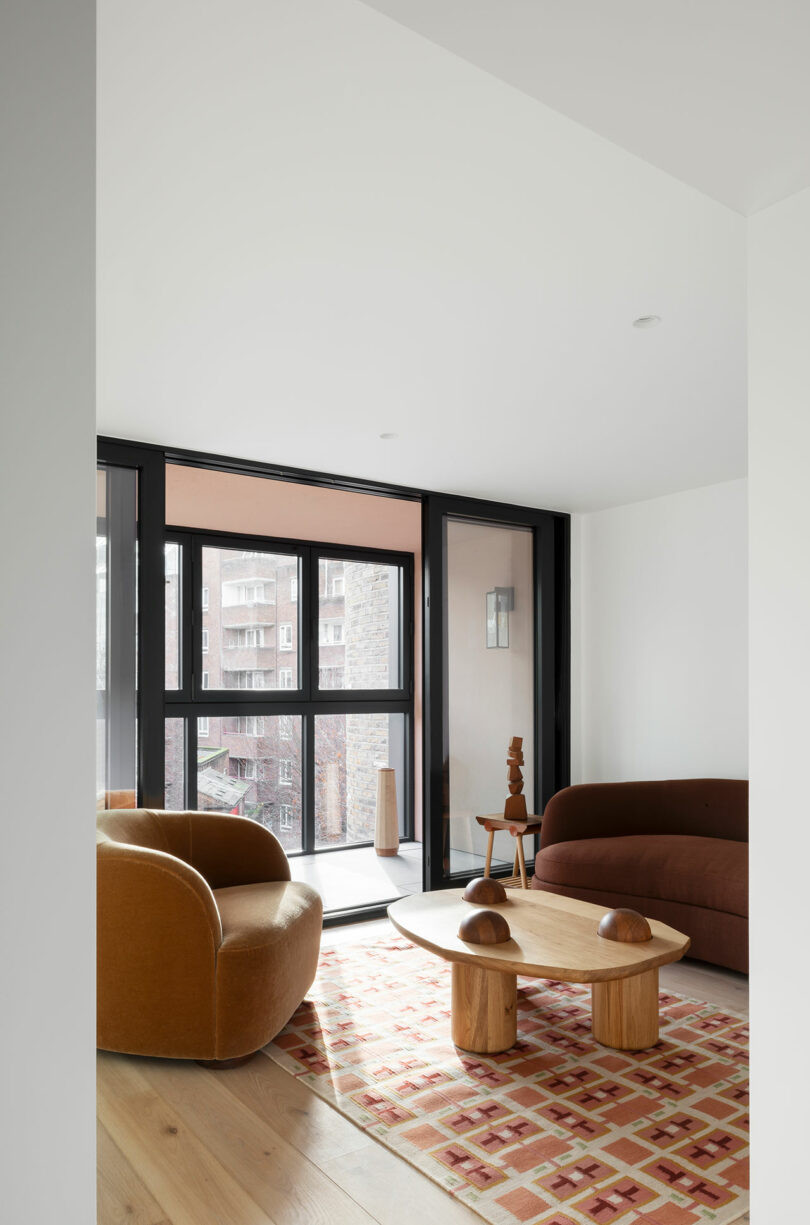
A key feature of the residential units is the inclusion of "winter gardens." These glass-enclosed balconies serve as a thermal buffer between the busy street and the quiet interior, while also providing residents with a semi-outdoor space that can be used year-round. In a dense urban setting like Euston, these spaces are vital for mental well-being, offering a sense of connection to the outside world without the noise and pollution of the street.
The interiors are finished with a minimalist palette that allows the play of light from the large arched windows to take center stage. The use of natural wood flooring, neutral tones, and high-quality fixtures complements the rugged, tactile nature of the exterior facade. The result is a series of homes that feel both modern and deeply rooted in their location.
Policy Context: The Euston Area Plan and Small-Site Development
The Trace project arrives at a pivotal moment for London’s planning policy. The Euston Area Plan (EAP), a long-term strategic framework, aims to guide the redevelopment of over 60 hectares of land. While much of the public attention is focused on the massive commercial and transit hubs, the EAP also emphasizes the need for high-quality residential infill and the preservation of the area’s unique character.
Trace demonstrates how small-scale, private developments can contribute to these broader goals. By choosing retrofit over demolition, the project aligns with the London Plan’s "circular economy" statements, which require developers to demonstrate how they are minimizing waste and maximizing the life cycle of materials.

Industry experts have noted that projects like Trace provide a template for "gentle density"—increasing the number of homes in a neighborhood without resorting to high-rise towers that can overwhelm historical contexts. The addition of two floors to an existing three-story building is a scalable model that could be applied to thousands of underutilized commercial and residential buildings across London.
Broader Implications for the Global Architecture Industry
The significance of Trace extends beyond the borders of Drummond Street. It represents a shift in the role of the architect from a creator of "newness" to a curator of "continuity." In a global climate crisis, the "embodied carbon" of existing buildings—the energy already spent to create the concrete, steel, and brick—is a precious resource that cannot afford to be wasted.

Bureau de Change’s methodology suggests that sustainability does not have to result in a sterile or purely utilitarian aesthetic. Instead, the constraints of reuse can be a catalyst for a more "seductive" architecture. The firm’s critique of "urban flatness"—the trend toward smooth, characterless glass facades—is answered here with a building that invites touch and close inspection.
The project also highlights the importance of "tactility" in the modern city. As digital interfaces and smooth surfaces dominate daily life, the physical environment becomes a crucial site for sensory engagement. The rough-hewn aggregate of Trace provides a visual and physical friction that grounds the building in the real world.
Conclusion: A Model for Future Urbanism
Trace stands as a quiet rebellion against the "erasure" of the past. It proves that the most innovative way forward is often to look back at what is already there. By treating the 1980s building as a valuable resource rather than an obstacle, Bureau de Change has delivered a project that is environmentally responsible, historically sensitive, and architecturally daring.
As cities worldwide grapple with the twin challenges of housing shortages and climate change, the lessons of Drummond Street are clear: the future of the city lies not in the "clean slate," but in the skillful negotiation between what was, what is, and what could be. The success of Trace suggests that a more circular, materially conscious architecture is not only possible but is the most forward-thinking move an architect can make in the 21st century.
Related posts: