Flos Reissues the Seki-Han Lighting Collection by Tobia Scarpa Bringing a 1960s Icon to the Contemporary North American Market through Lumens

The international design community is witnessing the revival of a long-lost masterpiece as FLOS, the Italian lighting powerhouse, announces the official reissue of the Seki-Han lamp. Originally designed in 1963 by the legendary husband-and-wife duo Tobia Scarpa and Afra Bianchin, the Seki-Han collection is making its debut in the United States through an exclusive partnership with luxury online retailer Lumens. This relaunch represents more than a simple reproduction; it is a meticulous technical evolution of a design that was produced for only three years in the mid-1960s, making original units some of the most sought-after rarities in the vintage lighting market.

Tobia Scarpa, the son of the seminal Venetian architect and polymath Carlo Scarpa, has spent over six decades forging a path defined by material experimentation and structural honesty. Alongside Afra Bianchin, who passed away in 2011, Scarpa developed approximately 30 luminaires for FLOS during the company’s formative years. The Seki-Han lamp, though overshadowed for decades by their more commercially ubiquitous works like the Soriana lounge or the Biagio lamp, is now being positioned as a quintessential example of the Scarpas’ ability to blend industrial precision with organic warmth.

The Genesis of Seki-Han: From Japanese Tradition to Italian Avant-Garde
The Seki-Han lamp derives its name and conceptual soul from a traditional Japanese dish. "Seki-han," or red rice, is a staple of Japanese celebratory cuisine, often served at births, weddings, and other milestones to symbolize good fortune. Tobia Scarpa’s fascination with the dish was not merely culinary but structural. He was captivated by the elongated, elegant form of the rice grain and the nuanced textures of the ingredients.

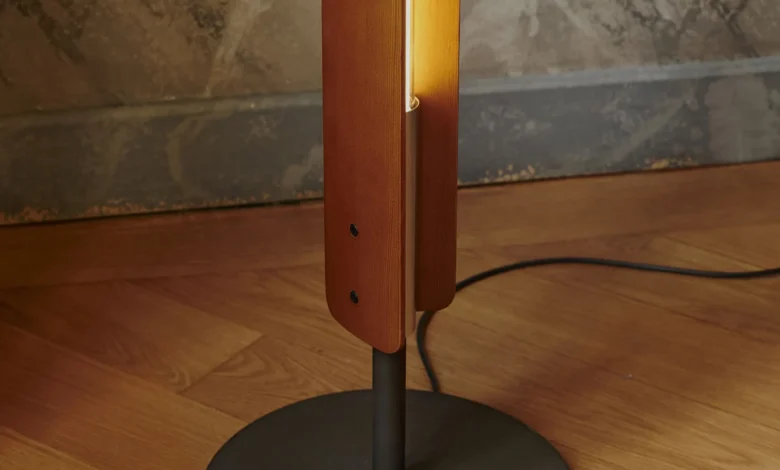
In 1963, this fascination manifested as a linear floor lamp characterized by two slender, blade-like wooden forms that shielded a central light source. At the time of its initial release, the lamp utilized a neon tube—a bold choice for domestic lighting in the early 1960s—which provided a cool, architectural glow. The choice of Douglas fir for the blades offered a tactile counterpoint to the industrial neon, creating a "quiet revolution" in how materials were paired within the Italian modernism movement.

Despite its innovative form, the original Seki-Han faced production challenges and a market that was perhaps not yet ready for its minimalist rigor. Production ceased in 1966, leaving the design to exist primarily in the archives of FLOS and the private collections of design aficionados. The 2024 reissue marks the first time the design has been available to the general public in over half a century.

Technical Evolution: Adapting an Icon for the 21st Century
Bringing a 60-year-old design into the contemporary era required more than a change in light bulbs. Working closely with the FLOS Research and Development team in Italy, Tobia Scarpa, now in his 90s, personally oversaw the modifications to ensure the lamp met modern safety, efficiency, and functional standards without losing its original spirit.

The most significant update is the transition from neon to FLOS’s proprietary LED technology. The new light source provides a significantly warmer color temperature and a higher color rendering index (CRI), which better illuminates the natural grain of the wood. Furthermore, the use of LED allowed the design team to slightly increase the overall height of the lamp, a move that Scarpa notes "further highlights the slender proportions of the thin wooden blades."

Sustainability and material longevity also played a key role in the reissue. While the 1963 version utilized Douglas fir, the new iteration is crafted from sustainably sourced ash. This timber was selected for its durability and its ability to be finished in tones that evoke the original "red rice" inspiration while fitting seamlessly into contemporary interior palettes.

Perhaps the most functional upgrade is the introduction of 360-degree rotation for the wooden blades. In the original 1963 model, the blades were fixed in position. The reissued version allows users to rotate the panels manually, giving them the ability to modulate the aperture of the light and direct the beam with surgical precision. This transformability turns the lamp into a kinetic sculpture, capable of shifting from a soft ambient glow to a directed task light.

Expanding the Collection: The Introduction of the Pendant
While the floor lamp remains the flagship of the collection, the 2024 relaunch includes a significant expansion: the Seki-Han horizontal pendant. This new typology applies the same language of wooden blades and linear light to a suspended format, catering to modern dining and office environments.

The pendant maintains the same rotational capabilities as the floor lamp, allowing for direct downward lighting or indirect upward illumination. By expanding the Seki-Han into a full collection, FLOS and Scarpa have demonstrated the versatility of the original concept, proving that the "rice grain" silhouette is as effective in a horizontal orientation as it is in a vertical one.

Chronology of the Scarpa-FLOS Partnership
To understand the significance of the Seki-Han reissue, one must look at the timeline of the Scarpas’ contribution to the "Made in Italy" movement:

- 1959: Tobia Scarpa and Afra Bianchin begin their professional partnership after graduating from the IUAV University of Venice.
- 1960: The duo wins their first Compasso d’Oro for the "Medusa" lamp.
- 1962: FLOS is founded in Merano by Dino Gavina and Cesare Cassina. Tobia and Afra are among the first designers recruited to define the brand’s identity.
- 1963: The Seki-Han floor lamp is designed and released, featuring a neon source and Douglas fir construction.
- 1966: Original production of the Seki-Han ceases due to the complexities of neon integration and shifting market trends.
- 1968-1973: The Scarpas design a series of icons for FLOS, including the Foglio and Ariette lamps, which remain in production for decades.
- 2011: Passing of Afra Bianchin; Tobia continues their shared legacy through independent architectural and design projects.
- 2024: FLOS officially reissues the Seki-Han collection globally, with Lumens securing the exclusive U.S. launch.
Market Context and the "Archive Movement" in Design
The reissue of the Seki-Han comes at a time when the global luxury lighting market is experiencing a significant shift toward "heritage" pieces. According to recent market analysis, the luxury lighting sector is expected to grow at a CAGR of approximately 6.5% through 2030, driven largely by a renewed consumer interest in mid-century modern aesthetics and sustainable, long-lasting products.

Design historians point to a broader trend of "archival mining," where manufacturers like FLOS, Cassina, and Vitra return to their vaults to resurrect designs that were either ahead of their time or limited by the technology of their era. For FLOS, the Seki-Han represents a strategic move to offer "slow design"—objects that have already proven their aesthetic longevity over sixty years.

The exclusive partnership with Lumens for the U.S. market further highlights the globalization of Italian design. Lumens, which has positioned itself as a primary conduit for high-end European lighting in North America, provides the digital and logistical infrastructure necessary to introduce such a niche, high-value collection to a wide audience of architects and interior designers.

Broader Impact and Design Analysis
The return of the Seki-Han lamp is more than a nostalgic exercise. It serves as a case study in how the "ethereal" nature of light can be harnessed through "solid" materials like wood. In an era dominated by plastic and composite materials, the use of ash wood in the Seki-Han serves as a reminder of the Scarpas’ commitment to the tactile and the permanent.

The lamp’s ability to adapt—both through its physical rotation and its technological upgrade—is central to Tobia Scarpa’s current philosophy. Now in his 90s, Scarpa has often stated that an iconic object cannot exist as a "fetishized artifact." For a design to remain vital, it must evolve. By integrating LED technology and improving the mechanical movement of the blades, Scarpa has ensured that the Seki-Han is not just a museum piece, but a functional tool for modern living.

The Seki-Han collection stands as a testament to the enduring power of Italian design. It bridges the gap between the experimental 1960s and the sustainability-focused 2020s, offering a lighting solution that is as much about the shadow it casts and the wood it illuminates as it is about the light itself. As it enters the American market, it invites a new generation to experience the "irreverent, self-determined spirit" of Tobia and Afra Scarpa—a spirit that, much like the Seki-Han lamp, has only grown more luminous with time.
Related posts: