When it’s a book I really love, it’s hard to let it go… but I always feel like it’s going to the right home.

The world of independent publishing and curated artistic spaces is constantly evolving, with new ventures emerging that redefine how we engage with art, literature, and creative expression. One such significant development is the establishment of Studio Nocturne, a multifaceted creative hub founded by an individual whose journey through the realms of fashion, art, and publishing has culminated in a deeply personal and distinct vision. This venture, born from a rich tapestry of experiences in Paris and London, represents a unique intersection of image-making, creative direction, and the tactile pleasure of the printed word, aiming to foster a community of shared inspiration.
From Parisian Studios to London’s Creative Landscape
The founder’s early career trajectory was marked by a series of serendipitous moves and a relentless pursuit of creative immersion. After relocating to Paris, she initially found her footing as a set assistant within the fast-paced environment of a fashion studio. This initial exposure to the visual demands of the fashion industry soon led her to assist photographers, honing her eye for composition and aesthetic. The burgeoning passion for visual arts propelled her to attend art school, further solidifying her foundational understanding of artistic principles.
A seemingly brief sojourn to London, intended as a short visit, unexpectedly transformed into a permanent relocation. “I was supposed to stay for two weeks… and I actually never left,” she recalls, a statement that encapsulates the magnetic pull of the city’s vibrant creative scene. This unplanned permanence marked the genesis of a career that would fluidly navigate the interconnected disciplines of image-making, creative direction, and publishing. Her early professional experiences in London were instrumental in shaping her understanding of the cultural landscape and the potential for innovative artistic platforms.
Formative Years: Claire de Rouen and Alaïa Bookstore
Two particular professional experiences proved to be profoundly formative, laying the groundwork for her independent endeavors. Her tenure at Claire de Rouen, a renowned independent bookstore, was a period of deep immersion in the world of books and their cultural significance. During her time there, she was actively involved in shaping the identity of the establishment. This included meticulously curating its collection, organizing engaging events that brought artists and audiences together, and diligently sourcing an eclectic range of titles that reflected a discerning taste. This role provided her with invaluable insights into the dynamics of a community-focused artistic space and the power of thoughtful curation.
Subsequently, her involvement with the Alaïa Bookstore offered an even more significant opportunity for autonomous creative expression. At Alaïa, she was granted remarkable freedom and responsibility. “They didn’t check on anything before the opening,” she remembers, highlighting the trust placed in her vision. She was tasked with the entire curation of the bookstore, a monumental undertaking involving approximately 1,200 volumes. This experience was not merely about selecting books; it was about constructing a narrative through literary and visual objects, creating an environment that resonated with the brand’s aesthetic and intellectual ethos. The success and autonomy experienced at Alaïa instilled in her a profound sense of confidence. “I was like, okay, if I did that, I can certainly do Nocturne,” she reflects, articulating the pivotal moment that catalyzed her decision to embark on her own independent project. This period provided empirical evidence of her ability to conceptualize, execute, and manage a significant artistic and retail venture.
Studio Nocturne: A Personal Lexicon of Curation
Studio Nocturne, while drawing upon the rich experiences of her past roles, is not simply an extension of those projects; it is a profound distillation of her personal sensibility and artistic lexicon. “It’s very personal,” she emphasizes, underscoring the intimate connection she feels to the space and its contents. The curated selection of books and artworks reflects a deeply individual perspective, creating a unique atmosphere that distinguishes it from other independent bookshops and galleries.
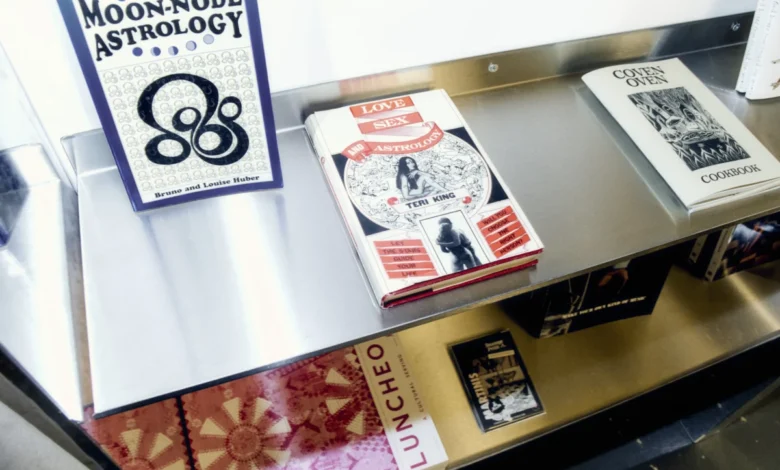
While comparisons to other independent bookspaces in London are inevitable, she actively resists the notion of competition, framing the landscape as one of diverse artistic voices rather than a zero-sum game. “No one can be me, and I can’t be them,” she states, a declaration that celebrates individuality and the inherent uniqueness of each creative endeavor. This philosophy is demonstrably evident in the distinctive curation that defines Nocturne. Her personality and discerning eye shine through in the unconventional and compelling choices. The collection features vintage books on witchcraft, providing a glimpse into esoteric knowledge and historical belief systems. Alongside these, one finds African voodoo printed materials, offering a window into diverse cultural practices and spiritual traditions. A particularly striking example is a beautiful edition of Langston Hughes poetry, prominently displayed with an archival image of the writer in his native Harlem, New York, connecting literary heritage with visual representation. This juxtaposition of themes and eras creates a rich and intellectually stimulating environment for visitors.
The inherent uniqueness of Nocturne lies in this deeply personal approach, which eschews trends in favor of genuine passion and curated narratives. This commitment to a singular vision ensures that Studio Nocturne offers a distinct experience, appealing to those who appreciate thoughtful curation and a space that feels both curated and lived-in.
Beyond the Bookstore: A Nexus for Visual Arts and Community Engagement
Studio Nocturne transcends the traditional definition of a bookstore by functioning equally as a dynamic exhibition space, with a particular focus on photography and visual work. This dual nature allows for a more holistic engagement with artistic practice, where literary exploration is complemented by visual immersion. Currently, the space is showcasing a collection of unique prints by Peter Tomka. This exhibition offers visitors a rare opportunity to not only view but also acquire original works, fostering a direct connection with the artist’s creative process. Tomka, whose first monograph was published by TBW Books, is known for his work that spans photography and conceptual imagery, producing pieces that skillfully blend intimacy with a careful consideration of materiality. The inclusion of such artists highlights Nocturne’s commitment to presenting contemporary visual art that resonates with its broader aesthetic.
The founder’s understanding of the interconnectedness of creative disciplines is articulated in her observation: “Fashion has always been fed by art references… and books and images are part of that language.” This sentiment underscores the rationale behind integrating visual art exhibitions with a curated book collection. At Nocturne, these artistic references are brought to life, allowing visitors to experience photography not in isolation, but in dialogue with the carefully selected books, creating a richer and more nuanced appreciation of visual culture. This approach acknowledges the symbiotic relationship between different art forms and their shared ability to communicate complex ideas and emotions.
Furthermore, Studio Nocturne actively fosters community through its robust program of events, designed to bring artists and audiences together in an intimate and interactive setting. Last week, the space hosted a photobook signing for Camille Bibault Waddington’s The Office, published by Empire Books. This event provided a valuable platform for visitors to connect directly with the artist, gaining insights into her creative process and the narrative behind her work. Looking ahead, April will feature an exhibition of photographic and video work by Adémidé Udoma, further diversifying the artistic offerings and continuing the tradition of showcasing compelling contemporary art.
For the founder, these initiatives are not ancillary to the core mission of Studio Nocturne; they are integral to its very purpose. “What I wanted was for people to meet, to share inspirations,” she states, articulating a vision that positions the space as more than just a retail or exhibition venue. Studio Nocturne thus deliberately positions itself as both a platform for artistic dissemination and a vital meeting point. It is a place where books, images, and ideas intersect, fostering a vibrant ecosystem of creativity within an intimate and meticulously curated environment. This commitment to community building and cross-disciplinary dialogue distinguishes Studio Nocturne as a significant and forward-thinking addition to London’s cultural landscape.
Supporting Data and Contextual Analysis
The rise of independent bookshops and art spaces like Studio Nocturne can be contextualized within broader trends in consumer behavior and the cultural economy. In an era often dominated by digital consumption, there is a discernible resurgence of interest in tangible objects and curated physical experiences. The global market for books, while facing challenges from digital formats, continues to demonstrate resilience, particularly within niche and specialized segments. According to industry reports, independent bookstores, while facing competition, often thrive by offering unique selections, personalized service, and a strong sense of community, factors that Studio Nocturne explicitly embraces.
The art market, similarly, sees a growing demand for original prints and limited editions, especially among emerging collectors who are seeking accessible entry points into art ownership. The ability to purchase unique prints directly from artists, as offered at Nocturne, democratizes the art market and provides crucial financial support for artists. The proliferation of artist-run spaces and independent galleries reflects a desire for more direct engagement with creative production and a rejection of purely commercial gallery models.
Broader Implications and Future Trajectory
The model employed by Studio Nocturne—combining a curated book selection with exhibition space and community events—suggests a sustainable and adaptable approach to fostering cultural engagement in the 21st century. This integrated strategy not only creates multiple revenue streams but also cultivates a loyal audience by offering a rich and multifaceted experience. The emphasis on personal curation and the creation of a distinct aesthetic identity is crucial for standing out in a competitive market.
The success of such ventures has broader implications for urban cultural development. They contribute to the vibrancy and distinctiveness of neighborhoods, acting as cultural anchors that attract both local residents and international visitors. By providing a platform for emerging and established artists and authors, these spaces play a vital role in nurturing creative talent and promoting diverse voices. The founder’s journey, from early career exploration to the confident establishment of Studio Nocturne, serves as an inspiration for aspiring creatives, demonstrating the power of vision, resilience, and a deep appreciation for the interconnectedness of art and literature. As Studio Nocturne continues to evolve, its commitment to personal curation, community building, and the celebration of diverse artistic expressions positions it as a significant and influential force in London’s creative landscape.
Related posts: