Instead of creating seamless public realms, elevated architecture has often resulted in "urban voids"—ambiguous, fragmented, and underutilized spaces. These areas, shielded from the sun but exposed to noise and pollution, often become secondary layers of the city, structurally necessary but programmatically forgotten. Today, a new wave of global architectural projects is challenging this legacy. By treating the space beneath buildings and infrastructures not as a byproduct, but as a primary site for intervention, architects are reclaiming these "non-places" and transforming them into vibrant cultural, social, and ecological hubs.
The Theoretical Framework: From Pilotis to Urban Voids
The architectural obsession with elevating structures gained formal momentum in the early 20th century. Le Corbusier’s "Five Points of Architecture," published in 1923, placed the pilotis at the forefront of modern design. The intent was to reclaim the land occupied by the building’s footprint, allowing the garden to pass under the house. While successful in isolated residential masterpieces like the Villa Savoye, the application of this logic to large-scale urban infrastructure—such as elevated highways and railway viaducts—created vast territories of "dead space."
In many 20th-century cities, these under-bridge areas became synonymous with urban decay. Lacking clear ownership and disconnected from the surrounding street life, they often served as informal parking lots or sites for illicit activity. Modern urban planners now recognize that "building lightly" requires more than just lifting a structure; it necessitates a deliberate strategy for the ground it leaves behind. The following ten projects represent a global shift toward "spatial justice," ensuring that every square meter of the urban fabric—including the underside—contributes to the public good.
Case Studies in Ground-Level Transformation
1. Mecidiyekoy Art & Istanbul Bookstore (KAAT Architecture + Urban & caps.office)
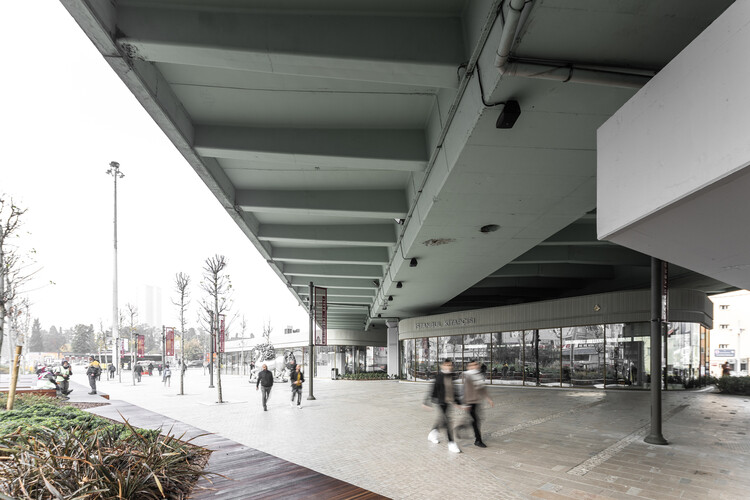
Located in one of Istanbul’s most congested transit hubs, this project addresses the chaotic environment beneath a major flyover. By inserting a glass-walled cultural center and bookstore into the concrete forest of pillars, the architects have transformed a noisy thoroughfare into a sheltered public living room. The project demonstrates how transparency and lighting can mitigate the oppressive atmosphere of heavy infrastructure.
2. The Under Space Revival (Aangan Collaborative LLP)
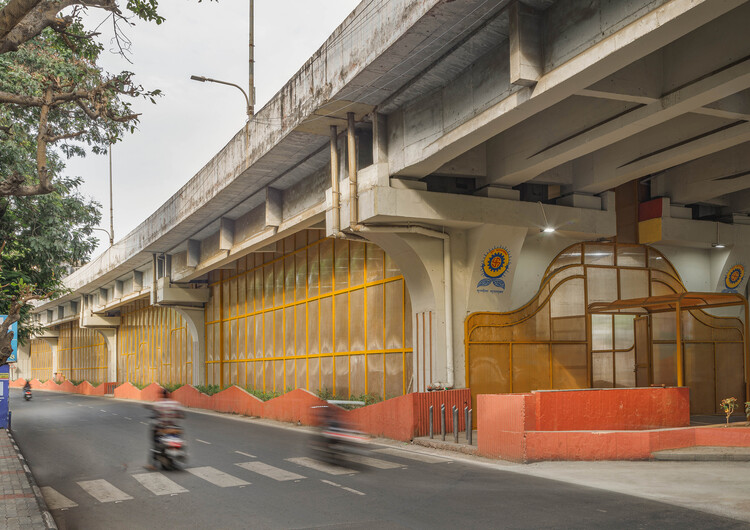
In Surat, India, the space beneath the city’s burgeoning flyover network was historically neglected. The Under Space Revival project repurposed these areas into recreational zones featuring seating, play areas, and exercise equipment. This intervention serves a dual purpose: providing much-needed public space in a dense city and preventing the informal dumping of waste that typically plagues highway underpasses.
3. One Green Mile (MVRDV)
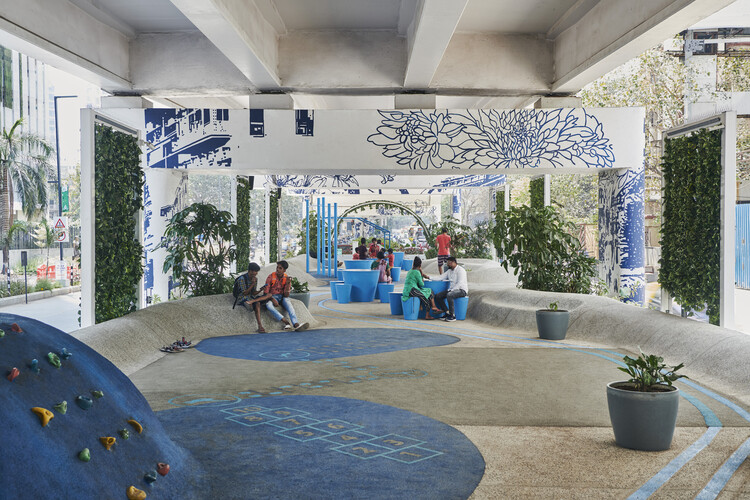
Mumbai faces some of the highest urban density rates in the world, leaving little room for parks. MVRDV’s "One Green Mile" project reimagines a series of neglected spaces beneath the Senapati Bapat Marg flyover. By adding greenery, cooling misting systems, and diverse programming—including a gym and a performance space—the firm turned a concrete barrier into a "green corridor" that reconnects divided neighborhoods.
4. Fonte Nova Square (José Adrião Arquitetos)
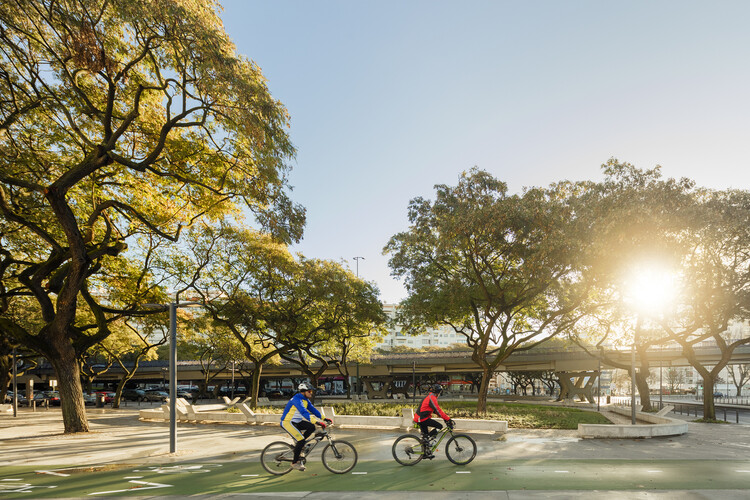
Lisbon’s Fonte Nova Square utilized the underside of a large viaduct to create a multifunctional public plaza. By integrating the structural pillars into the design of the square, the project converted a site of transit into a site of stay, featuring cafes and amphitheater-style seating that accommodates both daily commuters and local residents.
5. Refurbishment Viaduct Arches (EM2N)
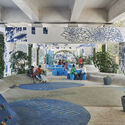
In Zurich, the "Im Viadukt" project is a landmark in urban regeneration. The architects filled the arches of a working railway viaduct with shops, restaurants, and workshops. This transformation did not just "beautify" the ground level; it created a commercial spine that links two previously disconnected parts of the city, proving that infrastructure can be a driver of economic vitality.
6. New Special Exhibitions Gallery (Carmody Groarke)
Located at the Science and Industry Museum in Manchester, this project occupies the lower level of a Grade II listed Victorian warehouse. By utilizing the "belly" of the building, the architects created a high-spec gallery space that highlights the original industrial masonry. It serves as a prime example of how the ground-level interior of historic elevated structures can be repurposed for modern cultural needs.
7. (Extra)Ordinary Arboretum (Emer-sys)
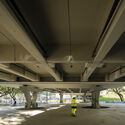
In Seoul, the (Extra)Ordinary Arboretum explores the ecological potential of the underside. By creating a vertical garden and research facility beneath an elevated roadway, the project addresses the "heat island" effect. The structure uses the shade provided by the road above to foster specific plant species that thrive in lower-light environments, turning a climatic challenge into a botanical opportunity.
8. Wuxiang 987 High Line Park (Ningbo Urban Construction Design & Research Institute)
While many "High Line" style projects focus on the elevated path, Wuxiang 987 in Ningbo, China, places equal emphasis on the ground level. The project integrates the space beneath the old railway tracks into a continuous landscape of water features and pedestrian paths, ensuring that the park is accessible and active at multiple elevations.
9. Taichung Green Corridor (Mecanoo)
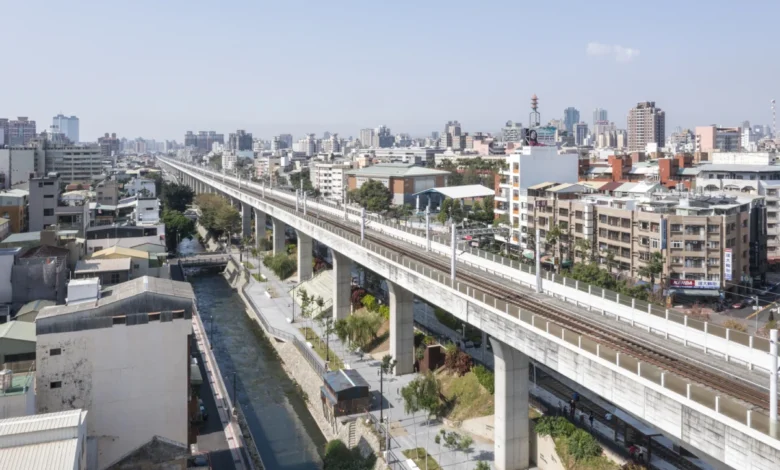
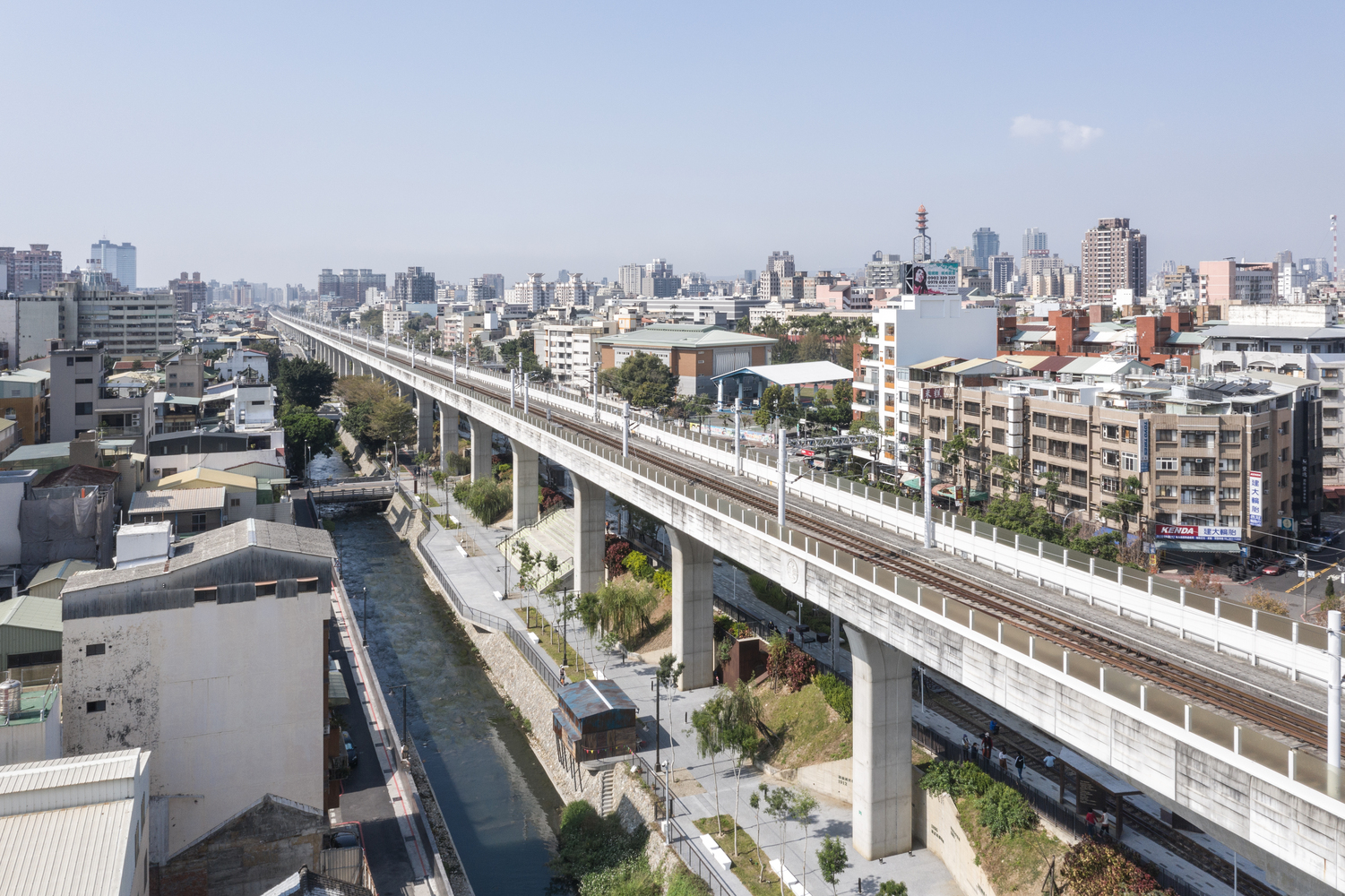
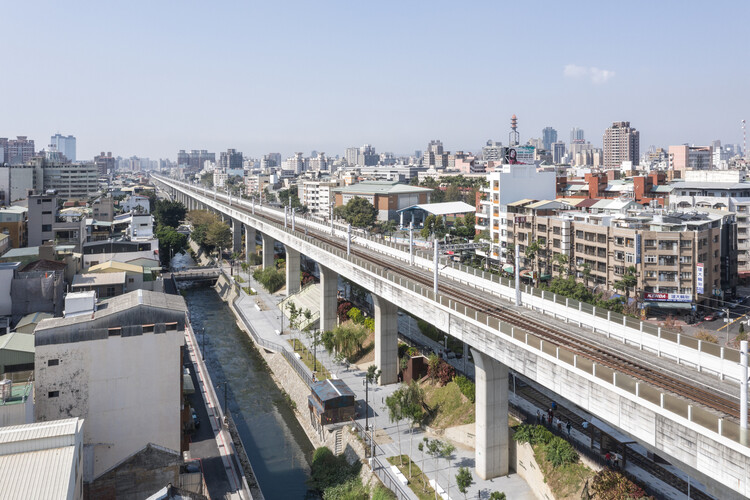
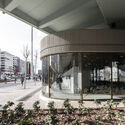
Mecanoo’s transformation of a 1.7-kilometer railway line in Taichung, Taiwan, is a masterclass in urban biodiversity. The project replaces a former barrier with a green lung that includes cycling paths, exercise areas, and water retention basins. By focusing on the ground level, the design encourages the return of local flora and fauna to the city center.
10. Eungbong Terrace (YZA)
This Seoul-based project tackles a steep, fragmented terrain near a railway embankment. By creating a series of timber terraces and walkways beneath and around the infrastructure, YZA provided a safe, aesthetic connection for pedestrians. The project emphasizes the "porosity" of the ground level, allowing residents to navigate the topography with ease.
Chronology of the Elevated Movement
The evolution of how architecture treats the ground level can be categorized into four distinct eras:
- 1920s–1950s: The Utopian Pilotis. Architects like Le Corbusier and Oscar Niemeyer championed the elevation of buildings to "free" the ground, though the resulting spaces were often left without specific programming.
- 1960s–1980s: The Infrastructural Divide. The rise of the automobile led to the construction of massive elevated highways. During this era, the "underside" was treated purely as a utility zone, leading to the fragmentation of urban social fabrics.
- 1990s–2010s: The Elevated Park Era. Following the success of the Promenade Plantée in Paris and the High Line in New York, cities began reclaiming the tops of old infrastructures. However, the ground level beneath these parks often remained secondary.
- 2020s–Present: The Integrated Ground. Current architectural trends, as seen in the 10 projects above, focus on "holistic elevation." The ground level is now designed simultaneously with the structure above, emphasizing social equity, climate resilience, and cultural programming.
Data and Economic Impact
The reclamation of ground-level space beneath infrastructure is not merely an aesthetic endeavor; it carries significant socioeconomic weight. According to urban planning data from UN-Habitat, cities that invest in "found spaces"—like underpasses—see a measurable increase in local safety and property values.
In Zurich, the "Im Viadukt" project led to a 15% increase in pedestrian traffic in the surrounding district within its first three years. In Mumbai, the "One Green Mile" project has been cited as a model for reducing local air pollution concentrations by approximately 7% through the strategic placement of greenery and improved airflow management. Furthermore, transforming these voids into active zones reduces municipal costs associated with cleaning and policing abandoned areas, which can account for up to 3% of an urban district’s maintenance budget.
Stakeholder Responses and Social Implications
Urban designers and sociologists have praised these interventions as acts of "spatial repair." Dr. Elena Rossi, an urban sociologist, notes that "the space beneath a bridge is often the only ‘free’ space left in a hyper-commodified city. When architects program these spaces without over-regulating them, they provide a vital pressure valve for urban life."
Architectural firms like MVRDV and Mecanoo have publicly stated that their goal is to move away from "object-oriented" architecture toward "system-oriented" design. By acknowledging that a building or a bridge has a shadow, architects are taking responsibility for the microclimates and social environments they create. This approach is particularly critical in the Global South, where informal economies often rely on these sheltered ground-level spaces for markets and community gatherings.
Broader Impact and the Future of the Urban Ground
As global populations continue to shift toward urban centers—with an estimated 68% of the world living in cities by 2050—the efficient use of every vertical layer of the city becomes a necessity. The projects highlighted in this report suggest that the future of architecture is not just in reaching higher into the sky, but in digging deeper into the potential of the ground.
Future implications of this trend include the integration of climate-responsive technologies. We are likely to see more "spongy" ground levels designed to manage urban flooding, using the shade of elevated structures to prevent evaporation. Additionally, as autonomous transit potentially reduces the need for massive highway footprints, the "great reclamation" of the ground level will likely become the most significant urban design challenge of the mid-21st century. To build "lightly" in the modern era is no longer about escaping the earth; it is about engaging with it more profoundly than ever before.
Related posts: