Paramedical Training Institute and Parking Structure / VIB Architecture

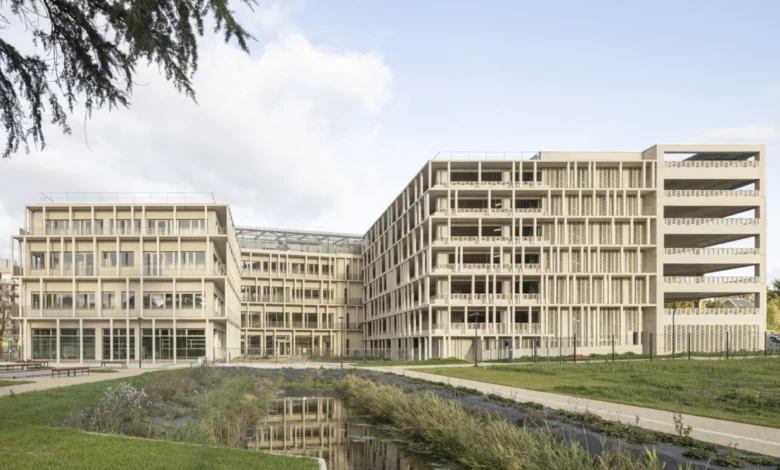
The inauguration of the Eure Paramedical Training Institute (IFPE) in Évreux marks a significant milestone in the regional development of healthcare education within the Normandy region of France. Designed by the acclaimed firm VIB Architecture, the project represents a sophisticated response to the growing demand for highly skilled healthcare professionals. By merging state-of-the-art pedagogical facilities with a sensitive approach to urban and natural landscapes, the new institute establishes a blueprint for future educational infrastructure. The facility is not merely a place of study; it is a meticulously crafted environment designed to mitigate the high-stress nature of medical training through biophilic principles and architectural clarity.
A Vision for Modern Healthcare Pedagogy
The paramedical sector has undergone a radical transformation over the last decade. As medical technology advances and the global population ages, the training required for nurses, caregivers, and specialized technicians has become increasingly rigorous. In Évreux, the IFPE was conceived to meet these challenges head-on. The architects at VIB Architecture recognized that a school for healthcare must do more than provide classrooms; it must provide a sanctuary for "living systems"—a term they use to describe the students, the staff, and the surrounding ecology.
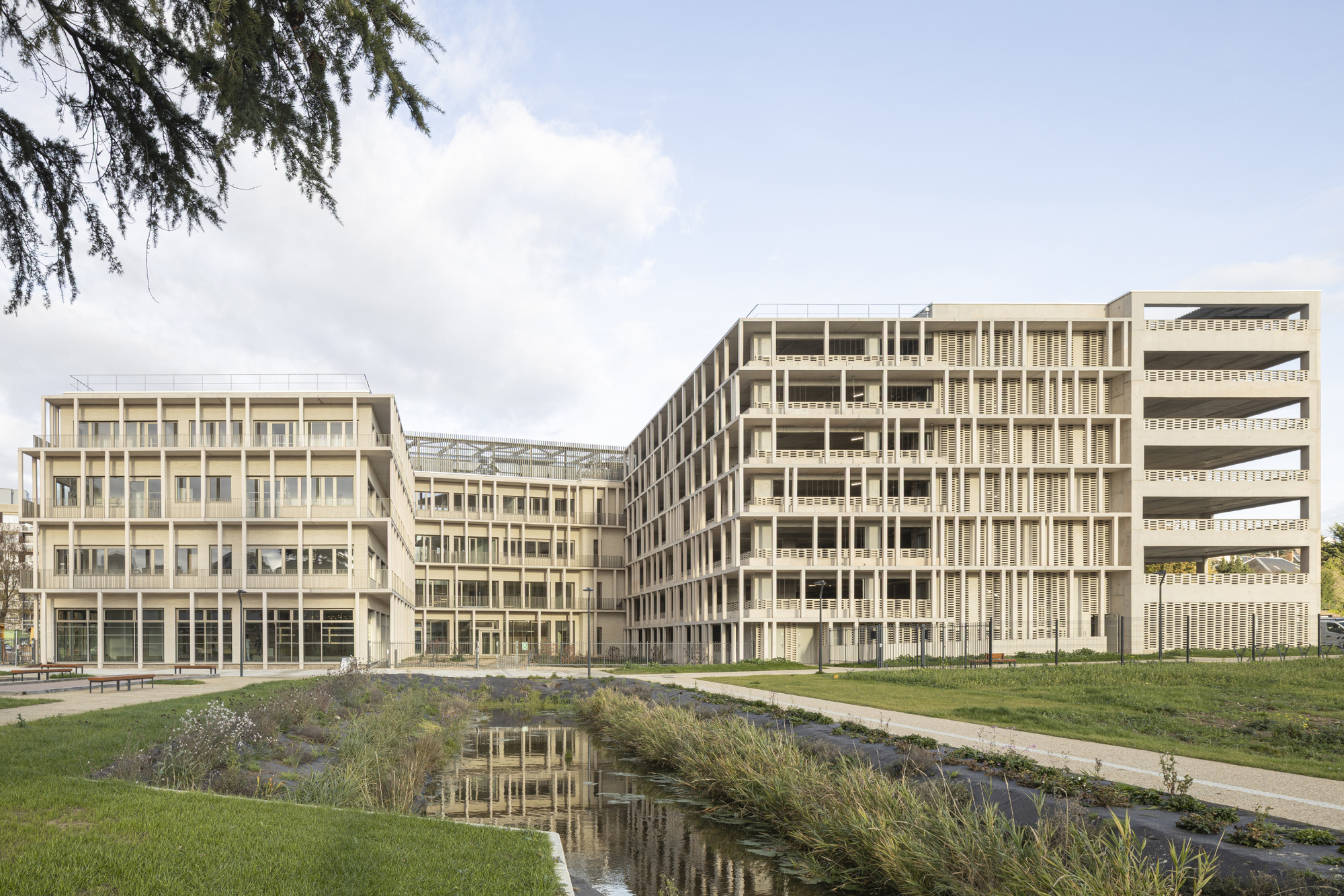
The building serves as a hub for the Eure department, centralizing training programs that were previously scattered or housed in outdated facilities. By consolidating these resources, the regional government aims to improve the quality of instruction and foster a sense of community among future healthcare workers. The design prioritizes the human dimension, acknowledging that those who will spend their lives caring for others require a supportive and stimulating environment during their formative years.
Integration of Architecture and Landscape
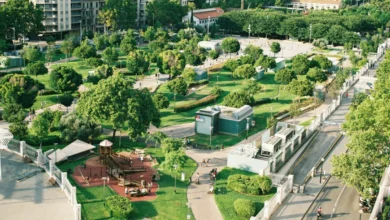
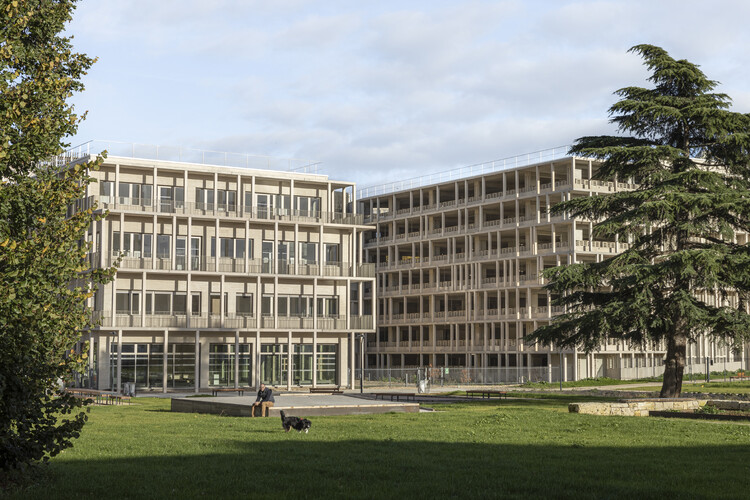
One of the defining characteristics of the IFPE is its relationship with its site in Évreux. Rather than imposing a monolithic structure on the landscape, VIB Architecture chose to create a dialogue between the built form and the natural surroundings. The project is situated in a transition zone, where the urban fabric of the city meets more open, green spaces.
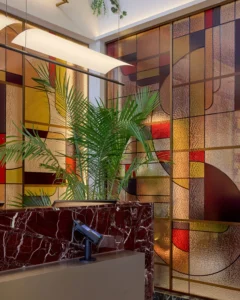
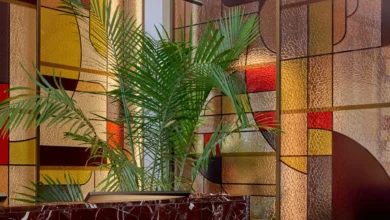
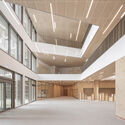
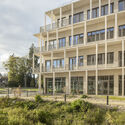
The architects utilized the topography of the site to organize the program. The institute is designed to feel porous, with large glass apertures and strategically placed courtyards that draw the outdoors in. This focus on "living systems" extends to the building’s footprint, which was planned to minimize environmental disruption. The use of natural light is a core component of the design strategy, not only to reduce energy consumption but to regulate the circadian rhythms of students who often work long, irregular hours.
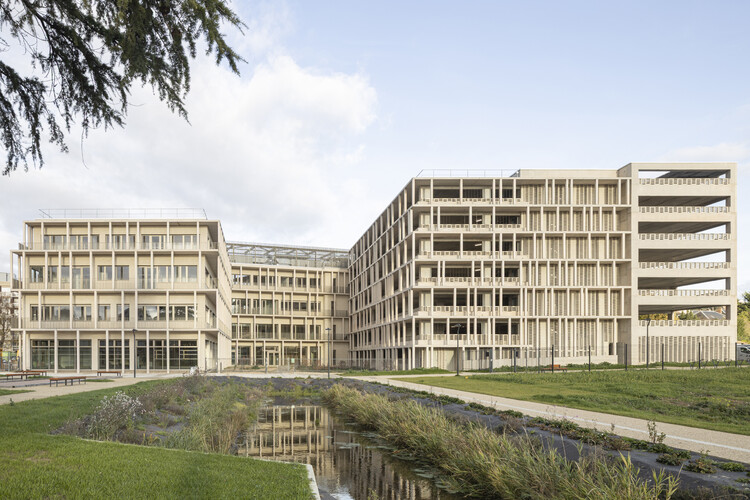
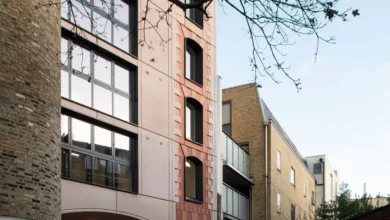
The materiality of the facade reflects this commitment to the landscape. Using a palette that harmonizes with the local context, the building features textures that change with the shifting light of the Normandy sky. The result is a structure that feels grounded and permanent, yet light and responsive to its environment.
The Dual Role of the Parking Structure
In many institutional projects, parking is treated as a secondary, purely functional requirement. At the IFPE, however, the parking structure is an integral part of the architectural composition. VIB Architecture treated the garage with the same level of design scrutiny as the training institute itself.
The parking facility serves a dual purpose. Logistically, it accommodates the high volume of commuters—students and faculty—who travel from across the Eure department. Architecturally, it acts as a buffer and a gateway. By integrating the parking into the overall site plan, the architects avoided the "sea of asphalt" typical of suburban educational campuses. Instead, the structure is wrapped in a skin that allows for natural ventilation while maintaining a visual connection to the main institute. This cohesion ensures that the entire site feels like a singular, well-planned campus rather than a collection of disconnected blocks.
Technological Innovation and Simulation-Based Learning
At the heart of the IFPE are its specialized training facilities. The institute is equipped with high-fidelity simulation labs that replicate real-world hospital environments. These "sim-labs" allow students to practice clinical procedures on advanced robotic mannequins in a controlled, low-risk setting.
The architectural layout supports this high-tech curriculum by providing a clear distinction between theoretical and practical zones. Large lecture halls are equipped with the latest audiovisual technology for remote learning and international collaboration, while smaller "breakout" rooms facilitate peer-to-peer learning and mentorship. The inclusion of these technological assets ensures that graduates are prepared for the digital reality of modern hospitals, where data management and precision technology are as vital as bedside manner.
Chronology and Development
The journey of the Paramedical Training Institute began in the early 2020s as part of a broader regional initiative to combat "medical deserts"—areas with insufficient healthcare coverage. The Eure department identified a critical need to retain young talent within the region by providing top-tier educational facilities locally.
- 2021-2022: The design competition was held, with VIB Architecture selected for their innovative approach to "living systems" and their ability to integrate complex logistics into a sensitive site.
- 2023: Groundbreaking occurred following an extensive environmental impact study. The construction phase prioritized local materials and sustainable building practices.
- 2024-2025: The building’s skeleton and the parking structure were completed. During this time, the interior fit-out focused on the installation of the specialized medical simulation equipment.
- April 2026: The institute officially opened its doors to its first cohort of students, marking the completion of a multi-year investment in the region’s social and physical infrastructure.
Environmental Responsibility and Sustainability
The IFPE was built under the strict guidelines of France’s RE2020 environmental regulations, which place a heavy emphasis on carbon footprint reduction and thermal performance. VIB Architecture went beyond mere compliance, incorporating passive heating and cooling strategies that take advantage of the building’s orientation.
Green roofs and permeable paving are used throughout the site to manage rainwater runoff, a critical consideration in the rainy climate of northern France. Furthermore, the building is designed for longevity; the interior spaces are flexible, allowing for future reconfigurations as medical teaching methodologies evolve. This "future-proofing" is a key aspect of the project’s sustainability, ensuring that the building will remain useful for decades to come without requiring major structural overhauls.
Supporting Data and Regional Impact
The impact of the new IFPE extends far beyond the city limits of Évreux. Data from the Regional Health Agency (ARS) suggests that students who train in modern, high-quality facilities are 30% more likely to remain in the region to practice after graduation. With a capacity to train hundreds of students annually across various disciplines—including nursing, physiotherapy, and emergency medical services—the institute is a vital engine for regional stability.
The project also provided a boost to the local economy during the construction phase, with a significant percentage of the contracts awarded to firms within the Normandy region. As a permanent fixture, the institute now employs dozens of administrative and academic staff, further contributing to the local workforce.
Official Responses and Public Reception
The completion of the institute has been met with widespread acclaim from both the architectural community and local officials. Representatives from the Regional Council of Normandy noted that the building "redefines what a vocational school can be," praising its ability to feel both professional and welcoming.
Students have also expressed positive feedback regarding the "human" scale of the building. In early interviews, many highlighted the importance of the relaxation areas and the connection to the outdoors, noting that the design helps alleviate the stress associated with their demanding exams and clinical placements. "It doesn’t feel like a sterile hospital," one student remarked. "It feels like a place where we can actually breathe and think."
Analysis of Implications for Healthcare Architecture
The Paramedical Training Institute and Parking Structure by VIB Architecture serves as a case study in the evolution of healthcare architecture. It moves away from the "institutional" aesthetic of the 20th century—characterized by long, windowless corridors and industrial materials—toward a more holistic, biophilic model.
This shift reflects a broader understanding in the design world that the environment in which one learns and works has a direct impact on performance and mental health. By treating the students of Évreux with the same care they are taught to give their patients, the IFPE fosters a culture of empathy and excellence.
Furthermore, the successful integration of a large-scale parking structure into a sensitive educational campus demonstrates that utilitarian infrastructure does not have to be a blight on the urban landscape. Through clever screening and thoughtful placement, VIB Architecture has shown that even the most functional requirements can contribute to a project’s aesthetic and social success.
As France continues to modernize its healthcare system, the IFPE in Évreux stands as a testament to the power of architecture to solve complex social problems. It is a building that looks toward the future, grounded in the needs of the present and the beauty of its natural setting. In an era where the healthcare sector faces unprecedented pressure, such "attentive" architecture is no longer a luxury—it is a necessity for the well-being of those who care for society.
Related posts: