V&A East Museum by O’Donnell + Tuomey to Open in East London’s Cultural Quarter

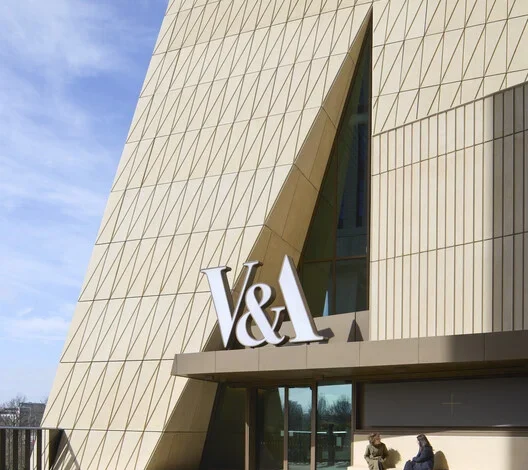
The Victoria and Albert Museum has officially announced that its newest landmark, the V&A East Museum, will open its doors to the public on April 18, 2026. Located in the heart of the Queen Elizabeth Olympic Park in Stratford, the project represents a significant milestone in the development of East Bank, London’s newest cultural and educational district. Designed by the acclaimed Irish architectural practice O’Donnell + Tuomey, the museum is the second of two sites forming the V&A East project, following the successful opening of the V&A East Storehouse, a collection-starter facility designed by Diller Scofidio + Renfro.
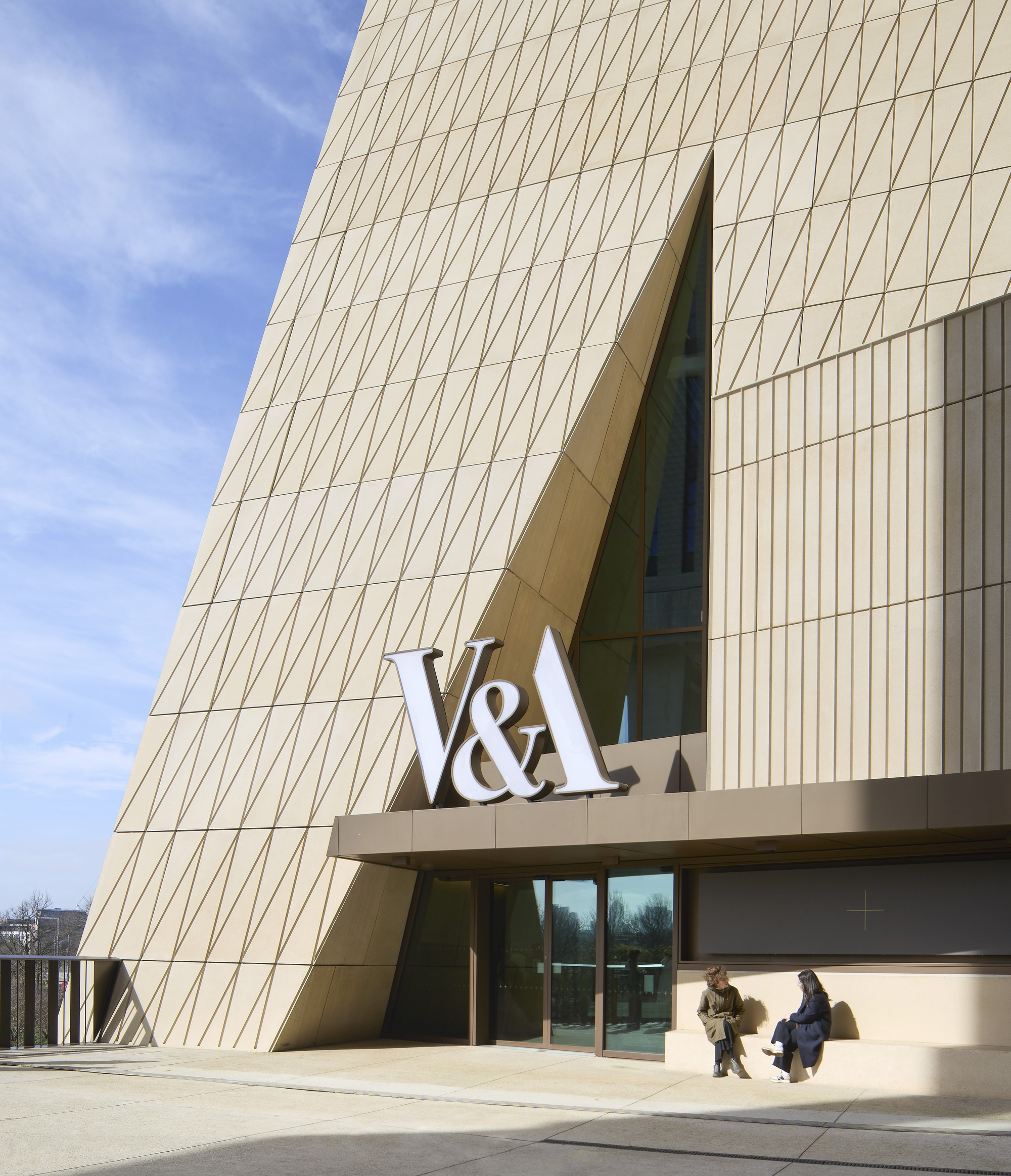
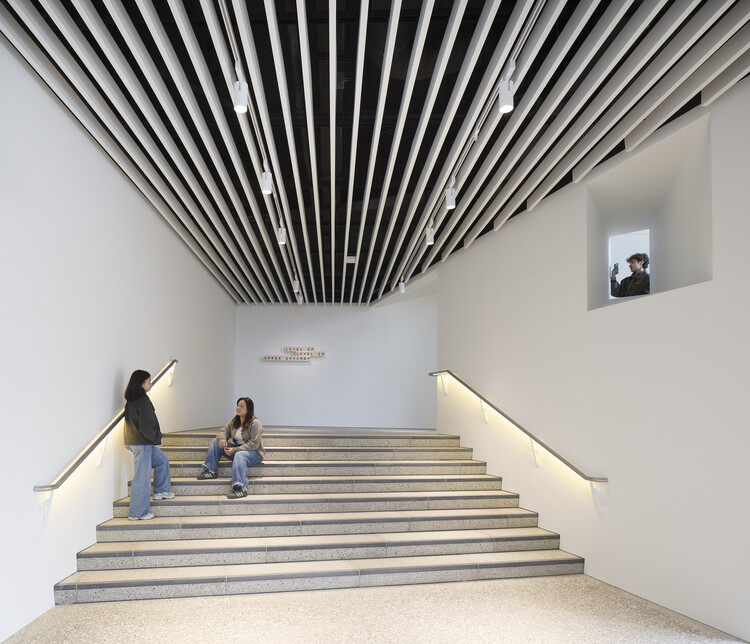
The V&A East Museum is envisioned as a radical departure from traditional museum models. It aims to act as a catalyst for creative opportunity, specifically targeting younger audiences and local communities in East London who have historically been underserved by major cultural institutions. Spanning five public levels, the building features two permanent galleries, a 900-square-meter temporary exhibition space, learning facilities, and a top-floor event space designed to host a wide array of creative programming.
A Vision Rooted in Sculptural Tailoring and Urban Porosity
The architectural identity of the V&A East Museum is defined by its complex, sand-colored facade and a design philosophy that bridges the gap between high fashion and structural engineering. O’Donnell + Tuomey, who were awarded the commission in 2015 following an international competition, drew inspiration from the V&A’s extensive fashion archives. Specifically, they looked at the work of Cristóbal Balenciaga, the legendary couturier known for his "sculptural tailoring."
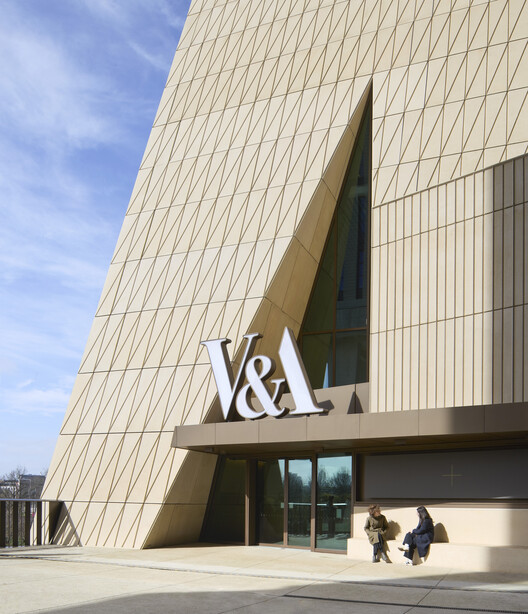
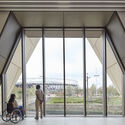
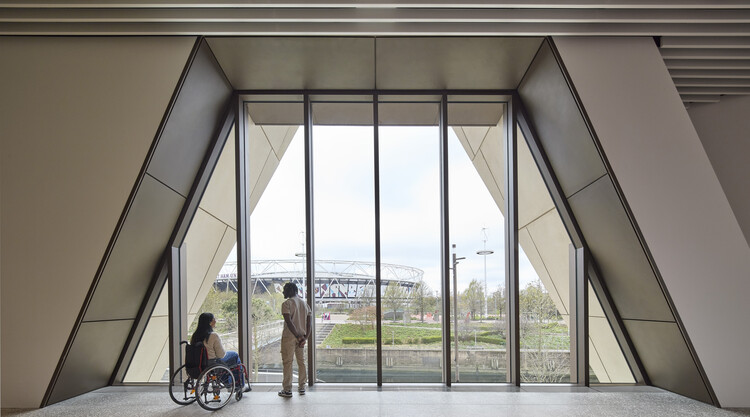
The architects focused on the relationship between a garment and the body, translating the concept of the "space in between" into a physical structure. This was further informed by the Japanese concept of "Ma," which emphasizes the importance of voids and intervals. The resulting building features a permeable, protective outer shell that wraps around a dense internal core. The interstitial space between the facade and the structural walls serves as a primary circulation route, guiding visitors upward behind a folded, rhythmic facade that catches the shifting light of the London sky.
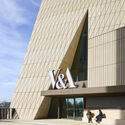
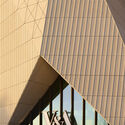
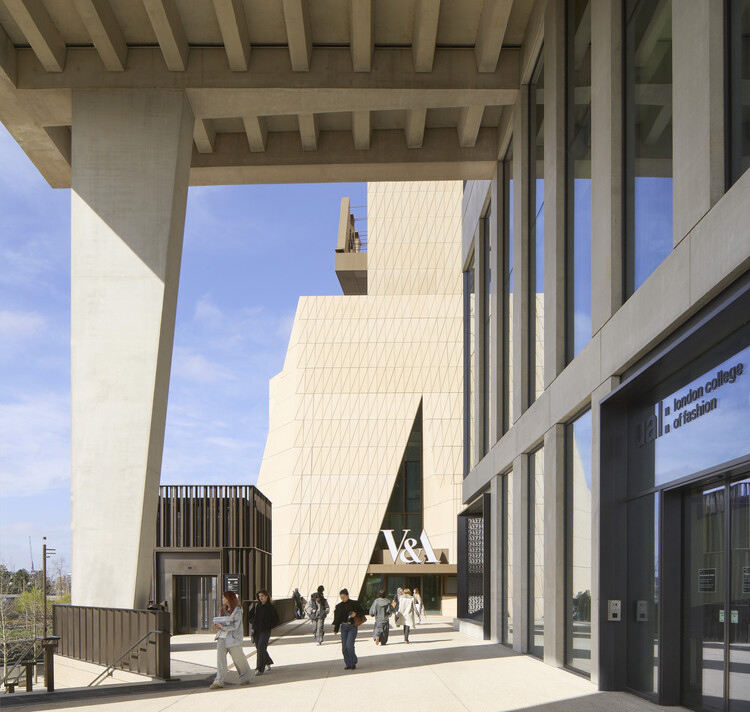
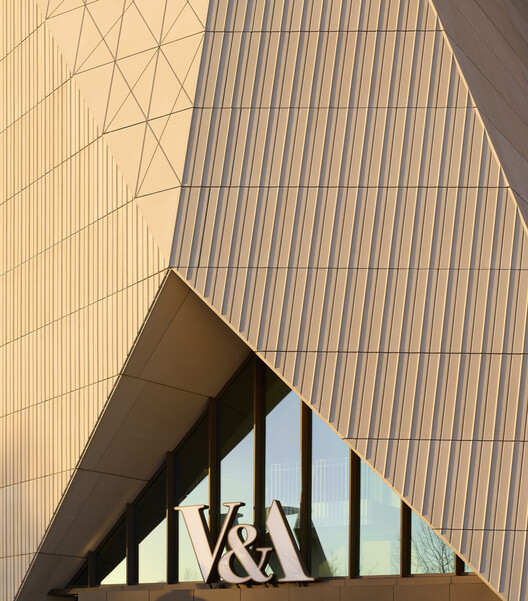
The exterior is composed of 479 precast concrete panels. These panels are not merely flat surfaces; they are scored with profiles that subtly reference the V&A’s iconic logo, creating a unified textural pattern across the three-dimensional form. At the ground level, the design integrates the building into the public realm through built-in benches and a waterfront threshold, encouraging passersby to interact with the museum even before they step inside.
The Strategic Context: East Bank and the Olympic Legacy
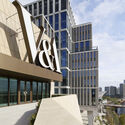
The V&A East Museum is a cornerstone of the £1.1 billion East Bank development, a project supported by the Mayor of London and the London Legacy Development Corporation (LLDC). East Bank is the largest cultural investment in the United Kingdom since the creation of the South Bank Centre in the 1950s. It aims to secure the long-term legacy of the 2012 Olympic Games by creating a powerhouse of culture, education, and innovation.
The museum sits alongside several other major institutions, including:
- UCL East: A new campus for University College London.
- London College of Fashion (UAL): A consolidated campus for one of the world’s leading fashion schools.
- Sadler’s Wells East: A new 550-seat theatre dedicated to dance.
- BBC Music Studios: A new home for the BBC Symphony Orchestra and the BBC’s music archives.
This ecosystem of creativity ensures that the V&A East Museum does not operate in isolation but rather as part of a collaborative network. The proximity to the V&A East Storehouse is particularly vital; while the Museum focuses on curated narratives and exhibitions, the Storehouse offers unprecedented public access to over 250,000 objects and 350,000 library books, effectively "democratizing" the museum’s back-of-house operations.
Programming and Internal Curation: "Why We Make"
The museum’s interior galleries are designed to be as inclusive as the exterior is welcoming. The primary permanent display, titled Why We Make, will span two free galleries. This space was designed by JA_Projects in collaboration with A Practice for Everyday Life and the artist Larry Achiampong, with significant input from the V&A East Youth Collective—a group of local young people aged 16 to 25.
Why We Make will showcase over 500 objects from the V&A’s global collections, covering art, architecture, design, and performance. The curation focuses on the motivations behind human creativity, exploring themes such as social justice, environmental action, wellbeing, and community identity. Highlights of the inaugural display include architectural models by the Turner Prize-winning collective Assemble and design work by the humanitarian architect Yasmeen Lari.
By involving the Youth Collective in the design process, the V&A has ensured that the gallery layouts, digital interfaces, and language are accessible and relevant to a generation that often feels alienated from traditional "white cube" museum spaces.
Inaugural Exhibition: The Music Is Black: A British Story
To mark its opening, the V&A East Museum will host a major temporary exhibition titled The Music Is Black: A British Story. This multisensory experience will trace the evolution of Black British music from 1900 to the present day, illustrating its profound impact on global culture.
The exhibition, developed in partnership with BBC Music, will feature over 200 objects, including instruments, stage costumes, and rare archival footage. It will celebrate the emergence of eight distinct Black British genres:
- Two Tone
- Lovers Rock
- Brit Funk
- Jungle
- Drum & Bass
- Trip Hop
- UK Garage
- Grime
The exhibition will serve as the centerpiece for The Music Is Black Festival, a series of live performances and digital programming scheduled for the summer of 2026. This initiative highlights the museum’s commitment to "live" culture, moving beyond the display of static objects to embrace the ephemeral nature of performance and sound.
Creative Commissions and Local Impact
In addition to its major exhibitions, the museum will launch New Work, a rotating program of creative commissions. Occurring twice a year, this program invites local and global artists to respond to the theme Making East London. For the museum’s debut, eight artists have been commissioned to create works that explore the district’s layered history—from its industrial roots to its current status as a site of cross-cultural exchange.
These commissions will be displayed across both the V&A East Museum and the Storehouse, creating a physical and conceptual link between the two sites. This program reinforces the museum’s role as a patron of contemporary art, providing a platform for creators to address urgent social and political issues through their work.
Chronology of Development
The journey of the V&A East Museum has been over a decade in the making, following a timeline of rigorous planning and construction:
- 2012: The London Olympic Games conclude, leaving a mandate for a cultural legacy in Stratford.
- 2015: O’Donnell + Tuomey win the international architectural competition for the museum site.
- 2018: Final designs are revealed, showcasing the Balenciaga-inspired facade.
- 2019: Construction begins on the Waterfront Square site.
- 2023: The building structure reaches its full height, and the installation of the precast concrete panels begins.
- 2024: V&A East Storehouse opens to the public, providing a prelude to the main museum.
- April 2026: V&A East Museum scheduled to open its doors.
Official Responses and Broader Implications
The project has garnered significant praise from architectural and cultural leaders. John Tuomey, Founding Director of O’Donnell + Tuomey, emphasized the civic purpose of the building, stating that the practice has worked since 2015 to create "a new kind of museum" that feels open and welcoming to a diverse audience. He noted that the museum stands as a testament to the power of public work to foster a sense of belonging within a rapidly changing urban environment.
Industry analysts suggest that the V&A East Museum will have a transformative impact on London’s cultural economy. By shifting the "center of gravity" for the arts toward the East, the museum is expected to attract millions of visitors annually, boosting local employment and supporting the growth of the creative industries in the boroughs of Newham, Tower Hamlets, Hackney, and Waltham Forest.
Furthermore, the museum’s focus on contemporary issues and diverse voices represents a strategic shift for the V&A as a global brand. As the institution prepares for its 2026 opening, it sets a new standard for how national museums can evolve to meet the needs of a 21st-century society—prioritizing community engagement, architectural innovation, and the celebration of living culture over traditional, colonial-era archival practices.
The opening of the V&A East Museum is not just the addition of a new building to the London skyline; it is the realization of a vision to make the world’s leading museum of art and design accessible to everyone, ensuring that the creative spirit of East London is recognized on a global stage.
Related posts: