Finding New Guardians for Old Treasures The Curated History of Andrea and La Plus Charmante Shop

Andrea, the founder of the specialized vintage jewelry boutique La Plus Charmante Shop, represents a growing movement of collectors and dealers who view antique ornaments not merely as accessories but as tangible historical artifacts. Her personal and professional journey into the world of horology and fine jewelry is rooted in a lifelong exposure to the craft, beginning with a childhood shaped by her parents’ disparate but complementary interests in the field. This foundation has allowed her to build a collection and a business that prioritizes provenance, artisanal integrity, and the preservation of techniques that have largely vanished from modern manufacturing.
The Foundations of a Curated Aesthetic
The origins of Andrea’s expertise can be traced back to her upbringing, which provided a dual education in the social and geological aspects of jewelry. Her mother, an advocate for Native American rights, specialized in the sale of jewelry created by indigenous makers. This exposed Andrea to the importance of cultural storytelling and the symbolic weight of handcrafted silver and turquoise work. Simultaneously, her father’s interest in collecting gemstones provided a scientific and aesthetic appreciation for the raw materials of the trade.
This early immersion created a framework for understanding jewelry as a vessel for history. Unlike mass-produced modern pieces, the items Andrea gravitates toward are defined by their unique narratives and the specific socio-political eras they represent. This background eventually led to the establishment of La Plus Charmante Shop, a platform where Andrea acts as a "guardian" for pieces transitioning from the past into the hands of modern collectors.

Specialized Motifs and Historical Significance
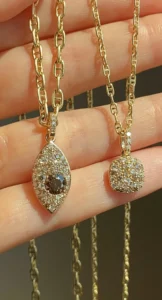
Andrea’s collection is notable for its focus on specific, often rare, motifs that require deep historical knowledge to appreciate. Among her primary interests are "Lover’s Eyes," a niche category of Georgian-era jewelry. These pieces, which typically feature a miniature painting of a single eye of a spouse or loved one, were popular in the late 18th and early 19th centuries. They were designed to be "secret" tokens of affection, as the identity of the subject was known only to the wearer. The craftsmanship required for these miniatures is immense, often involving watercolor on ivory or vellum, encased under glass and surrounded by precious stones.
Another significant area of her collection involves "Hand" motifs and French baby brooches. In the Victorian era, hand-shaped jewelry often symbolized friendship, loyalty, or remembrance, depending on the position of the hand and the items it held, such as a rose or a ring. The French baby brooches Andrea collects serve a dual purpose: they were historically given to children as protective amulets to ward off the "evil eye" and were practically used to fasten bibs. These items highlight a period when jewelry was deeply integrated into the daily rituals and superstitions of family life.

The selection of these pieces is guided by a strict adherence to quality. Andrea specifically seeks out materials and levels of craftsmanship that are no longer commercially viable in the contemporary market. The cost of labor and the scarcity of certain hand-carving skills mean that reproducing these items today would be prohibitively expensive, making the original antiques the only way to access such intricate artistry.
The Geography of Acquisition: The Paris Connection
While Andrea is a fixture at significant American antique events, such as the annual vintage show in Nashville, Tennessee, her primary "treasure hunting" ground is Paris, France. The French capital remains the global epicenter for antique jewelry due to its long history of high-fashion guilds and the preservation of estate pieces through various historical upheavals.

The Parisian market offers a density of knowledgeable dealers and an astounding variety of inventory that ranges from the Renaissance to the Art Deco period. For a professional like Andrea, the city provides more than just inventory; it offers a continuous education in the evolution of European jewelry design. The "hunt" in Paris is described as a rigorous process of vetting pieces for authenticity, condition, and historical relevance, ensuring that every item added to her collection or shop meets a high standard of "immaculate" quality, as noted by observers of her displays at major trade shows.
The Philosophy of Guardianship and Narrative Value
The tagline of La Plus Charmante Shop, "finding new guardians for old treasures," encapsulates Andrea’s professional philosophy. In the world of antique jewelry, the term "ownership" is often viewed as temporary. Because these pieces are made of durable precious metals and stones, they frequently outlive their owners, passing through multiple hands over centuries.

Andrea posits that antique jewelry allows for a connection to previous generations that other art forms, such as painting or sculpture, cannot replicate. Because jewelry is worn against the skin, it carries an intimate physical history. This perspective shifts the focus of the transaction from a simple purchase to an act of historical preservation. The stories behind the pieces—whether they are known through documented provenance or inferred through the motifs—are considered as valuable as the gold or gemstones themselves.
Practical Management and the Bank Vault System
For collectors of high-value antique jewelry, the issue of storage and security is a significant concern. Andrea refers to storage as her "bête noire," or her particular challenge. Over the years, she has transitioned from keeping her collection at home to utilizing bank vaults for the majority of her inventory and personal pieces. This is a common practice among high-level dealers to mitigate the risks of theft and environmental damage.

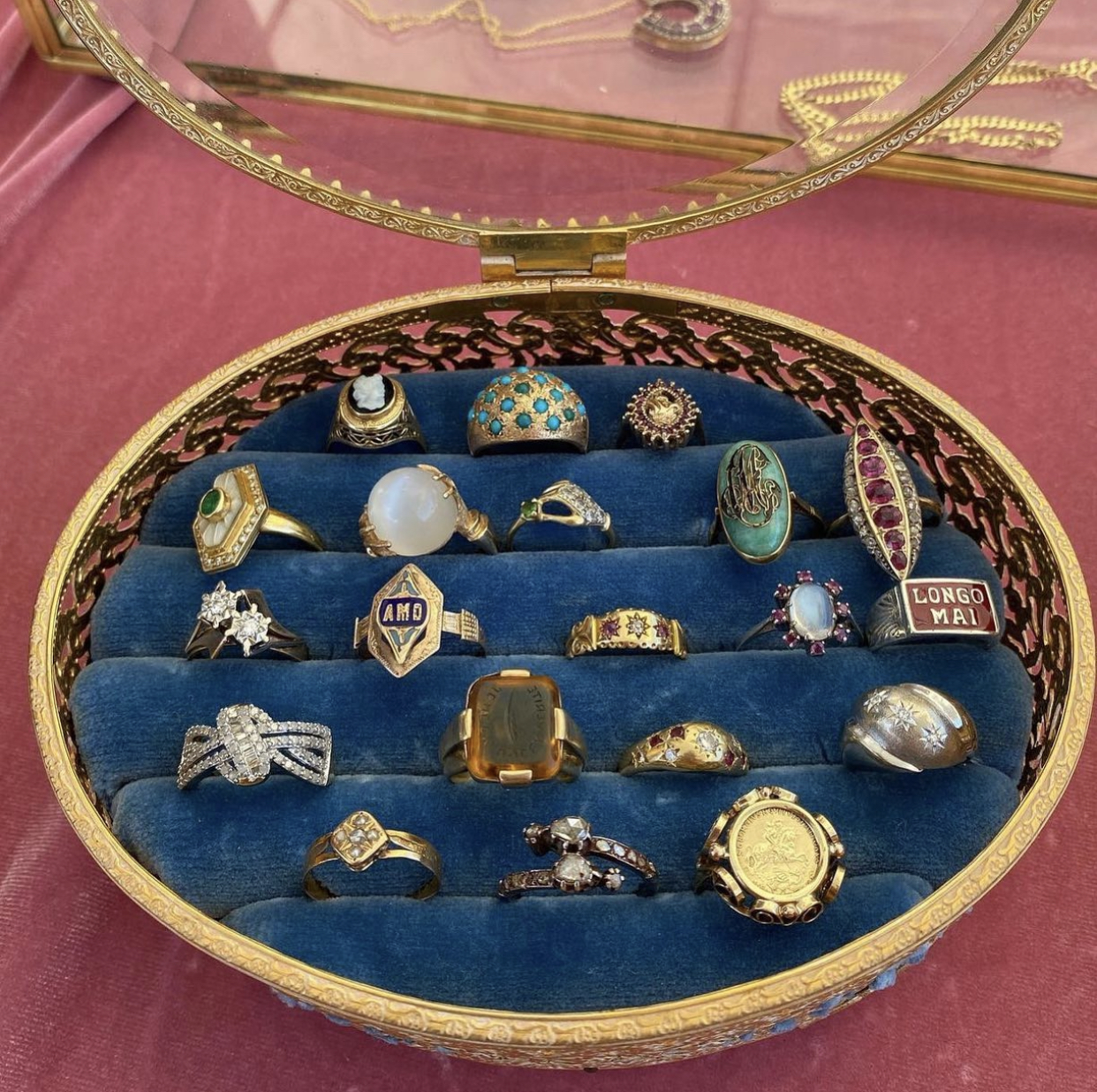
However, the emotional connection to jewelry is maintained through a small, curated "everyday" collection kept in an elegant jewel box at home. This box, an engagement gift from close friends, serves as a reminder of personal relationships, mirroring the way the antiques she sells once served as tokens of affection for people in the 18th and 19th centuries. This balance between high-security professional management and personal, sentimental access is a hallmark of a serious collector.
Sentimental Highlights: The "Forget Me Not" Signet Ring
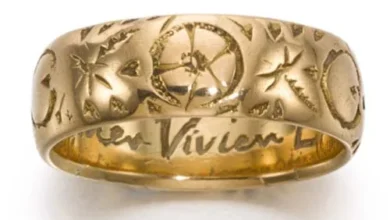
Within her personal collection, Andrea identifies an antique signet ring as her most sentimental piece. The ring features a hand-carved hardstone intaglio with the phrase "Forget Me Not" inscribed in German script (Vergissmeinnicht). The rarity of the ring lies in its perfect condition and its unusual design, which distinguishes it from more common Victorian mourning or sentimental jewelry.

The piece holds a specific chronological significance for Andrea, linking her present career to her early professional life. Before entering the jewelry trade, Andrea worked for the German media conglomerate Bertelsmann. The German script on the ring triggers a "happy nostalgia" for her 20s, illustrating how antique jewelry can serve as a bridge between different phases of an individual’s life.
In contrast to her rotating collection of historical pieces, Andrea’s daily wear is centered on her wedding set. Her commitment to these pieces is such that she famously wears them even while surfing, though she emphasizes the importance of maintenance, such as having prongs checked by a professional to ensure the security of the stones before engaging in strenuous activity.

Market Implications and the Rise of Sustainable Luxury
The success of Andrea and La Plus Charmante Shop reflects broader trends in the global luxury market. There is an increasing consumer shift toward "sustainable luxury"—the idea that buying pre-owned, high-quality items is more environmentally and ethically responsible than purchasing new, mass-produced jewelry.
According to market analysis, the vintage and antique jewelry sector has seen steady growth as younger consumers seek unique, one-of-a-kind pieces that offer better value retention than modern retail counterparts. By focusing on "prohibitively expensive" craftsmanship, Andrea taps into a market of connoisseurs who value the artisanal human element over machine-made perfection.

The role of social media, particularly Instagram, has also transformed the industry. It allows dealers like Andrea to share the "stories" behind the pieces with a global audience, turning the act of selling into an educational experience. This digital reach has made it possible for "old treasures" to find "new guardians" across continents, ensuring that the history contained within a "Lover’s Eye" or a French bib pin is not lost to time but is instead celebrated by a new generation of collectors.
Through her meticulous curation and dedication to historical narrative, Andrea ensures that her collection remains a living history, bridging the gap between the craftsmen of the past and the enthusiasts of the present.