A Dreamy Greek Island Escape: Inside Brittney and Rayce’s Intimate Destination Wedding on Zakynthos

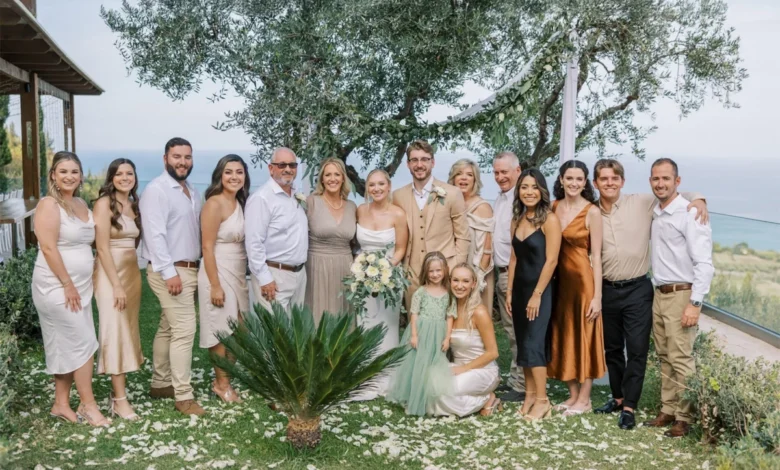
The global destination wedding industry continues to experience a profound structural shift toward hyper-intimate, experience-driven celebrations, and few recent events exemplify this trend as purely as the union of Brittney and Rayce on the sun-drenched Greek island of Zakynthos. Surrounded by the Ionian Sea’s azure waters and a carefully curated guest list of just 16 close friends and family members, the couple exchanged vows in a ceremony that married minimalist modern elegance with classical mythological inspiration. Styled and designed by the prominent European planning firm Bright & Beautiful Zante and captured through the lens of destination photographer Veronika Maxantova, the wedding highlights a growing preference among modern couples for meaningful, low-stress gatherings in unspoiled international locales over traditional, large-scale domestic receptions.
Main Facts of the Celebration

The ceremony took place on Zakynthos, an island renowned internationally for its dramatic white cliffs, secluded beaches, and rich Venetian and Greek heritage. Rather than opting for a sprawling ballroom or a conventional domestic venue, Brittney and Rayce chose an open-air coastal setup that emphasized the natural topography of the island. The aesthetic framework relied heavily on a restrained palette of crisp whites and organic greens, designed to harmonize seamlessly with the sweeping ocean views rather than compete with them.
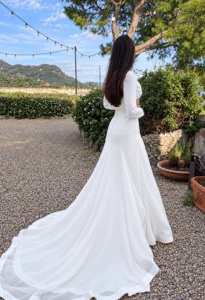
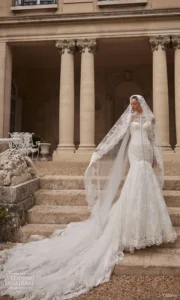
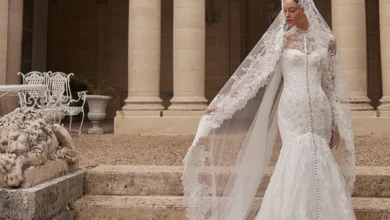
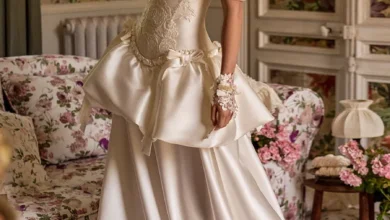
Brittney’s bridal attire drew direct inspiration from classical antiquity. She wore a sophisticated column-silhouette gown designed by KYHA, a luxury bridal house recognized for modern takes on classic tailoring. The gown featured intricate ruching that intentionally mirrored the timeless aesthetic of marble bust statues depicting Artemis, the ancient Greek goddess of the hunt, wilderness, and purity. In keeping with this mythological motif, the floral arrangements—curated by Bright & Beautiful Zante—consisted exclusively of white roses paired with lush native greenery, symbolizing purity and understated elegance.
Rayce complemented the bridal aesthetic by donning a sharp, light tan tailored suit. The choice of neutral, warm tailoring served as a functional and stylistic nod to the Mediterranean climate, proving both visually striking against the coastal backdrop and comfortable for an outdoor ceremony. The bridesmaids wore complementary satin dresses in a harmonious palette, further tying together the cohesive visual narrative of the day.

Chronology of a Lifelong Romance
The path to the shores of Zakynthos spans decades, rooted in shared geography and collegiate tradition. Brittney and Rayce’s story began in childhood, where the two grew up less than a mile apart. Their early dynamic evolved from childhood proximity into romance during a quintessential summer evening date at a local hometown snow cone stand.
Following high school, the couple’s shared trajectory brought them to Texas A&M University, an institution known for its deeply embedded traditions and fierce alumni loyalty. Throughout their undergraduate years, both pursued their higher education before graduating and cementing their academic and personal journey through the university’s famous Aggie Ring tradition. The traditional Aggie ring holds profound symbolic value; during graduation rituals led by The Association of Former Students, graduates proudly turn their rings to face the world, symbolizing readiness to contribute to society as alumni. For Brittney and Rayce, these rings served as a dual symbol of their shared resilience, academic accomplishments, and lifelong connection, prominently featured alongside their wedding bands during the nuptial celebrations.

The chronology of their engagement naturally mirrored their affinity for coastal settings. Following their graduation, Rayce proposed on a scenic beach surrounded by their closest family and friends, presenting Brittney with a custom ring that fulfilled her long-held design aspirations. This milestone laid the groundwork for their eventual decision to pursue a destination wedding, trading traditional domestic planning constraints for an immersive international experience.
Destination Wedding Planning and the Allure of Zakynthos
The decision to marry on Zakynthos was not merely aesthetic; it was the result of deliberate research into locations that preserved an unspoiled natural environment. In recent years, tourism boards and hospitality analysts have noted a significant rise in couples choosing lesser-known Greek islands over hyper-commercialized hubs like Santorini or Mykonos. Zakynthos offers a distinct balance of dramatic landscapes—such as the famous Navagio (Shipwreck) Beach and the forested interior associated in mythology with Artemis—and authentic local hospitality.

Planning a wedding across international time zones presents notable logistical challenges, particularly when managing guest travel logistics for a remote island. By engaging Bright & Beautiful Zante, the couple mitigated the friction points typically associated with destination event production. Professional event designers in the region often emphasize that hyper-intimate weddings—such as this 16-person gathering—allow couples to allocate their budgets more effectively toward high-touch guest experiences, luxury accommodations, and premium culinary offerings rather than inflating costs for venue capacities.
The morning of the wedding set a tranquil tone, featuring unhurried preparation time shared intimately with loved ones. According to attendee accounts, the hospitality extended by local Zakynthian residents and wedding vendors played an instrumental role in ensuring a seamless execution, reflecting the island’s robust infrastructure for high-end boutique tourism.
Supporting Data and Industry Trends

The choices made by Brittney and Rayce align closely with broader shifts documented within the global wedding and hospitality sectors. According to recent market research by organizations such as The Knot and Destination Weddings Travel Group, micro-weddings—defined generally as celebrations with fewer than 50 guests—have surged in popularity post-2020. Couples increasingly prioritize experiential travel, dedicating significant portions of their overall budget to creating multi-day itineraries for their closest inner circle rather than one-night events for hundreds of acquaintances.
Furthermore, the average expenditure on international destination weddings has seen steady year-over-year growth, driven by a preference for customized, high-end design elements. Brands like KYHA have capitalized on this movement by offering contemporary luxury silhouettes that break away from traditional heavy ballgowns, catering instead to modern brides seeking mobility, architectural lines, and breathable fabrics suitable for Mediterranean climates. Similarly, the trend toward sustainable, locally sourced floral and decor elements—evident in Brittney and Rayce’s minimalist white rose and greenery installations—reflects an industry-wide push toward eco-conscious event production that honors local ecosystems.
Official Responses and Vendor Insights

While formal corporate statements are rarely issued for private nuptials, the creative partners involved have widely shared reflections on the conceptual success of the event. Representatives for Bright & Beautiful Zante highlighted the project as a masterclass in how minimalism can elevate a natural landscape. By keeping the guest count intimate, the design team was able to maximize the visual impact of the coastal venue without overwhelming the site with excessive structural installations.
Veronika Maxantova, the lead photographer for the day, noted that the natural lighting conditions of Zakynthos provided an ideal environment for documentary-style and editorial wedding photography. The interplay between the neutral tones of Rayce’s suit, the classical architectural draping of KYHA’s gown, and the stark blues of the Ionian Sea created an optimal palette for high-definition visual storytelling. Local vendors on the island similarly expressed enthusiasm for the growing market segment of high-net-worth couples choosing Zakynthos for boutique celebrations, noting that such events positively contribute to the local economy while fostering cross-cultural appreciation.
Broader Impact and Implications for Modern Couples

The wedding of Brittney and Rayce serves as a case study in modern matrimonial prioritization. By stripping away the logistical burdens and financial strain of large-scale traditional weddings, the couple was able to craft a celebration that felt deeply personal, historically resonant, and environmentally grounded.
Their reflections following the event emphasize a philosophical shift away from commercial excess. As they noted in their reflections on the journey, lasting partnerships are measured not by grand, performative gestures, but by the quiet resilience of everyday shared experiences—a sentiment forged in childhood, solidified through academic achievement, and celebrated on the cliffs of a historic Greek island.
As the destination wedding sector continues to evolve, the blueprint established by celebrations like this one—characterized by micro-guest lists, localized cultural integration, architectural fashion choices, and professional event coordination—will likely continue to serve as an aspirational standard for couples seeking to transform their marriage milestones into deeply immersive travel experiences.