The High Price of Style: Unmasking the Hidden Human and Environmental Costs Behind London Fashion Week

From 19 to 23 February, the global fashion industry converges on the UK capital for London Fashion Week (LFW), a prestigious event designed to showcase British creativity, identity, and avant-garde innovation. Yet, as the catwalks shimmer with the latest seasonal collections, a stark dichotomy persists: the industry’s push for aesthetic evolution is increasingly overshadowed by its failure to address systemic ethical and environmental crises. While brands are vocal about their commitment to sustainability, the reality remains that millions of workers in global supply chains continue to endure conditions amounting to modern slavery, a systemic issue that extends far beyond the "fast fashion" narrative.
A Legacy of Exploitation: The Global Context
The fashion industry is one of the most labor-intensive manufacturing sectors on the planet, employing an estimated 25 to 60 million people globally. Since the late 1980s, the industry’s business model has been predicated on the pursuit of low labor costs and minimal environmental regulation, leading many major retailers to shift production to developing nations.
Today, the scale of this exploitation is staggering. According to recent data, approximately 50 million people are living in modern slavery globally, with a significant percentage of those individuals trapped in the shadows of garment supply chains. In 2021 alone, 10% of cases reported to the UK Modern Slavery & Exploitation Helpline were directly linked to businesses within the garment sector. These figures represent only the tip of the iceberg, as many cases go unreported due to the clandestine nature of subcontracted labor.
The Myth of the Fast Fashion Scapegoat
Public discourse frequently attempts to isolate exploitation as a problem unique to "fast fashion" retailers, whose rapid production cycles and low price points necessitate extreme cost-cutting. However, this narrative is incomplete. Recent supply chain scandals involving luxury brands demonstrate that high price tags do not necessarily equate to ethical production. Even in the luxury segment, reports of labor abuse, unsafe working conditions, and sub-minimum wage payments have surfaced, suggesting that the drive for profit margins often overrides corporate social responsibility at all tiers of the market.
The complexity of these supply chains—often stretching across multiple continents and involving numerous layers of subcontractors—creates a "veil of obscurity." Brands frequently claim ignorance of the conditions in the deepest tiers of their supply chain, yet this lack of oversight is a direct result of business models that prioritize speed and cost over traceability.
The Cotton Conundrum: A Chain of Forced Labor
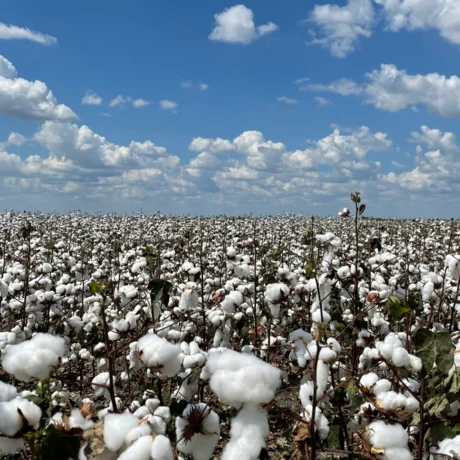
Raw materials are the foundation of the fashion industry, but they are also a primary site of human rights violations. Cotton, a staple fiber for global apparel, is frequently linked to state-imposed forced labor. Research by Sheffield Hallam University has identified that over 100 major global brands are at high risk of sourcing cotton from the Uyghur Region of China, where government-led labor programs have been extensively documented as coercive.
Similarly, in Turkmenistan, the state continues to mobilize public sector workers for annual cotton harvests. Under the threat of job loss or monetary penalties, thousands are forced into the fields each season. Once this cotton is processed and woven into textiles, it is nearly impossible to track its origin, allowing products tainted by forced labor to enter international markets undetected. Despite corporate pledges to sanitize their supply chains, the global trade in cotton remains largely unpoliced, effectively laundering the proceeds of state-sanctioned human rights abuses into the global retail economy.
Domestic Failures: Exploitation on UK Soil
The perception that human rights abuses are "overseas problems" is a dangerous misconception. The United Kingdom itself has seen significant instances of exploitation within its own borders. A 2020 investigation into garment factories in Leicester, which supply major domestic retailers, exposed deplorable working conditions. Reports indicated that workers were paid as little as £3 an hour—far below the national minimum wage—and were subjected to unsafe, fire-hazardous environments.
Similar patterns have emerged in Italy, where labor inspectors have uncovered workshops subcontracting for high-end brands that ignore safety regulations and labor laws. These incidents serve as a critical reminder that "Made in the UK" or "Made in Europe" labels are not a guaranteed seal of ethical production. Where regulation is lax or enforcement is underfunded, exploitation thrives, regardless of geographic location.
The Environmental Toll of Overproduction
The human cost of fashion is inextricably linked to its environmental impact. The industry is characterized by an insatiable cycle of overproduction and transient trends, resulting in an annual carbon footprint of approximately 3.3 billion tonnes of CO2e—a figure comparable to the combined output of all 28 EU member states.
Beyond carbon emissions, the industry is a leading driver of ecological degradation. Textile waste accounts for massive landfill volumes, while the shedding of synthetic microfibers is a primary source of ocean pollution. Cotton farming, which is highly water-intensive, has led to the depletion of vital water basins, such as the Aral Sea, and the poisoning of local communities through the heavy use of toxic pesticides and chemical dyes. The workers at the front lines of production are the most vulnerable, suffering from chronic health issues due to exposure to these chemicals.
The Legislative Gap: Why Voluntary Action Fails
For years, the industry has relied on voluntary Corporate Social Responsibility (CSR) reporting to demonstrate its ethical credentials. However, empirical evidence suggests that voluntary measures are insufficient to curb the systemic nature of modern slavery. The UK’s Modern Slavery Act 2015, while a landmark piece of legislation at the time of its inception, is now viewed by many as outdated. It mandates that large companies publish statements on their efforts to combat slavery, but it lacks the teeth of meaningful enforcement, penalties, or requirements for mandatory human rights due diligence.
In contrast, the European Union has moved toward a more robust framework with its Corporate Sustainability Due Diligence Directive, which legally mandates that companies identify, prevent, and mitigate human rights abuses within their operations. The United States has similarly implemented the Uyghur Forced Labor Prevention Act (UFLPA), which enforces strict import controls. The UK currently lags behind its international peers, allowing companies to benefit from exploitative practices with little to no legal repercussion.
A Call for Structural Reform
The conversation surrounding London Fashion Week must shift from mere celebration to a rigorous demand for systemic change. On 12 February, a parliamentary debate on the onshoring of fashion and textiles underscored the growing political pressure for reform. Minister Chris Bryant, addressing the government’s ongoing Responsible Business Conduct review, acknowledged the necessity of policy interventions to protect workers in supply chains.
Advocacy groups, including Anti-Slavery International, have long campaigned for a "Business, Human Rights and Environment Act" in the UK. Such legislation would level the playing field, ensuring that companies cannot gain a competitive advantage by slashing ethical standards. By codifying human rights and environmental due diligence into law, the UK could lead the charge in forcing transparency upon an industry that has operated in the shadows for too long.
Looking Toward a Transparent Future
While the challenges are monumental, there are glimmers of progress. A new generation of emerging fashion brands is investing in transparent supply chains, circular production models, and fair-wage systems. These companies demonstrate that profitability and ethics are not mutually exclusive.
However, individual corporate initiatives cannot solve a global, systemic crisis. The cultural power of fashion—its ability to influence norms and inspire societal change—must now be harnessed to demand accountability. As London Fashion Week continues to command global attention, the industry stands at a crossroads. It can either continue to rely on the "hidden costs" of human and environmental suffering to fuel its growth, or it can undergo a necessary transformation, grounded in the belief that human rights are non-negotiable.
The future of fashion depends on a transition from a model based on extraction to one based on respect. Until comprehensive, enforceable laws are enacted, the responsibility remains with policymakers to close the loopholes that allow exploitation to persist. For the millions of workers in the shadows of the global garment trade, the time for voluntary pledges has long since passed; the time for mandatory, global accountability has arrived.