UPS Commits Over $100 Million to Network-Wide RFID Integration, Signaling a New Era of Precision Logistics and Automation

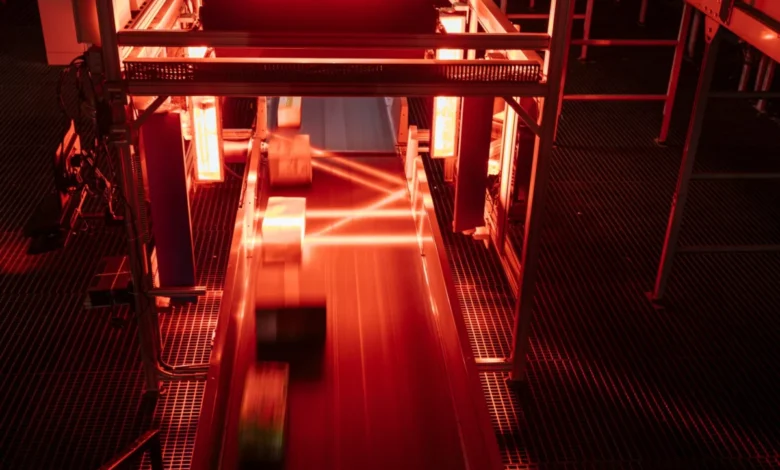
United Parcel Service (UPS), a global leader in logistics, has announced a landmark investment exceeding $100 million to embed Radio Frequency Identification (RFID) technology across its vast U.S. network, marking a pivotal shift towards advanced automation and unparalleled package visibility. This significant financial commitment, revealed on Tuesday, underscores the company’s strategic imperative to modernize its operations, enhance efficiency, and elevate the customer experience in an increasingly demanding e-commerce landscape. The rollout has already seen RFID sensors integrated into all U.S. package delivery vehicles, last-mile delivery facilities, and more than 5,500 UPS Store locations, laying the groundwork for a fully digitized and highly responsive logistics ecosystem.
UPS’s Landmark RFID Investment: A Leap Towards Hyper-Visibility
The core of UPS’s latest strategic move is the widespread adoption of RFID, a technology that promises to revolutionize how packages are tracked and managed from their point of origin to final delivery. This multi-million dollar investment is not merely an upgrade; it represents a fundamental re-engineering of the company’s operational backbone. Matt Guffey, executive vice president and chief commercial and strategy officer at UPS, articulated the transformative potential of this initiative, stating, "With RFID embedded into labels, on our vehicles and in our loading bays, customers benefit from clear visibility during the entire shipping process—from pickup to delivery, with no manual scanning required. The result is commerce that is smarter and predictable." This vision speaks to a future where package movements are seamlessly monitored, drastically reducing the reliance on labor-intensive manual barcode scanning and the inherent delays associated with it.
The immediate impact of this deployment is profound. By integrating RFID into the very fabric of its last-mile operations—from the vans traversing neighborhoods to the local hubs processing deliveries and the retail storefronts where packages originate or are collected—UPS aims to create an unbroken chain of digital visibility. This near-real-time tracking capability is designed to provide customers with precise updates on their package’s journey, a significant improvement over traditional tracking systems that can sometimes lag behind a package’s actual location. Moreover, the technology’s ability to automatically detect misloads, such as a package being placed on the wrong truck, has already yielded impressive results, with UPS reporting a nearly 70 percent reduction in such errors since the technology’s initial implementation.
Unpacking RFID: A Technological Leap in Logistics
Radio Frequency Identification, or RFID, is a technology that uses radio waves to automatically identify and track tags attached to objects. Unlike traditional barcodes, which require a direct line of sight for scanning and are susceptible to wear and tear, RFID tags can be read wirelessly, often from several meters away, and through various materials. This capability eliminates the need for manual scanning, streamlining processes and dramatically increasing throughput. An RFID system typically comprises three components: an RFID tag or smart label, an RFID reader, and an antenna. Tags contain an integrated circuit and an antenna, which are used to transmit data to the reader. The reader converts the radio waves reflected from the RFID tag into a digital form that can then be processed by a host computer system.
Traditionally, RFID has found extensive applications in inventory management, asset tracking, and loss prevention across various sectors, particularly retail and manufacturing. Its ability to provide accurate, real-time inventory data without manual intervention has made it an invaluable tool for optimizing supply chains. UPS’s deployment, however, takes this established technology to an unprecedented scale within the parcel delivery industry, extending its utility from static inventory management to dynamic, in-transit package tracking across an immense logistical network. This strategic pivot moves UPS away from the limitations of manual barcode scanning, which requires individual items to be physically scanned, towards a sensor-based system that can process multiple items simultaneously and autonomously. This technological shift is crucial for optimizing delivery networks, cutting operational costs, and meeting the escalating demands for speed and transparency from consumers and businesses alike.
A Decade of Innovation: UPS’s Path to Automated Efficiency
UPS’s recent RFID announcement is not an isolated event but the culmination of a multi-year strategic initiative to infuse its operations with advanced automation. The journey toward a smarter, more efficient logistics network gained significant momentum with the debut of the "Smart Package Smart Facility" initiative in 2022. This program initially focused on deploying RFID technology across dozens of UPS facilities with the ambitious goal of eliminating manual scans performed by pre-loaders—the crucial personnel responsible for sorting and moving packages from conveyor belts into delivery vehicles. This early phase demonstrated the potential for significant efficiency gains and error reduction at key operational choke points.
Building on this success, UPS expanded the technology’s reach in late 2023, integrating RFID capabilities directly into its extensive vehicle fleet. This was a critical step in extending real-time visibility beyond facility walls and into the dynamic environment of package delivery routes. The current $100 million investment signifies the transition from pilot programs and phased rollouts to a comprehensive, network-wide implementation, solidifying RFID as a foundational technology for UPS’s future. Looking ahead, the company plans to further extend this technological integration, with sensors slated for deployment in its middle-mile sortation facilities later this year, according to a report from The Wall Street Journal. This progressive rollout illustrates a methodical, long-term strategy to automate and digitize every segment of the package delivery process.
This phased approach underscores a deliberate strategy to incrementally integrate cutting-edge technology, moving from initial proofs-of-concept to broad-scale deployment. By continuously evolving its infrastructure, UPS is positioning itself at the forefront of logistics innovation, ensuring its network can handle growing package volumes with enhanced accuracy and speed, all while reducing operational overhead.
Revolutionizing Operations and Elevating Customer Experience
The operational advantages stemming from this widespread RFID implementation are manifold. Foremost among them is the unparalleled precision tracking it enables. The system is designed to automatically sense and track when a package moves into or out of a building or vehicle, providing near-real-time pickup and movement confirmations. This proactive tracking mechanism represents a significant advancement over traditional shipment tracking, which often relies on periodic manual scans and can consequently lag behind a package’s actual current location. For instance, the system’s ability to issue an immediate alert if a package is mistakenly loaded onto the wrong truck not only prevents delays but also allows for rapid corrective action, contributing to the reported 70 percent drop in misloads.
Beyond error prevention, the RFID technology significantly enhances UPS’s agility and responsiveness. The company anticipates that this heightened visibility will enable it to react faster to unforeseen events, such as sudden changes in weather conditions or other logistical disruptions. By having a clearer, more immediate understanding of package locations and network status, UPS can reroute, reschedule, or communicate more effectively with customers, minimizing the impact of external factors.
From a customer perspective, these operational improvements translate directly into a superior service experience. CEO Carol Tomé highlighted this during the company’s fourth-quarter earnings call in January, noting that UPS now processes 1.3 million packages per day with RFID labeling. She termed this deployment at the point of origin "smart fulfillment," emphasizing its role in "allowing us to earn new commercial business." Tomé further elaborated on the benefits, stating that it "gives better transparency order-to-cash. Something that customers are desperately seeking. It gives them better control." This enhanced transparency and control are crucial for both individual consumers eager for precise delivery windows and businesses relying on just-in-time inventory and reliable supply chains. Industry analysts suggest that this level of granular visibility could become a new standard, forcing competitors to accelerate their own technological adoptions. A small business owner, for example, might find immense value in the consistent and accurate updates, allowing them to manage their inventory and customer expectations with greater confidence, thereby reducing operational headaches and improving their own customer satisfaction.
Navigating a Dynamic Landscape: Industry Trends and Competitive Edge
UPS’s substantial investment in RFID is set against a backdrop of transformative trends within the global logistics industry. The exponential growth of e-commerce has fundamentally reshaped consumer expectations, driving demand for faster, more transparent, and more reliable parcel delivery. This surge in package volumes, coupled with increasing pressure on delivery times, necessitates a fundamental re-evaluation of traditional logistics models. Simultaneously, the industry faces persistent labor challenges, including rising wages and a scarcity of skilled workers, which makes automation an increasingly attractive solution for maintaining operational efficiency and cost-effectiveness. Furthermore, sustainability goals are prompting logistics providers to seek efficiencies that can reduce fuel consumption and optimize routes, areas where advanced tracking and data analytics can play a pivotal role.
In this fiercely competitive environment, logistics giants like FedEx, Amazon Logistics, and DHL are also making significant investments in automation, artificial intelligence, and advanced tracking technologies, ranging from sophisticated sortation robotics to drone delivery pilots. UPS’s commitment to RFID positions it at the forefront of this technological arms race, specifically in the realm of package visibility and operational precision. The global RFID market, valued at approximately USD 13.5 billion in 2023, is projected to grow at a compound annual growth rate (CAGR) of 11-12% through 2030, highlighting the widespread recognition of its potential across various sectors. Within the broader logistics automation market, which was valued at around USD 65 billion in 2023 and is expected to exceed USD 100 billion by 2030, UPS’s investment represents a significant chunk of capital dedicated to leveraging these transformative technologies. This strategic move is not just about keeping pace; it’s about setting a new benchmark for visibility and accuracy in last-mile logistics, creating a significant competitive advantage in a market where differentiation is increasingly critical.
The Intersection of Automation and Workforce Evolution
The narrative of technological advancement within UPS cannot be separated from its impact on the company’s workforce. The announcement of the extensive RFID rollout coincides with a period of significant staff reductions at the Atlanta-based firm. Last year, UPS notably axed 48,000 employees, many of whom were delivery drivers and warehouse workers. Following this, the company has indicated plans to cut an additional 30,000 jobs by 2026, including through voluntary driver buyouts. These decisions, while difficult, are directly linked to the broader "Efficiency Reimagined" initiative, under which the RFID deployment falls.
The connection is clear: automation, while driving efficiency and cost savings, inevitably reduces the reliance on manual labor. Processes previously requiring human intervention, such as scanning packages or sorting items, are now being handled by automated systems. While some roles may be displaced, the company argues that these changes are necessary to adapt to a changing market and ensure long-term sustainability. The "Efficiency Reimagined" initiative yielded an impressive $3.5 billion in cost savings last year. This was achieved not only through workforce adjustments but also through strategic infrastructure changes, including the closure of 93 buildings across the U.S. and the deployment of automation in 57 others. UPS has further identified 24 more buildings for closure in the first half of 2026, with plans for additional consolidations.
As of January, UPS had 127 automated facilities, with plans to implement automation projects at another 24 locations throughout the current year. The company expects to increase the percentage of U.S. volume processed through automated facilities to 68 percent by the end of the year, up from 66.5 percent at the end of 2025. The economic rationale for this aggressive automation strategy is compelling: the cost per piece in automated facilities is reported to be 28 percent less than in conventional buildings, a substantial saving that directly impacts the company’s profitability and competitive pricing. This transformation highlights a broader industry trend where companies are seeking to optimize their operational footprints and reduce labor costs through technological integration, fundamentally reshaping the nature of work within the logistics sector.
Strategic Imperatives and the Future of Logistics
UPS’s $100 million-plus investment in RFID is a clear declaration of its strategic imperatives: to drive down costs, enhance service quality, and solidify its competitive position in the global logistics market. In a business characterized by high volumes and often thin margins, efficiency gains directly translate into improved profitability and the ability to offer more competitive pricing. The enhanced visibility and accuracy provided by RFID will not only reduce operational errors but also improve customer satisfaction, a crucial factor in retaining existing clients and attracting new commercial business, as noted by CEO Carol Tomé.
Looking ahead, this extensive RFID deployment serves as a foundational layer for further technological integration within UPS’s supply chain. The wealth of data generated by these sensors could feed into advanced analytics and artificial intelligence systems, enabling more sophisticated predictive logistics, dynamic route optimization, and even more granular insights into supply chain performance. This could pave the way for highly customized logistics solutions, catering to specific industry needs and offering unprecedented levels of service. The long-term vision for UPS, and indeed for the broader logistics industry, points towards a future of highly digitized, interconnected, and increasingly autonomous networks where human intervention is focused on higher-value tasks, and routine operations are managed by intelligent systems.
As UPS prepares to host its first-quarter earnings call on April 28, investors and industry observers will be keen to hear further details on the financial impact of these investments and the continued progress of the "Efficiency Reimagined" initiative. The company’s bold move into ubiquitous RFID deployment signals a new era for parcel delivery, one where transparency, precision, and automation are not just aspirations but fundamental operational realities. This strategic pivot by UPS is set to redefine expectations across the logistics sector, setting a new standard for how packages are tracked, delivered, and managed in the digital age.
Related posts: