Nike Inc. Loses S&P 100 Spot Following Massive Market Capitalization Decline as Turnaround Efforts Under CEO Elliott Hill Face Global Headwinds

Nike Inc. continues to maintain its primary public listing on the New York Stock Exchange and remains a constituent of the broader benchmark S&P 500 Index, even as the athletic footwear and apparel giant navigates one of the most tumultuous periods in its corporate history.
The sportswear behemoth was officially removed from the prestigious S&P 100 index—an elite subset comprising 100 mega-capitalization, blue-chip corporations drawn from the larger S&P 500—following a staggering 78 percent decline in its stock price from historical peaks. This severe depreciation resulted in a corresponding contraction of Nike’s market capitalization, rendering the company ineligible for the S&P 100, which requires constituents to represent the upper echelon of U.S. market value and liquidity. S&P Dow Jones Indices routinely rebalances its indexes on a quarterly basis, adjusting for significant fluctuations in corporate valuation and market dynamics.
Despite the demotion from the S&P 100, trading activity for Nike shares has shown signs of stabilization in the immediate aftermath of the announcement. Nike shares closed at $36.10, matching the previous session’s closing price and marking a modest recovery from a close of $35.51 on the final trading day prior to its removal from the blue-chip index. During intraday trading, the stock reached a high of $37.03.
However, these figures remain severely depressed compared to the company’s performance earlier in the year. In February, Nike shares were trading within a range of $66 to $67. The current trading levels represent a steep 45 percent decline for the year 2026 alone, highlighting the deep-seated skepticism among institutional and retail investors regarding the speed and efficacy of the company’s ongoing turnaround strategy.
The Chronology of Nike’s Decline
To understand the current valuation of Nike Inc., financial analysts and industry historians point to a confluence of strategic missteps and macroeconomic disruptions that date back to 2020. The onset of the COVID-19 pandemic catalyzed rapid shifts in global consumer behavior, retail supply chains, and digital commerce.
During this volatile period, Nike leadership executed a decisive strategic pivot away from traditional wholesale retail partnerships toward a direct-to-consumer (DTC) model. While the DTC strategy was initially praised for boosting profit margins and granting the brand greater control over customer data and digital experiences, it ultimately alienated critical retail partners and failed to sustain long-term revenue growth.
Compounding the structural friction of the DTC transition was a distinct lack of product innovation and creative newness. For decades, Nike’s market dominance was anchored by groundbreaking footwear technologies and cultural phenomena launched through athletic performance and lifestyle categories. As the pipeline for innovative products slowed, consumer interest waned, allowing agile competitors and emerging athletic brands to capture significant market share in running, training, and lifestyle sectors.
The mounting financial pressures and sliding stock values prompted a leadership shakeup at the corporate headquarters in Beaverton, Oregon. Former chief executive officer John Donahoe stepped down and was succeeded by corporate veteran Elliott Hill, who returned to the company as president and CEO in 2024. Hill’s appointment was widely interpreted by market observers as a return to Nike’s foundational ethos: prioritizing deep relationships with wholesale partners, refocusing on core athletic performance, and revitalizing product innovation.
Strategic Execution Under CEO Elliott Hill
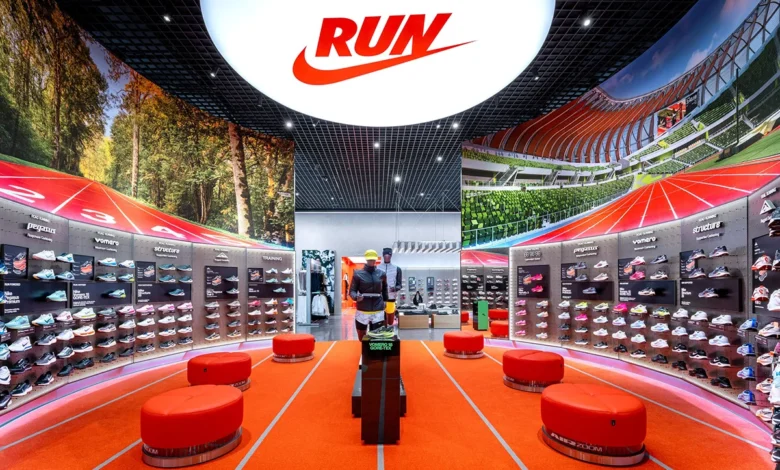
Upon taking the helm, CEO Elliott Hill wasted little time identifying the immediate operational priorities required to stabilize the brand. Hill established a strategic playbook focused first on restoring credibility and momentum within the Nike Running category. Running has historically served as the cornerstone of Nike’s technical performance narrative, and early performance metrics in this division have shown encouraging signs of recovery, providing a viable blueprint for rehabilitating other underperforming product lines.
However, the broader corporate turnaround has faced unexpected friction on an international scale. Hill and his executive team have acknowledged that the recovery timeline is extending longer than initially projected, largely due to unexpected headwinds in the Greater China market as well as across European retail operations. Persistent inflationary pressures, cautious consumer spending, and heightened promotional activity by competitors in these key international territories have compressed margins and slowed volume growth.
Despite these regional challenges, Hill has maintained an aggressive forward-looking product roadmap. During the fourth-quarter earnings conference call on June 30, Hill informed investors and analysts that the sportswear division is preparing to introduce more than a dozen new footwear styles in the second half of fiscal year 2027, which officially commences in January.
This impending product wave builds upon recent momentum generated by targeted performance launches. Last month, the brand rolled out an advanced training footwear system comprising the Hybrid Fly and Hybrid RN models, available in men’s and women’s sizing. Designed specifically to cater to the explosive growth of functional fitness and hybrid racing competitions such as Hyrox, these athletic performance shoes enable athletes to seamlessly transition from endurance running to heavy weightlifting and dynamic multi-planar movements without sacrificing speed, structural stability, or traction.
Upcoming Financial Disclosures and Market Implications
The immediate test for Nike’s leadership and its equity valuation will arrive on October 1, when the corporation is scheduled to report its financial results for the first quarter of fiscal 2027. Wall Street analysts will scrutinize the earnings report not only for top-line revenue and bottom-line profitability figures, but more importantly for forward-looking guidance, executive commentary regarding international demand, and updates on the execution of the upcoming product pipeline.
Depending on the reported metrics and the sentiment conveyed during the accompanying earnings conference call, Nike shares could experience heightened volatility. A better-than-expected progress report on inventory clearance, wholesale partner reintegration, and early reception of new footwear innovations could provide the catalyst needed to restore investor confidence. Conversely, continued softness in international markets or delays in product rollouts could subject the stock to further downward pressure.
Broader Industry Impact and Expert Analysis
The demotion of Nike from the S&P 100 serves as a cautionary tale within the global retail and apparel sectors, illustrating the rapid pace at which market capitalization can erode when a dominant industry leader misjudges shifting consumer preferences and distribution channels. For decades, Nike was viewed as an untouchable blue-chip investment impervious to cyclical downturns. Its current standing underscores the reality that even the most recognized brand portfolios require continuous product innovation, agile supply chain management, and balanced distribution strategies that harmonize digital commerce with trusted physical retail partners.
Market analysts note that while removal from the S&P 100 forces institutional index funds that track exclusively against that specific benchmark to divest their holdings, Nike’s continued presence in the broader S&P 500 Index ensures that it remains a mandatory holding for a vast array of passive and active investment portfolios.
As Elliott Hill and his management team continue to execute their multi-year restructuring plan, the broader athletic footwear industry is watching closely. The success or failure of Nike’s return to performance innovation, wholesale collaboration, and international stabilization will likely set the strategic benchmark for athletic apparel brands operating in an increasingly competitive and cost-conscious global economy.