Two Worlds, One Basin: Photographer Elliot Ross Exposes the Stark Disparities of Water Access in the American Southwest

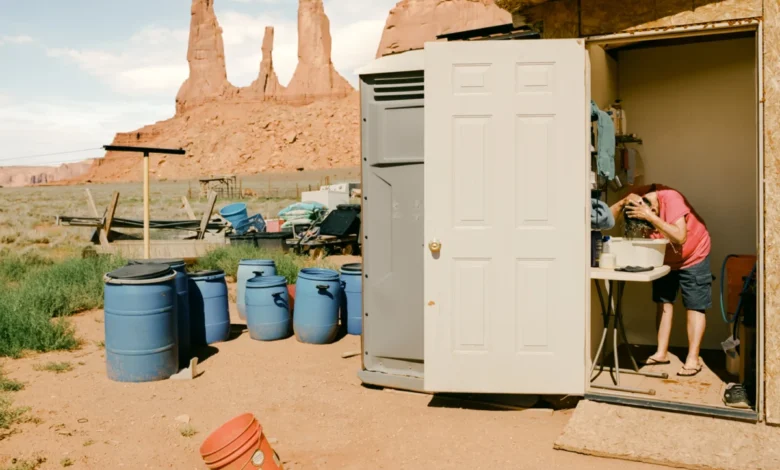
The stark, crimson monoliths of Monument Valley have long served as a romantic backdrop for the American imagination. Yet, hidden beneath the cinematic vistas lies a grinding, daily reality defined by thirst. For tens of thousands of citizens residing within the Navajo Nation—the largest Native American reservation in the United States—clean, running water is not a baseline utility taken for granted, but a precious, precarious commodity. More than one in three residents live without indoor plumbing, a statistic that underscores a profound infrastructure gap in the modern American West.
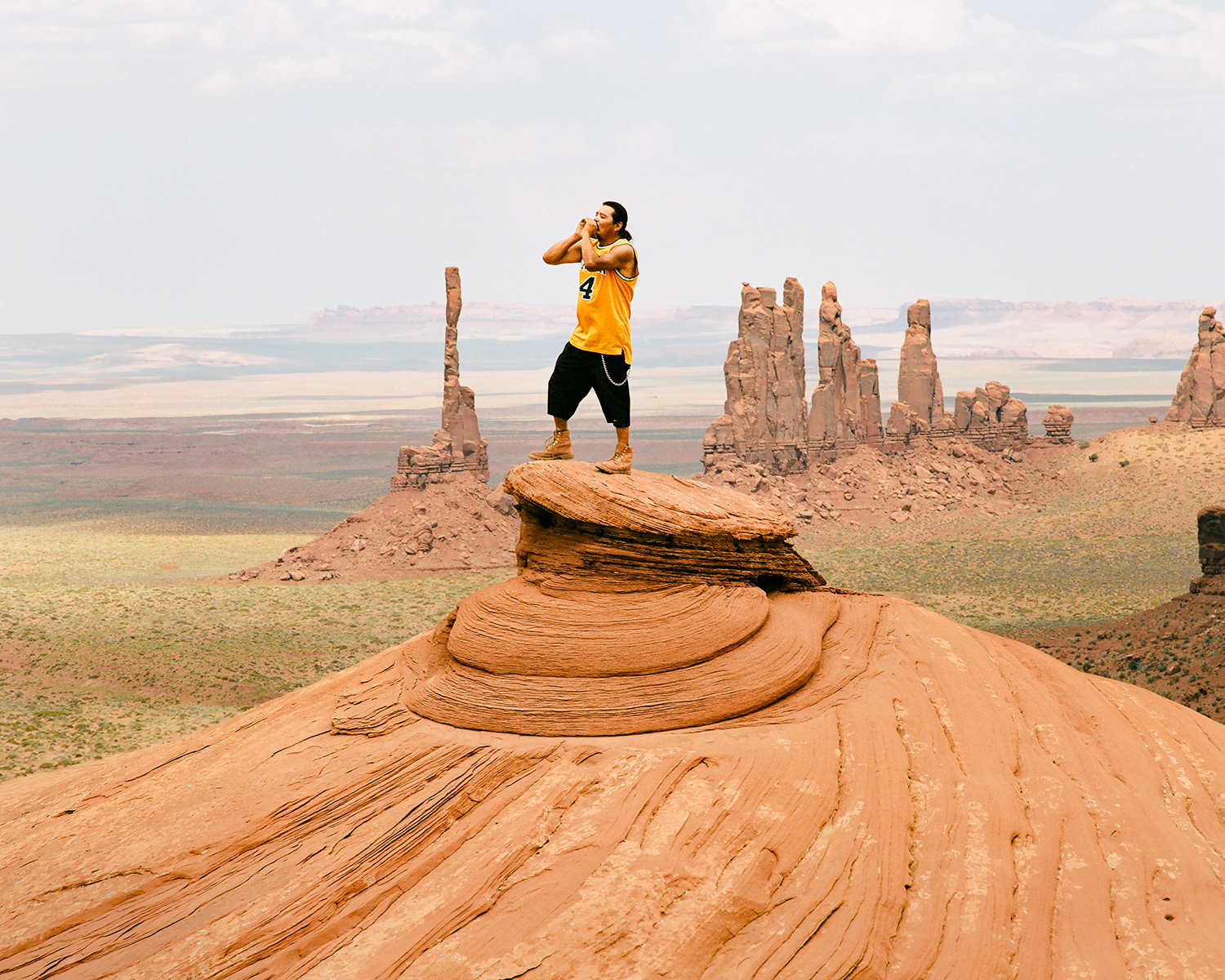
In his poignant and urgent visual documentary project, A Question of Balance, photographer Elliot Ross trains his lens on this systemic disparity. By documenting two distinct communities situated just 80 miles apart yet worlds away in their daily existence, Ross exposes the deep inequities embedded in the management and distribution of the Colorado River Basin. Published by KGP Monolith and supported by grants from the Magnum Foundation and the Center for Contemporary Documentation, the project serves as both an artistic achievement and an unflinching sociological critique.
A Tale of Two Landscapes: Sprawl Versus Scarcity
The core narrative of A Question of Balance relies on a jarring juxtaposition between Washington County in southwestern Utah and the adjacent expanses of the Navajo Nation.

In Washington County, a predominantly Mormon population experiences the rapid, unchecked growth of urban and suburban sprawl. Historically a quiet agricultural region, the county has evolved into one of the fastest-growing metropolitan areas in the United States. According to demographic figures from the Kem C. Gardner Policy Institute, Washington County’s population has surged by a staggering 1,210 percent since 1970, reaching nearly 200,000 residents by 2022, with a projected carrying capacity nearing one million people.
To sustain this explosive growth in an arid desert environment, Washington County has built extensive water infrastructure. Master-planned developments like "Long Valley"—a 600-acre project spearheaded by the nation’s largest homebuilder, D.R. Horton—rise rapidly from the dust. Residents of these new communities enjoy lush, irrigated landscaping, 17 public and private golf courses, and an estimated 2,500 swimming pools. Among them is a 2.4-acre, four-million-gallon private freshwater pool at the heart of the Desert Color development, fed continuously by developer-managed groundwater wells and ranking among the largest artificial freshwater pools in the world. According to the Washington County Water Conservancy District, roughly one in every twelve gallons of water consumed in the county is dedicated solely to keeping non-native grass and landscaping alive.

Eighty miles away, the reality for the Diné (Navajo) people is entirely inverted. More than 35 percent of Navajo Nation households lack indoor plumbing. During grueling summer months, families must regularly haul water across punishing terrain to fill storage tanks for drinking, cooking, and bathing. In Goulding, Utah—the commercial hub of Monument Valley—a single unassuming garden spigot serves as the literal watering hole for hundreds of residents, some of whom drive upwards of an hour each way just to secure basic hydration.
For residents like Linda Jackson, the absence of running water shapes every aspect of domestic life. Reflecting on her children’s upbringing, Jackson notes the generational disconnect: “My kids would say, ‘Mom, did we ever have running water?’ And I would say, ‘Kids, we did all the running.’” Similarly, elderly residents like 90-year-old Florence Neztsosie—who only recently had her kitchen connected to the local power grid—continue to rely on younger family members to manually haul water to sustain their households.

The Toxic Legacy of Cold War Uranium Mining
Compounding the crisis of scarcity is a profound crisis of contamination. The water insecurity faced by the Navajo Nation is not merely a product of geographical isolation or infrastructural neglect; it is deeply intertwined with the environmental fallout of 20th-century American history.
During the Cold War, the United States government aggressively pursued domestic uranium mining to fuel its nuclear arsenal. The Navajo Nation, rich in mineral deposits, became the epicenter of this extraction boom. Mining companies extracted millions of tons of uranium ore from Navajo lands, often employing local laborers under hazardous conditions without adequate safety warnings or protective equipment.

Decades after the mining operations ceased, the ecological ghost of the Cold War remains potent. Hundreds of abandoned uranium mines, waste piles, and exploratory boreholes continue to leach hazardous, cancer-causing heavy metals—including uranium, arsenic, and nickel—into the region’s aquifers, natural springs, and river systems.
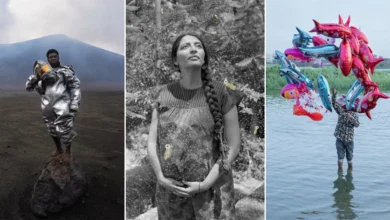
While federal agencies such as the U.S. Environmental Protection Agency (EPA) have initiated multi-million-dollar superfund cleanup operations and settlements, progress has been agonizingly slow. For many Diné families living in rural areas, natural water sources like the Little Colorado River are visibly integrated into the landscape, yet swimming or farming near them carries hidden biological hazards. Documented in Ross’s project, younger generations like Luna Stevens can be seen swimming in the uranium-tainted waters of the Little Colorado River near Cameron, Arizona, illustrating a dangerous collision between traditional ways of life and a poisoned ecosystem.

Infrastructure Gaps and the Climate of the Colorado River Basin
The stark divide in water consumption highlights a broader structural crisis facing the entire Colorado River Basin, a vital hydrological lifeline that supports over 40 million people across seven U.S. states and Mexico. Decades of over-allocation, prolonged megadroughts linked to global climate change, and rising temperatures have pushed the basin’s major reservoirs—Lake Mead and Lake Powell—to historic lows.
In this climate of scarcity, institutional capacity dictates survival. Washington County has leveraged vast financial resources, state backing, and federal partnerships to construct the dams, reservoirs, and piping networks necessary to capture, store, and distribute water reliably.

Conversely, Navajo communities largely lack the capital-intensive infrastructure required to capture seasonal bounty. As captured in Elliot Ross’s photography, heavy summer monsoons bring intense, short-lived cloudbursts that deliver the vast majority of the region’s annual precipitation. Without engineered dams, retention basins, and municipal distribution grids, this sudden influx of water mostly runs off into dry arroyos and washes, evaporating or disappearing into the desert sand before it can be harvested for human use.
Tom Holiday, a Navajo Nation resident living in the shadow of Monument Valley’s monuments, captures the philosophical and material gulf between the two cultures. “Water is life,” Holiday reflects. “People in the cities take it for granted and water their plants and grass. Here it’s precious. We think of water as a deity.”

Broader Implications and Socioeconomic Fallout
The documentation provided by A Question of Balance forces a broader examination of environmental justice, regulatory oversight, and equity in the American West.
Public health experts and human rights advocates have long argued that the lack of running water on the Navajo Nation is a public health emergency. Households lacking indoor plumbing face elevated rates of waterborne and skin diseases, face severe limitations during sanitary crises such as the COVID-19 pandemic, and experience diminished economic mobility. Time spent hauling water is time diverted from education, employment, and community development.

Furthermore, the project raises critical questions regarding municipal water rights and regional planning. As municipalities in Utah and other basin states continue to expand master-planned developments, luxury resorts, and water-intensive recreational facilities, downstream and adjacent indigenous communities frequently find their senior water rights bypassed or undermined by historical legal frameworks and federal inertia.
As A Question of Balance reaches wider audiences through exhibitions and its monograph publication, it challenges policymakers, urban planners, and the public to confront an uncomfortable truth: the gleaming, water-abundant oases of the modern Southwest are heavily subsidized by the systemic deprivation and historical neglect of indigenous communities living just down the road.