Nobu Hotel Toronto A Synthesis of Japanese Minimalism and Canadian Heritage in North Americas Fourth Largest City

Toronto is currently undergoing a period of unprecedented urban transformation, characterized by a rapid expansion across its lakeside plains and the emergence of dense vertical clusters that have redefined its skyline. Within a few short years, the city’s population has surpassed that of major North American hubs like Chicago, securing its position as the fourth-largest city on the continent. This demographic surge has been accompanied by a volatile real estate market and a construction boom that has turned the downtown core into a laboratory for avant-garde architecture. Amidst a sea of contorted spires and pixelated glass towers, a new philosophy of development is taking root—one that prioritizes the preservation of historical context over total erasure. The newly inaugurated Nobu Residences and Hotel stands as the preeminent example of this movement, blending the heritage of Toronto’s industrial past with the refined aesthetics of Japanese hospitality.
The Evolution of the Mercer Street Corridor
The site of the Nobu Hotel and Residences, located on Mercer Street in the heart of the Entertainment District, was once defined by its industrial utility. Central to this project is the historic Pilkington Glass Factory building, a structure that long served as a testament to Toronto’s early 20th-century manufacturing prowess. As the city pivoted toward a service- and finance-based economy, many such brick-and-beam structures were demolished to make way for high-rise condominiums. However, the development team behind Nobu Toronto—a collaboration between the Madison Group, Westdale Properties, and the global Nobu Hospitality brand founded by Chef Nobu Matsuhisa, Robert De Niro, and Meir Teper—opted for a more complex architectural path.
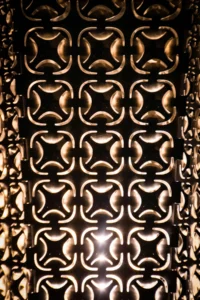
Designed by the renowned firm Teeple Architects, the complex utilizes a facadism approach that is both ambitious and meticulous. The defining feature of the original Pilkington building—its iconic glass bricks—has been preserved and integrated as the "skin" of the new podium. These bricks are not merely decorative; they serve as a thematic bridge between the heritage structure and the modern glass-and-steel towers that rise above it. This integration ensures that the street-level experience remains grounded in the city’s history, even as the project scales to heights previously unseen in this particular corridor.
Architectural Innovation: The Twin Towers and the Temple-Like Void
The structural composition of Nobu Toronto consists of two 45-story towers that rise from the historic base. These towers are characterized by angled window bays and subtly sculpted facade fins, designed to break the monotony of the standard glass curtain wall. The architectural language is one of movement; the towers appear to shift and contort slightly as they ascend, providing residents and guests with varied perspectives of the city and Lake Ontario.
One of the most significant architectural interventions is the two-story amenities podium located between the 9th and 10th floors. This space is defined by a massive, near-temple-like circular void that cuts through the center of the building. This "oculus" serves a dual purpose: it acts as a structural lungs for the complex and creates a dramatic visual focal point. According to Alessandro Munge, founding principal of Studio Munge—the firm responsible for the interior architecture—this void allows natural elements to become part of the guest experience. Rainfall and snowfall descend through the core, while natural light cascades deep into the interior, illuminating the gym and common areas that encircle the opening. This feature provides a serene, meditative counterpoint to the frenetic energy of the city streets 100 feet below.
Interior Philosophy: The Ryokan in the Sky
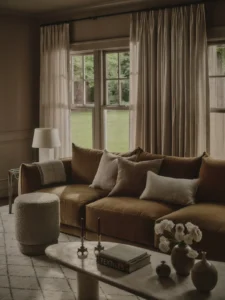
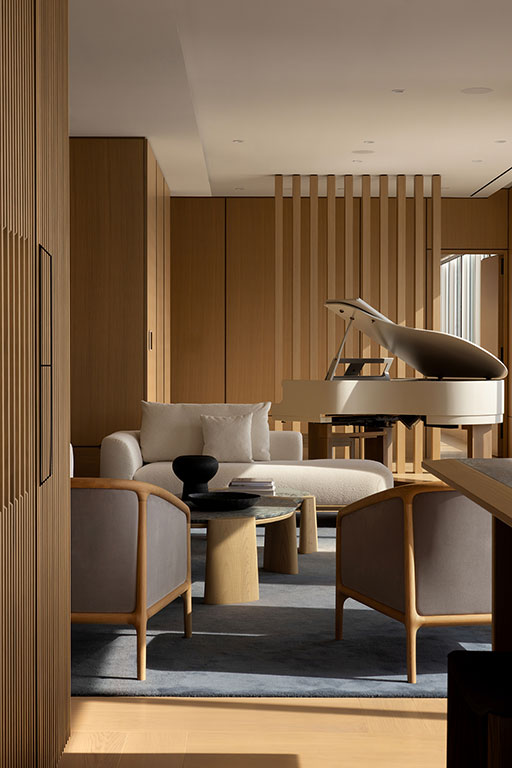
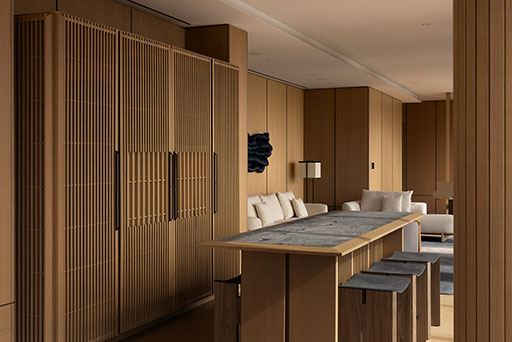
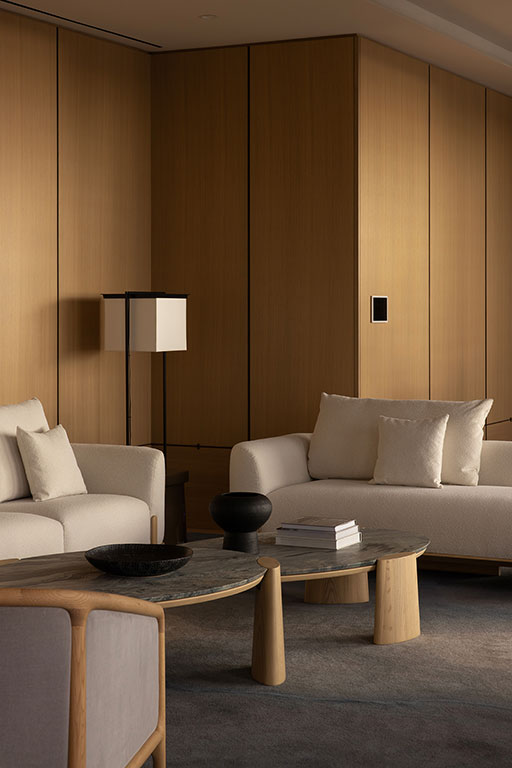
While the exterior of the building is a feat of modern engineering, the interior spaces, crafted by Studio Munge, are a study in restraint and cultural fusion. The design team looked to the "ryokan"—a traditional Japanese inn—as the primary conceptual driver. Ryokans are celebrated for their ability to provide a restorative environment through the use of tatami-matted rooms, natural materials, and a seamless connection to the environment.
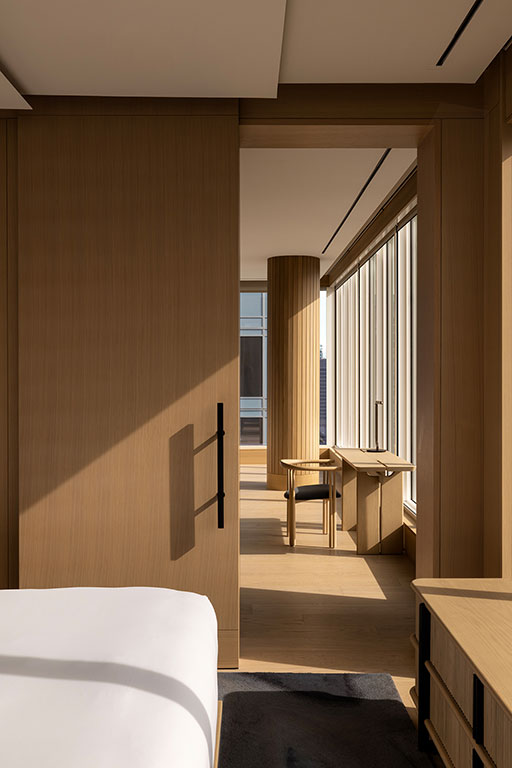
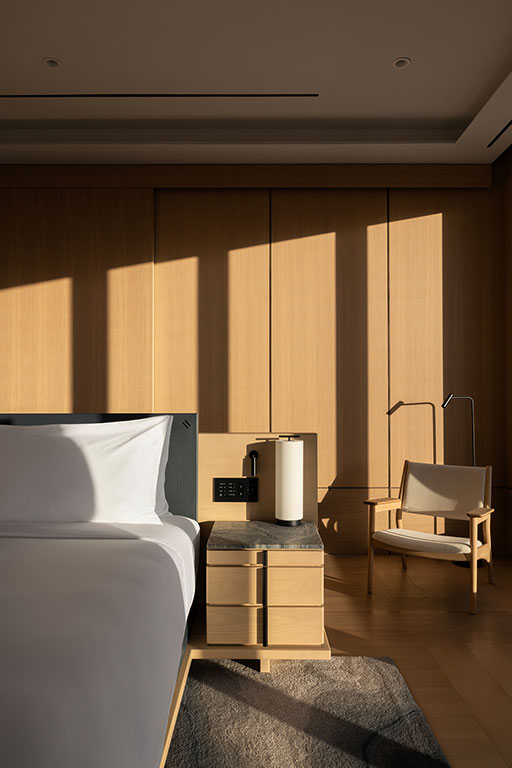
In Toronto, this concept has been adapted for a vertical, urban context. The hotel features only 36 exclusive guestrooms, marketed as "villas in the sky." These accommodations are located on the uppermost floors, offering a sense of seclusion and tranquility. The spatial planning of these rooms deviates from standard luxury hotel layouts. Bed orientations are strategically aligned to frame specific urban or lakeside views, and walk-in closets and generous living areas are standard.
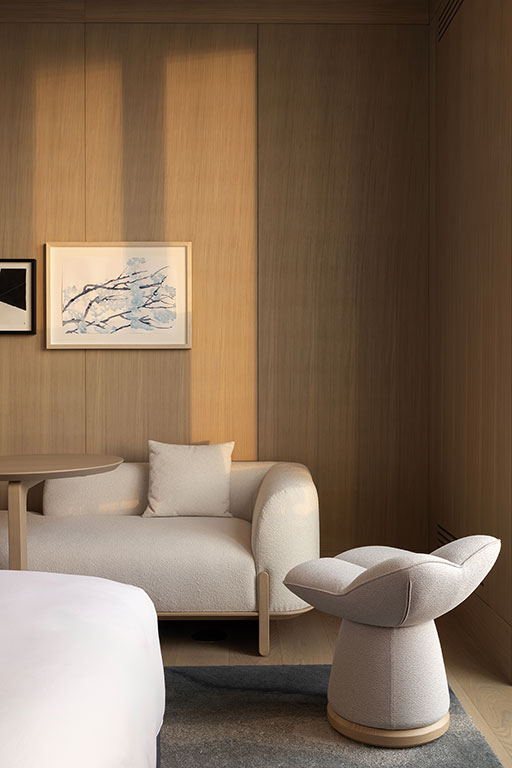
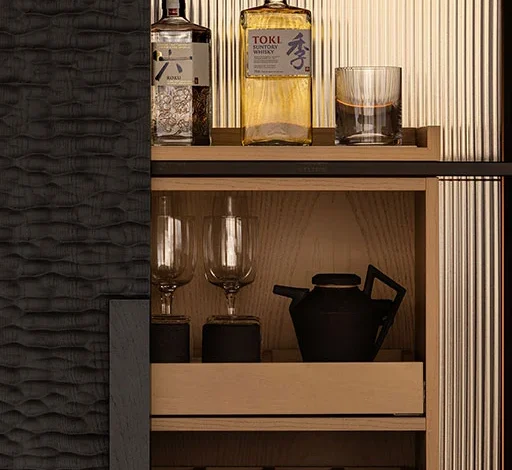
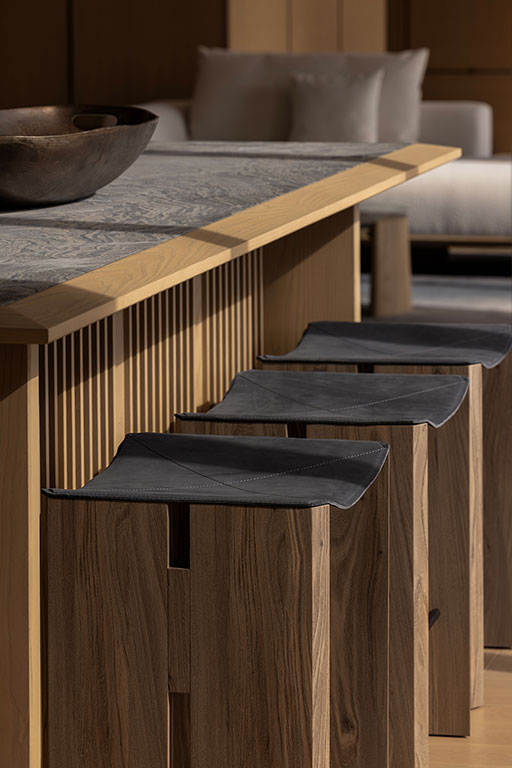
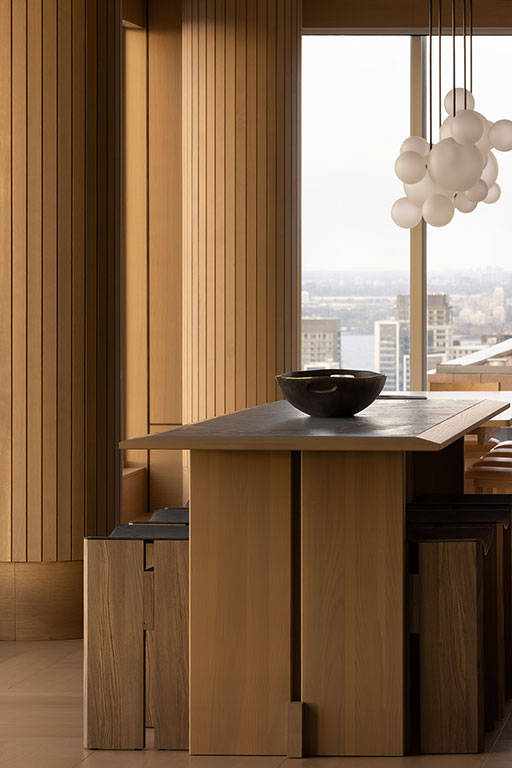
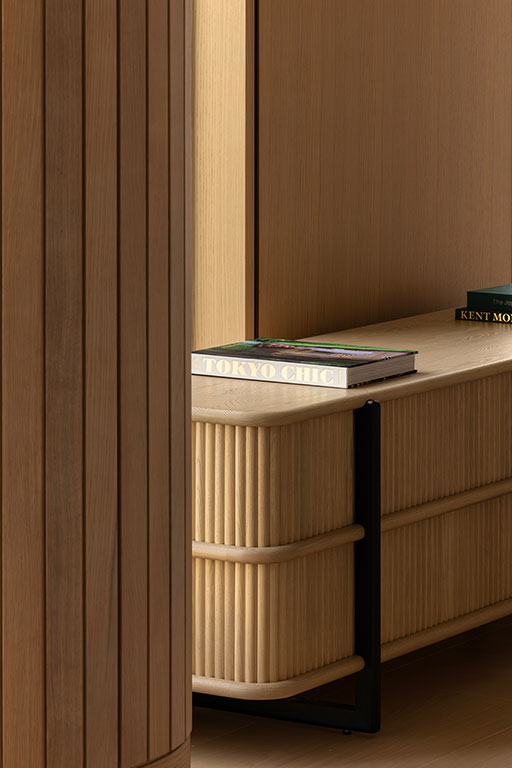
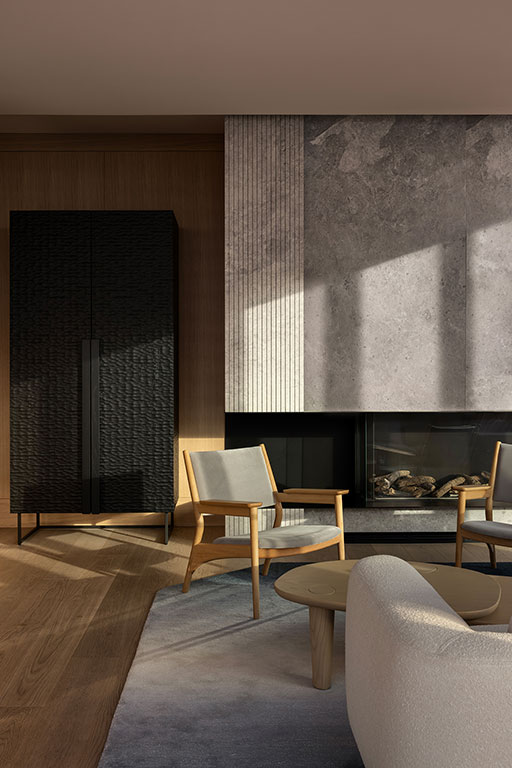
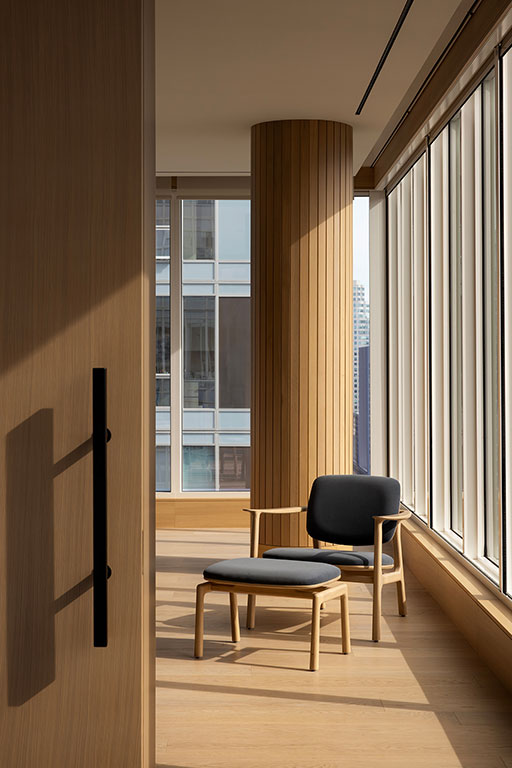
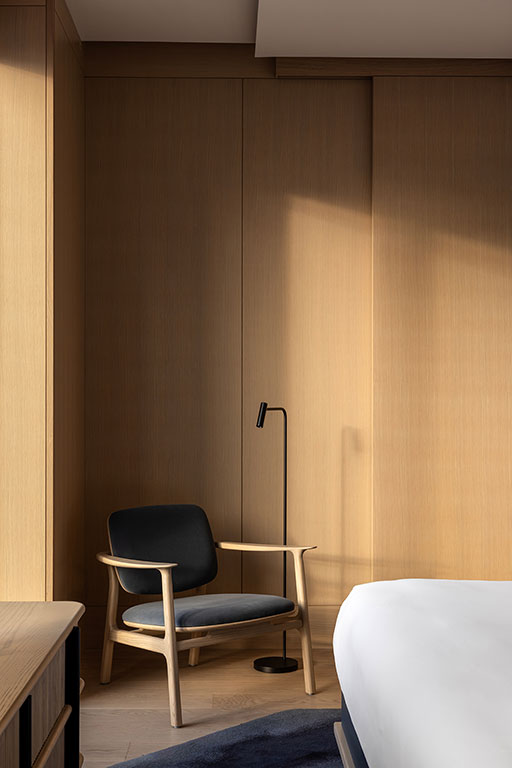
The material palette is a deliberate blend of Japanese tradition and Canadian geography. Studio Munge employed rift-cut white oak and Tundra Grey stone with a leathery finish to create a tactile, grounded atmosphere. These are complemented by hand-dyed indigo textiles and handcrafted Kawara tiles, the latter of which are traditionally used for Japanese roofing. To ground the project in its Canadian setting, the designers incorporated soft blue spectrums in the guestroom palettes, a direct reference to the proximity of Lake Ontario. In the lobby, traditional Japanese metalwork techniques were used to render abstracted interpretations of the local Canadian landscape, creating a unique visual dialogue between the two cultures.
A Curated Experience: Furnishings and Fine Dining
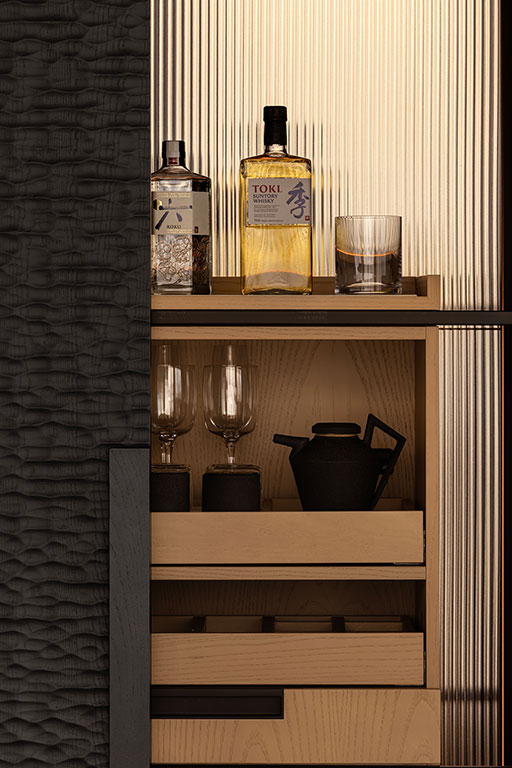
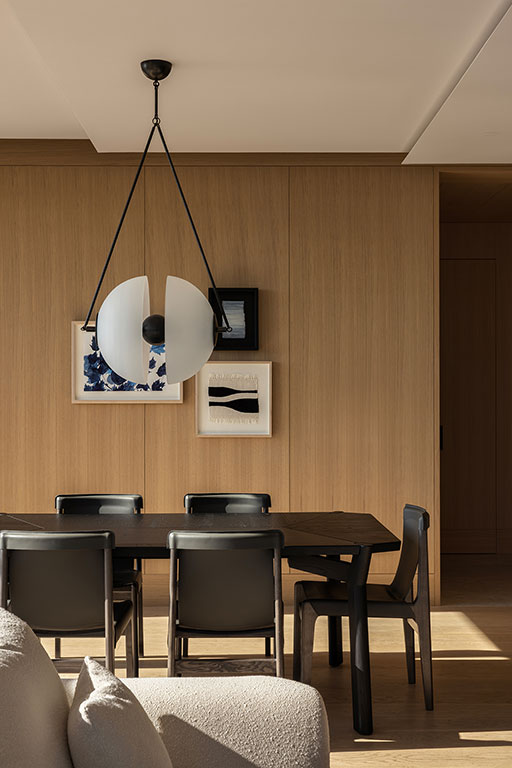
The luxury experience at Nobu Toronto is further enhanced by a meticulously curated selection of furniture from the world’s leading design houses. The list of collaborators reads like a "who’s who" of contemporary design, including B&B Italia, Gallotti & Radice, Henge, Piet Boon, and Christophe Delcourt. Lighting and textiles were sourced from Apparatus, Giopato & Coombes, and The Rug Company, while furniture from Karimoku Case Study and Carl Hansen & Søn reinforces the Japanese-minimalist aesthetic.
Beyond the accommodations, the development serves as a major culinary destination. The complex houses a 15,000-square-foot Nobu restaurant, which spans two levels. The restaurant is designed to be the social heart of the building, featuring a signature bar, a sushi chef’s table, and private dining rooms. The inclusion of such a massive retail and dining footprint reflects a broader trend in luxury development where the "lifestyle" component is as vital as the residential or hospitality offerings.
Economic Impact and the Luxury Market Context
The opening of Nobu Toronto, with room rates starting at approximately $2,700 per night, signals a new era for the city’s hospitality sector. For decades, Toronto’s luxury market was dominated by established brands like the Four Seasons, the Ritz-Carlton, and the Shangri-La. The entry of Nobu, which carries a distinct "lifestyle-luxury" branding, indicates that the city is now capable of supporting ultra-high-end niche products.
Data from the Toronto Regional Real Estate Board and various tourism agencies suggest that the demand for high-density, luxury mixed-use developments is at an all-time high. The 660 residential units within the Nobu complex sold out rapidly during the pre-construction phase, reflecting a global trend where high-net-worth individuals seek "branded residences" that offer hotel-style amenities and global recognition.
Furthermore, the project represents a significant capital investment in the Entertainment District, a neighborhood that has transitioned from a nightlife hub into a sophisticated residential and commercial precinct. The preservation of the Pilkington Glass building also sets a precedent for future developments, proving that heritage conservation can be a value-add rather than a hindrance to profitability.
Broader Implications for Urban Design
The success of the Nobu Hotel and Residences provides a roadmap for other rapidly growing cities facing the challenge of densification. It suggests that the "bombastic" architecture of the early 21st century—characterized by "look-at-me" spires—is giving way to a more nuanced approach. The most successful new developments are those that find a way to integrate the old with the new, the local with the global, and the frantic with the serene.
By incorporating the glass bricks of the Pilkington building, Teeple Architects and Studio Munge have ensured that Nobu Toronto is not just a "spaceship" landed in the middle of a Canadian city, but a structure that belongs to its site. The project serves as a reminder that even as Toronto rises in "dense vertical pockets," its past remains an essential part of its future identity. As the city continues to grow, the fusion of cultural heritage and modern luxury seen at Nobu Toronto will likely become the standard by which all other major urban developments are measured.