What’s the Difference Between Solid and Semi-Hollow Jewelry – Gem Gossip – Jewelry Blog

The global fine jewelry market is currently navigating a complex landscape defined by record-high precious metal prices and shifting consumer priorities that balance aesthetic impact with financial accessibility. Central to this evolution is the distinction between solid gold and semi-hollow gold construction, two manufacturing methodologies that offer vastly different profiles in terms of durability, weight, price, and long-term investment potential. As the price of gold continues to fluctuate near historic highs, understanding these structural differences has become essential for both seasoned collectors and first-time buyers looking to build a sustainable jewelry portfolio.
The Structural Mechanics of Fine Jewelry Production
In the professional jewelry industry, "solid gold" refers to items crafted entirely from a gold alloy—typically 14k or 18k—where the metal is consistent throughout the entire cross-section of the piece. These items are generally produced through lost-wax casting or hand-forging from solid wire or sheet. Because there is no air or void within the structure, solid gold jewelry possesses a significant "heft" or density that is immediately perceptible to the wearer. This density serves as a hallmark of traditional luxury, providing a tactile sense of security and value.

Conversely, "semi-hollow" jewelry, often referred to in the trade as "hollow" or "tubular," is crafted from real karat gold but features a hollow interior. This is achieved through sophisticated manufacturing techniques such as electroforming or the use of hollow gold tubing. In these processes, a thin layer of gold is formed over a core of base metal—such as copper—which is subsequently dissolved in an acid bath, leaving a lightweight, air-filled gold shell. The resulting piece can mirror the visual dimensions of a solid gold counterpart with exacting precision, yet it contains a fraction of the gold weight.
Economic Drivers and the Rising Cost of Gold
The preference for semi-hollow construction is largely driven by the economics of the global gold market. Over the past decade, gold has solidified its status as a safe-haven asset, with prices per ounce reaching unprecedented levels. For manufacturers, this creates a challenge: producing a bold, oversized gold chain in solid 14k gold can result in a retail price point that exceeds the budget of the average luxury consumer.
By utilizing semi-hollow technology, designers can offer the "bold gold" aesthetic—characterized by thick links and chunky silhouettes—at a price point that remains accessible. This allows the consumer to purchase real, high-karat gold rather than resorting to gold-plated or vermeil alternatives, which lack the intrinsic value of karat gold. However, this cost-saving measure comes with a significant trade-off in structural integrity.

Durability and the Physics of Wear and Tear
The primary drawback of semi-hollow jewelry is its susceptibility to physical damage, specifically denting. Because the walls of semi-hollow pieces are often thin, they lack the internal support necessary to resist impact. Once a hollow piece is dented, it is notoriously difficult, and sometimes impossible, to repair to its original state. In contrast, solid gold pieces can be polished, soldered, and reshaped by a jeweler with relative ease.
Industry data suggests that the "life-cycle" of a jewelry piece is heavily dependent on its placement on the body. Professional jewelers categorize jewelry into "high-impact" and "low-impact" zones.
- High-Impact Zones: This includes rings and bracelets. These items are subject to constant contact with hard surfaces, such as desks, doors, and steering wheels. For these categories, solid gold is the industry standard for longevity. A semi-hollow ring, for instance, is likely to collapse or warp under the pressure of daily wear.
- Low-Impact Zones: This includes earrings and, to a lesser extent, necklaces. Because these items sit against the skin or clothing and rarely strike hard objects, they are ideal candidates for semi-hollow construction.
The Ergonomics of Weight: Why Hollow Can Be Better
While solid gold is often equated with quality, it is not always the superior choice for the wearer’s comfort. This is most evident in the earring category. Large, solid gold hoops or heavy dangle earrings can cause significant physical strain on the earlobe, leading to discomfort or, in extreme cases, permanent stretching of the piercing.

The development of semi-hollow earrings has revolutionized the fashion industry by allowing for dramatic, oversized designs that weigh only a few grams. Market analysts note that the "statement earring" trend of the 2020s would be physically impossible without the use of hollow-core technology. For many consumers, the lightness of a semi-hollow piece is a functional necessity rather than a compromise.
Historical Context and the Evolution of Manufacturing
The transition from predominantly solid jewelry to a mix of solid and hollow pieces began in earnest during the industrial revolutions of the 19th and 20th centuries. Historically, jewelry was a luxury reserved for the elite, and solid construction was the only method known. However, as the middle class expanded and the demand for gold jewelry grew, manufacturers sought ways to reduce metal volume without sacrificing visual scale.
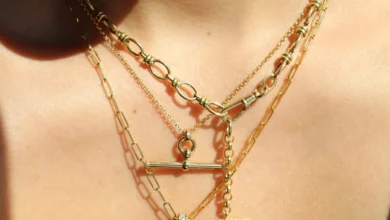
The introduction of the "Trombone Link" chain and the classic "Perfect Hoop" are prime examples of how hollow technology allowed for the mass democratization of fine jewelry. In the vintage market, semi-hollow pieces from the 1970s and 80s are frequently found with "character dents," which collectors often view as a testament to the piece’s history, though they significantly lower the resale value compared to pristine solid gold counterparts.

Investment Value and Resale Implications
From an investment perspective, solid gold remains the undisputed leader. When a consumer purchases solid gold, they are buying a commodity with a high "melt value." In times of financial crisis, solid gold jewelry can be liquidated based on its weight. While semi-hollow jewelry also holds melt value, the ratio of the purchase price to the actual gold content is much higher due to the labor-intensive manufacturing required to create stable hollow structures.
Furthermore, solid gold pieces are more likely to appreciate as "heirloom" items. Their ability to be resized and restored means they can be passed down through generations. Semi-hollow pieces, due to their fragility, are often viewed by the industry as "bridge jewelry"—items intended to last for a decade or two rather than a century.
Expert Statements and Market Reactions
"We are seeing a bifurcated market," says Marcus Thorne, a senior analyst at a leading precious metals consultancy. "On one side, you have the ‘investment-grade’ consumer who insists on solid 18k gold for its weight and permanence. On the other, you have the ‘aesthetic-first’ consumer who wants the look of a $10,000 chain for $2,500. The industry has responded by perfecting hollow-tubing techniques that are more resilient than they were twenty years ago."

Retailers have also noted a need for better consumer education. Many buyers are unaware that their jewelry is hollow until it sustains damage. Transparency in labeling—distinguishing between "solid," "hollow," and "semi-hollow"—is becoming a focal point for consumer protection agencies in the luxury sector.
Broader Implications for the Future of the Jewelry Industry
As sustainability becomes a core pillar of modern commerce, the debate between solid and hollow gold takes on a new dimension. Solid gold is more easily recycled; it can be melted down and repurposed with zero loss in quality. Semi-hollow pieces, while also recyclable, often require more complex processing to remove any internal residues from the manufacturing process.
The future of the industry likely lies in a hybrid approach. We are already seeing the rise of "reinforced hollow" jewelry, where strategic internal struts are added to hollow pieces to provide dent resistance without adding the full weight of solid metal. Additionally, 3D printing in gold is opening new doors for complex geometries that optimize strength-to-weight ratios.

Conclusion: Navigating the Choice
For the modern collector, the choice between solid and semi-hollow gold is not a matter of "good versus bad," but rather "purpose versus price."
- Solid gold remains the gold standard for rings, bracelets, and "workhorse" chains intended for daily, lifetime wear and financial security.
- Semi-hollow gold offers a pragmatic solution for statement necklaces and earrings, providing the luxury of real gold with an ergonomic lightness and a more accessible entry point into the world of fine jewelry.
As the market continues to adapt to the realities of gold pricing and consumer lifestyle needs, both construction methods will remain essential components of the fine jewelry ecosystem. The key to a successful collection lies in the strategic selection of each type, ensuring that high-impact pieces are built to last, while high-fashion pieces are built to be worn with comfort and style.