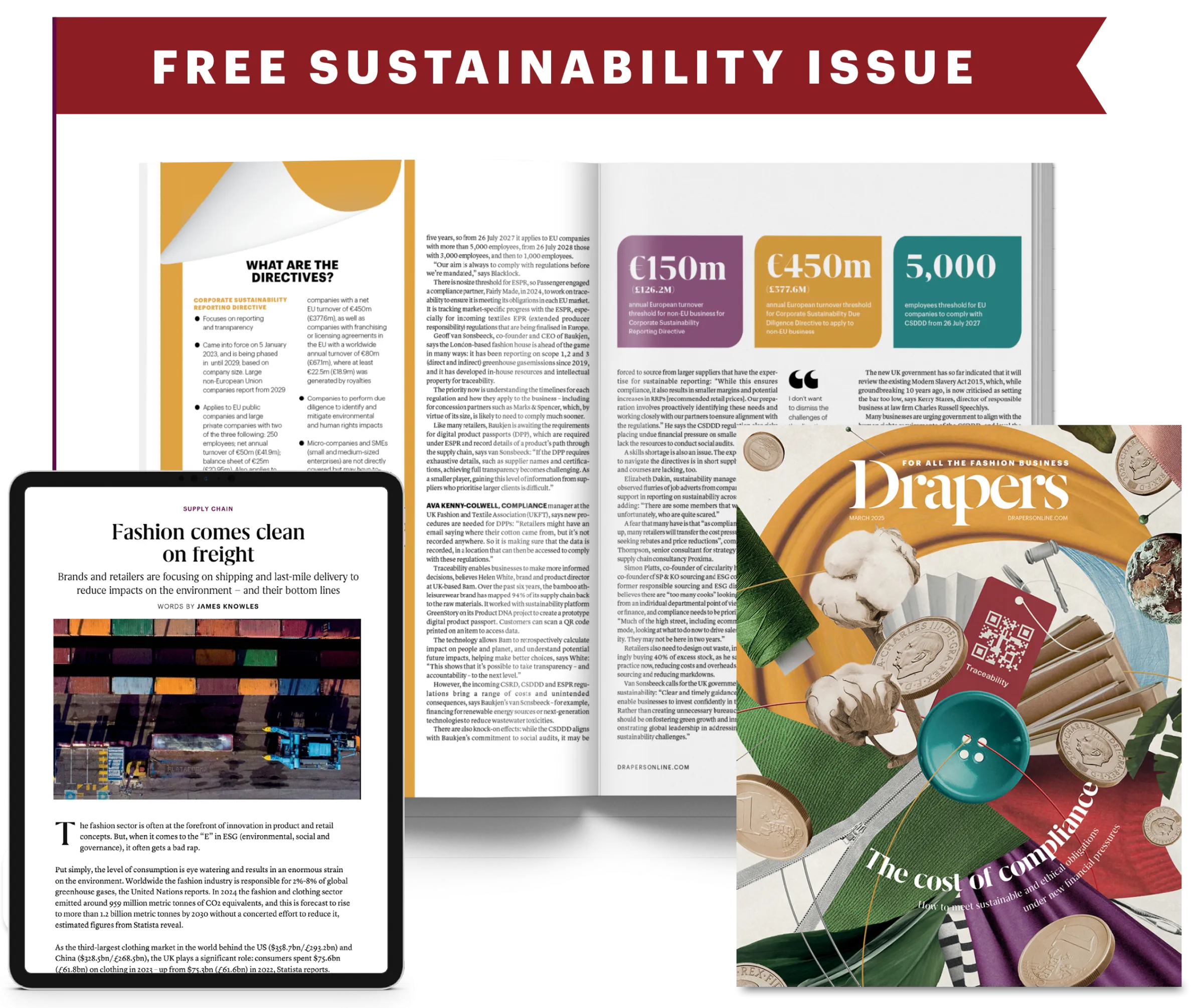
Digital Edition: Tesco F&F sales top £1.2bn as retailer warns on Middle East

Tesco’s dedicated clothing brand, F&F, has achieved a significant financial milestone, reporting total sales of £1.2 billion for the fiscal year ending February 28, 2026. This figure represents a 5.1% increase compared to the previous year, highlighting the brand’s continued dominance in the supermarket fashion sector despite a volatile global economic climate. While the revenue growth underscores the success of Tesco’s value-driven apparel strategy, the retailer has simultaneously issued a cautious outlook regarding geopolitical instability in the Middle East. Management warned that ongoing disruptions in the region are likely to exert pressure on supply chains and shipping costs throughout the coming fiscal year, potentially impacting margins in an increasingly competitive retail landscape.
Financial Performance and Market Position
The £1.2 billion sales figure cements F&F’s position as a cornerstone of the UK’s value fashion market. The 5.1% year-on-year growth is particularly notable given the broader stagnation seen in parts of the high street. Tesco’s ability to leverage its massive grocery footfall has allowed F&F to capture "mission-led" shoppers—consumers who may enter the store for food but are converted into fashion buyers by the brand’s proximity and pricing.
In the 2025/26 financial year, the clothing division benefited from a refined product mix that balanced essential basics with trend-led seasonal collections. Analysts attribute this success to Tesco’s sophisticated use of Clubcard data, which allowed the retailer to tailor its fashion offerings to specific regional demographics and optimize stock levels across its vast estate. By integrating fashion promotions directly into the Clubcard Prices ecosystem, Tesco has managed to maintain high volume sales even as inflation pressured household budgets.
Furthermore, the brand’s digital presence, primarily facilitated through its partnership with Next’s online platform, continued to contribute to the top-line growth. While the majority of F&F sales remain store-based, the digital channel has provided a crucial outlet for reaching customers who prefer home delivery, effectively bridging the gap between supermarket convenience and e-commerce accessibility.
The Middle East Warning: Supply Chain and Logistics
Despite the celebratory sales figures, the narrative of the annual report was tempered by a stark warning regarding the Middle East. Tesco joins a growing list of global retailers expressing concern over the prolonged instability in the Red Sea and the wider region. These geopolitical tensions have forced many shipping lines to divert vessels away from the Suez Canal, opting instead for the much longer route around the Cape of Good Hope.
For a high-volume fashion brand like F&F, which relies on timely shipments from manufacturing hubs in Southeast Asia and the Indian subcontinent, these diversions present two major challenges: time and cost. The detour around Africa can add between 10 and 14 days to lead times, making it difficult for the retailer to react quickly to changing weather patterns or sudden shifts in fashion trends.
From a financial perspective, the increased duration of these voyages leads to higher fuel consumption and elevated freight rates. Tesco management noted that while they have successfully mitigated some of these costs through long-term hedging and strategic inventory management, a prolonged conflict in the Middle East could eventually lead to "inflationary pressures" within the clothing category. The retailer has expressed a commitment to maintaining its value proposition for customers, but cautioned that sustained logistics disruptions would require "rigorous cost-control measures" to protect overall profitability.
Chronology of the 2025/26 Fiscal Year
The path to £1.2 billion in sales was marked by several key strategic milestones throughout the year:
- March – May 2025: Tesco initiated a "Back to Basics" campaign for F&F, focusing on high-quality essentials. This period saw a significant investment in sustainable cotton sourcing, which resonated with environmentally conscious consumers.
- June – August 2025: The summer season saw the launch of several "Limited Edition" edits, which leveraged social media influencers to drive footfall. Despite a relatively cool UK summer, the brand’s holiday-wear category performed above expectations.
- September 2025: As Red Sea tensions began to impact global shipping schedules, Tesco proactively adjusted its "Golden Quarter" logistics plan, bringing forward shipments of Autumn/Winter stock to ensure shelf availability.
- November – December 2025: The Christmas period proved pivotal. F&F reported record sales in the gifting and knitwear categories. The brand’s integration with Tesco’s "Clubcard Christmas Savers" scheme helped drive a 4% uptick in festive apparel sales compared to the previous year.
- January – February 2026: The final quarter focused on clearing winter inventory and transitioning to the Spring 2026 collection. During this time, the retailer formalized its warning regarding Middle East logistics, citing the potential for "secondary inflationary effects" in the new fiscal year.
Supporting Data and Category Insights
A deeper dive into the sales data reveals that the growth was not uniform across all categories, but rather driven by specific high-performing segments.
Kids and Babywear: This remained the most resilient category for F&F. As parents prioritized spending on children’s essentials during the cost-of-living squeeze, F&F’s multi-pack offerings and school uniform ranges saw a 7% increase in volume.
Menswear: Often an overlooked segment in supermarket fashion, F&F Menswear saw a 4.5% rise in sales, driven largely by a "premiumization" of the casual-wear range. The introduction of higher-quality fabrics in hoodies and chinos attracted a demographic looking for durability at a lower price point than traditional mid-market brands.
Womenswear: The largest contributor to the £1.2 billion total, womenswear sales were bolstered by "occasion-wear" edits. The brand’s ability to offer dresses and outerwear that mimic high-street trends at 30-40% lower prices remains its primary competitive advantage.
Margins and Operating Costs: While revenue was up 5.1%, the operating margin for the clothing division saw a slight contraction of 15 basis points. This was attributed to the aforementioned increase in shipping costs and a strategic decision by Tesco to absorb some of the price increases rather than passing them directly to the consumer.
Official Responses and Strategic Vision
While the earnings report was released as a formal filing, statements from Tesco’s leadership provided context on the brand’s direction. Ken Murphy, Tesco Group Chief Executive, emphasized the role of F&F in the retailer’s broader "Customer First" strategy.
"F&F continues to deliver exceptional value at a time when our customers need it most," Murphy stated. "To reach the £1.2 billion milestone is a testament to the quality of the product and the strength of our supply chain. However, we are not complacent. The situation in the Middle East is a reminder of the fragility of global trade. We are working closely with our suppliers to build further resilience into our network, ensuring that we can continue to offer the best possible prices regardless of external pressures."
Industry analysts have noted that Tesco’s response to the Middle East crisis has been more proactive than some of its peers. By issuing an early warning, the retailer is managing shareholder expectations while signaling to the market that it is prepared to navigate a period of prolonged volatility.
Broader Impact and Industry Implications
The performance of F&F serves as a barometer for the UK’s value fashion sector. The fact that a supermarket brand can generate £1.2 billion in annual sales suggests a permanent shift in consumer habits. The stigma once associated with "grocery store clothes" has largely evaporated, replaced by a pragmatism that favors convenience and value.
However, the warnings regarding the Middle East highlight a broader systemic risk for the UK fashion industry. Most UK retailers remain heavily dependent on Asian manufacturing and the maritime routes that connect East to West. If the Middle East remains a flashpoint for logistics, the industry may see a more aggressive move toward "near-shoring"—sourcing products from regions like Turkey, Morocco, or Eastern Europe to reduce reliance on the Suez Canal.
For Tesco, the challenge in the 2026/27 fiscal year will be maintaining the growth momentum of F&F while insulating the brand from external shocks. The retailer’s focus is expected to shift toward further automation in its distribution centers and a continued expansion of its digital footprint.
In conclusion, while the £1.2 billion sales figure represents a high-water mark for F&F, the "warning on the Middle East" serves as a sobering reminder of the complexities of modern retail. Tesco’s ability to balance its aggressive growth targets with the realities of a fractured global supply chain will be the defining theme for the brand in the coming year. For now, F&F remains a dominant force, proving that in the battle for the British wardrobe, value and convenience remain the most potent weapons.