Rania Matar: 50 Years Later – Where Do I Go? Captures the Resilient Spirit of Lebanese Youth Amid Ongoing Crisis


The poignant question scrawled on a concrete wall in war-scarred Beirut—“Where do I go?”—serves as the emotional anchor for acclaimed photographer Rania Matar’s latest sweeping body of work. Currently featured in a solo exhibition titled 50 Years Later – Where Do I Go? at the Sidney and Lois Eskenazi Museum of Art through August 2, 2026, this profound artistic project coincides with the release of a photobook of the same name. Featuring approximately 128 striking color portraits of young women living in contemporary Lebanon, the exhibition transcends traditional documentary photography to offer an intimate meditation on identity, belonging, displacement, and the heavy psychological toll of generational conflict.
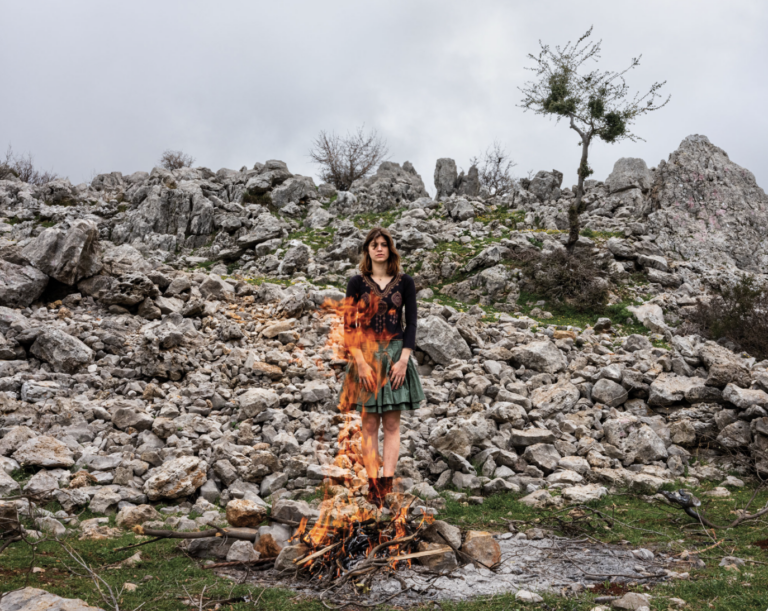
Through a deeply collaborative artistic process, Matar works alongside her subjects to ensure they maintain complete agency over how they are represented. For the young women captured in these frames, the query of relocation and survival is not a philosophical abstraction, but an immediate, high-stakes reality. They navigate an unforgiving landscape defined by persistent economic collapse, political instability, and the constant shadow of war. As geopolitical tensions continue to ripple across the region, Matar’s exhibition provides a vital humanizing lens, shifting global focus away from dry statistical reports and toward the lived experiences of individuals facing impossible life trajectories.
The Genesis of a Generation at the Crossroads
The conceptual roots of 50 Years Later – Where Do I Go? trace back to a pivotal inflection point in modern Lebanese history: the devastating August 4, 2020, explosions at the Port of Beirut. That catastrophic event—which resulted in over 200 deaths, thousands of injuries, and billions of dollars in property damage—shattered the Lebanese capital and accelerated an already severe economic crisis. For many young women, the blast served as a brutal catalyst, forcing them prematurely into adulthood and thrusting them onto an agonizing precipice: whether to remain in a fracturing homeland or seek a future abroad.

Matar’s deliberate choice to focus on women in this specific age bracket is deeply personal and historically resonant. In 1984, at the height of the protracted Lebanese Civil War (1975–1990), Matar was herself a young woman standing at that exact psychological crossroads. Facing the wrenching choice of whether to stay or flee, she ultimately emigrated to the United States, initially anticipating a brief absence that stretched into decades.
Decades later, returning to Lebanon to document the post-port explosion landscape, Matar experienced a profound sense of historical déjà vu. She saw her younger self—and her own daughters—mirrored in the faces of the women standing before her camera. This cyclical nature of displacement and uncertainty forms the intellectual and emotional backbone of the entire project, illustrating how generational trauma is inherited and continuously relived in the Levant.

Collaborative Process and Methodology
Unlike traditional photojournalism that often captures subjects unawares or frames them within predefined narratives, Matar’s creative methodology relies heavily on radical collaboration and mutual trust. She frequently initiates contact with prospective participants through open calls on social media platforms, such as Instagram, prior to her travels to Lebanon.
Rather than relying on pre-arranged location scouting or staged studio setups, Matar engages in extensive pre-shoot telephone consultations with each woman. During these conversations, they discuss personal histories, individual connections to specific Lebanese geographies, and the emotional resonance of various spaces. The shoot itself unfolds organically as an artistic dialogue between photographer and subject. The locations—ranging from sun-drenched Mediterranean coastlines and lush domestic gardens to the fractured, concrete skeletons of war-damaged buildings—are selected and interpreted jointly.

This hands-on, respectful approach ensures that the resulting portraits are not passive depictions of suffering, but active assertions of agency. The women dictate their posture, gaze, and spatial context, turning each frame into a co-authored visual testament. This methodology establishes a bridge of empathy, allowing the viewer to connect directly with the psychological interiority of the subject rather than merely observing an external crisis.
Motifs of Resilience: Light, Mirrors, and Rebirth
Art historians and critics examining 50 Years Later – Where Do I Go? have frequently noted recurring visual motifs that elevate the portraits beyond straightforward documentary records. Matar deliberately employs symbolic elements—such as natural shafts of Mediterranean light, strategic mirror reflections, and imagery of women interacting with earth, flora, and architectural ruins—to articulate a complex duality.

These visual metaphors communicate a dual narrative of devastation and persistent renewal. The mirrors and shafts of illumination speak to the tension between what is visible and what remains hidden, reflecting a country suspended between profound loss and enduring possibility. This visual vocabulary channels a modern phoenix-from-the-ashes narrative. Matar has frequently noted her awe at witnessing young women actively clearing rubble and participating in grassroots reconstruction efforts following the 2020 port disaster. By framing her subjects amidst both the scars of urban destruction and the natural beauty of the Lebanese landscape, the photographer insists on holding two simultaneous truths: the reality of deep-seated trauma and the stubborn endurance of hope.
Historical Chronology and Contextual Significance
The exhibition’s timeline is intrinsically tied to the 50th-century commemoration of the outbreak of the Lebanese Civil War, which began in 1975. Matar initially conceived the project to reflect upon half a century of recurring conflict, institutional decay, and mass emigration. However, the tragic irony of the project’s contemporary relevance became starkly apparent as regional hostilities escalated anew, leading to the displacement of roughly a quarter of Lebanon’s total population.

| Phase / Milestone | Historical Context & Significance |
|---|---|
| 1975–1990 | The Lebanese Civil War; shapes Rania Matar’s early life and eventual emigration in 1984. |
| August 4, 2020 | The Port of Beirut explosions; acts as a modern catalyst forcing a new generation of young women to weigh staying versus leaving. |
| 2025–2026 | 50-year retrospective milestone of the civil war; publication of the Where Do I Go? photobook and opening of the Eskenazi Museum exhibition amid renewed regional conflict and mass displacement. |
This timeline underscores the tragic persistence of the Lebanese predicament. The fundamental question—Where do I go?—has transformed from a historical reflection on the civil war era into a terrifyingly urgent present-tense reality for contemporary citizens facing renewed aerial bombardment, structural displacement, and economic destitution.
Ongoing Implications and Grassroots Mobilization
Despite the bleak geopolitical climate enveloping Lebanon, Matar remains in close communication with the women featured in her book and exhibition. Many of these individuals have experienced internal displacement, seeking temporary shelter across different regions of the country as their homes in South Lebanon and other targeted areas face destruction and occupation.

Yet, true to the resilient spirit captured in Matar’s frames, these young women have consistently risen to meet humanitarian emergencies. Rather than succumbing to despair, many have mobilized community-led relief efforts—coordinating fundraising campaigns, sourcing mattresses, cooking warm meals, and distributing essential supplies to families rendered homeless by the conflict.
In analyzing the broader implications of the project, cultural commentators note that Matar’s work serves as an essential antidote to dehumanizing media cycles that reduce complex human populations to casualty figures and geopolitical chess pieces. By spotlighting individual dignity, intellectual curiosity, and communal solidarity, 50 Years Later – Where Do I Go? frames the youth of Lebanon not as passive victims of cyclical violence, but as active agents charting their own survival. Through these evocative portraits, Matar has constructed an enduring visual monument—a collective love letter to a fractured nation and a tribute to a generation that repeatedly chooses to believe in its own future.