Chester Higgins: Shared Memories, A Six-Decade Retrospective, Celebrates the Nuances of African Identity

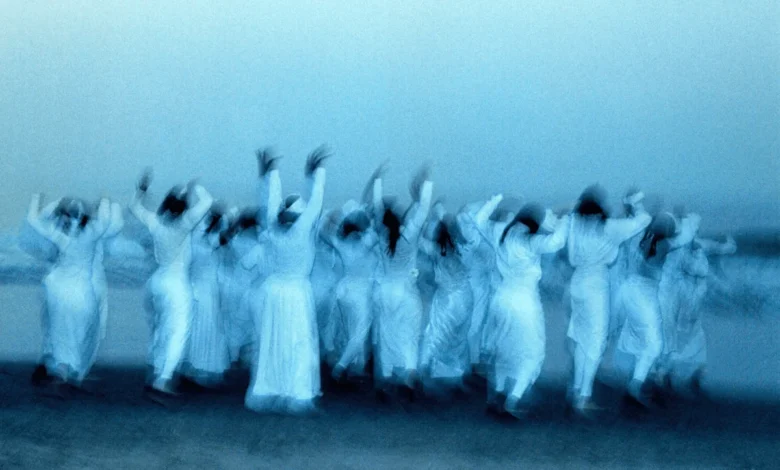
Photographer Chester Higgins has dedicated over sixty years to creating a powerful and enduring visual archive that celebrates the presence, history, and achievements of people of African descent. His journey began in rural southern Alabama during the crucible of the Civil Rights Movement, a period of profound social and political upheaval. It was during his student years at Tuskegee University that Higgins discovered the transformative power of photography, a calling that would ultimately lead to a distinguished nearly four-decade career as a staff photographer for The New York Times. Currently, an extensive exhibition titled Chester Higgins: Shared Memories, showcasing his remarkable body of work spanning six decades, is on view at the Bruce Silverstein Gallery in New York through June 20, 2026. This retrospective offers a compelling opportunity to engage with Higgins’s profound vision and his philosophy on capturing the essence of his subjects.
A Legacy of Respectful Representation
In an interview accompanying the exhibition, Higgins reflected on the enduring relevance of his work, particularly in the current socio-cultural landscape. "Absolutely," he stated when asked if the exhibition felt particularly timely. "Fundamentally, my work is about identity and celebrating the search for my own African Spirit, the Spirit in life, and sharing that with others. For most people, my view of African people is unique, embracing, and nonjudgmental. A positive and loving message about any people is a balm to the daily confusion and miseducation we are subjected to."
Higgins’s perspective is rooted in a deep personal connection to his subjects, a sentiment that permeates his entire oeuvre. Growing up in the segregated South, he witnessed firsthand the often-negative and stereotypical portrayals of Black Americans in media. This experience fueled a desire to counter such narratives with images that conveyed dignity, complexity, and shared humanity. His early exposure to the Civil Rights Movement provided a stark contrast to the prevailing visual discourse, highlighting the urgent need for a more balanced and authentic representation.

The New York Times: A Platform for Change
During his tenure at The New York Times, Higgins played a pivotal role in shaping how Black Americans were depicted in one of the world’s most influential newspapers. He articulated his mission with clarity: "The reason that I became a publishing photographer was because I wanted to change the visual diet from exclusive negativity when the subject is my people to include a more balanced human personality. I’d like to think that my daily visual representation of my people broadened the way they were perceived."
Higgins’s approach transcended mere documentation; he sought to illuminate the universal aspects of the human experience, regardless of economic or social standing. "I tried to look at poverty differently, without the lens of class, pity, or exclusion," he explained. "In all of my images, regardless of their economic and social situation, I try to focus on something much larger, like their humanity." He emphasized the shared desires that unite all people: "We, humans, have simple desires; we all want to be happy. But since we humans can be complicated and defective by nature, the road from where we start and where we end up, for some, can be an exhaustive struggle. But even in our struggles and differences, we are blessed that our common denominator is a creator who is generous to all of us. Regardless of who we are, we are all afforded air to breathe, water to drink, food to eat, and emotions to season our life experience."

His photographic subjects consistently included universal themes such as celebrations, ceremonies, family life, struggles, moments of enjoyment, and the natural process of aging. This deliberate focus on shared human experiences served to bridge cultural divides and foster empathy among readers. The impact of his work was recognized by the newspaper’s leadership. As Higgins recalled, upon his retirement, the Managing Editor stated that he "had changed the way the newspaper (meaning mostly white staffers) see Black people, that I expanded everyone’s horizon." Higgins saw his role as an "agent of expansion," utilizing his platform at the "paper of record" to present vital information to America’s decision-makers, packaged through art in a digestible format.
The Photographer’s Eye: Sentiment and Truth
Higgins’s profound statement, "The photograph never lies about the photographer," encapsulates his core belief in the inherent connection between the artist and their creation. He elaborated on this sentiment: "My statement is all about sentiment. As social beings, we process current reality through our lens of prior experiences, which determines our level of comfort with new information. If the new information facing us provokes fear or comfort, then that will color our decision of acceptance or rejection. If a photographer loves their subject, it is almost impossible to make a demening image of that subject. The reverse is also true. The photographer leaves their sociological contract in their photographs."

This realization was deeply ingrained in him during his formative years. He recounted a pivotal moment as a student at Tuskegee University, the day after participating in a political protest against the discriminatory policies of Alabama Governor George Wallace. He observed how photographs of the demonstration published the following day depicted the student protestors not as citizens exercising their democratic rights, but as "potential arsonists, rapists, thugs, and thieves." This stark contrast between the reality of their actions and the media’s portrayal solidified his understanding of how a photographer’s internal disposition profoundly influences the narrative conveyed in their images. This experience underscored the critical importance of a photographer’s empathy and respect for their subjects.
The "Signature of the Spirit": A Deeper Perception of Reality
Higgins’s artistic philosophy extends beyond the visible, delving into a realm he describes as the "Signature of the Spirit." He explains this concept as a unique way of perceiving reality, influenced by an early out-of-body experience. "At a very young age, I had an out-of-body experience that changed the way I perceive reality. I came away with the feeling that life or reality travels in parallels and is multi-layered. To me, this construction of Nature is supported by invisible forces with a constantly shifting quality. It made me conscious of the fact that most of the forces in Nature that we experience, we have no name for, and the presence of those underlying forces is not obvious and below the radar of our senses."

This heightened awareness shapes his photographic process. As an "ortovert," a term he uses to describe his perspective, Higgins suggests a degree of surrender to a higher power. "I’ve harnessed my ego. In many ways, I accept that the Spirit is in charge and that the reality we experience is akin to a Marionette performance. In acknowledging natural behavior and appreciating that performance, I tend to look for the behind-the-scenes effects driving our visual reality. It is in the transitions between the Spirit world and the world of reality that I search for Signature of the Spirit where it reveals itself." This intricate process of "looking" is not confined to the moment of capture but is an ongoing dialogue between his intuition, his experiences, and his engagement with the world, both seen and unseen.
Broader Implications and the Path Forward
Chester Higgins’s exhibition serves as a powerful testament to the transformative potential of photography as a tool for social change and understanding. His decades-long commitment to portraying people of African descent with dignity and nuance has undoubtedly contributed to a more inclusive and accurate visual landscape. The exhibition’s relevance today underscores the ongoing need to challenge stereotypical representations and to embrace a more multifaceted understanding of identity.

The implications of Higgins’s work extend beyond the art world. By consistently highlighting universal human experiences, he provides a framework for empathy and connection across diverse communities. His approach offers valuable lessons for anyone involved in visual storytelling, emphasizing the ethical responsibility to represent subjects with respect, honesty, and a deep appreciation for their humanity. As society continues to grapple with issues of representation and identity, Higgins’s legacy serves as an inspiration, reminding us that the most impactful images are often those that reveal the shared spirit that binds us all. The ongoing dialogue prompted by Chester Higgins: Shared Memories encourages a deeper contemplation of how we see and how we are seen, advocating for a visual language that embraces complexity, celebrates individuality, and fosters a more profound sense of shared experience.