Burberry Summer 2027: Daniel Lee Redefines British Heritage Through Instinctive Design

The history of Burberry is inextricably linked to the fabric of London, yet the house’s current creative director, Daniel Lee, has demonstrated a resolute commitment to preventing that legacy from stagnating. At the most recent iteration of London Fashion Week, the brand’s Summer 2027 showcase served as a masterclass in modernization, proving that heritage codes can achieve contemporary relevance when permitted to evolve. Eschewing the urge to force a radical reinvention, Lee instead opted for a younger, looser, and more instinctive approach to menswear, highlighting the enduring versatility of Burberry’s foundational aesthetic.
The Venue and Atmospheric Context
The show was hosted within the architectural confines of the Chelsea College of Arts, a venue selected for its ability to provide a clean, neutral backdrop. The environment was intentionally minimalist: a stark, white-walled space punctuated only by wooden benches bearing the brand’s signature graphic motifs. This deliberate stripping back of theatrical distraction focused the audience’s attention on the collection itself.
The atmosphere was set by an emotive, decades-spanning soundtrack featuring the work of David Bowie, an auditory choice that mirrored the collection’s core thesis: the tension between rigid control and creative instinct. Among the high-profile attendees witnessing the transition were Romeo Beckham, actor Jonathan Bailey, and industry stalwarts such as Jason Statham and Rosie Huntington-Whiteley. The guest list underscored the brand’s ongoing effort to bridge the gap between traditional luxury consumers and a younger, culturally engaged demographic.
Chronology and Creative Evolution
Since Daniel Lee assumed the role of creative director, Burberry has undergone a systematic reassessment of its visual language. This Summer 2027 collection marks a definitive shift in pace compared to his inaugural presentations, which were often characterized by more structural intensity.
The timeline of Lee’s tenure has been marked by a transition from archival reverence to a more fluid, lived-in aesthetic. While previous seasons focused on establishing a new visual identity for the house, the Summer 2027 collection represents a "return to essentials." By loosening the formality that has historically defined the trench-coat-centric brand, Lee has successfully pivoted toward a silhouette that favors comfort and personality over rigid adherence to tailoring traditions.
Design Analysis: The Architecture of Ease
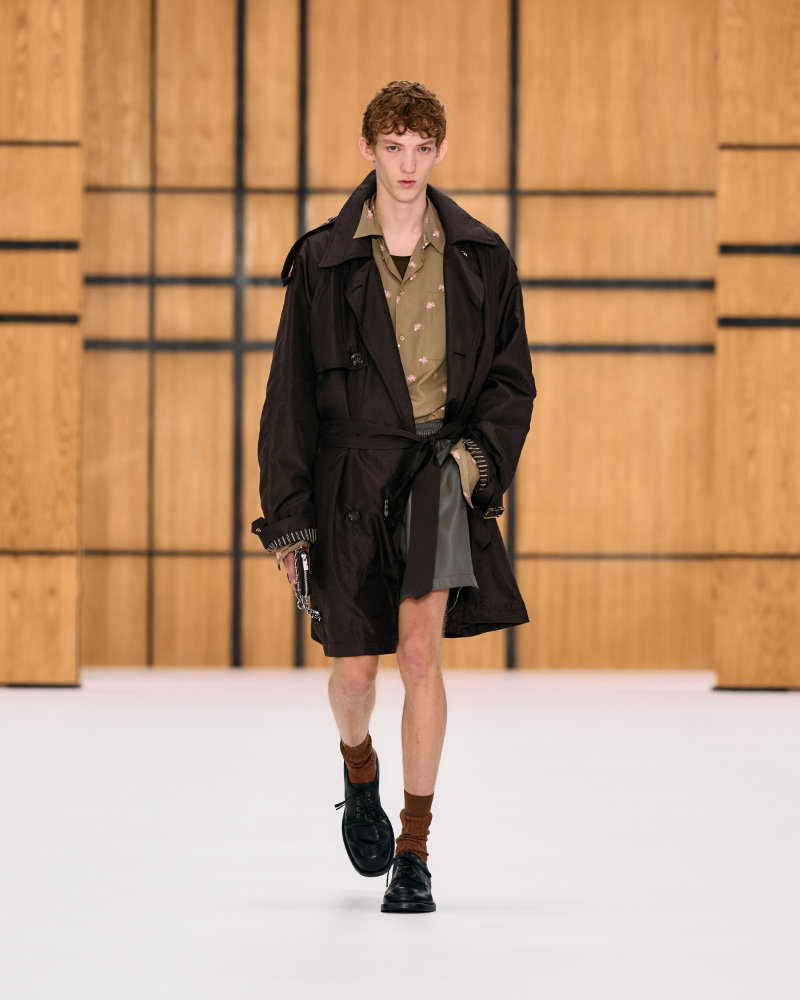
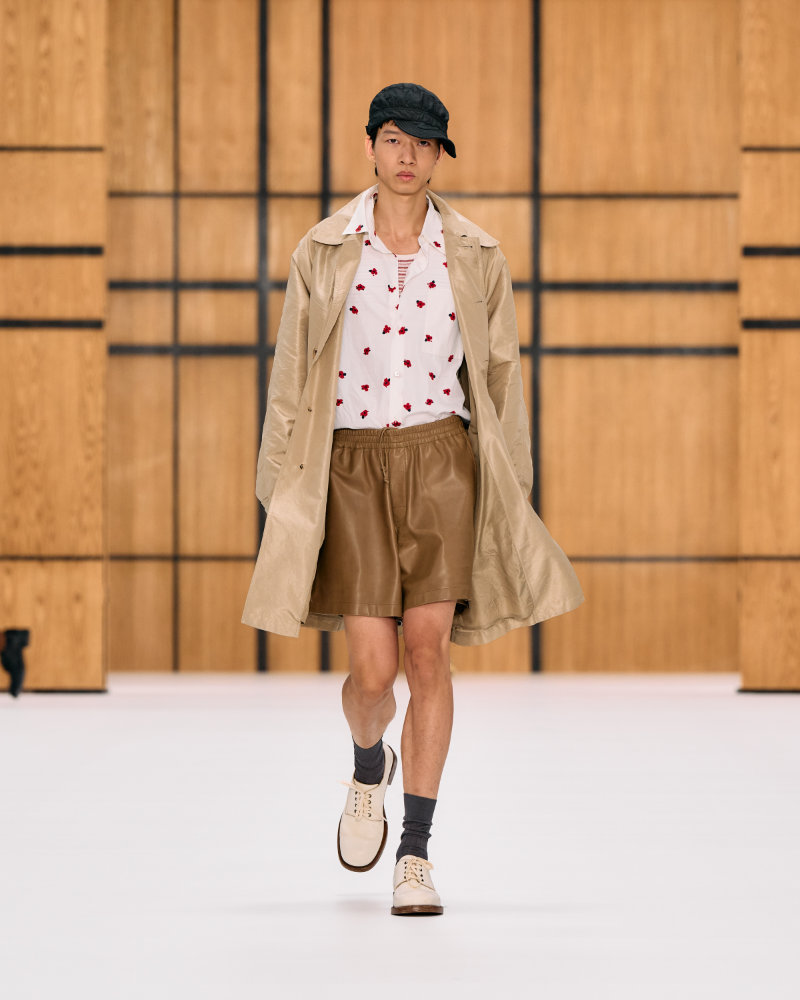
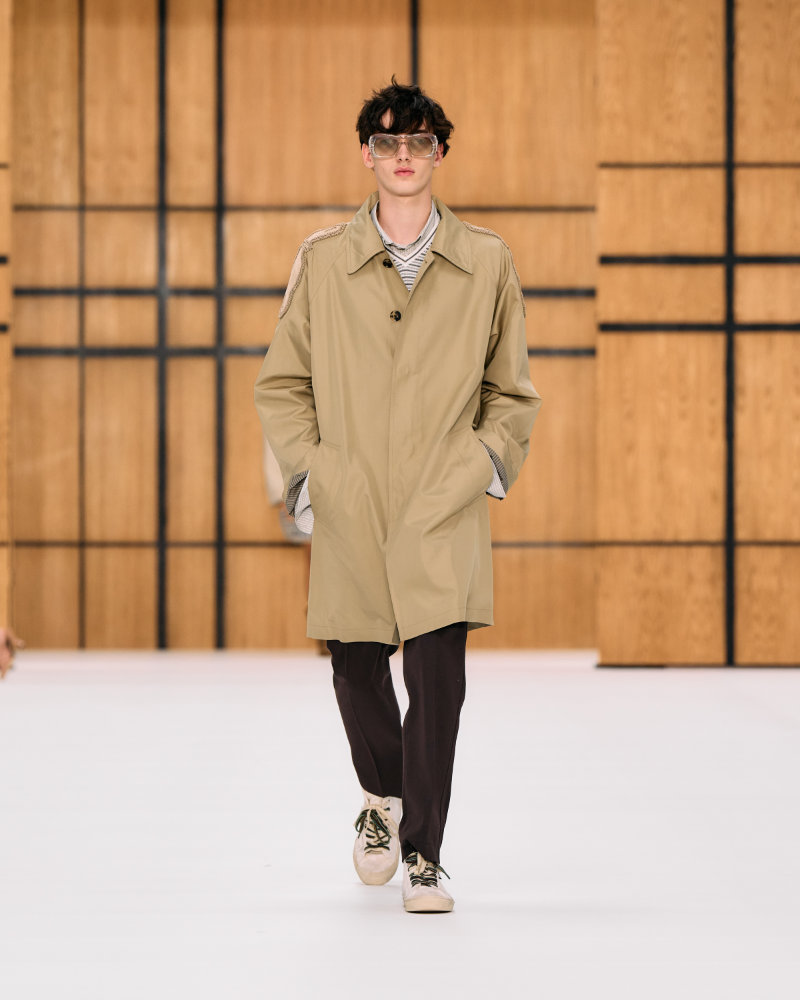
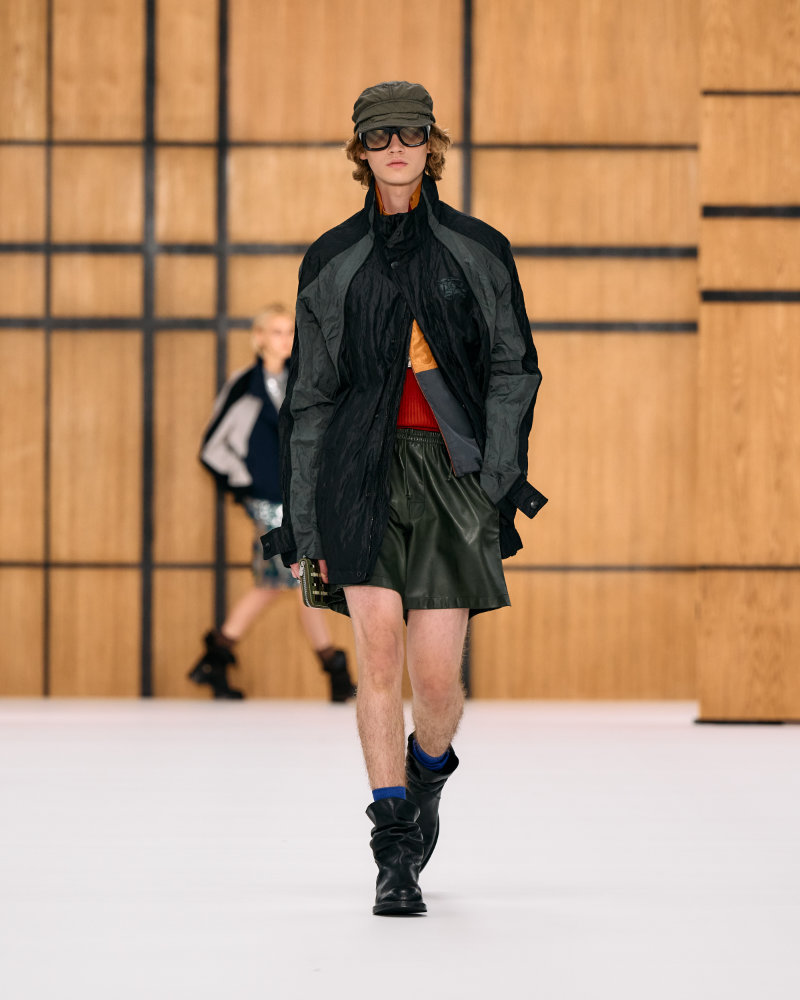
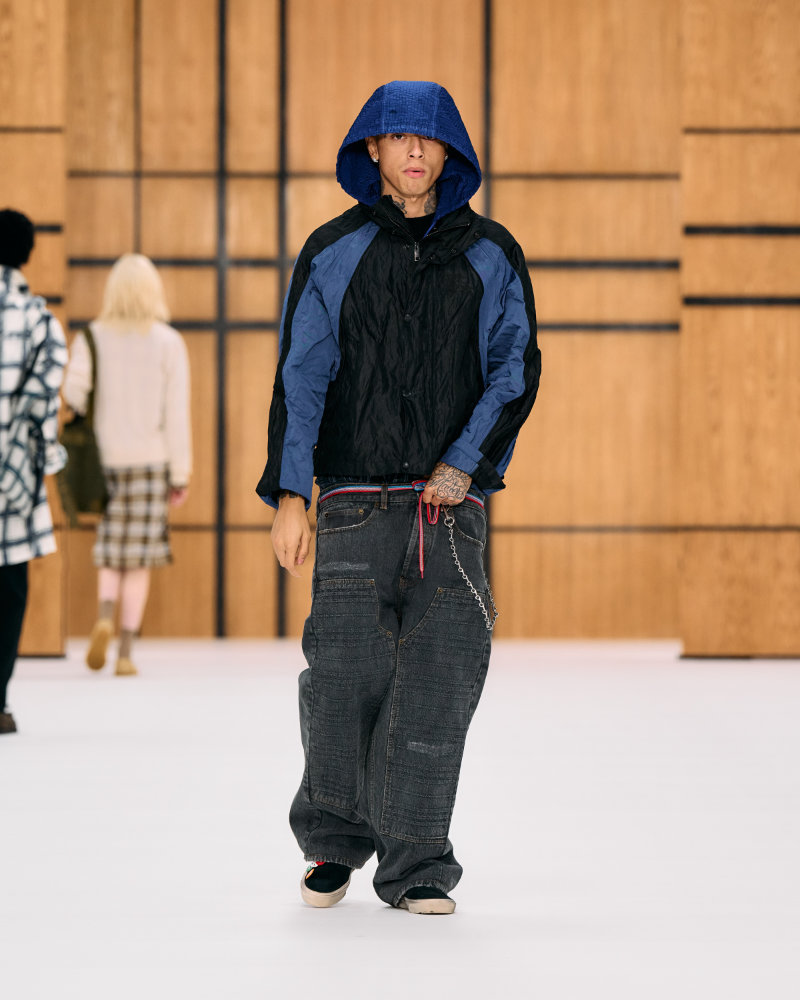
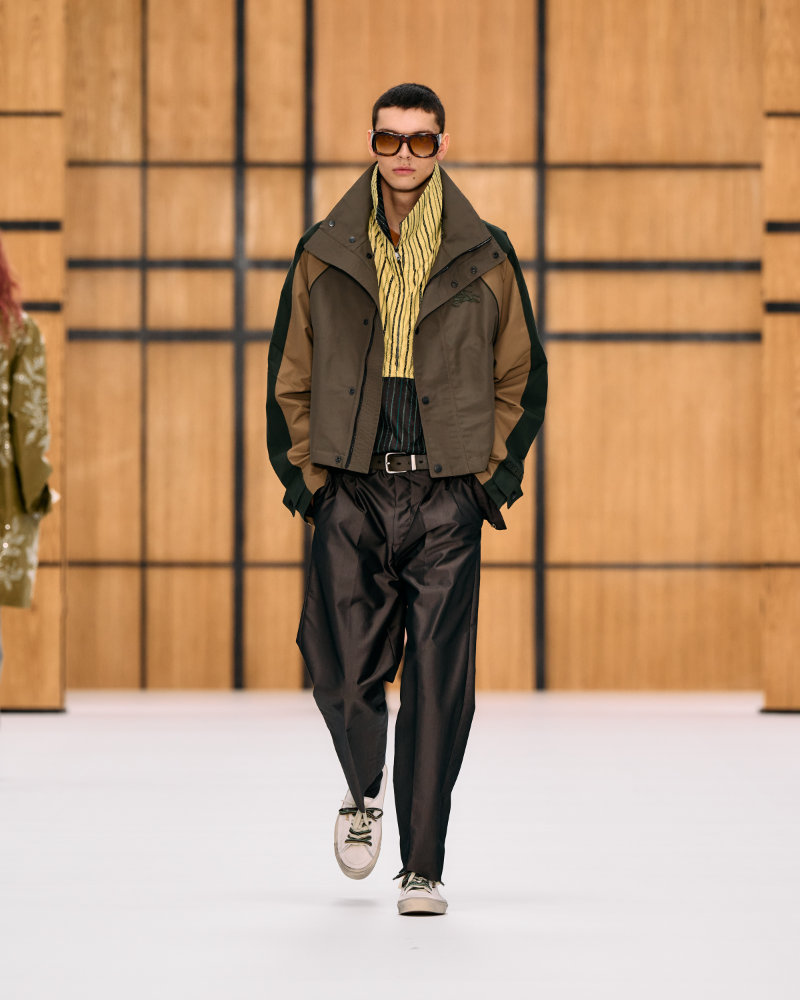
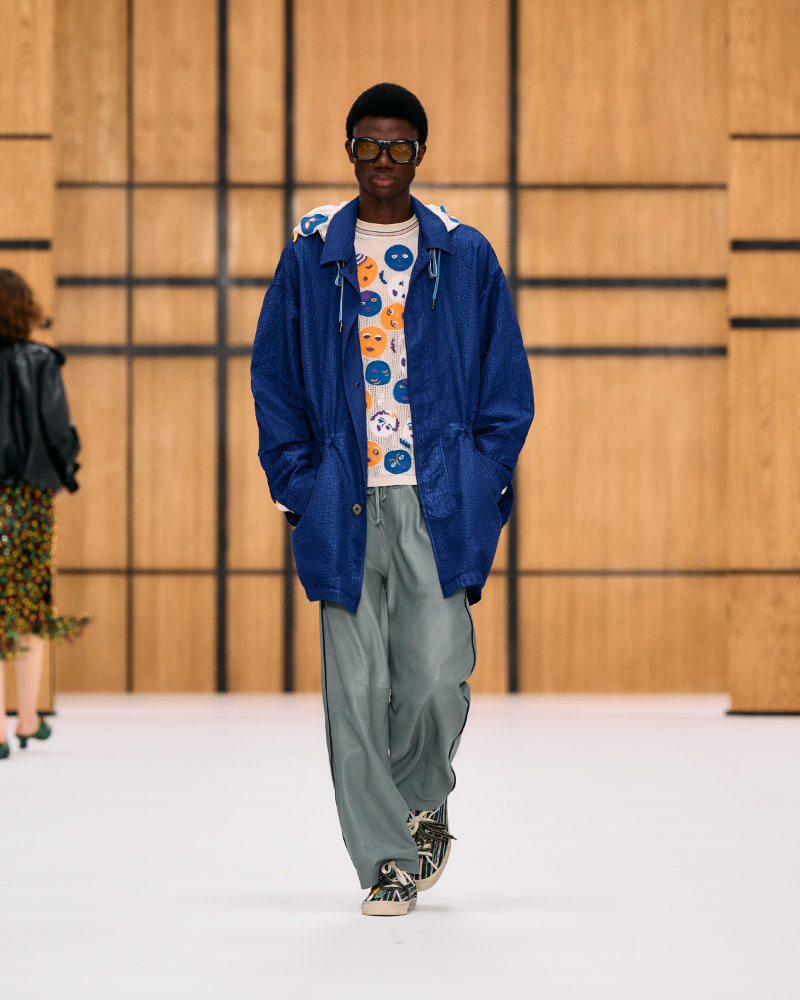
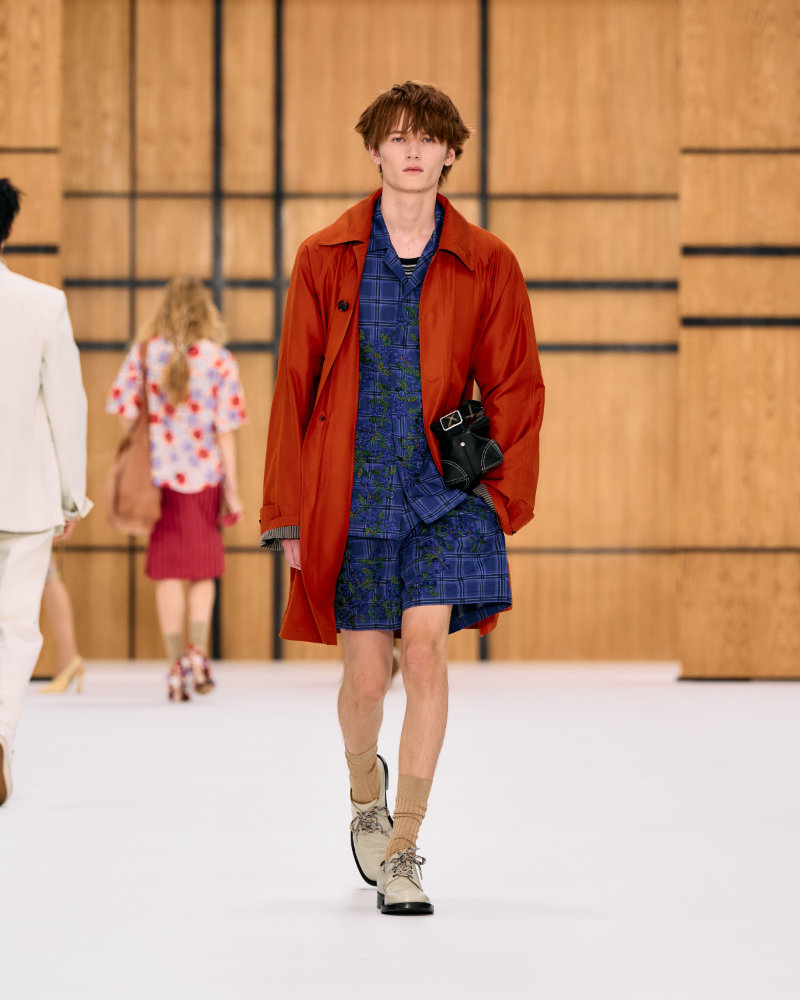
The hallmark of this collection was its reliance on lightweight, utilitarian outerwear. References to 1990s windbreakers and relaxed, sporty silhouettes dominated the menswear, providing an immediate, street-ready energy. The styling was intentionally non-fussy, with pieces—such as those worn by prominent cultural figures like Central Cee—focusing on short proportions and relaxed cuts.
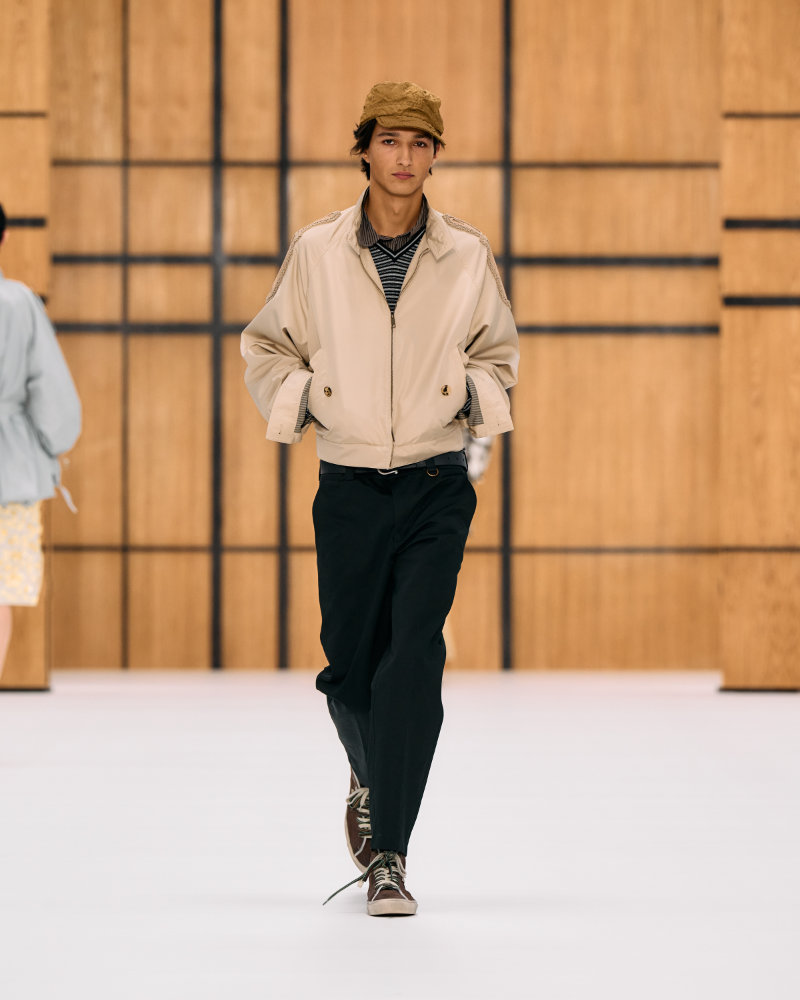
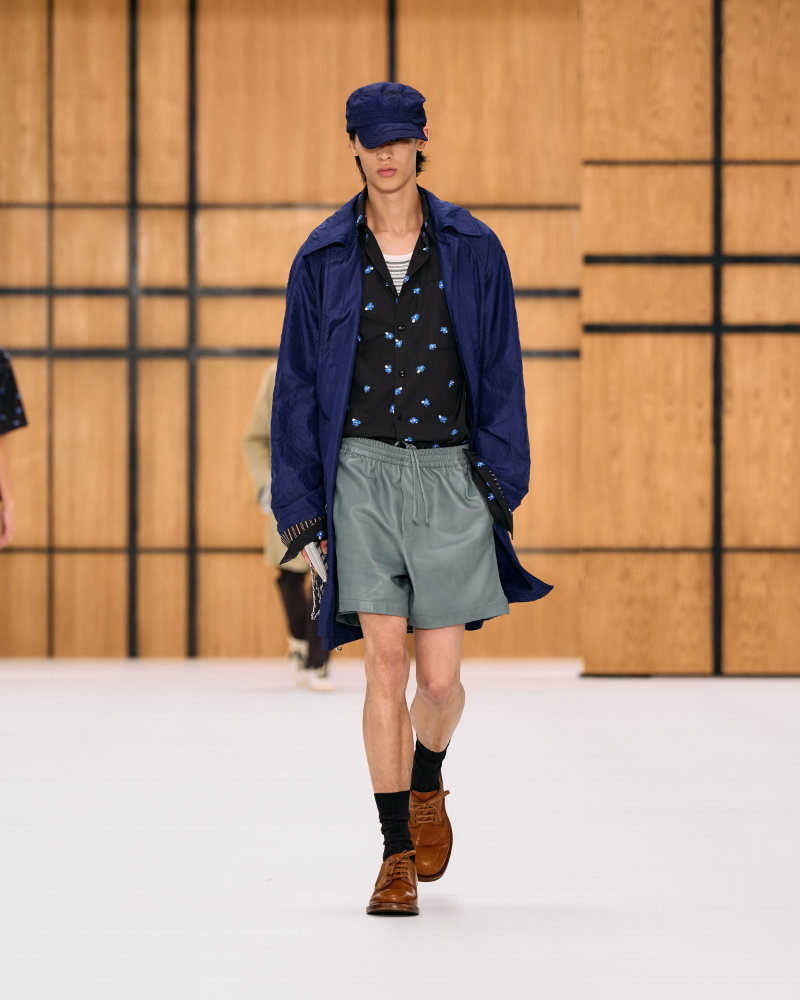
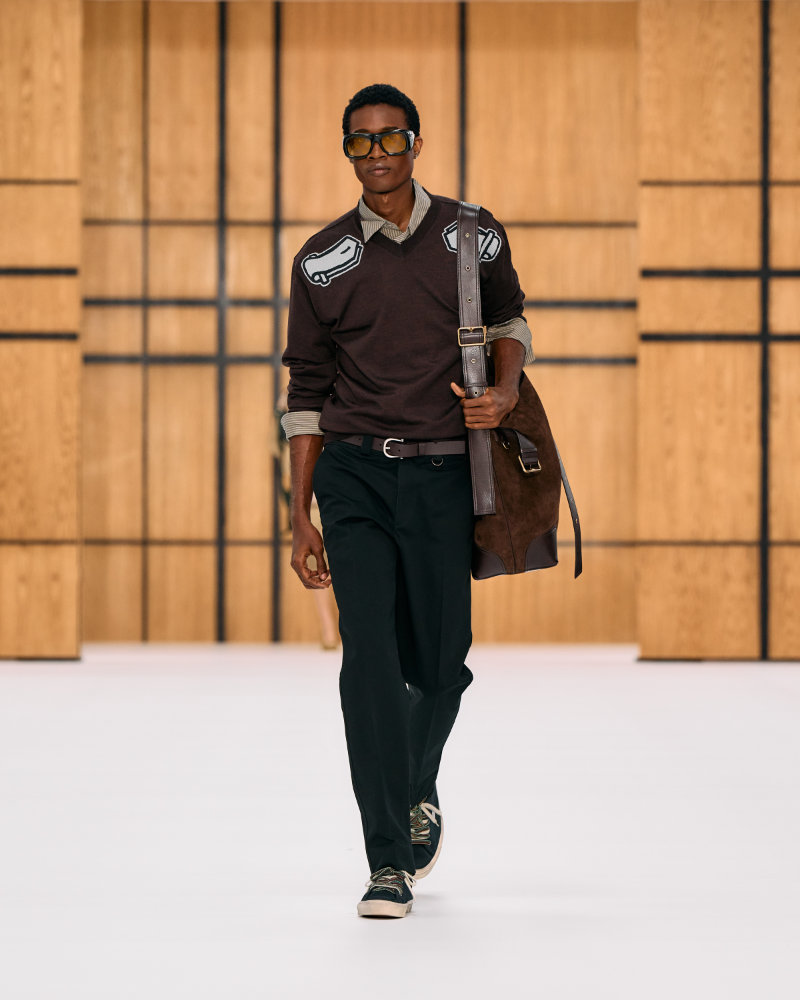
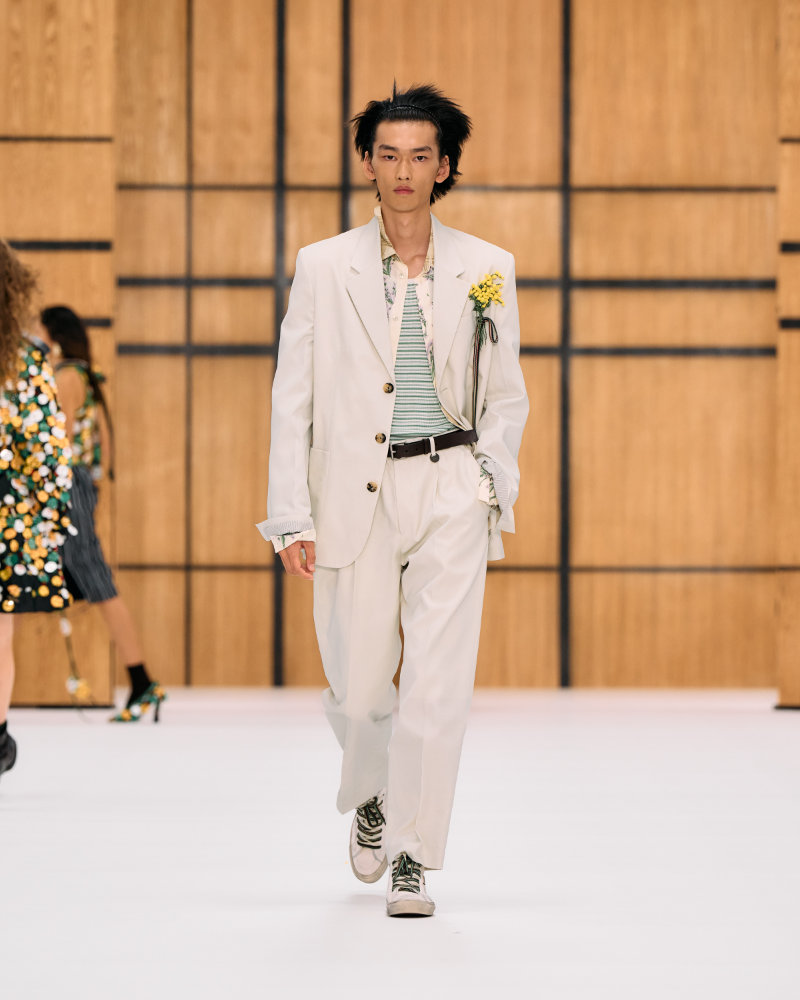
Accessories were not merely supplementary; they were integral to the structural narrative of the show. Square-shaped caps, oversized eyewear, and expansive leather bags provided a necessary counterpoint to the softer clothing. A standout element was the use of broad suede belts featuring leather corner detailing, which introduced a rugged, utilitarian edge. The Derby shoe, traditionally associated with Burberry’s equestrian roots, was reimagined with hand-finished floral motifs, effectively subverting the expected formality of the footwear. Conversely, "The Sloane" bag offered a study in restraint, utilizing braided leather to provide texture without the need for ostentatious branding.
Technical Craft and Visual Language
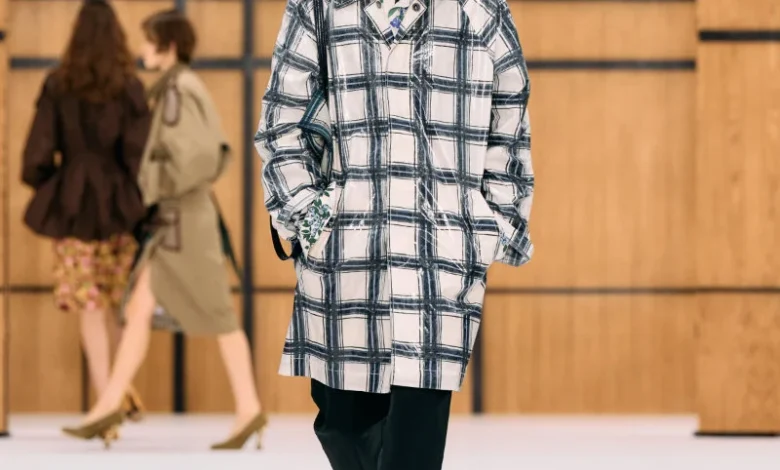
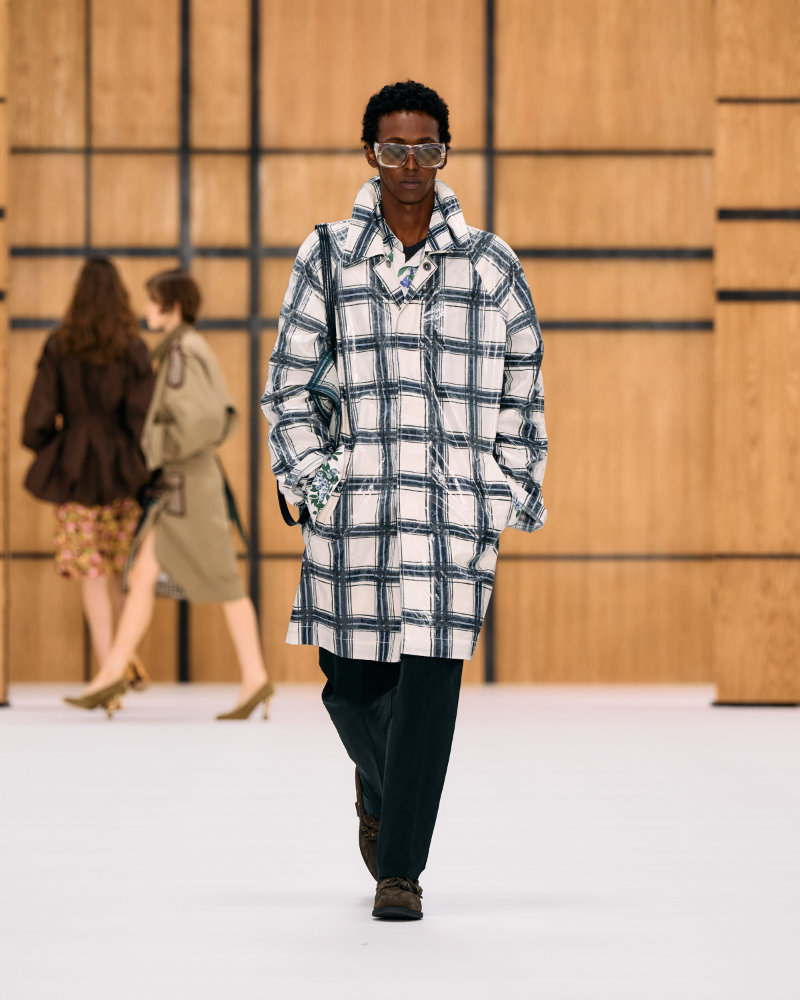
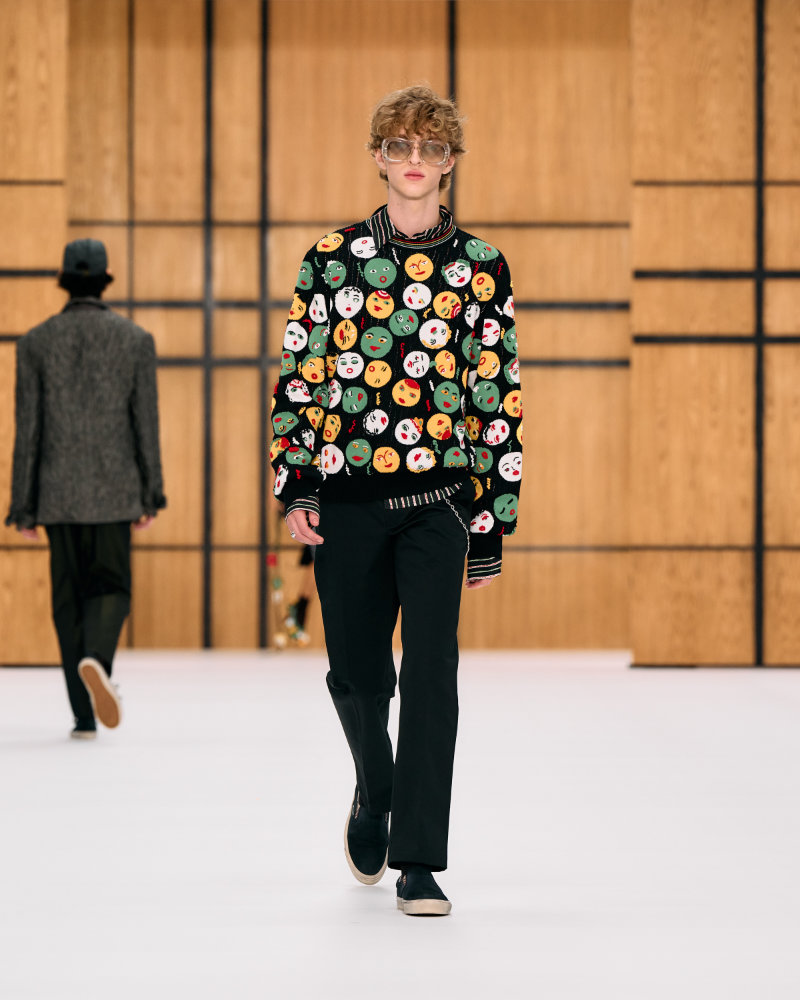
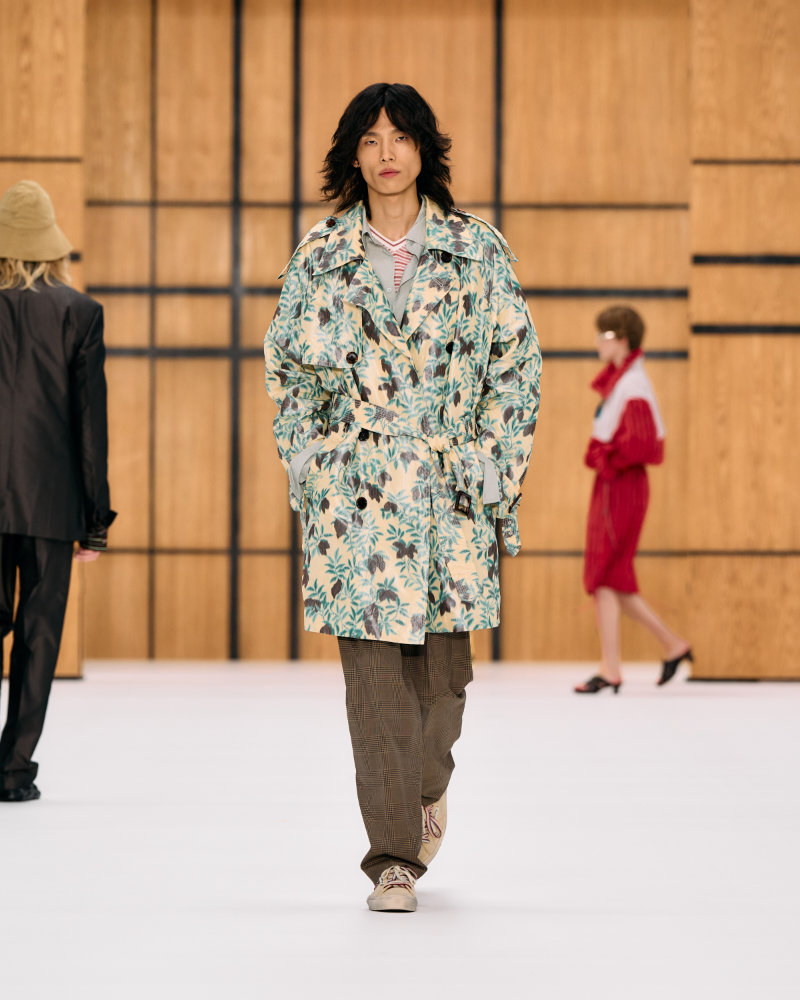
The collection’s visual identity leaned heavily into the house’s most recognizable codes, albeit filtered through an experimental lens. The influence of designer Celia Birtwell was evident in the prints, where the traditional House Check was deconstructed, evolving into gingham patterns and simple stripes. These were frequently interrupted by floral imagery and abstract faces, preventing the collection from appearing overly uniform.
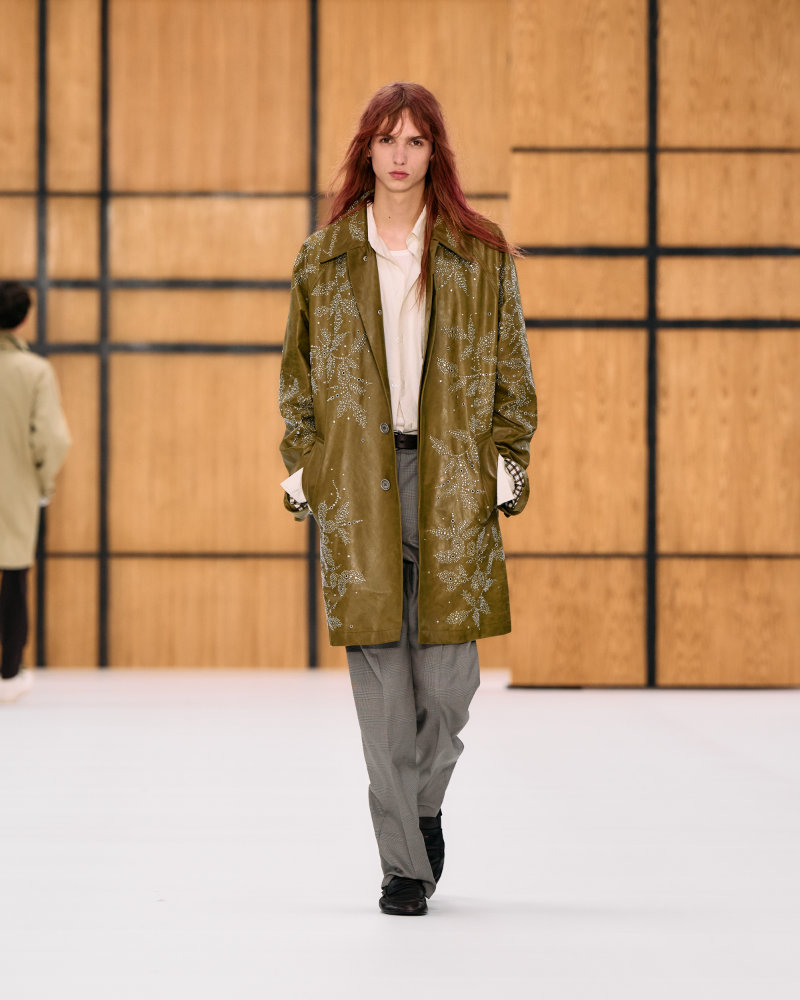
The color palette was anchored in earthy browns and neutrals, yet punctuated by deliberate, vivid flashes of color that lent the collection an unexpected sense of vitality. Patterns were mixed with a sense of defiance; stripes sat alongside florals, and checks were scaled against varying textures.
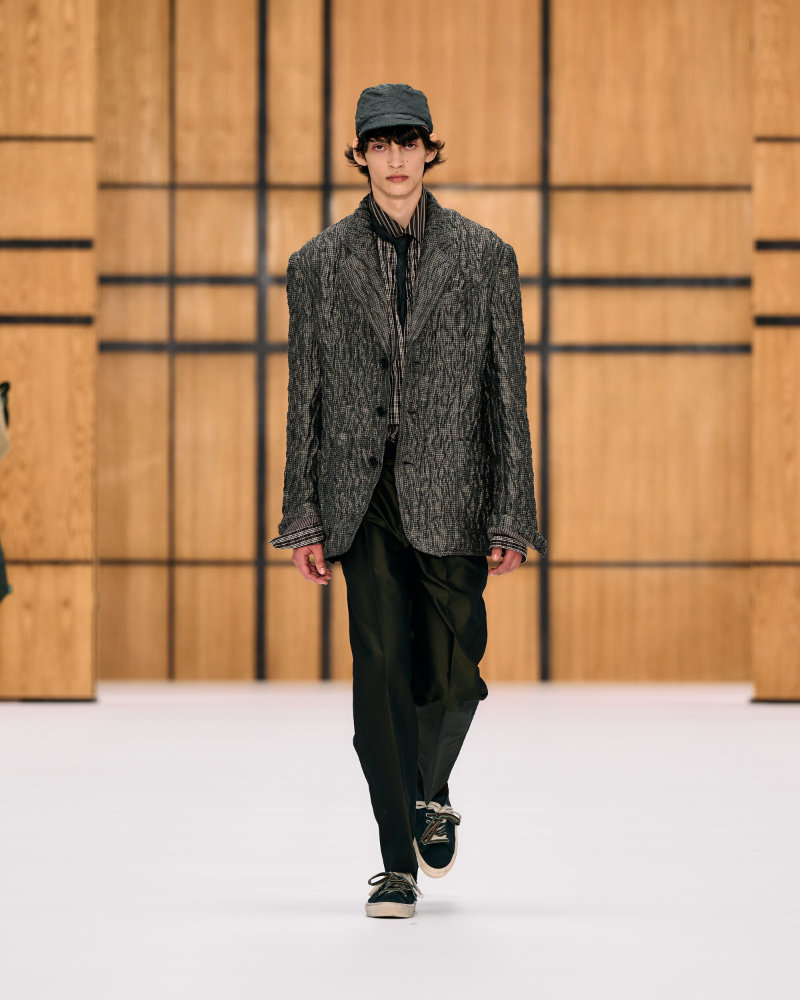
The trench coat, the cornerstone of the Burberry business, was subjected to the most significant transformation. Lee introduced PVC-effect finishes and "stripped-back" versions that utilized trompe-l’œil details to suggest belts and shoulder straps, effectively mocking the utility of the original design while maintaining its iconic silhouette.
Data and Industry Implications
Burberry’s strategy under Lee reflects a broader industry movement toward "quiet luxury" and "relaxed heritage." Market analysis of the luxury sector indicates that consumers, particularly those in the Gen Z and Millennial cohorts, are increasingly prioritizing versatility and wearability over the rigid, formal tailoring of the past. By emphasizing pieces that are "not overly ironed or too perfect," Lee is positioning Burberry to capture a share of the market that demands high-end quality without the perceived stuffiness of traditional couture.
The reliance on suede, leather, and intricate embroidery, combined with modern fabric technology, ensures that the collection maintains its luxury status while remaining lightweight and functional. This is a critical business strategy: by making the clothes feel "alive" rather than like museum pieces, the brand encourages a consumer relationship built on utility and personal expression.
Official Statements and Brand Philosophy
Addressing the philosophy behind the collection, Lee noted that the intent was to produce something "felt" and "true." The creative direction for Summer 2027 is a departure from the high-concept showmanship seen at some of the brand’s competitors. Instead, the focus remains on the product’s capacity to be "worn, moved in and gradually made personal."
This approach serves a dual purpose. Firstly, it honors the brand’s heritage by utilizing its most recognizable symbols—the check, the trench, the equestrian references—in new configurations. Secondly, it signals to investors and consumers alike that Burberry is moving away from the cyclical nature of trend-chasing. By focusing on craft rather than stiffness, Lee is attempting to build a sustainable, long-term identity for the house that relies on the "architecture of the look" rather than fleeting dramatic gestures.
Broader Impact on London Fashion Week
The success of this collection is indicative of the current state of London Fashion Week, which has increasingly become a hub for designers who seek to balance avant-garde experimentation with commercial viability. Burberry’s ability to draw a diverse crowd—from traditional industry elites to modern music and social media stars—highlights its continued importance as a tentpole event for the city’s economy and its global reputation as a fashion capital.
The implications for the wider luxury market are clear: the most successful brands are those that can effectively "re-animate" their history. By stripping back the excess, Lee has reminded both the industry and the public that Burberry’s codes possess a timelessness that does not require constant overhaul. Instead, the brand’s evolution is found in the subtle recalibration of fit, fabric, and attitude.
Conclusion
As the industry looks toward the next season, the Burberry Summer 2027 collection stands as a testament to the power of measured evolution. By allowing the house’s history to "breathe," Daniel Lee has managed to make one of Britain’s most historic institutions feel genuinely, and perhaps surprisingly, current. The collection succeeds not because it attempts to become something else, but because it recognizes that the most effective way to stay relevant is to ensure the brand remains active, tactile, and firmly rooted in the reality of its wearer.
Whether this shift in tone will translate into sustained long-term growth remains a subject for analysts to monitor in the coming fiscal quarters. However, from a creative standpoint, the house of Burberry has successfully navigated the difficult task of balancing the weight of its own archives with the necessity of the present moment. Through this collection, the brand has demonstrated that heritage, when treated with both respect and a lack of sentimentality, is perhaps the most valuable asset in the modern luxury market.