Capturing the Otherworldly: Acclaimed Director and Photographer Lev L. Spiro Explores the Art of Thin Places Through the Lens

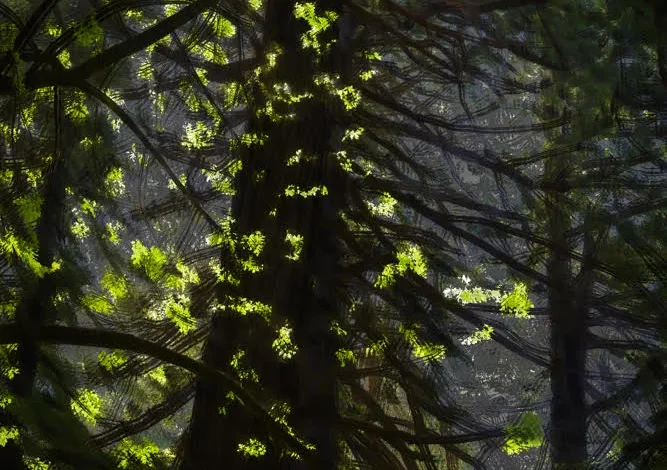
The concept of a "thin place"—originating deeply within ancient Celtic spiritual traditions—describes geographic locations where the perceived barrier between the physical world and a transcendent, sacred reality dissolves. While historically rooted in folklore and theology, this ephemeral phenomenon has found a compelling contemporary intersection with modern fine-art landscape photography, championed most notably by filmmaker, television director, and photographer Lev L. Spiro. Through his evocative portfolios, including the critically acclaimed series Thin Places and his ongoing project Elemental, Spiro investigates how visual mediums can move beyond mere topographic documentation to evoke profound emotional and spiritual resonance.
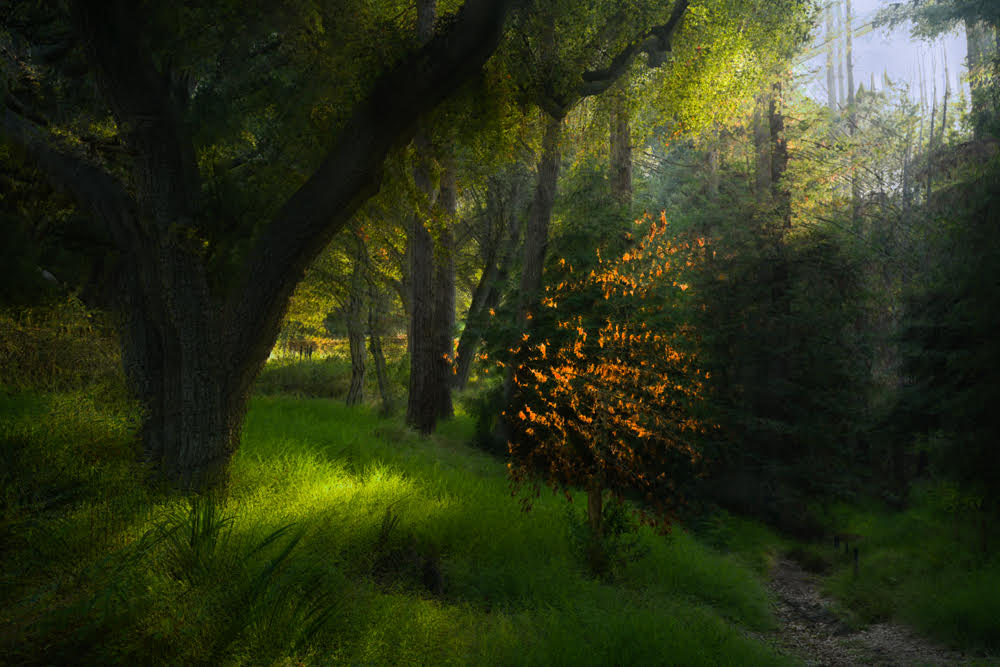
This artistic inquiry has resonated powerfully within the contemporary photography community, manifesting most visibly in Spiro’s sold-out educational workshop series, Thin Places: Photography and the Sacred in Nature, hosted by the prestigious Santa Fe Workshops. The overwhelming public demand—resulting in consecutive sell-outs and extensive waitlists—highlights a growing artistic appetite among technical photographers seeking to transition from documentary realism to evocative, mood-driven visual storytelling.
Background Context and the Evolution of the Thin Places Project
The etymology and cultural framework of thin places trace back centuries to Celtic lands, where certain remote islands, misty mountaintops, and ancient groves were regarded as spaces where eternity and earthly time intermingled. For Spiro, however, the understanding of these locations began long before he assigned them a formal nomenclature. Growing up, Spiro spent his formative summers between the ages of 11 and 13 immersed in an Outward Bound-style wilderness wilderness camp in Vermont. During these extended excursions far removed from urban and suburban environments, he experienced early encounters with the profound stillness and awe that characterize the natural world.

Decades later, as a seasoned professional in film and television direction who transitioned heavily into fine-art photography, Spiro synthesized these childhood impressions with artistic philosophies inherited from photographic masters such as Minor White, Paul Caponigro, and Sam Abell. These influences emphasized receptivity, heightened perception in the field, and the discipline of allowing a subject to reveal itself organically rather than forcing a preconceived composition onto a landscape.
In his photography, Spiro’s technical methodology adapts to the emotional demands of the environment. While his series Thin Places leaned heavily on the dramatic, soft illumination found during the transitional windows of the first two hours after sunrise and the final two hours before sunset, his subsequent body of work, Elemental, utilizes long-exposure techniques. By focusing on the kinetic motion of running water and shifting cloud formations, Spiro attempts to capture the temporal fluidity that defines these liminal spaces.

Chronology and Pedagogical Development
The journey from individual artistic exploration to a structured pedagogical framework developed gradually over the course of Spiro’s decades-long career in visual arts. After decades of commanding film and television sets, Spiro dedicated significant creative bandwidth to mastering large-format and digital landscape photography, exhibiting work that reflects a deep reverence for natural geometry and lighting.
Recognizing a gap in traditional photographic education—which often prioritizes equipment settings, sharp focus, and rule-of-thirds composition over psychological and emotional resonance—Spiro partnered with the Santa Fe Workshops to develop a specialized curriculum. The resulting program, Thin Places: Photography and the Sacred in Nature, was launched to bridge technical mastery with inner perception.

The chronological development of the workshop’s popularity mirrors a broader cultural shift among landscape photographers. As digital camera technology has democratized high-resolution image-making, making technical perfection accessible to a wider demographic, photographers have increasingly sought qualitative differentiators. Spiro’s curriculum directly addresses this evolution by training students in the difficult art of unlearning rigid compositional habits, teaching them instead how to pause, cultivate heightened sensory awareness, and remain open to spontaneous visual interruptions.
Methodological Approach and Field Philosophy
Spiro’s photographic practice challenges the traditional definition of landscape capture through a distinct methodology centered on receptivity rather than aggressive pursuit. Rather than meticulously planning every compositional element beforehand, Spiro advocates for the discipline of letting oneself be "stopped" by an environment.

This philosophy, heavily inspired by the teachings of photographer Sam Abell, relies on subconscious recognition. Often, a photographer is halted by a fleeting environmental cue—a distant waterfall glimpsed momentarily through dense foliage, or shifting backlighting illuminating a canopy of leaves—before the conscious mind fully processes the visual rationale. Spiro notes that the ephemeral nature of these phenomena means they frequently vanish by the time the photographer comprehends the catalyst, underscoring the necessity of extreme responsiveness in the field.
Furthermore, Spiro’s methodology incorporates strict ethical considerations regarding the preservation of natural and culturally sensitive environments. Operating under a rigorous "leave no trace" ethos, he emphasizes that true thin places exist dynamically in the perceptual space between the observer and the environment. Consequently, photographers operating in these areas are urged to exercise profound respect not only for the fragile ecology of natural landscapes but also for the historical and spiritual significance these locations may hold for Indigenous and local communities.

Implications and Broader Cultural Impact
The widespread acclaim for Spiro’s work and the unprecedented enrollment in his educational programs point to broader implications within contemporary visual arts. In an era dominated by instantaneous digital consumption and hyper-saturated social media landscape imagery, the appeal of "thin places" suggests a collective cultural yearning for contemplative, immersive artistic experiences.
Industry analysts and arts educators observe that contemporary audiences are increasingly fatigued by clinical, highly processed depictions of nature that prioritize technical perfection over emotional authenticity. By reframing photography as an experiential medium—where the primary objective is to convey the subjective interiority of a moment rather than to objectively verify a geographic location—Spiro and similar practitioners are helping to redefine the boundaries of modern landscape art.

Ultimately, the core message of the Thin Places corpus extends beyond specialized camera techniques or niche aesthetic categories. As Spiro articulates to his students, the sacred or liminal qualities of the natural world are not locked away in inaccessible, geographically remote coordinates. Instead, they emerge organically through sustained attention, unhurried curiosity, deep environmental presence, and the psychological vulnerability required to allow the natural world to leave a lasting mark upon the observer.