Circulose resumes commercial-scale production at its Ortviken facility backed by major brand commitments

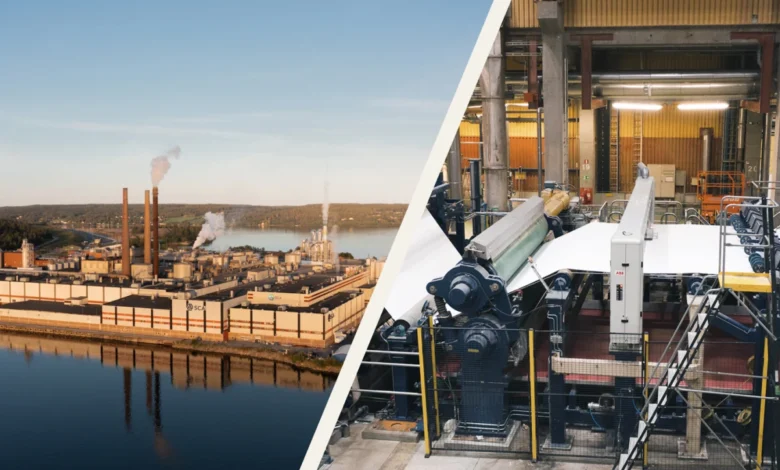
The global movement toward a circular fashion economy reached a pivotal milestone this week as Circulose officially restarted commercial-scale production at its state-of-the-art facility in Ortviken, Sundsvall, Sweden. This development represents a critical inflection point for the textile-to-textile recycling sector, signaling a transition from experimental pilot programs to industrialized, high-volume manufacturing. By securing firm volume commitments from 16 international partner brands, Circulose has established a viable commercial framework that bridges the gap between waste management and high-performance material production.
The restart of the Ortviken plant serves as a litmus test for the fashion industry’s ability to operationalize sustainable innovations. As the world’s first facility dedicated to large-scale chemical textile recycling, the plant utilizes a proprietary process to dissolve discarded cotton and other cellulosic fibers, transforming them into high-quality, pulp-based fibers that can be spun back into new textiles. This breakthrough effectively closes the loop on apparel production, reducing the industry’s reliance on virgin wood pulp and cotton crops while simultaneously diverting textile waste from landfills and incinerators.
A Chronology of Resilience and Strategic Realignment
The journey of Circulose has been characterized by intense market volatility and significant structural changes. The technology, which emerged as a beacon of hope for sustainable apparel, faced severe financial headwinds that forced a complete reassessment of its business model.
In early 2024, the enterprise underwent a transformative acquisition by the private equity firm Altor. Under this new ownership, the strategic focus shifted from rapid expansion to a more disciplined, demand-driven model. The primary objective was to stabilize the supply chain and secure long-term purchase agreements—a strategy designed to insulate the company from the boom-and-bust cycles that have historically plagued green-tech startups.
The period between early 2024 and November 2026 was defined by internal restructuring and the rebuilding of operational capacity. Under the leadership of outgoing CEO Jonatan Janmark, the organization focused on two primary pillars: optimizing the chemical recovery processes at the Ortviken site and fostering deep collaborative relationships with downstream garment manufacturers and retail brands. The culmination of this effort—the formal resumption of production on November 11, 2026—serves as the validation of this strategic pivot.

The Power of Volume Commitments
One of the most significant challenges in the textile recycling industry is the "chicken-and-egg" dilemma: brands are hesitant to commit to recycled fibers without guaranteed supply, while recyclers are unable to secure funding for production without guaranteed demand. By securing volume commitments from 16 partner brands, Circulose has effectively bypassed this barrier.
These commitments provide the financial predictability necessary for the facility to operate at its intended scale. According to industry analysts, these agreements represent more than just sales; they signify a commitment from the fashion industry to prioritize circular materials in their upcoming seasonal collections. By locking in volume, brands ensure they have access to a sustainable supply chain, while Circulose secures the revenue stream needed to maintain its 130-strong workforce and further refine its recycling technology.
Executive chair Helena Helmersson noted that the restart was meticulously timed to match confirmed demand, ensuring that the plant’s output does not sit idle. "With commitments from 16 brands, and more on the way, we are now there," Helmersson stated. "Today, Circulose is backed by leading brands and fiber producers, has an organization of around 130 people with deep expertise where it matters, and a plant ready to produce."
Leadership Transition in a New Era
The restart of operations also marks a transition in corporate governance. After two years of navigating the company through its most turbulent and critical period, CEO Jonatan Janmark has announced his departure. The board has appointed CFO Amanda Geijer to serve as interim CEO while a global search for a permanent successor is conducted.
This transition is viewed by many market observers as a natural progression for a company moving from a "turnaround" phase to a "growth and scaling" phase. Janmark’s tenure was instrumental in stabilizing the company’s finances and securing the Altor acquisition. As the company moves toward full-capacity operations, the focus will likely shift to operational efficiency, scaling output volume, and integrating the fiber into a wider array of garment types.
Broader Implications for the Textile Industry
The implications of Circulose’s return to production are far-reaching. The global textile industry is currently under immense pressure from regulators—particularly within the European Union—to adopt circular business models and reduce the environmental footprint of garment production. Legislation such as the EU Strategy for Sustainable and Circular Textiles is pushing brands to take responsibility for the entire lifecycle of their products.

Circulose provides a scalable, tangible solution to these regulatory demands. By proving that textile-to-textile recycling can be performed at a commercial scale, the company sets a precedent for other innovators in the space. However, the path forward is not without challenges. The industry must still address the complexities of textile collection, sorting, and the removal of synthetic fibers and dyes from pre- and post-consumer waste.
Furthermore, the price parity between recycled fibers and virgin materials remains a point of contention. As production volumes increase, economies of scale are expected to drive down the cost of Circulose fiber, making it more competitive against conventional alternatives. The 16 brands that have committed to the platform are betting that the premium paid for these fibers today will be offset by the long-term benefits of brand loyalty, regulatory compliance, and a reduced carbon footprint.
Future Outlook and Industry Integration
Looking ahead, the success of the Ortviken plant will likely influence investment trends in the green-tech and textile sectors. Investors have historically been wary of recycling technologies that fail to achieve commercial viability; Circulose’s ability to restart under new ownership demonstrates that even when firms falter, the intellectual property and operational infrastructure can be salvaged and made profitable through rigorous business discipline.
For the fashion industry, the availability of high-quality recycled cellulose fiber is a game-changer. It allows for the production of garments that maintain the soft, breathable qualities of cotton while adhering to strict environmental standards. As more brands join the partner network, the Ortviken facility is expected to serve as the template for future plants, potentially leading to a distributed network of recycling facilities closer to major textile manufacturing hubs in Asia and Europe.
In conclusion, the restart of the Ortviken plant is a signal of maturity for the sustainable materials sector. It moves the conversation beyond the "proof of concept" phase and into the reality of supply chain integration. With the support of 16 committed partners and a clear strategic mandate, Circulose is positioned to play a leading role in the necessary transition of the global apparel industry toward a more sustainable and resource-efficient future. The coming months will be critical as the plant ramps up production, with industry stakeholders watching closely to see if the facility can meet the sustained quality and volume requirements of its partners. The success of this endeavor will not only define the future of Circulose but will likely serve as a benchmark for the entire circular textile economy.