Illuminating the Basalt Sanctuaries: Dr. David S. Efurd Documents Decades of Ancient Indian Cave Architecture

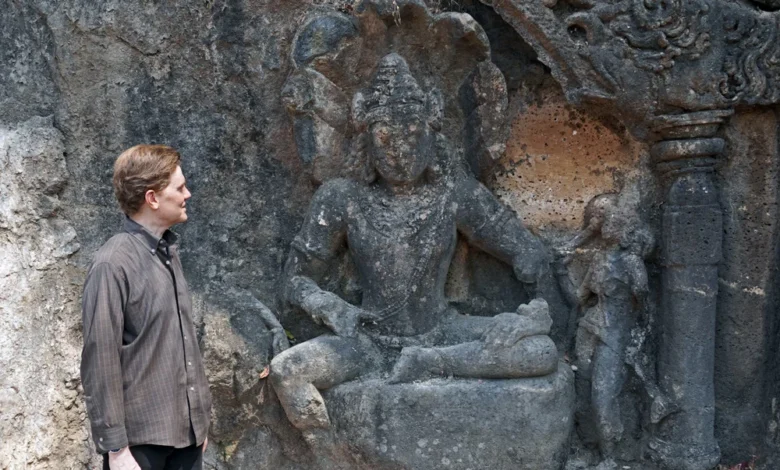
The rugged volcanic basalt cliffs of western India hold some of the world’s most remarkable architectural achievements, spanning over two millennia of religious, artistic, and cultural evolution. Dr. David S. Efurd, a two-time Fulbright recipient, associate professor, and chair of art and art history, has dedicated decades of rigorous academic fieldwork to documenting these subterranean wonders. Armed with a handheld camera, a meticulous notebook, and an unwavering commitment to architectural history, Efurd has systematically surveyed more than 80 cave sites across South Asia and beyond, generating an archive of over 10,000 photographs now accessible to researchers and the public via Artstor.
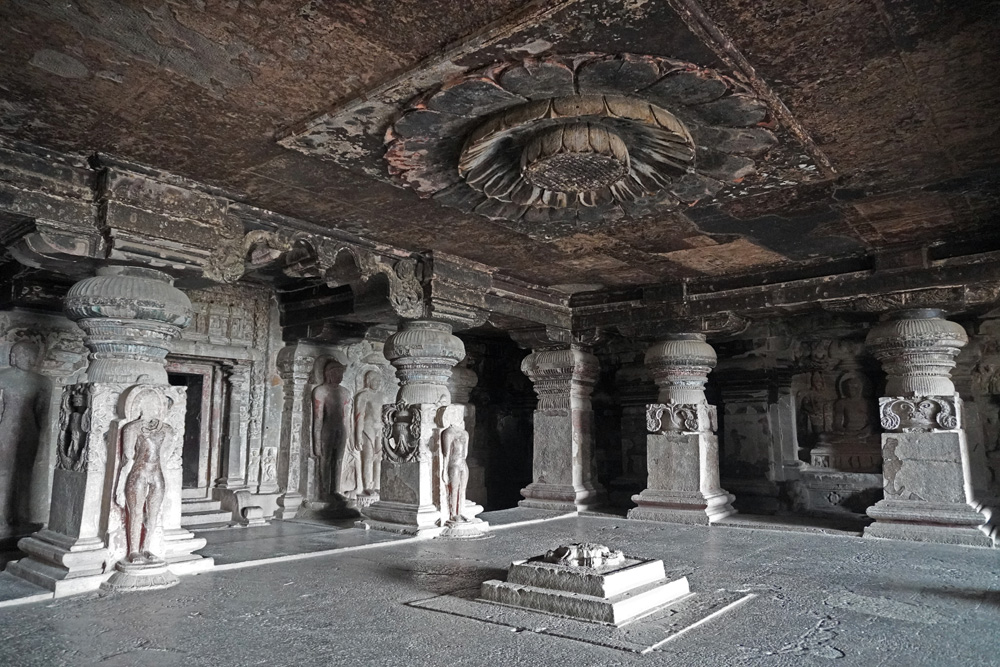
This extensive digital collection captures intricately carved monasteries, grand monuments, delicate religious art, and sacred spaces dating as far back as the second century BCE. Through his precise methodology, Efurd bridges the gap between historical preservation and contemporary scholarship, offering unprecedented visual data on sites that served as the beating heart of early Buddhist monastic life and subsequent religious traditions.
Geological and Geographical Context of the Rock-Cut Monasteries

The choice of western India’s rugged basalt escarpments—commonly referred to as the Western Ghats—for massive monastic excavations was no accident. Geologically, these expansive volcanic outcroppings provided an ideal medium for permanent architecture. Unlike structural masonry, which requires quarried stones and complex timber scaffolding prone to weathering, volcanic basalt allowed ancient artisans to carve colossal, enduring structures directly into the living rock with minimal risk of structural collapse.
Furthermore, these locations were strategically selected to balance isolation with connectivity. While the dramatic cliffs offered the quiet sanctuary necessary for meditative introspection and scholarly instruction, they were intentionally situated along major historical trade routes. This positioning placed the monasteries within walking distance of bustling towns and cities, fostering a vital symbiotic relationship between the monastic orders and the local laity. Monks and nuns relied on the surrounding communities for physical sustenance through daily alms, while the laity sought spiritual guidance and the accumulation of religious merit by supporting the monastic infrastructure.

Chronology and Evolution of the Sacred Spaces
The history of rock-cut architecture in western India is a narrative of continuous adaptation, shifting religious paradigms, and evolving artistic expression. The chronology of these sites can be broadly categorized into distinct developmental phases:

The Early Phase (2nd Century BCE – 1st Century CE): Characterized by austerity and aniconic representation, early sites such as Pitalkhora, Ajanta (earlier caves like Cave 10), and the Kondhane and Bedse complexes featured modest monastic quarters, refectories, and grand chaitya halls. Artwork during this period favored symbols such as the Triratna (the triple gem) and railings denoting sanctity, alongside fertility motifs like mithuna (amorous couples) and yakshas (nature spirits), which were conceptually integrated into the Buddhist framework.
The Later Phase (4th – 6th Century CE): Marked by a theological shift toward devotional (Bhakti) practices, this era saw the introduction of anthropomorphic representations of the Buddha and Bodhisattvas. Sites like Ajanta and Ellora were significantly refurbished, with walls and once-unadorned spaces receiving elaborate painted and sculpted imagery.

The Transition and Appropriation Era (Post-6th Century CE): As Buddhism gradually declined in mainland India, many remote cave complexes were abandoned and reclaimed by nature, while accessible sites such as Karle were dynamically recontextualized. Local Hindu and regional religious communities rededicated these halls for Brahmanical worship, venerating existing Buddhist iconography within new pantheistic frameworks.
The Methodology of Slow Looking and Technical Precision

Efurd’s academic inquiry is anchored in the contemplative practice of "slow looking," a methodology traditionally reserved for museum art appreciation but profoundly effective when applied to massive architectural structures. Eschewing the rapid pace of modern tourism, where visitors routinely traverse complex sacred spaces in minutes, Efurd spends days—and sometimes returns across multiple field seasons—analyzing the spatial dynamics, decorative programs, and lighting conditions of individual caves.
A critical component of this research involves architectural measurement. Unlike conventional masonry architecture, which relies on strict plumb lines and rigid geometric grids, rock-cut architecture allows for subtle deviations that remain invisible to the naked eye. By meticulously measuring these spaces, Efurd and his contemporaries are uncovering sophisticated mathematical proportions embedded within major monuments, such as the chaitya hall at Karle. These findings challenge colonial-era and Eurocentric assumptions that minor discrepancies in ancient South Asian structures reflected a lack of technical planning, proving instead that these spaces were engineered with profound intentionality.

Astronomical Alignments and Engineering Feats
One of the most astonishing discoveries highlighted in Efurd’s archive is the sophisticated integration of celestial mechanics into cave architecture. Collaborating with preceding scholars such as the late Walter Spink, world-renowned authority on the Ajanta caves, Efurd emphasizes how ancient builders calculated solar movements with pinpoint accuracy.

At Ajanta, specific caves feature enormous round apertures known as "caitya windows" carved into their facades. Once a year, during the winter solstice, a narrow beam of sunlight penetrates these windows to illuminate the central Buddha image housed within the relic monument. Similarly, at Ellora, a designated cave filters sunlight onto the face of a central Buddha statue twice a year. This phenomenon is celebrated annually in March during the traditional festival known as Kirnotsav, or the festival of the sun’s rays. These temporal alignments demonstrate an advanced synthesis of engineering, art, and sacred cosmology in the ancient world.
Implications and Broader Cultural Impact

The preservation and digital archiving of these subterranean sanctuaries carry profound implications for global cultural heritage. Managed primarily by the Archaeological Survey of India (ASI) alongside regional authorities, these sites occupy a delicate intersection between historical preservation and active religious heritage. While the ASI maintains strict protocols to protect the structural integrity of the basalt excavations, Indian religious culture ensures that many of these spaces remain vibrant centers of living tradition. Visitors and pilgrims regularly engage in chanting, music, and ritual prayer within the ancient halls.
Efurd’s digital archive on Artstor serves multiple critical functions: it offers a comprehensive baseline for ongoing conservation efforts, provides scholars worldwide with high-resolution visual data, and democratizes access to remote cultural artifacts that are otherwise difficult to visit. As undocumented or mud-filled chambers continue to be accidentally uncovered—such as the recent discovery of a hidden nagaraja (serpent king) sculpture at the Ghatotkacha caves following minor pathway excavations—archives like Efurd’s ensure that humanity’s shared architectural history is permanently safeguarded for future generations of historians, architects, and pilgrims alike.