Origins Reimagines Sustainability with Community-Focused Urban Greening Initiative Amidst Los Angeles’ Growing Climate Challenges

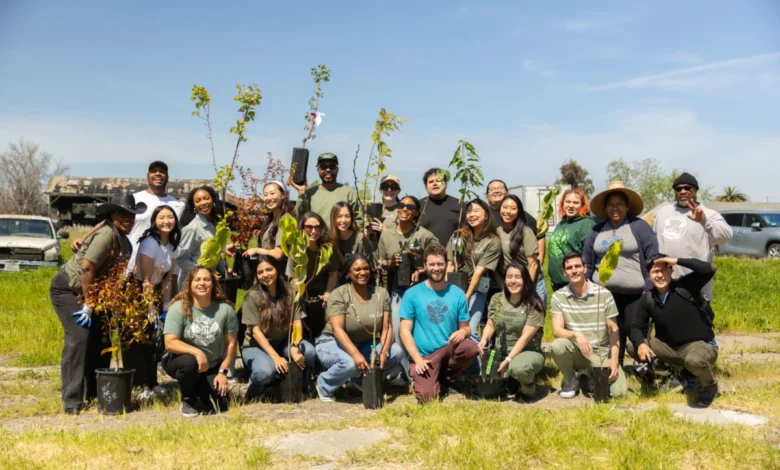
As Los Angeles confronts the escalating threat of hotter summers and increasingly pronounced gaps in its urban tree canopy, beauty brand Origins is strategically recalibrating its sustainability efforts. In a significant pivot towards more localized and tangible environmental impact, the company announced a new partnership with the Arbor Day Foundation. This collaboration is set to champion urban tree planting, develop vital student programs, and support critical local climate resilience projects. While Origins has a well-established global reforestation track record, having contributed to the planting of over 2.5 million trees worldwide since 2009, this latest initiative marks an expansion beyond traditional reforestation to encompass direct community infrastructure and educational outreach.
The evolving landscape of corporate sustainability in the United States presents a complex backdrop for such announcements. In 2025, Reuters reported on a growing political backlash against Environmental, Social, and Governance (ESG) policies, manifesting in legal challenges and restrictions on how companies can publicly communicate their sustainability commitments. This environment has prompted many corporations to temper public declarations of intent while continuing to invest, albeit with increased caution. Compounding these challenges, recent reports indicate that the cosmetics industry is grappling with heightened operational costs and softening consumer demand. In this scenario, sustainability is no longer an isolated selling point but must now contend directly with factors such as price and product performance in the consumer’s decision-making calculus.
This dynamic is fundamentally altering how brands approach their sustainability narratives. A notable shift is emerging, moving away from broad, global messaging towards more targeted, visible, and demonstrably impactful initiatives. For Origins, this strategic recalibration is finding its expression at the grassroots level, aiming to foster direct community engagement and visible environmental improvement.
A New Chapter in Community-Centric Sustainability
Francesca Damato, Vice President of Global Marketing at Origins, articulated the brand’s refreshed vision: "We’ve always been about caring for people and the planet. Now, we’re trying to bring those two things closer together in a way that people can actually experience in their own communities." While the specific financial investment underpinning this new initiative remains undisclosed, the strategic intent is clear: to forge a more intimate and impactful connection between the brand’s sustainability mission and the daily lives of its consumers and the communities they inhabit.
The partnership’s inaugural phase is slated to commence in Los Angeles later this month, a city acutely aware of its vulnerability to rising temperatures and environmental disparities. The project is designed to make an immediate and visible difference in neighborhoods identified as having low tree canopy coverage and high climate vulnerability. Origins plans to plant approximately 20 trees at a designated project site and, crucially, distribute 200 fruit-bearing trees directly to local residents. This dual approach aims not only to increase the physical presence of greenery but also to empower residents with resources that can contribute to local food security and a more aesthetically pleasing environment.
Addressing Urban Heat Islands and Health Disparities
The significance of urban tree canopy coverage extends far beyond aesthetics; it is a critical public health issue. Areas with sparse tree cover are disproportionately affected by the urban heat island effect, leading to higher ambient temperatures and an increased risk of heat-related illnesses. According to data from the U.S. Forest Service, urban tree coverage is estimated to play a vital role in preventing hundreds of heat-related deaths annually across the United States.
Los Angeles, in particular, faces a stark reality. Nearly 90% of residents in its urban county reside in neighborhoods with less than 10% tree canopy coverage. This lack of natural shade exacerbates the impact of heatwaves. During the 2025 heatwaves, approximately 59% of residents in these low-canopy areas experienced at least an eight-degree Fahrenheit increase in temperature, with many experiencing temperatures exceeding 100 degrees Fahrenheit, according to the National Weather Service. Damato highlighted this disparity, stating, "There are communities that simply don’t have access to greenery." This initiative by Origins seeks to directly address these inequities, bringing much-needed shade and environmental benefits to underserved areas.
The Arbor Day Foundation’s Role and Vision
The Arbor Day Foundation, a long-standing advocate for tree planting and conservation, brings its extensive expertise and network to this partnership. Dan Morrow, VP of Partnerships at the Arbor Day Foundation, emphasized the timely and critical nature of this collaboration. "In a changing world, we need business leaders who are bold enough to meet the moment," Morrow stated, underscoring the urgency of addressing climate challenges through proactive, on-the-ground action.
The foundation’s involvement will extend to leveraging tools like the Tree Equity Index to meticulously identify areas where investment in tree planting will yield the greatest social and environmental benefits. This data-driven approach ensures that resources are directed towards communities most in need and that the impact of the plantings can be effectively tracked over time, measuring outcomes such as temperature reduction and improvements in air quality.
Investing in Future Sustainability Leaders
Beyond the immediate impact of tree planting, the Origins and Arbor Day Foundation partnership includes a forward-looking educational component. This pipeline initiative is designed to cultivate the next generation of environmental stewards. Five students will receive comprehensive support, including mentorship, stipends, and access to sustainability-focused conferences. Furthermore, funding will be allocated to Tree Campus initiatives at select universities, fostering a culture of environmental responsibility within higher education institutions.
"We’re investing in the people who are going to define what sustainability looks like going forward," Damato explained, highlighting the long-term vision of empowering young leaders. This aspect of the partnership recognizes that lasting environmental change requires not only tangible actions but also the development of informed and passionate individuals dedicated to sustainable practices.
Navigating Complexity in a Fragmented Market
Damato also acknowledged the inherent complexities of implementing sustainability initiatives within the beauty industry, particularly in a market as diverse and regulated as the U.S. "There isn’t one perfect solution [for the beauty industry to make an impact around sustainability]," she noted, pointing to the intricate web of varying regulations concerning packaging, recycling, and product claims across different states and regions. "You look at materials, recyclability and regulations, and it’s incredibly complex."
This complexity is further compounded by the sheer volume of packaging generated by the beauty sector. Globally, the industry produces an estimated 120 billion units of packaging annually, with a concerningly low recycling rate of just 9%, according to data shared by Saie and its partners. This environmental burden is increasingly drawing regulatory attention.
Regulatory Pressures and Shifting Industry Practices
In the U.S., regulatory pressure on packaging is mounting. States such as California, Oregon, and Colorado are implementing Extended Producer Responsibility (EPR) laws, which mandate that brands take financial responsibility for the collection and recycling of their packaging. These laws are accelerating through 2026, with California’s SB 54 setting ambitious targets for reducing plastic use and increasing recyclability. Such regulations are compelling beauty companies to fundamentally rethink their material choices and packaging volumes, while regulators simultaneously intensify scrutiny on environmental claims made by brands.
Origins itself has been proactively addressing packaging challenges. In 2024, the brand introduced packaging that utilizes 35% less plastic, a significant reduction equivalent to over 2 million plastic water bottles, while also incorporating post-consumer recycled materials. This move demonstrates an awareness of the dual pressures of consumer demand for sustainability and evolving regulatory landscapes.
Broader Industry Trends and Localized Impact
The strategic shift observed in Origins’ sustainability approach mirrors a broader trend within the beauty industry. Facing regulatory scrutiny and a more discerning consumer base, brands are increasingly prioritizing initiatives that are not only measurable and communicable but also deeply rooted in local communities.
For instance, during Earth Month, Saie partnered with Sephora and eleven other brands on "Planet Beautiful," a month-long initiative focused on recovering over one million pounds of plastic waste across India, Indonesia, Colombia, and Kenya. This effort included establishing a plastic recovery hub in Kenya and linking product sales to funding for waste removal projects. While distinct in its focus on waste remediation, Saie’s initiative shares the characteristic of being a tangible, geographically defined project with clear metrics for success.
These targeted, localized efforts represent a pragmatic response to the challenges of global sustainability communication and the increasing cost of raw materials and transportation, as highlighted in recent Reuters reports. The beauty industry, a significant contributor to global waste streams, is under immense pressure to innovate and demonstrate genuine commitment to environmental responsibility. The move towards community-level projects, like Origins’ urban greening initiative, offers a visible and relatable pathway for brands to connect with consumers on shared environmental values, even as they navigate complex global supply chains and evolving market dynamics. The success of such initiatives will likely be measured not only by the trees planted or plastic recovered but also by their ability to foster lasting community engagement and contribute to a more resilient and equitable future.