The Enduring Rivalry Between Nike and Adidas Ignites a New Front in New York City’s SoHo District with Nike’s Flagship Opening

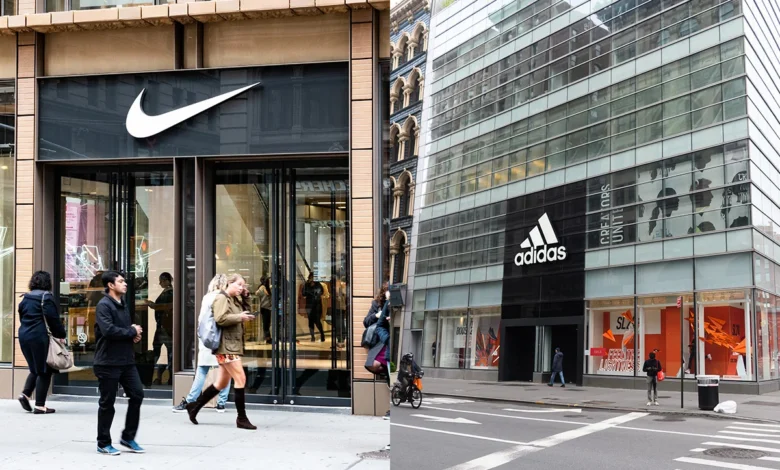
The long-standing, intense rivalry between global sportswear titans Nike and Adidas is escalating within the bustling streets of New York City, particularly as Nike prepares to inaugurate its new flagship storefront in SoHo, strategically positioned directly across the street from its German competitor. This calculated move, set to reshape the retail landscape of one of the world’s most coveted shopping destinations, underscores the fierce competition for market dominance, consumer attention, and brand prestige in an increasingly dynamic global industry. The opening is not merely a new store; it is a symbolic declaration in a protracted commercial battle, especially pertinent given the divergent financial trajectories recently reported by both multinational corporations.
A New Front in an Enduring Rivalry
The strategic opening of Nike’s latest SoHo outpost at 611 Broadway, formerly occupied by home goods retailer Crate & Barrel, positions the iconic Swoosh brand within immediate sight of Adidas’s substantial SoHo flagship. This Adidas store, a neighborhood fixture since 2004 at the prominent corner of Broadway and West Houston Street, has long served as a testament to the brand’s enduring presence in the high-stakes New York retail environment. Nike’s relocation, just two blocks from its previous address at 529 Broadway, which itself briefly hosted a Kith pop-up during renovations of the Ronnie Fieg-founded label’s NoHo store, signifies a deliberate intent to intensify its physical retail engagement in a critical urban market. The new Nike store, slated to open its doors to the public on April 16, is expected to draw considerable attention, not least because of its audacious proximity to its chief rival.
The competition between Nike and Adidas transcends mere geographical proximity; it encapsulates a decades-long struggle for supremacy in the athletic footwear and apparel industry. Founded in the mid-20th century, both companies have consistently pushed the boundaries of sports science, fashion, and marketing, often mirroring each other’s innovations and challenging each other’s market strategies. From the track and field stadiums of the Olympics to the global fashion runways, their battle has defined the sportswear industry. In recent years, this rivalry has intensified as both brands navigate evolving consumer preferences, the rapid ascent of e-commerce, and the critical importance of creating immersive, experiential retail environments that transcend transactional shopping. New York City, with its diverse population, status as a global fashion capital, and high tourist footfall, represents an unparalleled arena for this contest.
SoHo: A Premium Retail Crucible
SoHo, an acronym for "South of Houston Street," is renowned globally as a premier shopping district, characterized by its historic cast-iron architecture, cobblestone streets, and a vibrant mix of high-end boutiques, art galleries, and flagship stores. Its unique blend of cultural heritage and contemporary commercialism makes it an irresistible magnet for brands seeking to establish a powerful physical presence and engage directly with trend-setting consumers. For sportswear giants like Nike and Adidas, a SoHo flagship is more than just a sales point; it is a brand statement, a marketing showcase, and a laboratory for retail innovation.
The decision by Nike to secure a new, prominent location in SoHo, particularly one that offers direct visual confrontation with Adidas, reflects the ongoing "retail arms race" among global brands. In an era where online shopping continues to grow, physical flagships have evolved into critical touchpoints for brand storytelling, community building, and delivering unique customer experiences that cannot be replicated digitally. These stores often feature exclusive product drops, customization services, interactive digital displays, and dedicated spaces for community events, transforming shopping into an immersive journey. The SoHo district, with its high foot traffic and discerning clientele, provides an ideal backdrop for these elevated retail strategies, making the square footage on Broadway exceptionally valuable.
Nike’s Strategic Relocation and Chronology
Nike’s journey to its new SoHo home has been a carefully orchestrated, if reactive, process. In October of the previous year, Nike confirmed its intention to close its former SoHo store at 529 Broadway. This decision was prompted by the sale of the building to an affiliate of Swedish furniture giant Ikea for a reported $213 million. At the time, Nike assured the public and its loyal customer base that it would "look at other options in the area and maintain its presence in SoHo." This commitment underscored the strategic importance of the neighborhood to the brand’s overall New York City retail strategy.
The subsequent swift identification and preparation of the 611 Broadway location demonstrate Nike’s agility and determination to retain a prime foothold in SoHo. The new site, significantly larger and more modern, allows Nike to re-imagine its retail experience, potentially incorporating advanced digital features, expanded product assortments, and dedicated zones for various sports categories. The timing of the opening, April 16, indicates an expedited transition, minimizing the disruption of its SoHo presence. This rapid deployment of a new flagship, particularly one so strategically positioned, serves as a clear indicator of Nike’s unwavering commitment to aggressive market engagement, even amidst broader corporate challenges.
Beyond SoHo, Nike maintains a substantial retail footprint across New York City. This includes its colossal House of Innovation flagship at 650 Fifth Avenue, a multi-story experiential store that epitomizes its cutting-edge retail vision. Additional stores are strategically located in diverse neighborhoods such as Battery Park in lower Manhattan, Harlem, the North Bronx, East New York, Williamsburg, and at the Atlantic Center in Brooklyn, ensuring widespread accessibility and catering to various demographic segments throughout the metropolitan area. This extensive network highlights Nike’s belief in the power of physical retail to complement its digital channels and deepen brand connection.
Divergent Financial Fortunes: Adidas’s Resurgence
The opening of Nike’s new SoHo store arrives at a pivotal moment, with both brands exhibiting markedly divergent financial performances in their most recent earnings reports. Adidas, the German sportswear giant, has shown encouraging signs of a robust turnaround. In its most recent earnings release for the fourth quarter of fiscal 2025, Adidas reported an impressive 11 percent increase in sales, reaching 6.08 billion euros. This strong quarterly performance contributed to a full-year net sales increase of 13 percent on a currency-neutral basis, culminating in a total sales tally of 24.81 billion euros.
Bjørn Gulden, Adidas’s chief executive officer, expressed considerable optimism following the release of these figures in March. "Q4 ended better than we expected," Gulden stated, acknowledging the volatile global economic landscape. "There were many issues in the world, it was very volatile, but we were able to deliver double-digit growth again." This positive sentiment reflects a strategic recovery spearheaded by Gulden since his appointment, focusing on strengthening core categories, revitalizing classic silhouettes like the Samba and Gazelle, and improving inventory management. Analysts attribute Adidas’s resurgence to a renewed focus on product innovation, effective marketing campaigns, and a successful navigation of supply chain challenges, particularly after the significant impact of the Yeezy partnership termination. The brand’s ability to pivot and capitalize on lifestyle trends while maintaining its athletic heritage has been crucial to its recent success, rebuilding investor confidence and demonstrating a clear path to sustained growth.
Nike’s Navigational Challenges
In stark contrast to Adidas’s upward trajectory, Nike has recently faced significant headwinds, leading to investor unease and a notable decline in its stock performance. On April 1, the first trading session following weaker-than-expected fourth-quarter guidance and a slower-than-anticipated recovery in the third quarter, Nike’s stock experienced a substantial fall of over 15 percent, dropping to $44.62. This sell-off underscored a broader pattern of investor dissatisfaction, as Wall Street continues to scrutinize the brand’s strategic direction and financial outlook. Over the past five years, shares for Nike Inc. have plummeted by 68 percent from their peak of $167.31 per share recorded in November 2021, highlighting a sustained period of market skepticism.
In March, the Beaverton, Oregon-based company reported a significant drop in its net income for the third quarter of fiscal 2026, which fell by 35 percent to $520 million, down from $794 million in the corresponding period a year ago. Diluted earnings per share similarly decreased to 35 cents from 54 cents. Net sales for the period remained flat at $11.3 billion on a reported basis but declined by 3 percent on a currency-neutral basis, indicating underlying challenges in global demand.
Nike’s CEO, Elliott Hill, addressed analysts on the company’s most recent earnings call, acknowledging the dissatisfaction but expressing confidence in the long-term strategy. "While we are not satisfied, I am confident that our progress in the areas we prioritize: first, through our Win Now actions, point to where we are ultimately heading across our portfolio," Hill stated. He further emphasized the scale and breadth of the Nike portfolio, suggesting that "progress will not happen all at once." These "Win Now" actions are understood to include streamlining product offerings, accelerating innovation, and optimizing its direct-to-consumer (DTC) model, which has presented both opportunities and challenges in recent years. Analysts point to several factors contributing to Nike’s struggles, including an over-reliance on its DTC strategy potentially alienating wholesale partners, inventory management issues, intensified competition in key categories, and slower growth in the crucial China market. Furthermore, some market observers suggest a perceived slowdown in groundbreaking product innovation compared to its rivals, impacting its ability to capture new consumer segments.
The Shifting Retail Landscape and Brand Strategies
The opening of Nike’s new SoHo flagship, set against the backdrop of these contrasting financial performances, illuminates the evolving retail strategies of global sportswear brands. Both Nike and Adidas have invested heavily in creating immersive, brand-centric physical spaces that serve as extensions of their digital ecosystems. Nike’s House of Innovation concept, exemplified by its Fifth Avenue flagship, is a prime example of this strategy, integrating digital tools, personalization options, and exclusive experiences to deepen consumer engagement. The new SoHo store is expected to adopt similar principles, serving as a powerful physical touchpoint for the brand’s narrative.
Adidas, too, has been enhancing its retail presence, focusing on stores that reflect local culture and community while showcasing its product breadth. Their SoHo flagship, a long-standing fixture, has consistently served as a hub for product launches, collaborations, and brand activations. The proximity of these two retail giants in SoHo creates a unique competitive dynamic, where each store must not only attract customers but also effectively communicate its brand identity and differentiate its offerings from its immediate neighbor. This competition benefits consumers, as it often leads to more innovative retail concepts, enhanced customer service, and exclusive product releases designed to draw foot traffic.
Implications for the Global Sportswear Market
The re-ignited rivalry in SoHo carries broader implications for the global sportswear market. New York City often serves as a bellwether for global trends, and the strategies deployed here by Nike and Adidas are likely to inform their approaches in other major cities worldwide. The aggressive retail positioning by Nike, despite its recent financial setbacks, signals a steadfast commitment to maintaining its market leadership and challenging Adidas’s recent momentum. Conversely, Adidas’s strong performance, coupled with its established SoHo presence, demonstrates its resilience and renewed competitive vigor.
The sportswear industry, valued at hundreds of billions of dollars annually, is characterized by rapid innovation, shifting fashion trends, and intense brand loyalty. Market share in this sector is fiercely contested, with both established players and emerging brands constantly vying for consumer attention. While Nike has historically held a larger global market share, Adidas’s recent growth trajectory suggests a tightening of the competitive landscape. This direct retail confrontation in SoHo is a microcosm of the larger battle playing out on a global scale, where product innovation, marketing prowess, supply chain efficiency, and compelling retail experiences are all critical components of success. The outcome of this localized skirmish, and the broader financial narratives of both companies, will undoubtedly shape the future direction of the global athletic footwear and apparel market.