The Carmen Lúcia Ruby: A Testament to Burmese Geology, Philanthropy, and Everlasting Love

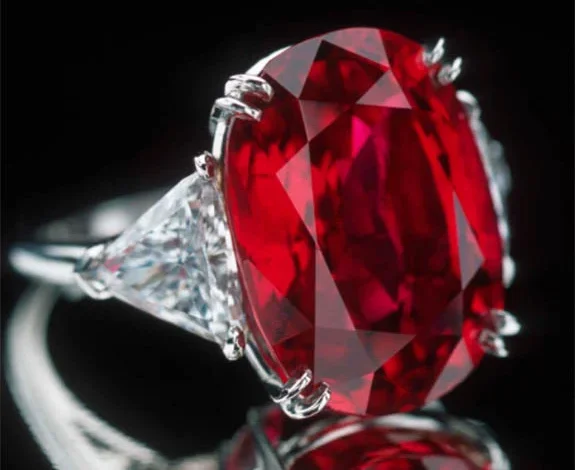
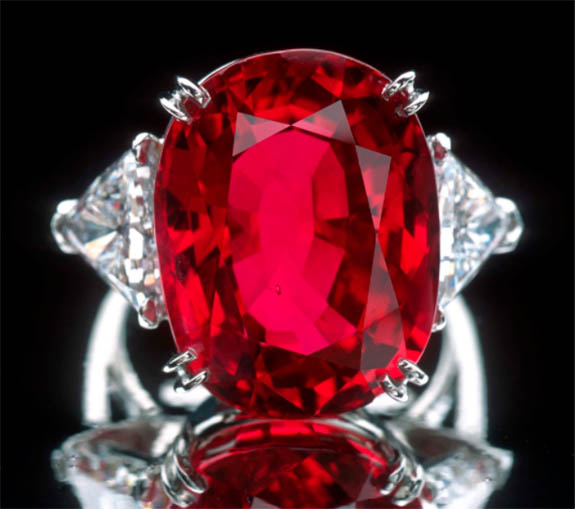
In the heart of the Janet Annenberg Hooker Hall of Geology, Gems and Minerals at the Smithsonian’s National Museum of Natural History, a singular gemstone captures the attention of millions of visitors annually. The Carmen Lúcia Ruby, a 23.10-carat Burmese masterpiece, stands as one of the most significant mineralogical specimens in the world. Since its induction into the National Gem and Mineral Collection in 2004, the stone has been recognized not only for its extraordinary physical properties but also for the poignant narrative of devotion and philanthropy that brought it to the American public. As one of the largest and finest faceted rubies ever documented, its presence in Washington, D.C., represents a rare intersection of geological rarity, historical provenance, and the legacy of a multi-billion-dollar American success story.
The Geological Rarity of the Mogok Ruby
To understand the significance of the Carmen Lúcia Ruby, one must look to the fabled Mogok Stone Tract in Upper Myanmar (formerly Burma). For over 800 years, this mountainous region has been the world’s premier source for "pigeon’s blood" rubies—a term used by gemologists to describe a vibrant, richly saturated red with a soft glowing fluorescence. The Carmen Lúcia Ruby epitomizes this ideal.
Rubies are a variety of the mineral corundum (aluminum oxide). While pure corundum is colorless, the presence of trace elements creates the vivid hues associated with sapphires and rubies. In the case of the ruby, the coloring agent is chromium. The geological conditions in Mogok are unique because the rubies are typically found in marble host rock. This marble environment is low in iron, an element that often "quenches" or dulls the natural fluorescence of a gemstone. Because the Carmen Lúcia Ruby was formed in such an iron-poor environment, it exhibits a high degree of internal fire, appearing to glow from within when exposed to natural or ultraviolet light.
While diamonds, sapphires, and emeralds are frequently found in sizes exceeding 100 carats, rubies of exceptional quality rarely surpass 20 carats. The crystal structure of corundum, combined with the geological stresses required to produce ruby, often results in smaller, heavily included stones. A 23.10-carat ruby with the clarity and saturation of the Carmen Lúcia is a statistical anomaly, placing it in a category of rarity that exceeds almost any other colored gemstone in the world.
A Chronology of Discovery and Acquisition
The history of the Carmen Lúcia Ruby is a journey from the mines of Southeast Asia to the halls of American academia.
The 1930s: Discovery and Early History
The stone was sourced from the Mogok region in the 1930s, an era when traditional mining techniques still dominated the Burmese landscape. Upon its discovery, the rough crystal was faceted into its current oval shape, a cut designed to maximize its weight while highlighting its exceptional color. Shortly after its cutting, the gem disappeared into private European collections, where it remained largely shielded from public view for seven decades.
2002–2003: A Symbol of Hope
The gem re-emerged on the private market in the early 2000s. It was during this period that Carmen Lúcia Buck, the wife of Subway co-founder Dr. Peter Buck, learned of the stone’s availability. Carmen, a native of Brazil who had become a devoted philanthropist in the United States, was undergoing treatment for cancer. She reportedly saw the ruby as a symbol of resilience and hoped to acquire it to celebrate her eventual recovery.
2003–2004: Loss and Legacy
Tragically, Carmen Lúcia Buck passed away in 2003 before the acquisition was finalized. Moved by his late wife’s admiration for the stone and her lifelong commitment to charitable causes, Dr. Peter Buck decided to purchase the ruby not for his personal collection, but as a gift to the Smithsonian Institution. By donating the funds required for the museum to acquire the stone, Buck ensured that the ruby would serve as a permanent memorial to his wife.
2004–Present: Public Exhibition
The stone was officially unveiled at the Smithsonian in 2004. At the time of its acquisition, Jeffrey Post, then the curator of the National Gem and Mineral Collection, remarked that the ruby was the most significant addition to the museum’s holdings in two decades. It now sits in a place of honor alongside the Hope Diamond and the Logan Sapphire.
The Philanthropic Engine: Dr. Peter Buck and the Subway Legacy
The donation of the Carmen Lúcia Ruby was made possible by one of the most successful entrepreneurial ventures in American history. Dr. Peter Buck, a nuclear physicist by training, was the financial architect behind the Subway restaurant chain.
In 1965, a 35-year-old Buck provided a $1,000 loan to a 18-year-old family friend named Fred DeLuca. The goal was for DeLuca to open a sandwich shop in Bridgeport, Connecticut, to fund his medical school tuition. Originally named "Pete’s Super Submarines," the venture eventually evolved into Subway. By the time of the ruby’s donation, Subway had become the largest fast-food chain in the world by store count, with tens of thousands of locations globally.
Dr. Buck’s net worth, estimated at approximately $2.6 billion at the time of his later years, allowed him to engage in significant philanthropic endeavors. While he was known for his modest lifestyle—often driving an old car and living in a relatively simple home—his public giving was monumental. The gift of the Carmen Lúcia Ruby was a strategic act of "cultural philanthropy," intended to provide the American public with access to a treasure that would otherwise have remained in a private vault.
Market Valuation and Comparative Analysis
While the Smithsonian does not disclose the exact purchase price of the Carmen Lúcia Ruby, gemological experts and auction records provide a framework for its immense value. The market for "investment-grade" Burmese rubies has seen exponential growth over the last twenty years, driven by dwindling supply from Mogok and increasing demand from global collectors.
A relevant benchmark is the "Sunrise Ruby," a 25.59-carat Burmese stone that sold at Sotheby’s Geneva in May 2015 for $30.3 million. This sale set a world record for any ruby at auction, equating to more than $1.1 million per carat. Given that the Carmen Lúcia Ruby is comparable in size (23.10 carats) and possesses the same prestigious Burmese origin and "pigeon’s blood" color, its valuation in today’s market would likely reach tens of millions of dollars.
The rarity of the Carmen Lúcia is further highlighted when compared to other famous stones in the Smithsonian:
- The Hope Diamond: While world-famous for its 45.52-carat size and blue color, diamonds are found in a much wider variety of geological settings than high-quality rubies.
- The Logan Sapphire: At 423 carats, it is significantly larger, but sapphires naturally grow in much larger crystal structures than rubies, making a 23-carat ruby arguably rarer than a 400-carat sapphire.
Official Responses and Curatorial Impact
The acquisition of the ruby transformed the Smithsonian’s colored gemstone gallery. Curators at the National Museum of Natural History have frequently highlighted the stone’s educational value. Beyond its beauty, the Carmen Lúcia Ruby serves as a primary example for students of mineralogy and gemology to study the effects of chromium on corundum and the specific inclusions (such as "silk" or rutile needles) that identify a stone as being of Burmese origin.
In his 2004 interview with The New York Times, Dr. Peter Buck emphasized the public nature of the gift. He noted that Carmen would have been pleased to know that the stone was being used to inspire wonder in children and researchers alike, rather than being "locked away in a vault." This sentiment reflects a broader trend in high-level philanthropy where collectors choose to institutionalize "world-class" assets for the benefit of public education.
Broader Implications for Gemology and Heritage
The presence of the Carmen Lúcia Ruby in a public trust like the Smithsonian also carries weight in the context of international heritage. As Myanmar has faced various political transitions and trade sanctions over the years, the preservation of such a significant piece of its geological history in a stable, scientific environment ensures its safety for future generations.
Furthermore, the ruby serves as a benchmark for the "pigeon’s blood" standard. In an era where many gemstones undergo heat treatment or chemical diffusion to enhance their color, the Carmen Lúcia Ruby remains a testament to the perfection that nature can achieve without human interference. It is a "natural" stone, meaning its color and clarity have not been artificially altered, a fact that exponentially increases its value to both scientists and collectors.
Conclusion: A Legacy in Stone
The Carmen Lúcia Ruby is more than a 23.10-carat mineral specimen; it is a convergence of natural history and human emotion. For the scientist, it is a rare window into the metamorphic processes of the Earth’s crust. For the historian, it is a relic of the legendary Mogok mines. For the public, it is a dazzling display of natural beauty.
However, perhaps its most enduring role is as a monument to the woman for whom it was named. Through the generosity of Dr. Peter Buck, a stone that was intended to celebrate a personal recovery became a gift of national significance. As it sits under the lights of the Smithsonian, the Carmen Lúcia Ruby continues to fulfill its donor’s wish: to be seen, to be known, and to stand as an everlasting testament to a love that sought to share the world’s rarest treasures with the nation.