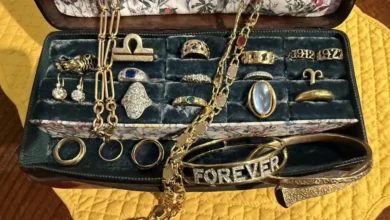
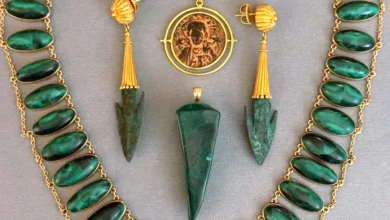
Brooke Astor Estate Auction Surpasses Expectations as Jewelry and Personal Effects Raise Millions for New York Philanthropy

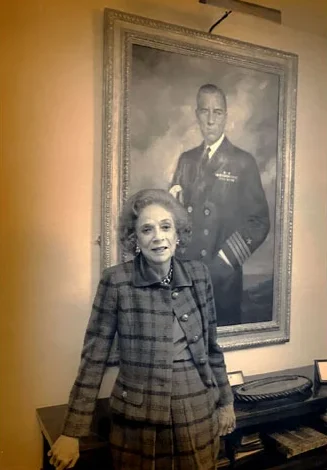
The late Brooke Astor, a titan of New York society and a relentless champion of urban philanthropy, famously remarked that "money is like manure; it’s not worth a thing unless it’s spread around." Though Mrs. Astor passed away in 2007 at the age of 105, her philosophical commitment to the redistribution of wealth reached a final, resounding crescendo this week. A high-profile, two-day auction hosted by Sotheby’s in New York City concluded with a staggering total of $18.8 million, with the proceeds destined for the very charitable organizations she championed during her long life. The event, which drew international collectors and admirers of the "Grand Dame of New York," saw hundreds of her personal items—ranging from fine art and furniture to an exquisite collection of jewelry—shatter their pre-sale estimates.
A Legacy of Giving and the Final Distribution of Assets
The auction served as the final chapter in the storied life of Roberta Brooke Russell Kuser Marshall Astor. As the wife of Vincent Astor, she inherited a massive fortune that she spent nearly half a century dispersing through the Vincent Astor Foundation and her personal giving. The Sotheby’s event was not merely a sale of luxury goods; it was a curated exhibition of a life lived at the pinnacle of American high society, with every dollar earned serving the public good.
The total of $18.8 million far exceeded the initial conservative estimates, reflecting the enduring "Astor cachet." While the furniture and decorative arts from her Park Avenue duplex and her Westchester estate, Holly Hill, performed admirably, it was the jewelry collection that provided the auction’s most dramatic moments. Of the total funds raised, the jewelry portion alone accounted for $5.7 million, nearly $2 million above the high estimates provided by Sotheby’s specialists.

The Bvlgari Emerald Necklace: A Romantic Provenance
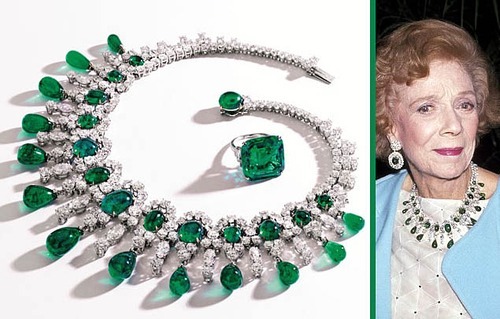
The undisputed centerpiece of the jewelry session was a magnificent platinum, emerald, and diamond necklace created by the renowned house of Bvlgari in 1959. The piece is a masterwork of mid-century jewelry design, featuring 13 drop-shaped emeralds weighing approximately 71 carats, complemented by 14 cabochon emeralds totaling 41 carats. The architectural brilliance of the necklace is further enhanced by 14 marquise diamonds and a cascade of brilliant-cut diamonds weighing a combined 50 carats.
Beyond its physical beauty, the necklace carried a poignant backstory that captivated bidders. According to Astor’s 1980 autobiography, Footprints, the necklace and its matching earrings were commissioned by her husband, Vincent Astor, during a trip to London in the autumn of 1958. Vincent passed away the following spring, before the pieces were completed. Brooke Astor remained unaware of the commission until nearly two years later, when she received a letter from Bvlgari. Enclosed was a note from her late husband, written before his death, requesting that the jewelry be delivered to her on her birthday.
Mrs. Astor finalized the purchase herself, viewing the necklace as a final, eternal gift from her husband. Entering the auction with an estimate of $250,000 to $350,000, the necklace sparked a competitive bidding war, eventually selling for $686,500. The emotional weight of the provenance, combined with the quality of the stones, made it the highlight of the event’s first day.
The Emerald Engagement Ring and Other Notable Lots
While the Bvlgari necklace held the most sentimental value, the highest price of the jewelry session was fetched by Mrs. Astor’s engagement ring. The ring, a platinum and diamond setting, features a spectacular emerald center stone weighing 22.84 carats. The deep green hue and significant size of the stone made it a rarity on the open market. Originally estimated to sell between $100,000 and $150,000, the ring saw explosive interest from international buyers, ultimately selling for $1.2 million—ten times its low estimate.
Other significant jewelry sales included:
- Verdura Earclips: A pair of platinum, emerald, and diamond earclips by the iconic jeweler Verdura. Estimated at $30,000 to $40,000, they sold for $152,000.
- Van Cleef & Arpels Brooch: A sophisticated platinum, emerald, and diamond brooch. It was estimated at $60,000 to $80,000 but reached a final price of $254,500.
- Lion Brooch: A whimsical 18-karat gold, platinum, diamond, and emerald "Lion" brooch by Van Cleef & Arpels, which became a symbol of Astor’s spirited personality, also sold well above its estimate.
The success of these lots underscored a broader trend in the auction market: the "provenance premium." Items owned by figures of historical or social significance often command prices that defy traditional valuation metrics based solely on material or craftsmanship.
Chronology of the Astor Estate Settlement
The path to the Sotheby’s auction was long and often fraught with legal complexity. To understand the significance of this sale, one must look at the timeline following Brooke Astor’s death:
- August 2007: Brooke Astor passes away at age 105 at Holly Hill, her estate in Briarcliff Manor.
- 2007–2009: A contentious legal battle ensues regarding her estate. Allegations of elder abuse and the mishandling of her will led to a high-profile criminal trial involving her son, Anthony Marshall.
- October 2009: Anthony Marshall is convicted of grand larceny and other charges related to the exploitation of his mother’s diminished mental state in her final years.
- 2011–2012: Following the resolution of legal disputes and the finalization of estate taxes, the executors of the Astor estate move forward with the liquidation of personal property to fulfill the charitable bequests outlined in her final valid will.
- September 2012: Sotheby’s holds the two-day "Property from the Estate of Brooke Astor" auction in New York.
The auction represented the final resolution of the estate, ensuring that the funds were finally directed toward the institutions Mrs. Astor loved, rather than being consumed by legal fees or familial disputes.
Strengthening New York’s Cultural Pillars
True to her "manure" philosophy, the $18.8 million generated by the sale will be distributed among several of New York City’s most vital cultural and social institutions. Brooke Astor was known for her "hands-on" philanthropy; she famously visited the projects she funded, from tenement basements to the halls of the Metropolitan Museum of Art.
The primary beneficiaries of the auction proceeds include:
- The New York Public Library: Astor was an honorary trustee and a passionate advocate for the library system, which she believed was the "crown jewel" of the city’s civic life.
- The Metropolitan Museum of Art: As a long-time trustee, she funded various galleries and acquisitions, ensuring the museum remained a world-class institution.
- The Pierpont Morgan Library: Astor supported the preservation of rare manuscripts and the expansion of the library’s public reach.
- The Animal Medical Center of New York: A lifelong lover of dogs, particularly her dachshunds, Astor was a major benefactor of this veterinary hospital.
- The New York City Schools: Funds will be directed toward literacy programs and the improvement of public education facilities, a cause Astor championed to ensure the city’s future.
Market Analysis and Cultural Implications
The Brooke Astor sale occurred during a period of robust growth for the high-end auction market. Analysts noted that the "white-glove" nature of the sale (where every lot is sold) indicated a strong appetite for items with impeccable pedigree.
"The Astor sale was a perfect storm for the auction world," said one market analyst following the event. "You had high-quality gems, items with a direct link to the ‘Gilded Age’ of New York, and the knowledge that the money was going to charity. This creates an emotional environment where bidders are willing to go far beyond the appraised value."

Furthermore, the auction highlighted the shift in how grand estates are handled in the 21st century. While previous generations might have seen these collections broken up privately or passed down through increasingly diluted family lines, the public auction serves as both a final celebration of the individual and a transparent mechanism for charitable funding.
Conclusion: The Enduring Spirit of Brooke Astor
The $18.8 million raised at Sotheby’s is more than a financial figure; it is a testament to a woman who understood that her status came with a profound obligation to the city that fostered her family’s fortune. Brooke Astor’s ability to "spread the manure" ensured that her influence would be felt long after her death.
As the final gavel fell on the last lot, the legacy of Brooke Astor was secured not in the jewelry she wore or the furniture she owned, but in the libraries that will remain open, the art that will remain on display, and the students who will have better resources to learn. In the end, the auction proved that while Brooke Astor may have left the stage, her commitment to the enrichment of New York City continues to flourish.