Louis Vuitton Illuminates Milan Design Week with a Grand Homage to Art Deco and Heritage

Milan, a city pulsating with design and cultural dynamism, once again became the epicenter of global creativity during its annual Design Week. Amidst this vibrant backdrop, Louis Vuitton, the venerable French luxury house, unveiled its latest interiors and Objets Nomades collections, solidifying its profound connection to art, heritage, and innovative design. Pietro Beccari, chairman and chief executive officer of Louis Vuitton, captured the prevailing sentiment, declaring, "It’s a magic moment for Milan," a statement that resonated deeply with the brand’s expansive and immersive presentation.
Milan Design Week: A Global Stage for Luxury and Innovation
Milan Design Week, comprising the prestigious Salone del Mobile (Milan Furniture Fair) and the sprawling Fuorisalone events scattered across the city, represents the apex of the international design calendar. Drawing hundreds of thousands of visitors, including designers, architects, collectors, and enthusiasts from around the globe, it serves as an unparalleled platform for showcasing cutting-edge innovation, artistic expression, and market trends in furniture, lighting, and interior design. For luxury brands like Louis Vuitton, participation in this esteemed event extends far beyond mere product display; it is a strategic assertion of cultural relevance, a celebration of craftsmanship, and an opportunity to engage with a sophisticated global audience on a multi-sensory level.
Louis Vuitton’s choice to present its collections during this pivotal week underscores Milan’s indispensable role as a nexus where design, fashion, and luxury converge. The city’s unique blend of historical grandeur and contemporary flair provides an ideal setting for brands to narrate their stories, offering experiences that transcend traditional retail. The sheer scale and international attendance of Milan Design Week offer luxury houses an unmatched opportunity to reinforce their brand identity and expand their footprint within the lucrative and increasingly competitive home and lifestyle sectors.
Louis Vuitton’s Evolving Brand Narrative: Beyond Fashion
Pietro Beccari articulated a clear vision for Louis Vuitton, emphasizing its transformation into a brand that is "part of people’s life. It’s a brand that embraces history, culture, sports." This philosophy guides the luxury industry’s imperative to "seize the moment, evolve and respond to the need of people to be entertained." Beccari contends that Louis Vuitton, with its innovative spirit, is uniquely positioned to meet this demand. This strategic pivot reflects a broader trend in luxury towards creating holistic, experiential ecosystems that captivate consumers beyond seasonal fashion cycles.

The brand’s expanding portfolio of "retailtainment" ventures serves as a testament to this strategy. Recent examples include the new six-level LV The Place Seoul, an immersive destination combining brand history, exclusive collections, and a rooftop restaurant helmed by Michelin-starred chef Junghyun Park. This follows the 2024 opening of LV The Place in Bangkok and "The Louis" in Shanghai, a groundbreaking store concept designed as a life-size cruise ship that debuted in June of the previous year. Even more recent, the Louis Vuitton store in Beijing’s Taikoo Li Sanlitun, unveiled in December, introduced the city’s first Louis Vuitton Café. These ambitious projects are not merely retail spaces but cultural hubs designed to offer unique, memorable experiences, significantly increasing brand visibility and fostering deeper consumer engagement. They exemplify how luxury brands are blurring the lines between commerce, culture, and entertainment, crafting destinations that become integral to the lifestyle aspirations of their clientele.
A Deep Dive into Art Deco: Honoring Pierre-Émile Legrain
At the heart of Louis Vuitton’s Milan presentation was a profound homage to Art Deco, a style that epitomizes elegance, modernity, and craftsmanship, and specifically to the seminal French decorator, bookbinder, illustrator, and cabinetmaker Pierre-Émile Legrain. Beccari highlighted the brand’s "legitimacy" in this interiors development, stressing Legrain’s integral role in Louis Vuitton’s history. "He’s part of our history," Beccari affirmed, underscoring the deep-seated connection.
The Art Deco movement, which flourished in the 1920s and 1930s, gained international prominence following the 1925 International Exhibition of Modern Decorative and Industrial Arts in Paris. Louis Vuitton was an influential participant in this landmark event, which helped define the movement’s aesthetic – characterized by geometric forms, rich colors, lavish ornamentation, and exotic materials. Legrain (1888-1929) was a pivotal figure in this era, known for his revolutionary approach to design that seamlessly blended artistic expression with functional elegance. His collaborations with luminaries such as French illustrator and designer Paul Iribe and French designer and art collector Jacques Doucet cemented his legacy as a visionary who left an indelible mark on Art Deco.
Gaston Louis Vuitton: A Visionary Patron
The enduring connection between Louis Vuitton and Legrain can be traced back to Gaston Louis Vuitton, the grandson of the founder. Beccari lauded Gaston as "a genius, one of the family’s most eclectic members." Serving as a key third-generation leader from 1936 until his death in 1970, Gaston was instrumental in introducing innovative designs and elevating the company’s artistic direction. It was his foresight and appreciation for cutting-edge design that led him to commission Legrain in the 1920s to create an Art Deco-inspired piece of furniture: the Louis Vuitton Coiffeuse, or dressing table. This piece holds immense historical significance as the very first piece of furniture ever sold by the house, laying the groundwork for Louis Vuitton’s future in home design.
Reinterpreting Heritage: The 2026 Collection

Fast forward to 2026, Louis Vuitton has magnificently reinterpreted Legrain’s iconic designs, bridging a century of artistic evolution with contemporary luxury. The original ebony-veneer and lacquer dressing table, the Louis Vuitton Coiffeuse, has been reborn as the Celeste Coiffeuse, featuring a new version crafted in exquisite lacquer wood and supple Nomades leather. This reinterpretation speaks to the brand’s commitment to preserving its heritage while embracing modern craftsmanship and materials.
Beyond the Coiffeuse, the collection brings other Legrain masterpieces back to life. The Riviera chaise longue, originally designed by Legrain in 1925 for Jeanne Tachard, a renowned French collector and patron of the arts, has been reinterpreted in luxurious leather, featuring a distinctive V-shaped design on its head and foot sides. Similarly, Legrain’s Kubic trapezoidal chair has been reimagined in the brand’s signature VVN leather (natural vegetable-tanned leather), showcasing the enduring appeal of his geometric forms through the lens of Louis Vuitton’s material expertise. Beccari succinctly captured the brand’s philosophy: "Louis Vuitton has always been part of the culture of the times, just as we aim to be today."
The Objets Nomades Collection: A Decade of Design Excellence
Since its inception in 2012, the Objets Nomades collection has been a beacon of Louis Vuitton’s commitment to design, craftsmanship, and the spirit of travel. This visionary project invites influential international designers to collaborate, creating extraordinary, limited-edition pieces that exalt the house’s savoir-faire and its deep-rooted heritage in travel-inclined products. Over the years, the collection has featured a stellar roster of designers including Patricia Urquiola, India Mahdavi, Atelier Biagetti, Zanellato/Bortotto, Andrew Kudless, Tokujin Yoshioka, Frank Chou, Nendo, Damien Langlois-Meurinne, Barber Osgerby, and Marcel Wanders Studio, each contributing unique perspectives and pushing the boundaries of design.
The latest additions to the Objets Nomades collection continue this tradition of innovation and artistic prowess. The Cocoon Dichroic by Estudio Campana x Géraldine Gonzales, reminiscent of the Louis Vuitton store façade in Sanlitun, stands out with its futuristic shell made of hand-cut, color-shifting iridescent leaves, creating a mesmerizing play of reflections. The Cabinet Kaléidoscope, crafted with intricate exotic leather marquetry, exemplifies meticulous artistry. A unique piece, the Odyssey Babyfoot, appears in a new green version adorned with tiny mermaids, transforming a classic game into a whimsical art object.
Within the grand mirrored expanse of the Palazzo Serbelloni’s Foyer, other masterpieces captivated visitors. The Stella armchair, designed by the London-based Raw-Edges design studio (Shay Alkalay and Yael Mer), was upholstered in a fabric that created captivating optical illusions, inviting a second look. The Aqua coffee table by Franck Genser, whose creative studio was founded in Paris in 2015, featured a subtly curved marble surface that appeared almost liquid, showcasing the material’s surprising fluidity. Marc Newson’s minimalist design for the re-released scented candles, originally launched in 2018, and furniture pieces by Patrick Jouin and Cristian Mohaded further enriched the majestic salons, demonstrating the breadth of the collection.
Expanding the Home Textile and Tableware Universe

The new home collection further diversified Louis Vuitton’s lifestyle offerings. A striking screen, meticulously crafted in wood marquetry and mother-of-pearl, demonstrated the brand’s mastery of decorative arts. The Aventura chair by Cristian Mohaded, originally launched in 2025, was reimagined with a new Art Deco-style fabric, drawing inspiration from the cover of the 1925 book "Le Cantique des Cantiques" by Jean-Joseph Mardrus.
The home textile collection introduced five luxurious plaids and matching cushions in cashmere and wool, each inspired by iconic book covers, including one echoing the cover of Francis Carco’s "Nuits de Paris." Six large rugs showcased geometric patterns and unique color combinations, directly drawing inspiration from the beautiful book covers designed by Legrain.
For tableware, the Homage Collection presented Limoges porcelain pieces reinterpreting the cover of Legrain’s book binding for "À Rebours." Similarly, the Promenade tablecloths and napkins were inspired by Legrain’s book cover of the same name. A new serving piece, "Fragments," originally launched in 2025, found its spark in Alfred de Vigny’s 1837 philosophical novel "Daphné." The "Flower Crown" set of dinner plates and serving dishes, crafted in Limoges porcelain with gold metal details, drew its inspiration from the iconic Capucines bag, seamlessly blending fashion accessory design with home aesthetics.
The Venue and Collaborative Spirit
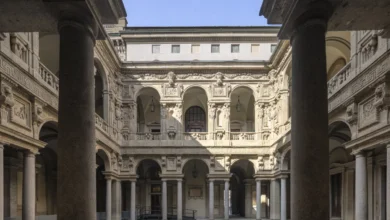
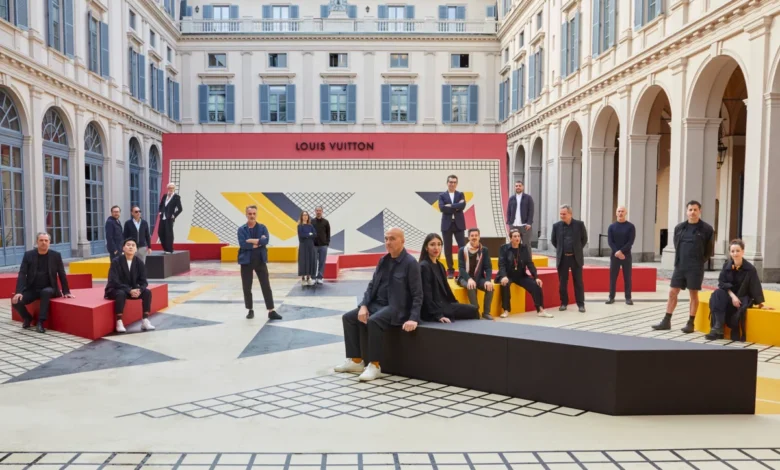
The unveiling took place at Milan’s Neoclassical Palazzo Serbelloni, a magnificent setting that provided a fitting backdrop for the collections. The building’s grandeur amplified the luxury and artistry on display. In a notable collaborative effort, the courtyard of the Palazzo featured a monumental pavement work inspired by Legrain, created in situ. This ambitious project involved students from the Accademia Belle Arti di Brera, who contributed to the design and execution, fostering a connection between emerging talent and established luxury. This collaboration underscores Louis Vuitton’s commitment to nurturing artistic endeavors and integrating the local cultural fabric into its global presentations.
The Convergence of Fashion and Design
Beccari underscored the inherent connection between luxury fashion and design, asserting that "They are two sides of the same coin." He highlighted how virtually all influential artistic directors, from Karl Lagerfeld and Marc Jacobs to Nicolas Ghesquière, Pharrell Williams, and Virgil Abloh, have demonstrated a keen interest in design. This observation reflects a fundamental truth in the luxury sector: design principles, aesthetic sensibilities, and an appreciation for craftsmanship transcend specific product categories. The integration of fashion and design is not merely a trend but a logical evolution, offering a holistic brand experience where clothing, accessories, and home goods all speak the same language of refined luxury and artistic vision.

Global Retail Expansion and the Future of Home Collection
Milan’s significance to Louis Vuitton is further cemented by the company’s sprawling flagship store on Via Montenapoleone, unveiled last year. This store holds the distinction of being the first in the world to carry the brand’s comprehensive home collection, a segment Louis Vuitton ventured into nearly 15 years ago. While adhering to LVMH Moët Hennessy Louis Vuitton’s policy of not disclosing specific financial figures, Beccari expressed satisfaction, stating, "the store is performing very well, we are very happy," noting strong customer interest even in luxury games like foosball and billiard tables.
Louis Vuitton currently features its home line in 11 stores globally, including key markets such as Tokyo, Seoul, and New York. Looking ahead, the brand plans to open a new unit in Hong Kong at the K11 Art Mall by the end of the year, with Beccari envisioning "one opening per year, where it’s right, where we have an edge and we can do something different; otherwise we won’t do it." This cautious yet strategic expansion reflects a deliberate approach to market penetration, focusing on locations that offer unique opportunities for the brand to differentiate itself and provide unparalleled customer experiences.
In essence, Louis Vuitton’s presentation at Milan Design Week was more than a product launch; it was a powerful declaration of its identity as a cultural institution deeply rooted in heritage yet constantly pushing the boundaries of innovation. By honoring historical figures like Pierre-Émile Legrain and integrating design into its core strategy, Louis Vuitton continues to shape the evolving landscape of luxury, affirming its position not just as a fashion powerhouse, but as a comprehensive lifestyle brand that defines the "magic moment" for its discerning global clientele.