Phillips to Auction Rare Pre-Production F.P. Journe Chronomètre à Résonance with Serial Number 022/99R at Upcoming Geneva Sale

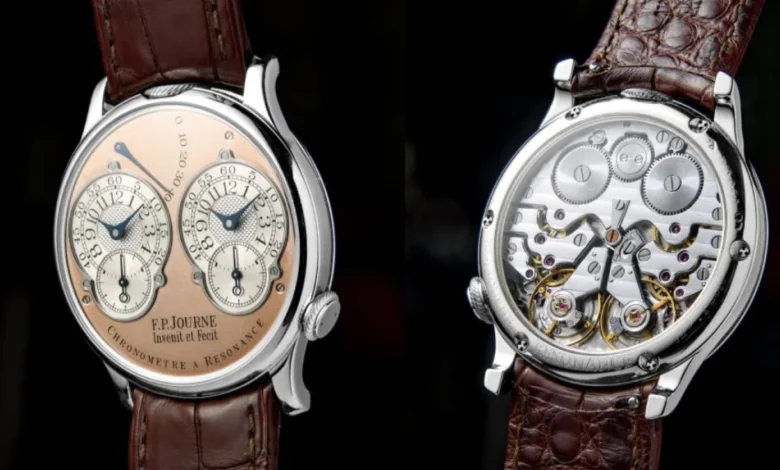
The international auction house Phillips, in association with Bacs & Russo, has announced the highlights of its upcoming Geneva Watch Auction: XXIV, featuring a cornerstone of modern independent horology: an exceptionally rare F.P. Journe Chronomètre à Résonance. This specific timepiece, encased in 38-millimeter platinum and featuring a distinctive shiny pink gold dial, represents a significant moment in the history of the brand, as it is one of the earliest examples of the model ever produced. Bearing the serial number 022/99R, the watch dates back to 1999, which places its manufacture a full year before the Chronomètre à Résonance was officially launched to the public in 2000. This pre-production status, combined with its 27-year absence from the public market, has led experts to place an upper estimate of CHF 1 million ($1.2 million) on the lot for the auction scheduled for November 7 and 8 in Geneva.
The appearance of serial number 022/99R is a landmark event for collectors of François-Paul Journe’s work. According to Phillips, the watch is one of only ten pre-production examples ever released by the watchmaker, making it a "holy grail" for enthusiasts of the brand. The "99R" suffix in the serial number denotes the year 1999 and the "Résonance" model, signifying its place at the very genesis of the brand’s commercial existence. For nearly three decades, this specific piece has remained in private hands, away from the spotlight of the secondary market, which adds a layer of "fresh-to-market" allure that typically drives competitive bidding in high-stakes horological auctions.
Technical Mastery: The Science of Resonance in Horology
To understand the significance of this timepiece, one must look toward the technical innovation that François-Paul Journe brought to the wristwatch format. The Chronomètre à Résonance is celebrated as the world’s first wristwatch to successfully utilize the physical phenomenon of resonance. In horological terms, resonance involves a movement featuring two independent balance wheels positioned in close proximity to one another. As these wheels oscillate, they generate subtle vibrations through the air and the shared mainplate. Over a short period, these two systems naturally synchronize their frequencies, effectively "locking" into a unified rhythm.
This synchronization is not merely a visual or mechanical curiosity; it serves a profound chronometric purpose. By having two balance wheels working in tandem, any external disturbance—such as a sudden movement of the wearer’s wrist or a change in position—that would normally cause a single balance wheel to speed up or slow down is mitigated. If one wheel is affected, the other compensates, resulting in a significantly more stable and consistent rate of timekeeping. This level of precision was previously thought to be attainable only in large-scale clocks, and Journe’s ability to shrink this complex physical interaction into a 38-millimeter case is widely regarded as one of the greatest achievements in contemporary watchmaking.
The concept was not entirely new, but its application was historically limited. Journe drew heavy inspiration from the 18th-century clockmaker Antide Janvier, who first experimented with the idea in double-pendulum clocks. Later, the legendary Abraham-Louis Breguet conducted extensive research into the phenomenon, though he was only able to produce a handful of pocket watches using the principle. It was François-Paul Journe who, after years of research and development, finally mastered the adaptation of resonance for the wrist, ensuring that the two balances remained stable despite the constant movement inherent in wearing a watch.
A Chronology of the F.P. Journe Résonance Series
The timeline of the Chronomètre à Résonance is a narrative of evolution and increasing complexity. While the official launch took place in 2000, the groundwork was laid in the late 1990s as Journe sought to establish his eponymous brand.
- 1996–1998: François-Paul Journe develops the prototype movements, refining the distance between the two balance wheels to ensure the resonance effect can be achieved consistently.
- 1999: The pre-production phase begins. During this year, a limited run of approximately ten pieces is created. These are often referred to as the "Souscription" or early pre-production models. The watch being auctioned by Phillips, serial 022/99R, originates from this pivotal year.
- 2000: The official commercial launch of the Chronomètre à Résonance. This model would go on to win the Grand Prix d’Horology de Genève (GPHG) and cement Journe’s reputation as a visionary.
- 2004: The brand transitions from using brass movements to 18-karat rose gold movements across its entire collection, a move that distinguishes F.P. Journe from nearly every other manufacturer in the world.
- 2010–2020: Various iterations are released, including the "Digital" Résonance and the 20th-anniversary model, which redesigned the movement to feature a single mainspring barrel driving both gear trains through a differential.
The 1999 example featured in the upcoming auction is particularly noteworthy because it represents the "purest" form of Journe’s vision, produced before the brand reached its current level of global fame. The 38mm case size is also the original proportion preferred by the watchmaker, as many modern collectors find the smaller dimensions more elegant and historically accurate compared to later 40mm versions.
Market Context and Historical Sales Performance
The secondary market for F.P. Journe has experienced an unprecedented surge over the last five years, moving from a niche collector’s interest to a dominant force in the global auction scene. Phillips in association with Bacs & Russo has been at the forefront of this trend, setting multiple world records for the brand.
During recent sales cycles, Phillips sold three historic timepieces from the Résonance series that underscored the escalating value of early Journe pieces. Leading the pack was the Souscription No. 007, which fetched a staggering $13.9 million, a price that placed it among the most expensive watches ever sold at auction. This was followed by the Souscription No. 18, which realized $6.3 million, and the "Pisa" edition, which sold for $3 million.
These figures illustrate a clear hierarchy in the collector market: the earlier the watch and the more unique its serial number or provenance, the higher the premium. The serial number 022/99R fits perfectly into this high-value category. While the $1.2 million upper estimate is significant, many market analysts believe it may be a conservative figure given the recent trajectory of "pre-production" and "Souscription" F.P. Journe watches. The shiny pink gold dial of this lot is also a highly coveted feature, as early Journe dials often developed a unique patina or texture that modern production methods cannot replicate.
Official Responses and Horological Implications
The inclusion of this watch in the Geneva Watch Auction: XXIV is seen by many as a barometer for the current health of the high-end independent watch market. Phillips has noted that the Chronomètre à Résonance remains one of the landmark creations of contemporary watchmaking, serving as a bridge between the classical traditions of the 18th century and the technical capabilities of the 21st century.
Aurel Bacs, Senior Consultant at Bacs & Russo, has frequently remarked on the "emotional and intellectual depth" of Journe’s work. In previous statements regarding the Résonance, the auction house has emphasized that owning an early Journe is not merely about owning a timepiece, but about possessing a piece of horological history that challenged the status quo of the Swiss watch industry at a time when quartz movements and mass-produced mechanical watches dominated.
The implications of this sale extend beyond a single lot. If the 022/99R exceeds its million-dollar estimate, it will further validate the "Independent" category as a stable asset class for alternative investments. Furthermore, it highlights the importance of "Invenit et Fecit" (Latin for "Invented and Made"), the motto found on all Journe dials, which signifies that the watchmaker conceived and constructed the movement in its entirety—a rarity in an era of outsourced components.
Auction Logistics and Collector Expectations
The Geneva Watch Auction: XXIV will take place at a time when the global watch market is undergoing a period of refinement. While the "hype" around certain mass-market luxury brands has cooled, the demand for "blue-chip" independent makers like F.P. Journe, Philippe Dufour, and Rexhep Rexhepi remains robust. Collectors attending the November sale will be looking for transparency, provenance, and condition.
Phillips has confirmed that the platinum case and pink gold dial of the 022/99R have been meticulously preserved. The watch will be presented alongside other high-profile lots, but its status as a pre-production example from the first year of the brand’s existence makes it the centerpiece of the catalogue. As the auction dates of November 7 and 8 approach, the horological community will be watching closely to see if this 1999 masterpiece will set a new benchmark for the "non-Souscription" early Résonance models.
In the broader context of horology, the sale of serial 022/99R serves as a reminder of the enduring power of mechanical innovation. In an age of digital precision, the fact that a million-dollar market exists for a watch that tells time through the "subtle vibrations" of two balance wheels is a testament to the human fascination with craftsmanship and the physical laws of the universe. For François-Paul Journe, this auction is yet another confirmation of his legacy as one of the most influential watchmakers of the modern era.