The Invisible Siege of Luxury Jewelry E-commerce How Typosquatting and Negative SEO Are Reshaping Digital Security

The first indication of a coordinated digital assault on Opulent Jewelers did not arrive via a customer complaint or a sudden drop in transaction volume, but through a series of anomalies buried within the Google Search Console. A routine audit of the site’s disavow report revealed a startling trend: referring domains had increased by several hundred within a single week. None of these domains were associated with the jewelry industry, nor did they host any discernible content. Instead, they shared a singular, calculated purpose: they were all misspelled variations of the brand’s domain name, and they were all being flooded with thousands of spam-flagged backlinks. This phenomenon represents a sophisticated evolution in the threat landscape for luxury e-commerce, moving beyond the immediate theft of credentials toward a more patient and technical form of brand sabotage known as negative SEO paired with typosquatting.
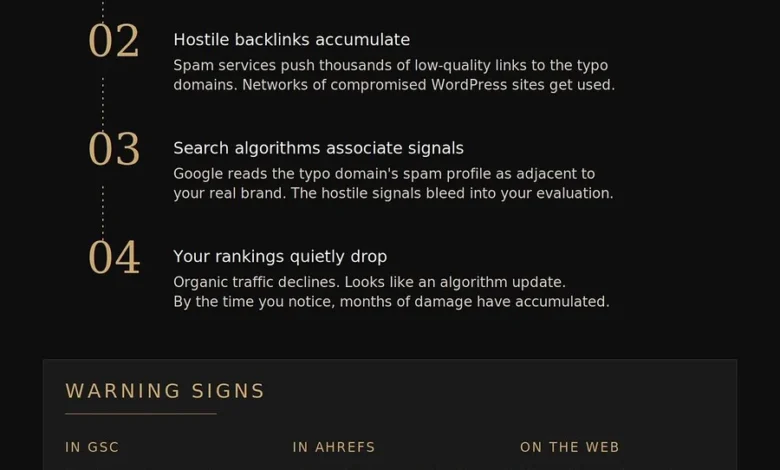
For at least eighteen months, this pattern has quietly targeted high-end jewelry retailers. Unlike traditional phishing, where a fake website mimics a storefront to steal credit card data, this new wave of attacks seeks to manipulate the architectural logic of search engine algorithms. By creating a network of hostile "shadow domains" that mirror a brand’s identity, attackers are successfully bleeding "spam signals" into the legitimate brand’s profile. The result is not a stolen login, but a steady erosion of search engine rankings, a decline in organic traffic, and the eventual loss of visibility on high-value commercial queries.
The Mechanics of Algorithmic Sabotage
To understand the severity of this threat, one must distinguish between traditional typosquatting and its modern, weaponized application. Historically, typosquatting involved registering domains like "gogle.com" to catch stray traffic or host malicious ads. The current iteration is far more insidious. These domains often host no content at all; they sit as "parked" pages with zero outbound links. Their power lies entirely in their inbound link profile.
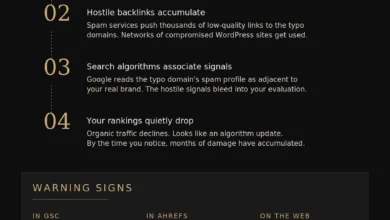
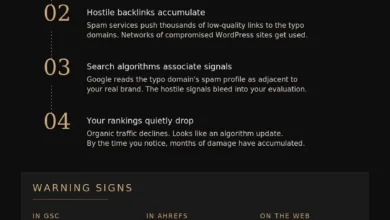
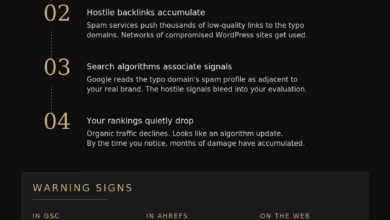
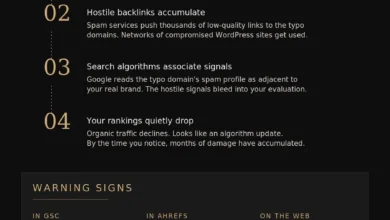
Attackers utilize automated scripts to build thousands of links from compromised WordPress sites, link farms, and spam-heavy directories to these misspelled domains. Because Google’s algorithms—specifically those focused on brand entity recognition—look at the broader "signal landscape" surrounding a brand name, the toxicity of the typosquat domain begins to affect the real brand. When a search engine sees a domain one letter removed from a major retailer associated with thousands of links for "discount pharmaceuticals" or "gambling," the proximity can trigger a ranking suppression for the legitimate site.
The owner of Opulent Jewelers, who has documented this trend extensively, notes that the attacker is exploiting how search engines understand brand identity. Google does not view a domain in isolation; it evaluates the ecosystem. If the ecosystem surrounding a brand name becomes saturated with spam, the algorithm may perceive the brand itself as low-quality or compromised, leading to a slide in search engine results pages (SERPs) that looks like a routine algorithm update rather than a targeted attack.
Why the Luxury Jewelry Sector is the Primary Target
The selection of the luxury jewelry industry for these attacks is a matter of cold economic calculation. Several factors make this sector uniquely vulnerable and highly profitable for those seeking to disrupt the market.
First, the average order value (AOV) in luxury jewelry is among the highest in e-commerce. For retailers specializing in pre-owned Cartier Love bracelets or authenticated Van Cleef & Arpels Alhambra necklaces, a single transaction can range from $5,000 to $50,000. In such a high-stakes environment, even a minor 5% drop in organic traffic can result in six-figure revenue losses over a fiscal quarter.
Second, the keyword landscape is exceptionally competitive. There is a limited inventory of authoritative retailers who can rank for specific, high-intent phrases like "pre-owned luxury jewelry" or "authenticated vintage watches." By pushing a legitimate competitor down just one or two positions on the SERP, an attacker can redirect millions of dollars in potential annual search value toward other players in the market.
Third, the industry relies heavily on "trust signals." Authenticated luxury retailers invest heavily in content that proves their expertise, including provenance documentation and detailed authentication guides. This rich, high-quality content is what search engines reward. By targeting these brands with negative SEO, attackers attempt to turn the brand’s own authority against it, making the high-quality content appear as though it is part of a "sophisticated spam network."
A Chronology of the 2024 Surge
While typosquatting has existed since the dawn of the internet, the coordination of negative SEO intensified significantly in late 2024. Monitoring services began to see a shift from randomized spam to structured infrastructure. The attacks now involve:
- Link-Spam Services: Specialized providers that openly advertise the ability to manipulate search signals.
- Compromised Networks: The use of thousands of hijacked WordPress sites to inject commercial anchor text into the global link graph.
- Aged-Domain Marketplaces: The recycling of domains that already possess hostile backlink profiles, which are then renamed to mimic jewelry brands.
By the fourth quarter of 2024, the pattern had become a standard operating procedure for certain bad actors. What began as an occasional nuisance for the largest global brands has trickled down to independent boutiques and mid-sized e-commerce players who lack the massive security budgets of multinational conglomerates.
Identifying the Early Warning Signs
The difficulty in defending against this attack lies in its invisibility. Most jewelers will experience the symptoms—declining sales and lower rankings—long before they identify the cause. However, there are specific technical indicators that can be monitored through standard industry tools.
Google Search Console Indicators
In the "Links to your site" report, retailers should watch for sudden spikes in referring domains from unfamiliar sources. A particularly telling sign is the use of anchor text that combines the jeweler’s brand name with unrelated commercial terms such as "buy," "cheap," or "discount," often in languages or regions where the jeweler does not operate. If a retailer in New York suddenly sees a surge of links from Eastern European or Southeast Asian forums using their brand name to sell unrelated goods, it is a clear signal of a coordinated campaign.
Backlink Monitoring Tools
Using professional SEO tools like Ahrefs or Semrush, retailers can detect "referring URL paths" that contain randomized hash strings or auto-generated patterns. These are hallmarks of programmatic link building. Another red flag is an influx of links from domains that have an extremely high outbound link count—often in the thousands—which indicates a "poisoned" site used solely for link manipulation.
Typosquat Surveillance
Retailers should proactively monitor for new domain registrations that involve single-letter variations of their brand. If a new domain is registered with a name like "OpulentJewelerss.com" (adding an ‘s’) and it begins accumulating backlinks despite having no content, it is almost certainly being used for negative SEO.
The Strategic Defensive Playbook
Defending against this form of digital sabotage requires a multi-layered approach that combines technical SEO management with legal intervention. There is no "silver bullet" to stop an attacker from registering a domain, but the impact can be mitigated.
1. The Disavow Strategy
The most immediate line of defense is the Google Search Console Disavow Tool. This allows a site owner to tell Google to ignore specific domains when calculating their site’s ranking. For jewelers under active attack, the disavow file must be treated as living infrastructure. It requires weekly or even daily updates to ensure that new waves of spam domains are neutralized before the algorithm can factor them into the brand’s identity.
2. Formal Spam Reporting
Google provides a dedicated channel for reporting search quality issues, including "paid links" and "spammy behavior." While these reports do not always result in an immediate takedown of the offending domain, they provide the data necessary for Google’s webspam team to issue manual actions or adjust algorithmic filters. When filing these reports, it is crucial to select categories like "paid links," as the infrastructure behind these attacks is essentially a massive, illicit link-buying scheme.
3. Legal Recourse: UDRP and ACPA
For attacks causing significant financial damage, legal action is often the only way to permanently remove the hostile domains. The Uniform Domain-Name Dispute-Resolution Policy (UDRP) is a process managed by the World Intellectual Property Organization (WIPO). It allows trademark owners to challenge the registration of domains that are confusingly similar to their own. A UDRP proceeding typically costs around $1,500 in filing fees and takes approximately two months to resolve.
In the United States, the Anticybersquatting Consumer Protection Act (ACPA) offers an even more aggressive remedy. Under 15 U.S.C. § 1125(d), a brand owner can sue for statutory damages ranging from $1,000 to $100,000 per domain. While federal litigation is more expensive and time-consuming than a UDRP filing, the threat of high statutory damages can change the economic incentives for the attacker. Both of these options require the jeweler to have established trademark rights, reinforcing the necessity for even small retailers to register their brands federally.
What Not to Do: Avoiding Counterproductive Responses
In the face of an attack, certain instinctive reactions can actually worsen the situation. It is critical for e-commerce managers to avoid the following pitfalls:
- Defensive Purchasing: It is often tempting to buy the typosquatted domain from the attacker. However, doing so means the retailer now owns a "poisoned asset." The hostile backlink profile remains attached to the domain, and by redirecting it to the main site, the retailer may inadvertently "import" the negative SEO directly into their primary domain.
- Public Confrontation: Engaging with the operator of these networks rarely leads to a cessation of activity. These are often automated, industrial-scale operations. Publicly naming the attacker can sometimes lead to an escalation of the attack as a form of retaliation.
- Misfiling Reports: Reporting typosquatting as "phishing" to services like Cloudflare will often result in a rejection. Most infrastructure providers define phishing narrowly as the theft of credentials. If the domain has no content, it does not technically "phish," and filing incorrect reports can damage the retailer’s credibility with security providers.
Broader Impact and the Future of Search Integrity
The emergence of typosquatting-driven negative SEO represents a fundamental challenge to the integrity of the global search ecosystem. As search engines rely more heavily on artificial intelligence and automated signals to determine trust, the ability for bad actors to "noise up" those signals becomes a powerful weapon.
For the luxury jewelry industry, this is more than a technical hurdle; it is a threat to the democratization of the market. While large-scale retailers may have the resources to maintain massive disavow files and retain IP attorneys, smaller independent jewelers are often left defenseless. The asymmetry of the conflict—where an attacker can launch a campaign for a few hundred dollars while a defender must spend thousands to mitigate it—is the most concerning aspect of this new landscape.
However, awareness is growing. As jewelers share data and security protocols, the "playbook" for these attackers becomes less effective. The future of e-commerce security will likely see search engines developing more robust "identity verification" tools that decouple a brand’s ranking from the noise of misspelled domains. Until then, the burden of vigilance remains with the retailers. In the digital age, protecting a jewelry brand now requires as much attention to the "link graph" as to the physical security of the showroom. The most effective protection is not a single piece of software, but a culture of continuous monitoring and a willingness to use the legal and technical tools already at the industry’s disposal.