The Legacy of Brooke Astor Lives On Through $18.8 Million Sotheby’s Auction Benefiting New York’s Cultural and Educational Institutions

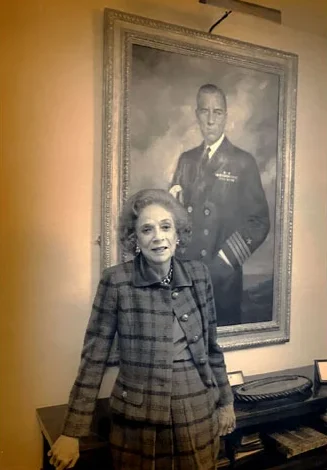
The legendary New York socialite and philanthropist Brooke Astor famously remarked that money is like manure—it is not worth a thing unless it is spread around. Though Mrs. Astor passed away in 2007 at the age of 105, her commitment to the civic and cultural enrichment of New York City continues to manifest through the liquidation of her vast estate. This week, a highly anticipated two-day auction at Sotheby’s in New York City concluded with a total of $18.8 million generated, far exceeding initial expectations. The proceeds are designated for the various charities and institutions that Astor championed throughout her long life, ensuring that her wealth continues to be "spread" across the city she called home.
The auction featured a diverse array of items from her Park Avenue apartment and her country estate, Holly Hill, in Westchester County. Among the 900 lots offered were fine art, Qing Dynasty lacquerware, European furniture, and a celebrated collection of jewelry. The jewelry segment alone proved to be a major highlight of the event, generating $5.7 million. This figure was nearly $2 million above the high estimate, a testament to the enduring allure of the Astor name and the exceptional quality of her personal collection.
The Bvlgari Necklace: A Posthumous Gift of Romance and Elegance
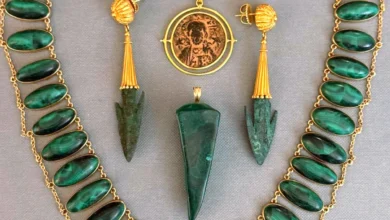
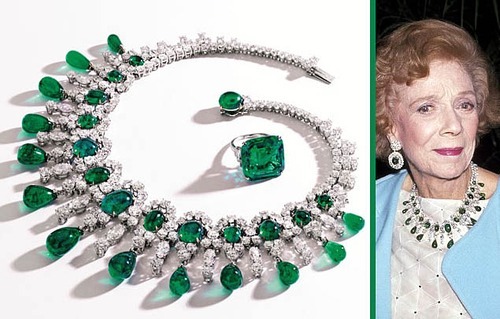
The centerpiece of the auction was an exquisite platinum and emerald necklace crafted by the Italian jeweler Bvlgari in 1959. This piece, which carries a narrative as rich as its stones, was a gift from her husband, Vincent Astor. The necklace is a masterwork of mid-century jewelry design, featuring 13 drop emeralds weighing approximately 71 carats, complemented by 14 cabochon emeralds totaling 41 carats. The architectural brilliance of the piece is further enhanced by 14 marquise diamonds (8.5 carats) and a staggering 50 carats of numerous brilliant-cut diamonds.

While the physical attributes of the necklace are remarkable, its history provided a poignant resonance for bidders. In her 1980 autobiography, "Footprints," Brooke Astor detailed the origins of the piece. During a trip to London in the autumn of 1958, she and Vincent commissioned the necklace and a matching set of earrings. However, Vincent Astor passed away the following spring, before the jewelry could be completed. Brooke remained unaware that the order had been finalized until nearly two years later, when she received a letter from Bvlgari.
Included with the technical specifications was a note written by her late husband before his death, requesting that the jewelry be delivered to Brooke on her birthday. She eventually completed the purchase, viewing the necklace not merely as an accessory, but as the final, most memorable gift from her husband. Entering the auction with a pre-sale estimate of $250,000 to $350,000, the necklace saw intense bidding, eventually selling for $686,500—nearly double its high estimate.
Record-Breaking Sales and the 22-Carat Emerald Ring
Beyond the Bvlgari necklace, other items in the Astor collection commanded prices that stunned market analysts. The most significant financial performer of the jewelry session was Brooke Astor’s platinum and diamond engagement ring. The ring features a massive emerald center stone weighing 22.84 carats. While Sotheby’s had conservatively estimated the ring to sell for between $100,000 and $150,000, the final gavel fell at $1.2 million.
The high premiums paid for these items reflect a trend in the auction world where the "provenance premium"—the added value of an object due to its famous former owner—outweighs the intrinsic value of the gemstones and metals. Experts suggest that the Astor name, synonymous with the Gilded Age and New York’s social elite, acted as a powerful catalyst for the high prices achieved.
Other notable jewelry sales included:
- Verdura Earclips: A pair of platinum, emerald, and diamond earclips by Verdura, estimated at $30,000 to $40,000, sold for $152,000.
- Van Cleef & Arpels Brooch: A platinum, emerald, and diamond brooch by the renowned French jeweler was estimated at $60,000 to $80,000 but eventually sold for $254,500.
A Legacy of Targeted Philanthropy
The $18.8 million raised through this auction is not destined for a single repository but will be distributed among several institutions that Brooke Astor referred to as the "crown jewels" of New York City. Having presided over the Vincent Astor Foundation for decades, she directed hundreds of millions of dollars toward causes that improved the quality of life for New Yorkers.
The primary beneficiaries of the auction proceeds include:
- The New York Public Library: A favorite of Astor’s, she often visited the 42nd Street branch and funded everything from literacy programs to building restorations.
- The Metropolitan Museum of Art: Astor was a long-time trustee and a frequent donor to the museum’s various galleries.
- The Pierpont Morgan Library: Benefiting her love for literature and historical preservation.
- The Animal Medical Center of New York: Reflecting her lifelong affection for animals, particularly her beloved dachshunds.
- The New York City Public Schools: A significant portion of the estate is earmarked for educational initiatives, continuing her work in supporting the city’s youth.
The Context of the Sale: A Final Chapter
The auction marks a definitive conclusion to the legal and personal complexities that shadowed the final years of Brooke Astor’s life. Following her death in 2007, the estate became the subject of a high-profile legal dispute involving her son, Anthony Marshall, who was eventually convicted of grand larceny and elder abuse related to his mother’s fortune. The resolution of these legal battles allowed the executors of the estate to finally move forward with the auction, fulfilling the philanthropic directives laid out in her will.
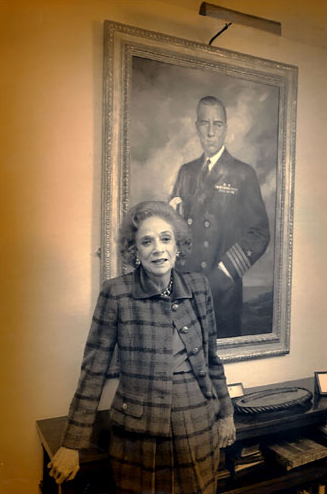
The success of the Sotheby’s sale highlights the enduring public fascination with the Astor dynasty. As the wife of Vincent Astor, the great-grandson of John Jacob Astor—America’s first multi-millionaire—Brooke Astor occupied a unique position in American history. She transformed the Astor legacy from one of mere accumulation to one of active, hands-on social responsibility.
Market Analysis and Implications
The auction results provide a snapshot of the current strength of the high-end estate market. Despite fluctuations in the global economy, "blue-chip" estates—those with impeccable provenance and high-quality assets—continue to attract international buyers. Sotheby’s reported that bidders from across the globe participated in the sale, though a significant portion of the buyers were New Yorkers looking to own a piece of their city’s social history.
The jewelry market, in particular, remains robust. The sale of the 22.84-carat emerald ring for $1.2 million demonstrates that rare, high-quality emeralds remain a preferred asset class for collectors. Furthermore, the fact that many items sold for four to ten times their estimates indicates that the market values the "story" behind an object as much as the object itself.
Strengthening the Cultural Fabric of New York
For the beneficiary institutions, the influx of funds comes at a critical time. Cultural organizations often rely on estate liquidations to bolster their endowments and fund capital projects. The New York Public Library and the Metropolitan Museum of Art, in particular, have noted that Astor’s contributions—both during her life and through her estate—have been instrumental in maintaining their status as world-class institutions.

The "manure" that Brooke Astor so famously spoke of has now been spread, providing the metaphorical fertilizer for the continued growth of New York’s educational and cultural landscape. From the emeralds of Bvlgari to the furniture of her Park Avenue home, the physical remnants of a life well-lived have been converted into a lasting legacy of public service.
As the auction concluded, a spokesperson for Sotheby’s noted that the event was "more than just a sale; it was a celebration of a woman who defined an era of New York." With the $18.8 million now destined for charity, Brooke Astor’s final act has proven to be as impactful as her first, ensuring that her motto remains the guiding principle of the Astor name for generations to come.