Young Thai Photographer Captures Prestigious Hasselblad Masters Award with Stunning Underwater Images

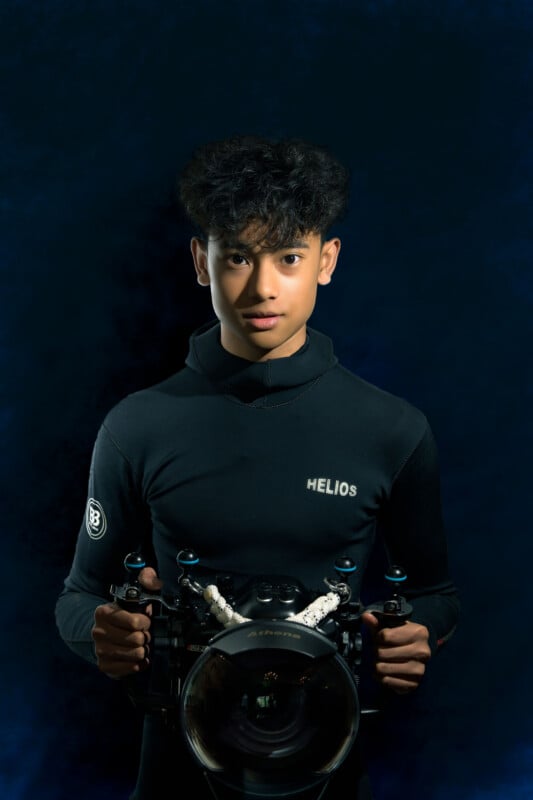
Panitbhand Paribatra "Pari" Na Ayudhya, a 14-year-old award-winning underwater photographer from Thailand, has made significant waves in the international photography community by winning the Project // 21 category at the highly esteemed Hasselblad Masters 2026 photo contest. This victory marks a significant milestone in Pari’s burgeoning career, underscoring a talent and maturity that belies his young age. The Hasselblad Masters competition is globally recognized for its prestige, attracting some of the world’s most accomplished photographers, making Pari’s win a remarkable achievement.
Pari’s journey into the realm of underwater photography began not as a pursuit of accolades, but as a natural extension of his deep-seated passion for the ocean. "I have always liked the ocean, spending time in the ocean," Paribatra shared in an interview with PetaPixel. "Long before I started diving, I knew I had to do something to pay back what the ocean gave to me." This intrinsic motivation to connect with and give back to the marine world has clearly shaped his artistic vision and technical approach.
A Calculated Approach to a Prestigious Competition
The Hasselblad Masters competition is renowned for its rigorous judging process and the caliber of its participants. The Project // 21 category, specifically designed for photographers aged 21 and under, presents a unique platform for emerging talent. Pari’s strategic preparation for this contest was evident. He meticulously studied past editions of the competition, analyzing the winning entries across various categories to discern recurring themes and aesthetic qualities that resonated with the judges.
"I looked at all the categories, and I saw there’s this pattern in which all the photos have to be unique, but they also have to go along with each other," Pari explained. This insight into the importance of both individual impact and thematic cohesion within a series of images was crucial. For the Hasselblad Masters, photographers are required to submit a series of three photographs. Pari’s winning submission consisted of three distinct underwater images, each a powerful standalone piece, yet united by a shared visual language and thematic connection. "They all look similar but they’re all different in a way," he noted, highlighting his deliberate effort to create a cohesive yet varied collection.
The Art of Blackwater Diving: Capturing Ephemeral Beauty
The three award-winning photographs were captured during a blackwater dive in the Philippines, a highly specialized and adventurous form of underwater photography. Blackwater diving involves venturing into the open ocean at night, typically tethered to a boat, and floating in the water column above abyssal depths. A powerful light source is deployed to attract plankton and small marine life, which in turn draws in larger, deep-sea creatures that are feeding under the cover of darkness.
"We were in the middle of the ocean, waiting for creatures to come up at night," Pari recounted. His initial attempts utilized standard flash photography, resulting in clear, well-lit images. However, inspired by techniques observed in other blackwater dives, Pari experimented with slow shutter speeds. This approach, while promising, initially produced somewhat chaotic results when paired with a normal flash.
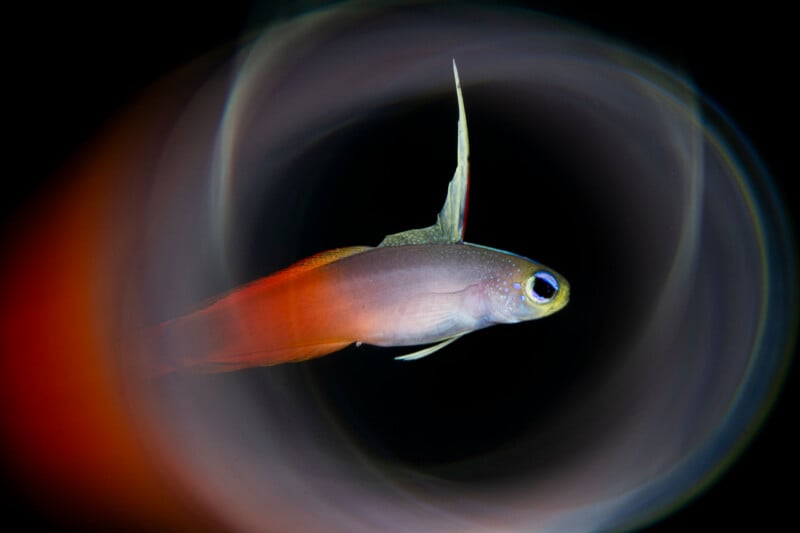
"So I improvised with a video light and filters, and I put the filter on during the slow shutter, and then ended my photo with flash to keep the details," he explained. This innovative combination of a video light for ambient illumination, filters to enhance color and mood, a slow shutter speed to capture motion and light trails, and a final flash to freeze the subject, demonstrated a remarkable level of technical ingenuity and artistic vision for a photographer his age. This experimental approach allowed him to capture the ethereal and often otherworldly beauty of deep-sea organisms in a way that was both unique and visually striking.
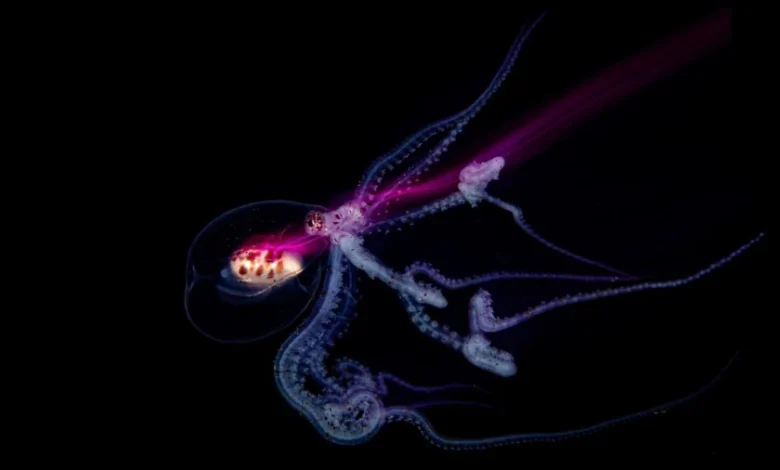
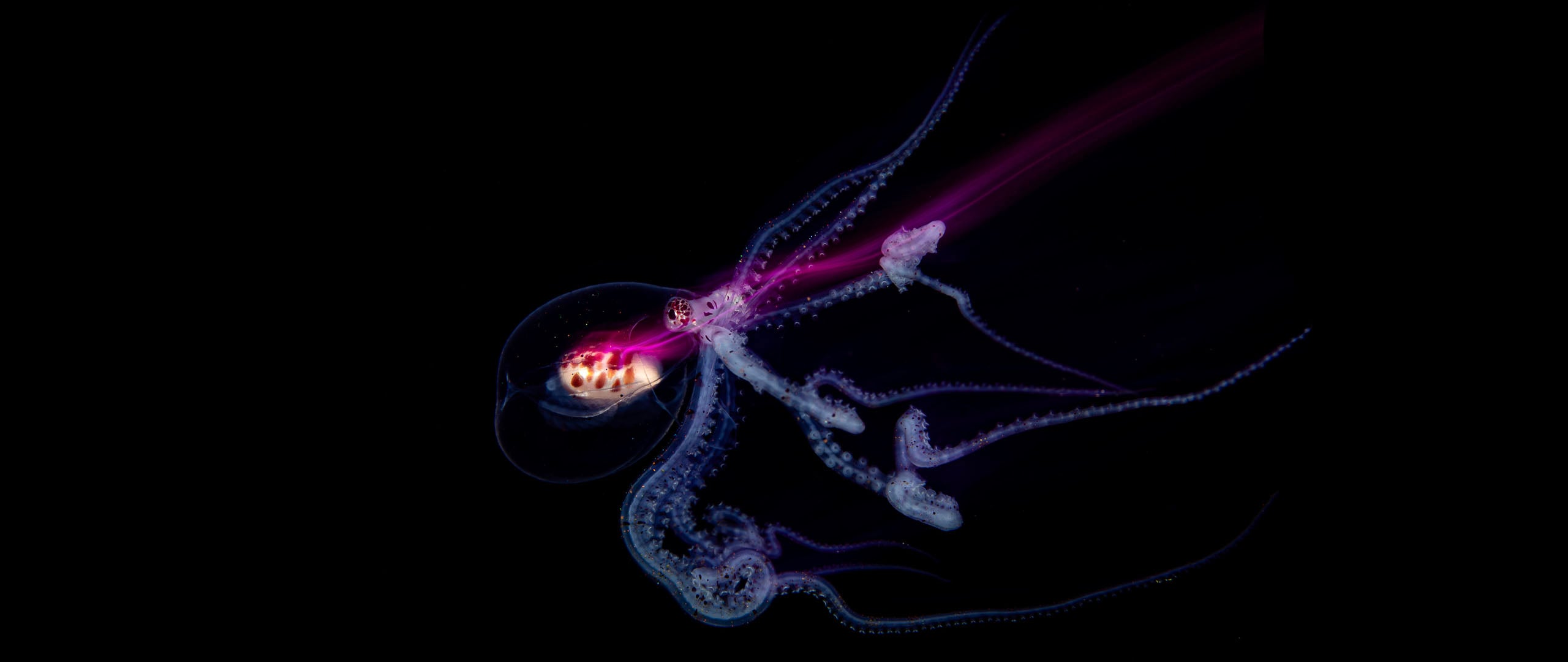
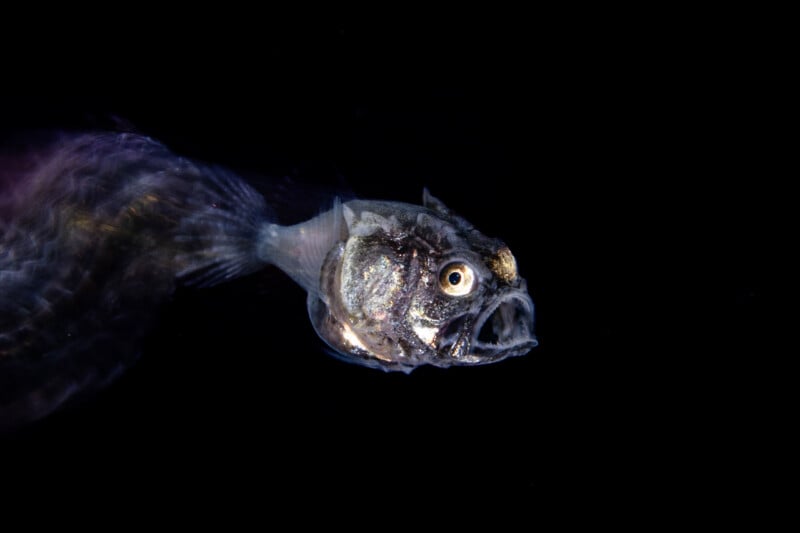
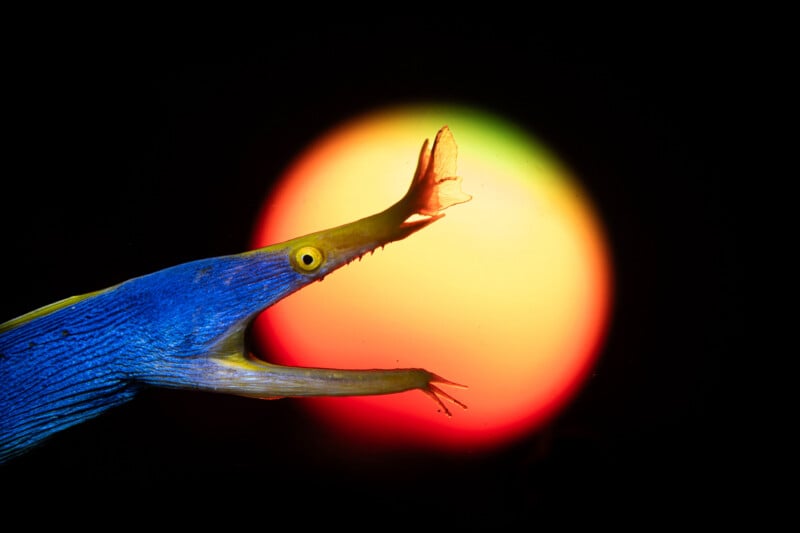
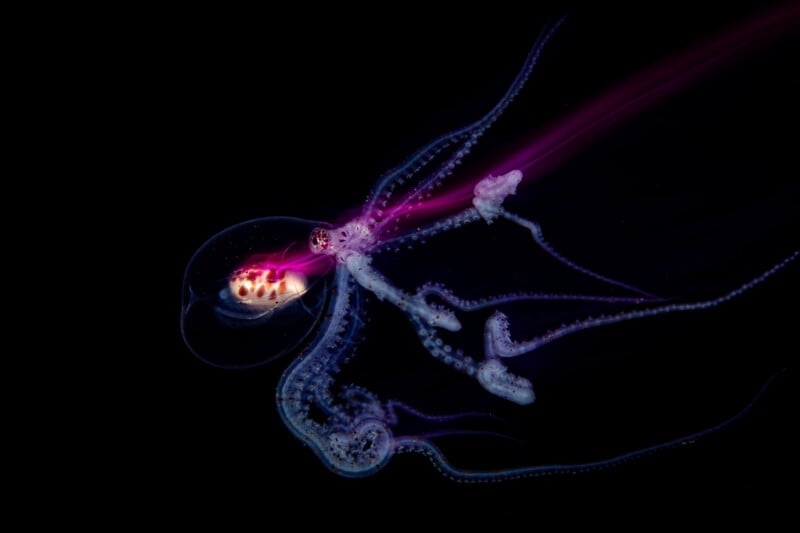
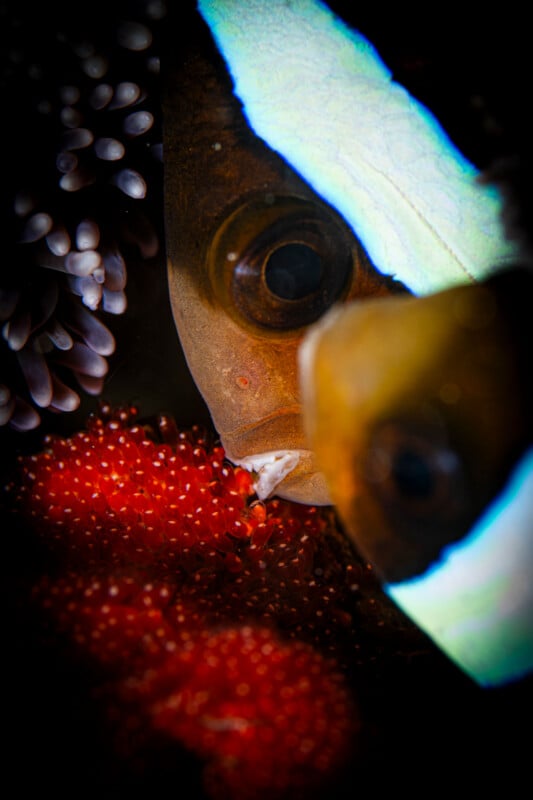
The winning images showcase a variety of fascinating marine life. One depicts a translucent deep-sea fish with large eyes, swimming against a dark background. Another features a vibrant blue and yellow trumpetfish, illuminated by a glowing, blurred circular light. The third, and perhaps most captivating, is a shot of a nearly transparent octopus, glowing with purple and pink hues, its tentacles gracefully trailing. Pari revealed that the octopus, which appears substantial in the photograph, was no larger than a ping-pong ball, emphasizing the macro focus of his work and the challenges of capturing such diminutive subjects.
A Foundation Built on Dedication and Expertise
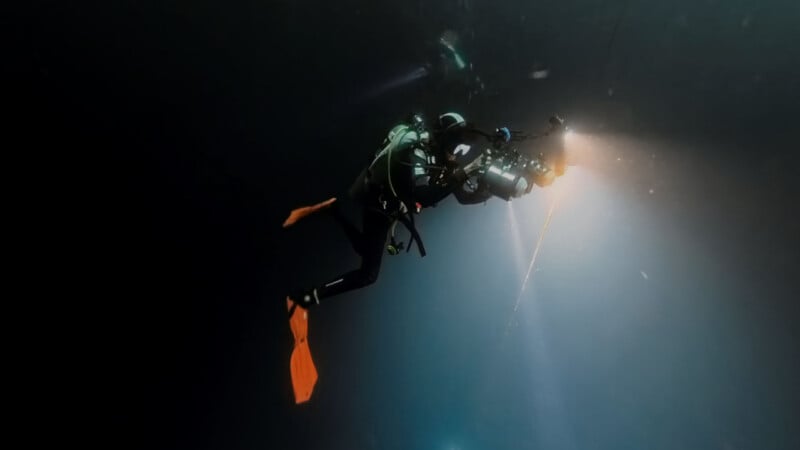
Underwater photography is an inherently challenging discipline, demanding not only photographic prowess but also a high level of diving proficiency. For Pari, these two passions have been intertwined since he was legally able to begin scuba diving. He obtained his diving certification at the age of 10 and quickly followed up with a rescue diving certification. His dedication to mastering the underwater environment is a testament to his commitment. "I just practiced and practiced and practiced," he stated.
His initial foray into documenting his underwater experiences involved a simple action camera. "I always had an action camera," Pari recalled. "I just thought I would record what happened out there." However, when his early photographs proved unsatisfactory, a drive for improvement ignited. "When my first photos were ‘really bad,’ he said, "I had to improve… Then it went on, and I started really liking it." This determination to refine his skills led him to upgrade his equipment and delve deeper into the technical aspects of photography.
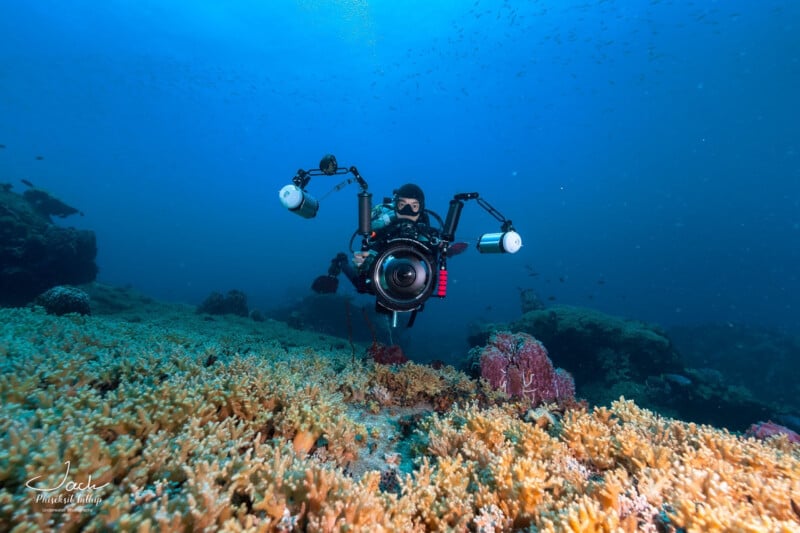
Currently, Pari utilizes a Nikon Z8 camera, frequently paired with a Nikkor Z MC 105mm f/2.8 VR S macro lens. His setup also includes a pair of Kraken strobes and a video light. He opts for a macro lens over the more common wide-angle lenses used in underwater photography because it allows him to focus on the intricate details of small subjects. "I need to get really close-up shots of tiny subjects, and if I need more space, I can always swim farther away," he explained. This preference for macro photography stems from an early fascination with the miniature wonders of the ocean, exemplified by his encounter with a sea slug. "It was a sea slug," Pari remembered. "I saw it on documentaries, and I was like, ‘Wow, this thing actually exists, and you can actually see it.’ So I was like, ‘I have to take a photo of this.’" Though his first attempt was blurry, it fueled his determination to master the art of capturing these tiny, often overlooked creatures.
Navigating the Challenges of the Underwater Realm
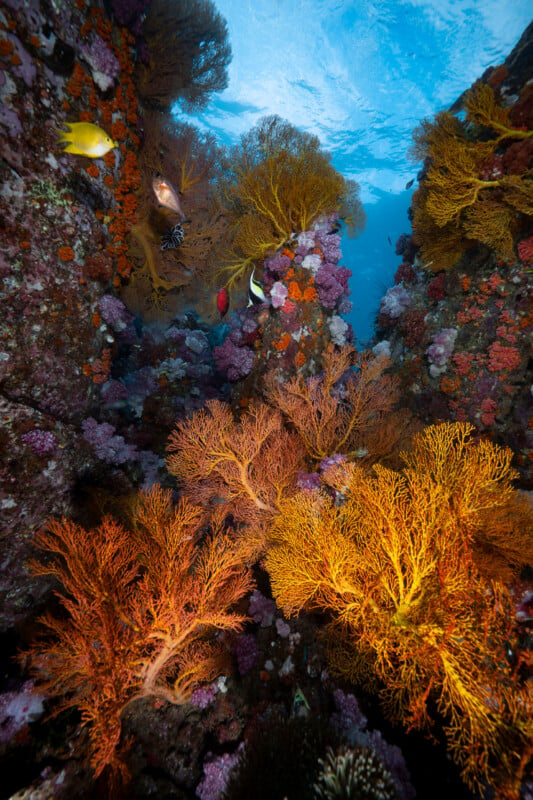
Despite his numerous accolades and evident talent, Pari is quick to acknowledge the inherent difficulties of underwater photography. "It’s hard because you can’t control a lot of things," he admitted. "You can control the light, but you can’t control the water. If the water isn’t cooperating, it’s really hard to do anything." Factors such as water clarity, currents, and the unpredictable movements of marine life present constant challenges.
"The subject is moving, we’re moving, and sometimes the conditions aren’t great. You’re just not always going to get photos, and that’s really disappointing," Pari elaborated. Furthermore, his deep respect for marine life dictates a non-intrusive approach. As an Ocean Ambassador for the Manta Trust and a Young Shark Ambassador for Fins Attached Marine Research and Conservation, he prioritizes the well-being of his subjects. "He has to wait for them to come to him, and that doesn’t always happen."
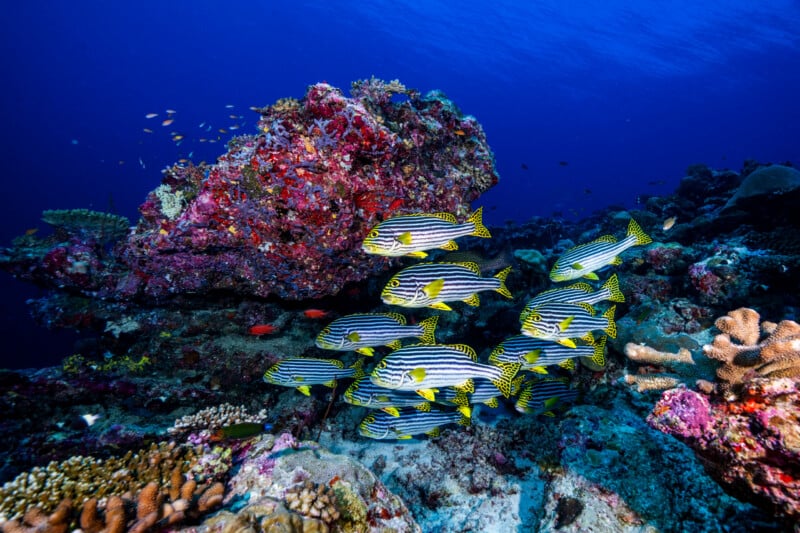
This necessitates a high degree of preparedness. Pari emphasizes the importance of being constantly ready the moment he enters the water. He meticulously checks his camera settings and conducts test shots on inanimate objects or nearby divers before encountering his intended subjects, especially elusive creatures like sharks. "I practice on the person next to me or a rock or something to make sure the settings are perfect first, because a shark isn’t going to stick around long," he explained. "So if it does, I’m ready and just try to find the angle and click because I can’t set anything up on my camera after the shark shows up." This readiness is crucial for capturing fleeting moments with fast-moving marine life.
Beyond the Lens: A Commitment to Ocean Conservation
While Pari has achieved significant recognition in the field of underwater photography, his aspirations extend beyond a career solely focused on capturing images. His overarching goal is to contribute to the well-being of the ocean. He has actively engaged in conservation efforts, including giving presentations and hosting a photo exhibition in Bangkok titled "Pay Back to the Ocean."
"Other people do stuff with data and science and awareness. But I just thought that photography – I enjoy photography – so I want to use that and do something good for the ocean," he stated. Although he is not yet certain about his future career path, he expresses a desire to pursue a field related to marine science. "I want to improve, I want to get better," Pari said of his photography. "But I also want to enjoy it in a way that it might not be the number one job in my life. Because when it becomes a commitment, and something I have to do a lot, I won’t enjoy it as much. I think it’s a number one hobby, but not everything in my life."
This balanced perspective suggests a mature understanding of his passions and a commitment to a fulfilling life that encompasses both his love for the ocean and his artistic pursuits. The Hasselblad Masters award is not merely a personal triumph but a testament to the power of young voices in advocating for environmental awareness through compelling visual storytelling. Pari Paribatra’s journey, marked by early passion, relentless dedication, innovative technique, and a profound respect for the marine world, promises a future filled with continued impact and inspiration.
Readers can follow Panitbhand Paribatra "Pari" Na Ayudhya’s underwater photography adventures on Instagram at @pelagic_captures and visit his website at pariocean.com.
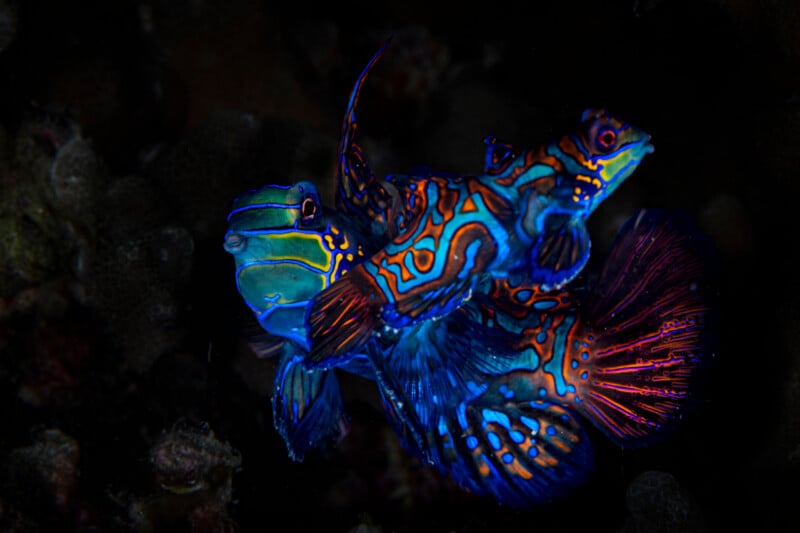
Image credits: All photos by Panitbhand Paribatra "Pari" Na Ayudhya