Ibraaz: A New Hub for Discursive Gathering and Artistic Expression in London

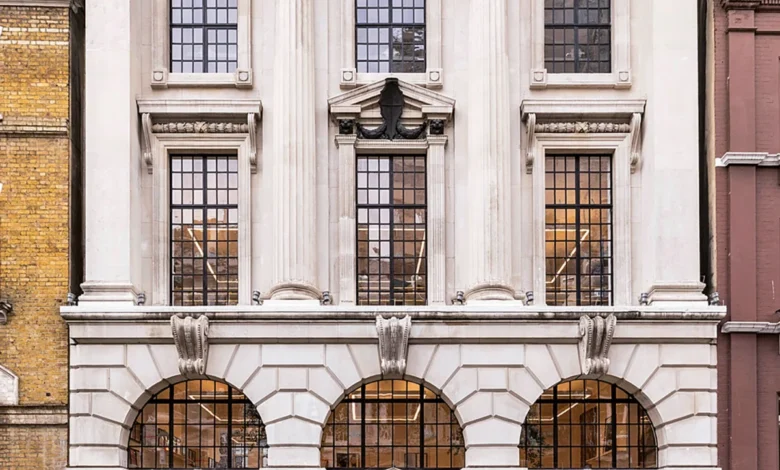
The third floor of the newly opened Ibraaz centre houses a Musalla, a space designated for spiritual practice. During a recent visit, it was occupied by Joe Namy’s "Cosmic Breath," an auditory installation featuring recordings of the adhan, the Islamic call to prayer, sourced from various locations worldwide. Louise Oram, Head of Communications and Partnerships at Ibraaz, noted that the carpeted room is intended not only for listening but also as a sanctuary for prayer, reflection, or respite from the urban environment. Descending to the basement reveals the Minassa, defined as a platform, podium, dais, or stage. This area is envisioned for cinematic presentations, performances, and regular discussions, talks, and debates, underscoring the venue’s commitment to fostering dialogue.
Conversations are actively encouraged throughout the centre, extending beyond the dedicated Minassa. The meeting rooms and the welcoming Oula café, managed by French-Tunisian chef Boutheina Ben Salem, are also spaces for engagement. The café, situated on the ground floor, faces the Maktaba, a bookshop operated by Burley Fisher Books and curated in collaboration with the Palestine Festival of Literature. Prominently displayed in the shop window during the visit was Ahmad Al-Bazz’s photobook, "The Erasure of Palestine." Hammad Nasar, a key figure at Ibraaz, highlighted the significance of this publication, recounting a recent event where Al-Bazz discussed his work within the bookshop itself.
Nasar articulated a distinct vision for the centre’s ambition: "Our ambition is not a traditional ambition for people to come and quietly admire things in a hush and then walk out. We want noise. We want conversations." He elaborated, "These gatherings, around food, books, the soul, or with song, with art, that’s the overall sense of the programme. That’s what we’re interested in doing." This ethos permeates the entire operation, aiming to create an environment that is both intellectually stimulating and socially engaging.
The discussion with Nasar took place in the Sofra, a space adorned with framed images of Palestine by artists Adam Rouhana and Adam Broomberg. While many of the artworks showcased at Ibraaz are sourced from the Kamel Lazaar Foundation, the institution itself is not a collecting body. Ibraaz’s origins trace back to 2011 as an online publication, launched in the wake of the Arab Spring. Nasar explained its initial purpose: "to create a platform where people could gather online." This fundamental drive to foster connection and dialogue has remained a guiding principle. The London centre, which commenced operations in October, embodies this impulse, aiming to serve as "a discursive place of gathering."
The establishment of a physical space for gathering was significantly influenced by current geopolitical realities. Nasar elaborated, "As we see the ongoing genocidal violence in Gaza, now extending elsewhere, and as we see the spaces for gathering reducing, the spaces for free expression really under assault, these things made Lina keen to have a space where physical gatherings could take place." He further described the centre’s role as "a vehicle or vessel to hold people," providing a much-needed sanctuary and platform for engagement during challenging times.
Photography plays a pivotal role in Ibraaz’s multifaceted approach to cultural expression and discourse. Nasar identified several key reasons for its importance. Firstly, photography and lens-based imaging are integral components of contemporary art, reflecting current artistic trends and practices. Secondly, the medium’s inherent capacity for documentation and evidence-gathering is highly valued by individuals and communities whose narratives are often marginalized or deliberately suppressed. This is particularly relevant in contexts where historical records are challenged or erased. Thirdly, Nasar highlighted photography as a fundamentally democratic medium, empowering individuals by placing the means of production and dissemination into their hands. "It’s the tool within the armament that virtually every single human being has in their pocket," he stated, underscoring the ubiquity of photographic capabilities in the digital age.
"Photography has the capacity to bear witness [whether a cell phone or camera]," Nasar continued. He referenced "The Erasure of Palestine" as a prime example, noting that the photobook "looks at remnants of Palestinian villages in occupied territories which are now being called Israel; it is actually a visual mapping." This illustrates how photography can serve not only as artistic expression but also as a powerful tool for historical preservation, critical inquiry, and the assertion of identity in the face of erasure.
Background and Genesis of Ibraaz
Ibraaz’s journey began in the tumultuous period following the Arab Spring uprisings. Launched in 2011, it emerged as a critical online platform designed to amplify voices and foster dialogue amidst rapidly evolving socio-political landscapes across the Middle East and North Africa. The initial focus was on providing a space for critical engagement with contemporary art, culture, and politics, often from perspectives that were underrepresented in mainstream discourse. The transition to a physical centre in London represents a significant expansion of this mission, translating the digital community into a tangible hub for interaction and exchange. The decision to establish a London base reflects the city’s status as a global nexus for cultural dialogue and its diverse expatriate communities.
Thematic Pillars and Programming
The programming at Ibraaz is intentionally diverse, aiming to encompass a wide spectrum of artistic and intellectual engagement. The centre’s spaces are designed to facilitate various forms of expression and discussion. The Musalla, with its focus on the adhan, invites contemplation on sound, spirituality, and cultural identity. Joe Namy’s "Cosmic Breath" installation, by presenting the call to prayer from different regions, creates a sonic tapestry that transcends geographical boundaries, inviting listeners to consider the universality and diversity of Islamic practice. This approach aligns with Ibraaz’s broader aim of exploring cultural nuances and shared human experiences.
The Minassa serves as a dynamic stage for performances, film screenings, and academic discussions. This flexibility allows for a responsive programming schedule that can address emergent issues and showcase a range of artistic disciplines. The inclusion of cinema and performance art underscores a commitment to visual and performative storytelling as vital means of cultural commentary and critique. The regular talks and debates are intended to foster critical thinking and provide platforms for the exchange of ideas on pressing contemporary issues, particularly those affecting the Arab world and its diaspora.
The Role of the Maktaba and Oula Café
The Maktaba, curated by the Palestine Festival of Literature, and the Oula café, run by chef Boutheina Ben Salem, are integral to Ibraaz’s strategy of creating an accessible and welcoming environment. The bookshop’s focus on Palestinian literature and art, exemplified by the display of Ahmad Al-Bazz’s photobook, directly addresses themes of identity, history, and resistance. The collaboration with the Palestine Festival of Literature signals a commitment to amplifying narratives from this specific region, which is central to many of the socio-political discussions that Ibraaz aims to facilitate.
The Oula café, by offering a space for refreshment and informal interaction, plays a crucial role in fostering community. The act of sharing food is a universal connector, and the café provides a relaxed setting where visitors can engage in conversations sparked by the exhibitions, talks, or simply their shared experience of being at Ibraaz. This integration of hospitality with cultural programming is a deliberate choice to make the centre more approachable and to encourage spontaneous dialogue.
Photography as a Tool for Witness and Resistance
Hammad Nasar’s emphasis on photography highlights its critical function in Ibraaz’s operational framework. In an era where information is often contested and visual narratives can be manipulated, photography’s capacity to document and bear witness is paramount. The context of ongoing conflicts and the systematic erasure of histories make photography a vital tool for counter-narratives. "The Erasure of Palestine" serves as a potent example, demonstrating how photographic evidence can be used to map lost landscapes and preserve the memory of displaced communities.
The democratization of photography, facilitated by the widespread availability of smartphones, further amplifies its potential. This accessibility allows a broader range of individuals to document their experiences, challenge dominant narratives, and contribute to a collective archive of visual testimony. Ibraaz’s platform, both online and now physical, is designed to harness this potential, providing a space where these photographic accounts can be shared, discussed, and critically examined.
Broader Implications and Future Outlook
The establishment of Ibraaz in London represents a significant development in the landscape of cultural institutions dedicated to critical engagement with the Middle East and North Africa. In a period marked by increasing political polarization and the erosion of public spaces for dialogue, centres like Ibraaz are vital for fostering understanding and promoting nuanced perspectives. The emphasis on "noise" and "conversations" signals a departure from traditional, passive forms of cultural consumption, advocating instead for active participation and critical engagement.
The centre’s programming, by weaving together art, food, literature, and spiritual practice, aims to create a holistic experience that resonates with diverse audiences. This interdisciplinary approach acknowledges the interconnectedness of cultural, social, and political issues. The success of Ibraaz will likely be measured not only by the quality of its exhibitions and events but also by its ability to cultivate a vibrant and inclusive community where dialogue can flourish, even amidst challenging global circumstances. The commitment to providing a "vehicle or vessel to hold people" underscores its role as a sanctuary and a platform for collective resilience and expression. The long-term impact of Ibraaz could be significant, contributing to a more informed and engaged public discourse on issues often overlooked or misrepresented in mainstream media. Its continued evolution will be closely watched by those invested in the promotion of critical cultural exchange and the amplification of underrepresented voices.