Education Secretary Linda McMahon Criticized for Using AI-Generated Images to Honor Historical Women

Education Secretary Linda McMahon has drawn significant criticism for her recent use of artificial intelligence-generated images in social media posts aimed at celebrating prominent women in American history. The decision to employ AI, particularly for figures whose legacies are rooted in truth and factual representation, has sparked debate among historians, scholars, and the public alike, raising questions about historical accuracy, the nature of commemoration, and the ethical implications of using synthetic media in educational contexts.
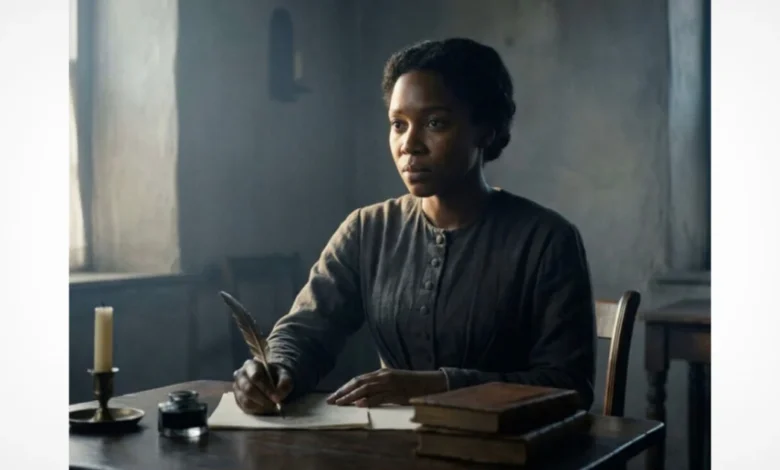
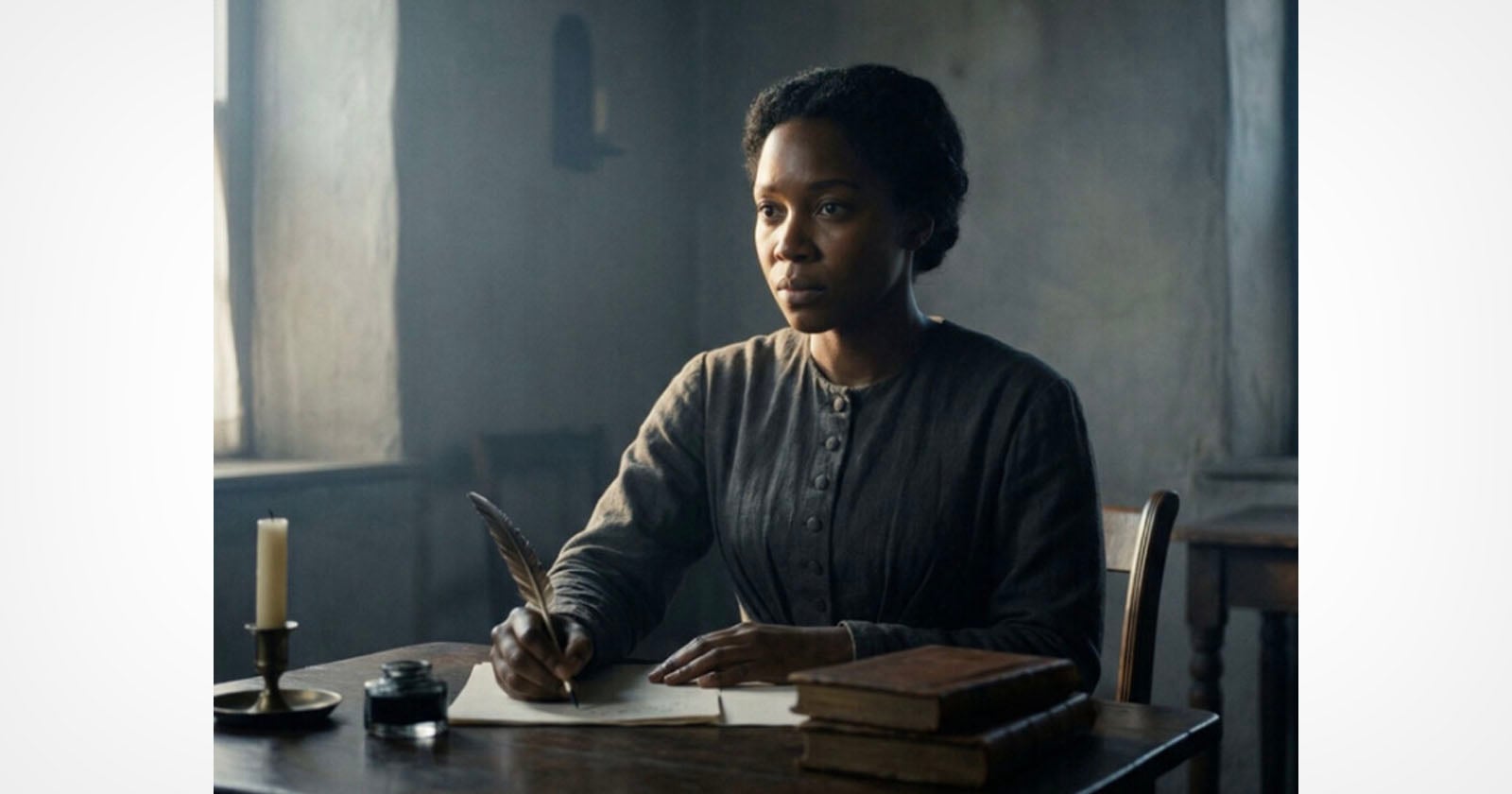
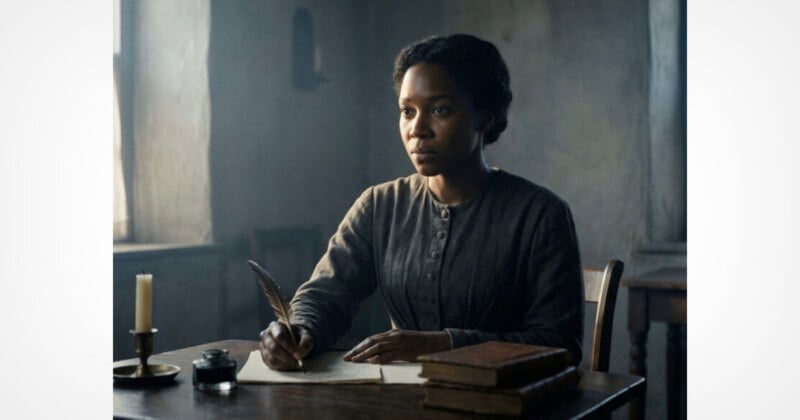
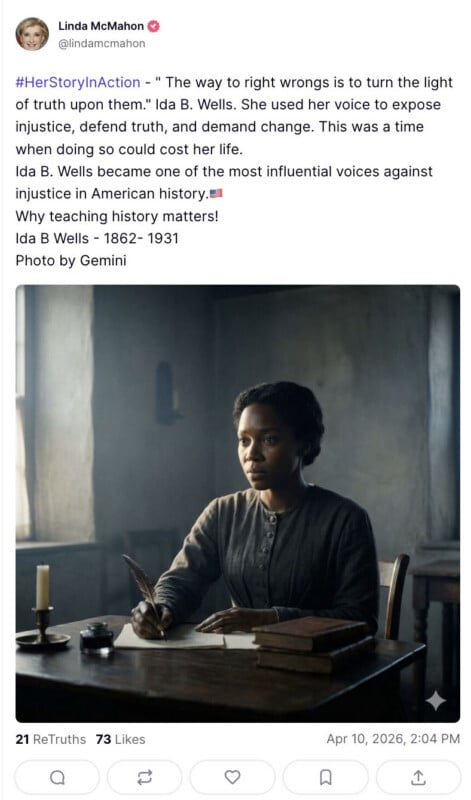
The controversy first ignited when McMahon shared a post on Truth Social paying tribute to Ida B. Wells, a formidable Black journalist, suffragist, and early leader of the Civil Rights Movement. While the intention to highlight Wells’s vital contributions to American history was met with some approval, the accompanying visual was not. The AI-generated image depicted Wells in what appeared to be a 19th-century setting, holding a quill pen over a piece of paper, with a candle and books on a wooden table. This depiction, however, has been flagged for its historical inaccuracies and for presenting a potentially misleading visual narrative of a woman whose life’s work was dedicated to uncovering and disseminating truth.
"The decision to use an AI-generated image undermines the very values she stood for: truth-telling and her lifelong campaign against false representations," stated Paula Giddings, a renowned biographer of Ida B. Wells, in an interview with The Washington Post. Giddings further elaborated on the incongruity, asserting, "To use a fabricated image—even a respectful one—is not only unnecessary but is evidence that the secretary of education misreads [Wells’s] legacy." This sentiment highlights a core concern: that the use of synthetic imagery, even with good intentions, can inadvertently distort or dilute the historical record and the profound significance of the individuals being honored.
This is not an isolated incident for Secretary McMahon. Reports indicate that she has utilized AI-generated visuals in multiple posts celebrating other influential historical women, including Susan B. Anthony, Sojourner Truth, and Dolley Madison. The use of AI across a series of such tributes suggests a pattern, despite the existence of authentic photographic and artistic records for these figures. This approach has led many to question why readily available, verifiable historical imagery was bypassed in favor of AI creations.
The controversy also touches upon a broader trend within certain political circles. The Trump administration has shown a notable enthusiasm for artificial intelligence, with notable instances of AI-generated imagery being shared by prominent figures. This recent episode involving Secretary McMahon aligns with a pattern where AI technology is being integrated into public communication, sometimes with questionable regard for factual representation. The President himself has faced scrutiny for sharing AI-generated images, underscoring a wider dynamic of AI adoption in public discourse.
Historical Inaccuracies and the Erosion of Verifiable Records
The visual artifacts generated by AI have come under particular scrutiny for their historical inconsistencies. Sarah Weicksel, Executive Director of the American Historical Association, pointed out these discrepancies, noting, "The use of AI to pull together infographics about individuals has resulted in poor quality and inconsistent resources in education."
In the case of the Ida B. Wells image, the depiction of her using a quill pen next to a candle is anachronistic. While quill pens were in use earlier, by the late 19th century, when Wells was actively writing and publishing, metal-tipped pens were becoming increasingly common, and gas lighting was more prevalent than candles in many urban settings. This detail, seemingly minor to some, represents a factual inaccuracy that can mislead those less familiar with the period.
"The AI images are pulling from material that is historically inaccurate," Weicksel added. "We have excellent sources for all of these women, so there is no point to using something that is AI-generated." This statement emphasizes the availability of authentic historical materials, making the reliance on AI-generated content appear unnecessary and potentially detrimental to educational efforts that strive for accuracy. The American Historical Association, a leading professional organization for historians in the United States, has a vested interest in promoting accurate historical representation and interpretation, making their concerns particularly weighty.
The implications extend beyond the immediate criticism of Secretary McMahon. The use of AI-generated images in educational contexts, especially when presented without clear disclosure or when containing factual errors, can contribute to the spread of misinformation. As AI technology becomes more sophisticated, the ability to distinguish between authentic historical records and synthetic creations becomes increasingly challenging, posing a significant risk to public understanding of history.
Chronology of Events and Public Reaction
The sequence of events leading to the current criticism began with Secretary McMahon’s posts on Truth Social, a platform favored by many in conservative political circles. The posts, intended to honor historical women, featured AI-generated imagery. The first notable public criticism emerged following the post about Ida B. Wells.
- Early April 2026: Secretary Linda McMahon begins posting on Truth Social, utilizing AI-generated images to commemorate historical female figures.
- Mid-April 2026: The post featuring an AI-generated image of Ida B. Wells gains traction and attracts criticism from historians and scholars.
- April 11, 2026: The Washington Post publishes an article detailing the controversy, including critical statements from Ida B. Wells biographer Paula Giddings and the American Historical Association’s Sarah Weicksel.
- Ongoing: The debate continues online and within academic circles regarding the appropriate use of AI in historical commemoration and education.
The reaction from the historical community has been largely critical, focusing on the principles of accuracy and respect for historical figures. Scholars emphasize that when honoring individuals who fought for truth and exposed falsehoods, the methods of commemoration should themselves be grounded in authenticity.
Broader Implications and the Future of Historical Representation
The controversy surrounding Secretary McMahon’s use of AI images is emblematic of a larger societal discussion about the role and impact of artificial intelligence in various domains, including education and historical discourse. The ease with which AI can generate realistic, yet fabricated, images raises profound questions about authenticity, trust, and the very nature of evidence in the digital age.
For educators and institutions, the incident serves as a cautionary tale. It underscores the importance of critical evaluation of AI-generated content, especially when it pertains to factual information and historical narratives. The potential for AI to create convincing but misleading visuals necessitates a heightened level of vigilance and a commitment to using verified sources.
Furthermore, the debate highlights the need for clear guidelines and ethical frameworks for the use of AI in public communications, particularly by government officials. Transparency regarding the origin of images and a commitment to historical accuracy should be paramount. The incident also prompts reflection on how best to engage younger generations with history in an era where synthetic media is increasingly prevalent. Educational strategies may need to incorporate lessons on media literacy and critical thinking to help students navigate a complex information landscape.
The legacy of figures like Ida B. Wells, who dedicated her life to factual reporting and combating misinformation, is arguably best honored through methods that reflect her own commitment to truth. The reliance on AI, particularly when it introduces historical inaccuracies, presents a significant paradox. As AI technology continues to evolve, the challenge will be to harness its potential for educational and commemorative purposes without compromising the integrity of historical understanding and the enduring importance of authentic representation. The ongoing discussion is crucial for shaping responsible practices in how we remember and learn from the past in an increasingly digitized world.
Related posts: