LEGEARD STUDIO Redefines Hospitality Through the Revitalization of the Hyatt Union Square Lobby in New York City

The modern hotel is undergoing a profound structural and philosophical transformation, shifting from a mere waypoint for travelers into a sophisticated, multifunctional anchor for the local community. This evolution is particularly evident in the recent completion of the Hyatt Union Square’s lobby renovation, a project helmed by the multicity interiors firm LEGEARD STUDIO. By reimagining the traditional entry point as a "neighborhood salon," the firm has addressed a growing demand in the hospitality sector for spaces that serve a diverse array of stakeholders, from international business travelers to local residents seeking a refined "third place."
The project arrives at a pivotal moment for New York City’s hospitality industry, which has seen a resurgence in demand for boutique experiences that prioritize local character over corporate uniformity. Located on Fourth Avenue, the Hyatt Union Square sits at a geographic and cultural crossroads, straddling the boundaries of Greenwich Village, the East Village, and the Flatiron District. The renovation of its two-story interior signifies a broader trend toward adaptive reuse, where established structures are retooled to meet the shifting expectations of a post-pandemic urban public.
The Cultural and Geographic Context of Union Square
To understand the strategic importance of the Hyatt Union Square’s redesign, one must consider the historical weight of its surroundings. Union Square has long served as a central axis for Manhattan, acting as a site for political demonstrations, artistic movements, and commercial innovation. In the mid-20th century, the area was synonymous with the avant-garde; Andy Warhol famously maintained his "Factory" nearby, and the Parsons School of Design continues to infuse the district with a constant stream of creative energy.
The square itself is a microcosm of New York life, hosting a world-renowned farmers’ market four times a week and transforming into a festive holiday village during the winter months. For LEGEARD STUDIO, the challenge lay in creating an interior that reflected this external vitality while providing a sanctuary from the frantic pace of the street. The resulting "porous buffer" design concept aims to soften the transition between the public sidewalk and the private accommodations above, inviting the city inside rather than walling it out.
Design Philosophy: A Synthesis of Mid-Century Styles
The renovation executed by LEGEARD STUDIO is characterized by a "complete gut" approach, allowing the firm to reintroduce structural elements that balance historical nostalgia with contemporary functionality. The aesthetic language of the space is a deliberate hybrid, drawing inspiration from two distinct but complementary mid-20th-century movements: Palm Springs Tropical Modernism and the restrained, warm elegance of Milanese design.

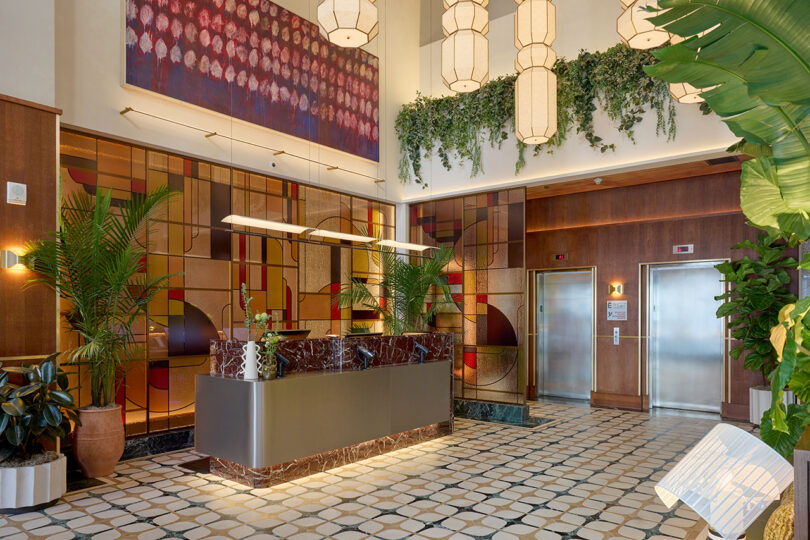
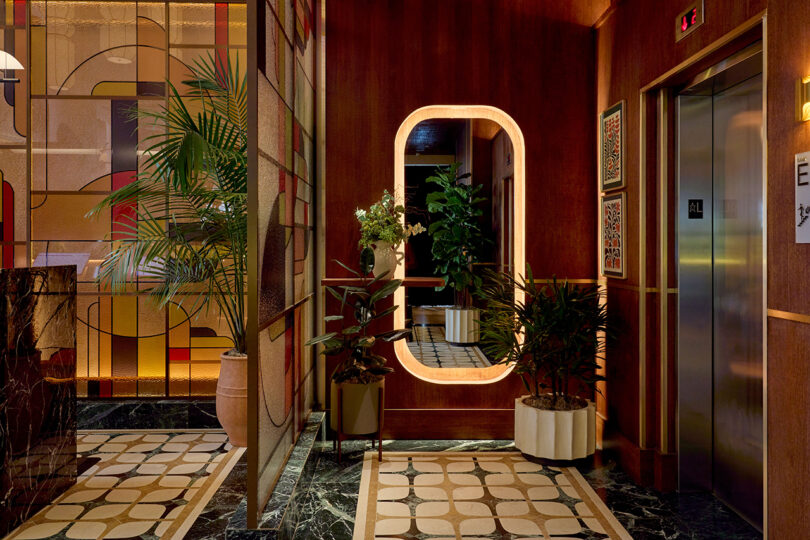
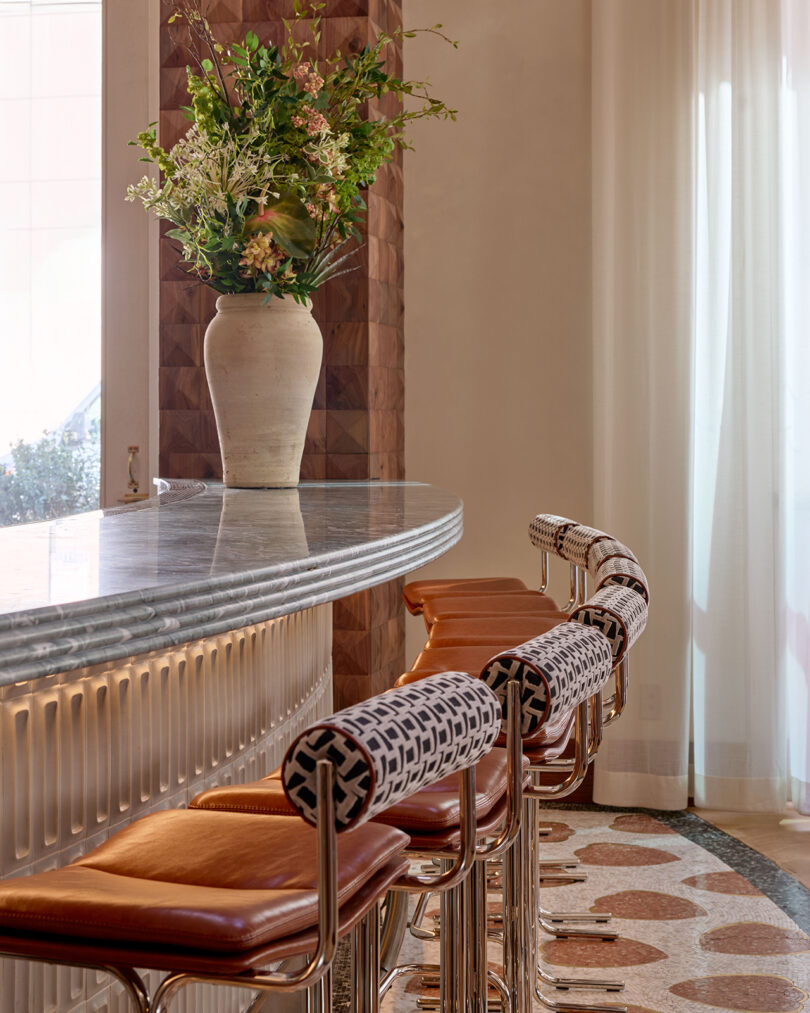
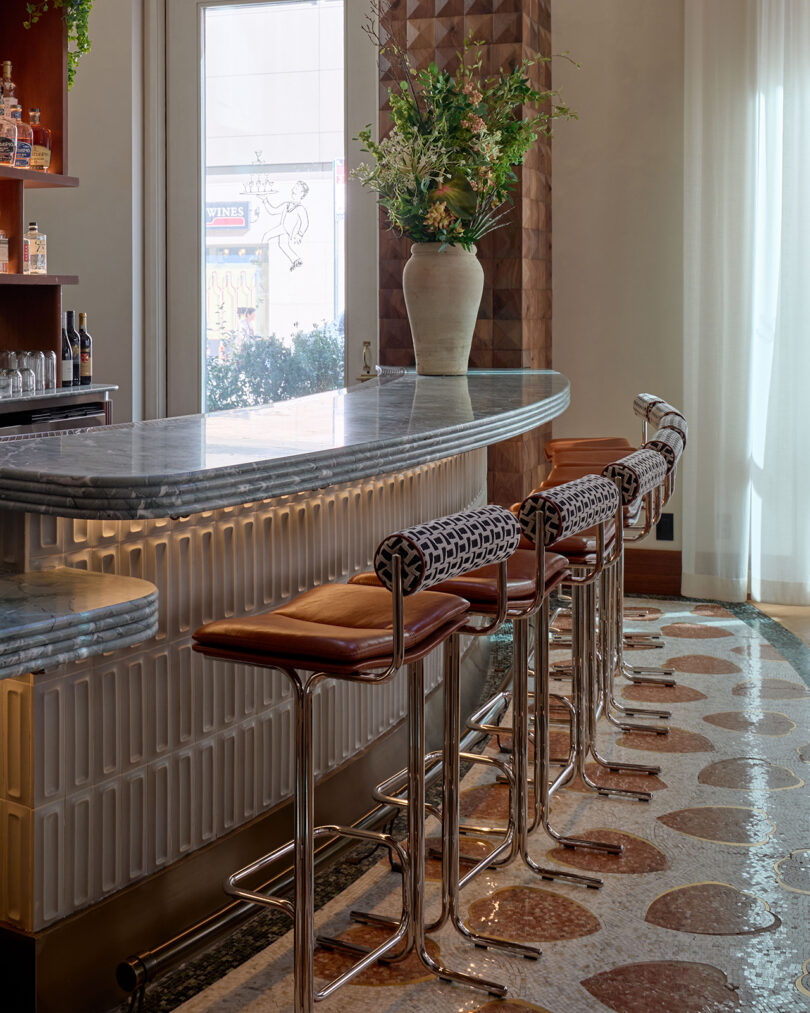
This stylistic synthesis is grounded by a bespoke, amoebic-form patterned tile floor. This flooring choice is not merely decorative; it serves a critical architectural function by breaking up the expansive two-story volume into a series of intimate, partially contained alcoves. By avoiding a singular, monotonous void, the designers have created a "human-scale" environment that encourages lingering. This shift represents a departure from the "shock and awe" tactics of late-20th-century hotel design, which often used massive, cold atriums to impress guests at the expense of comfort.
The Reception and Entrance: Materiality and Light
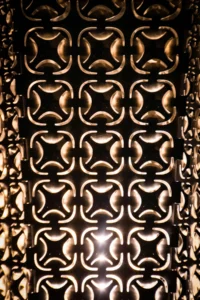
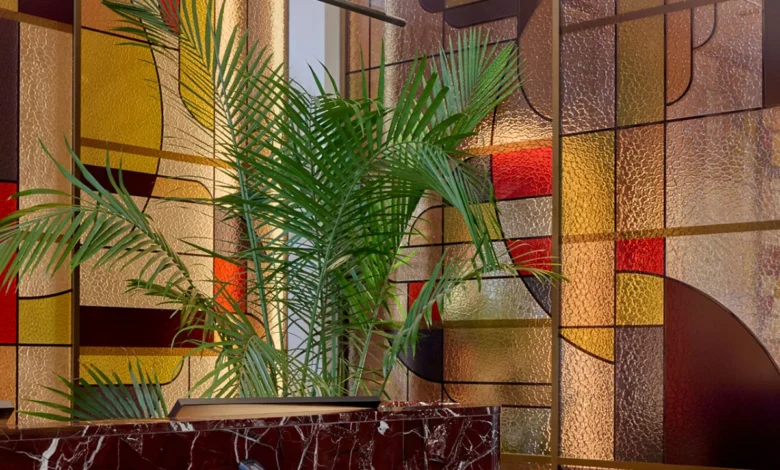
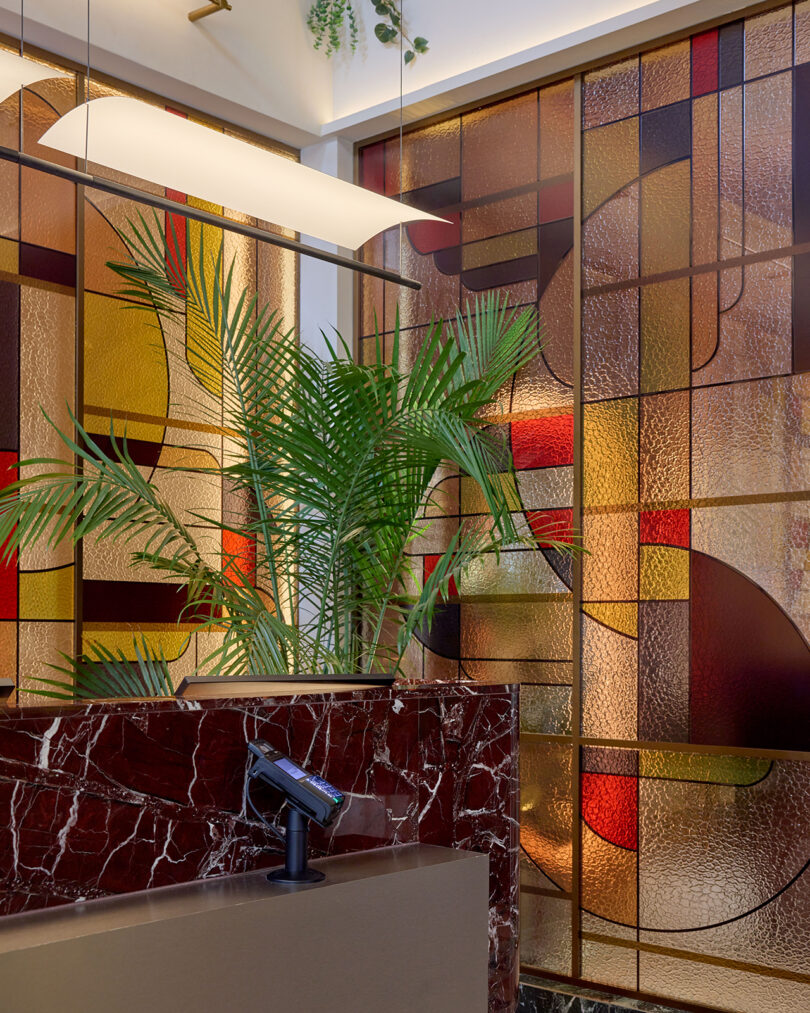
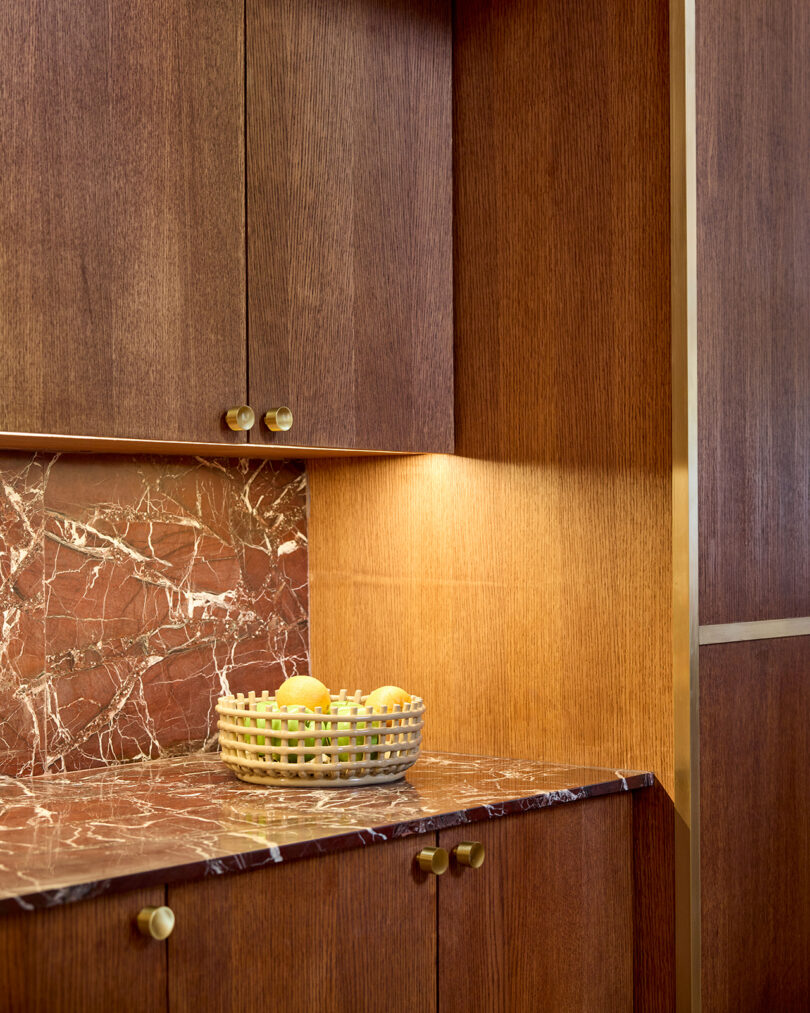
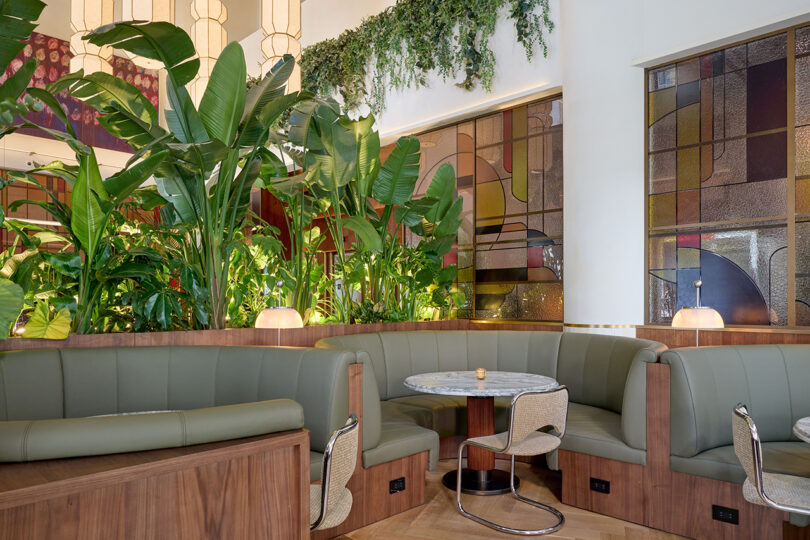
The centerpiece of the entry sequence is a richly veined wooden reception desk, which serves as an identifiable beacon for arriving guests. This element is framed by a geometric stained glass wall that echoes the patterns found in the tile flooring. This backdrop is heavily influenced by the Bauhaus movement, utilizing primary shapes and disciplined lines to refract both natural light from the Fourth Avenue windows and indirect artificial light from within.
Suspended above the reception area are paper lanterns that pay homage to the Akari lamps designed by Isamu Noguchi. The inclusion of these fixtures is a poignant nod to a polymathic creative hero of New York City, further rooting the hotel in the local artistic canon. The interplay of the heavy wood, the translucent glass, and the ethereal paper lanterns establishes a material palette that is both luxurious and approachable.
The Guest Lounge and the "Third Place" Concept
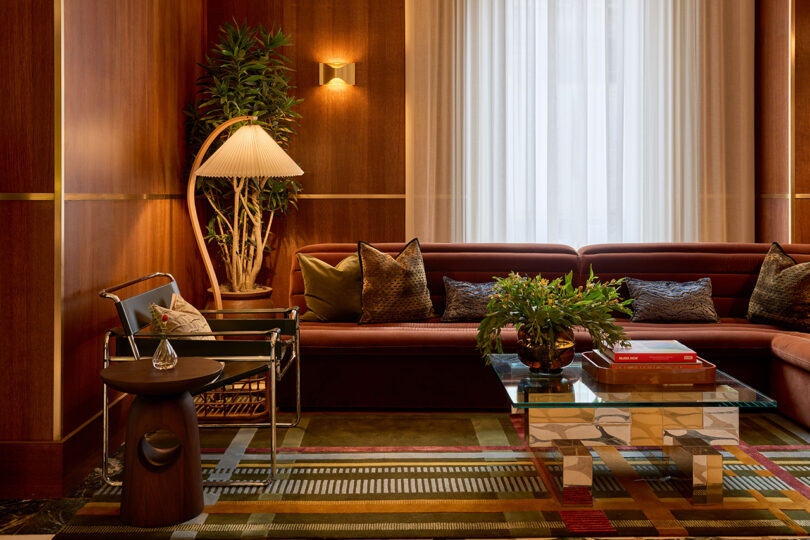
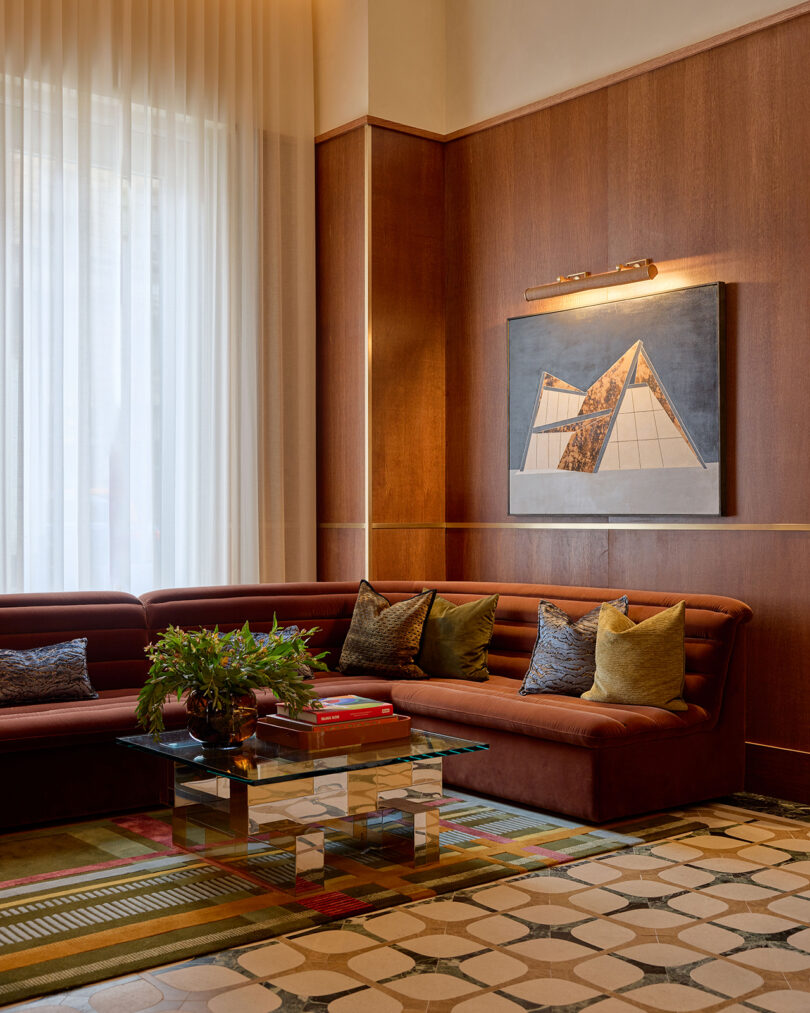
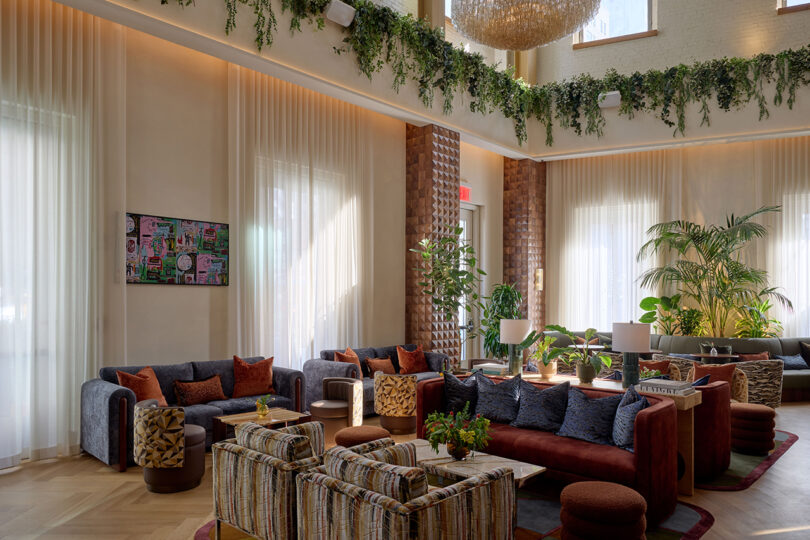
Moving deeper into the lobby, the guest lounge takes on more intimate proportions, functioning as the primary "living room" of the hotel. The walls are wrapped in wood paneling, providing acoustic dampening and a sense of enclosure. The seating is defined by 1970s-inspired low-slung sofa pits, a design choice that encourages a relaxed, communal atmosphere.
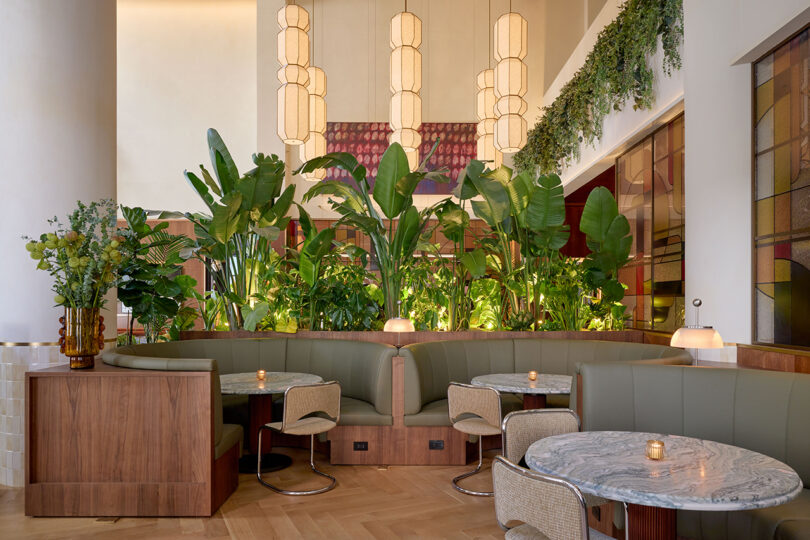
This area exemplifies the "third place" concept—a social environment separate from the two usual social environments of home ("first place") and the office ("second place"). To support this, the lounge features:
- Integrated Coworking Capabilities: Ample variety in seating and discreet power access points cater to the "bleisure" traveler—those combining business and leisure trips.
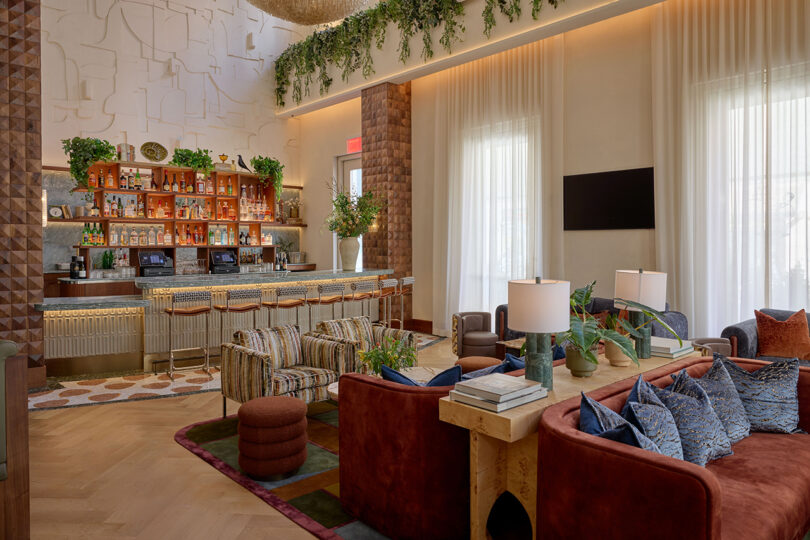
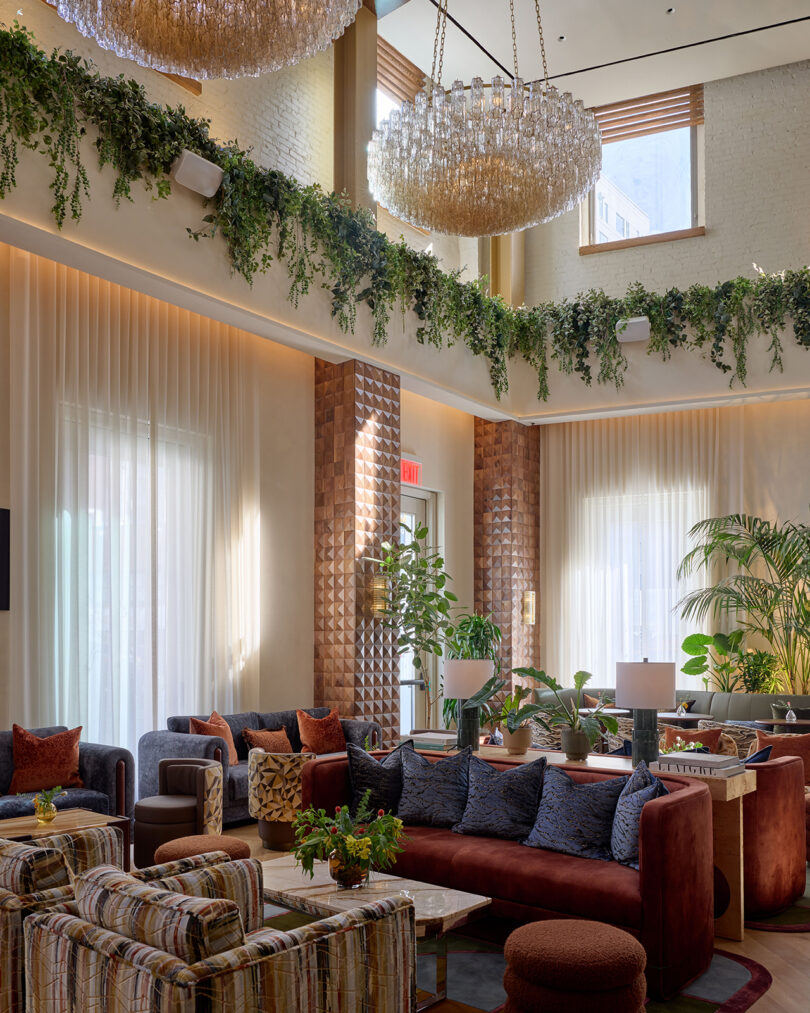
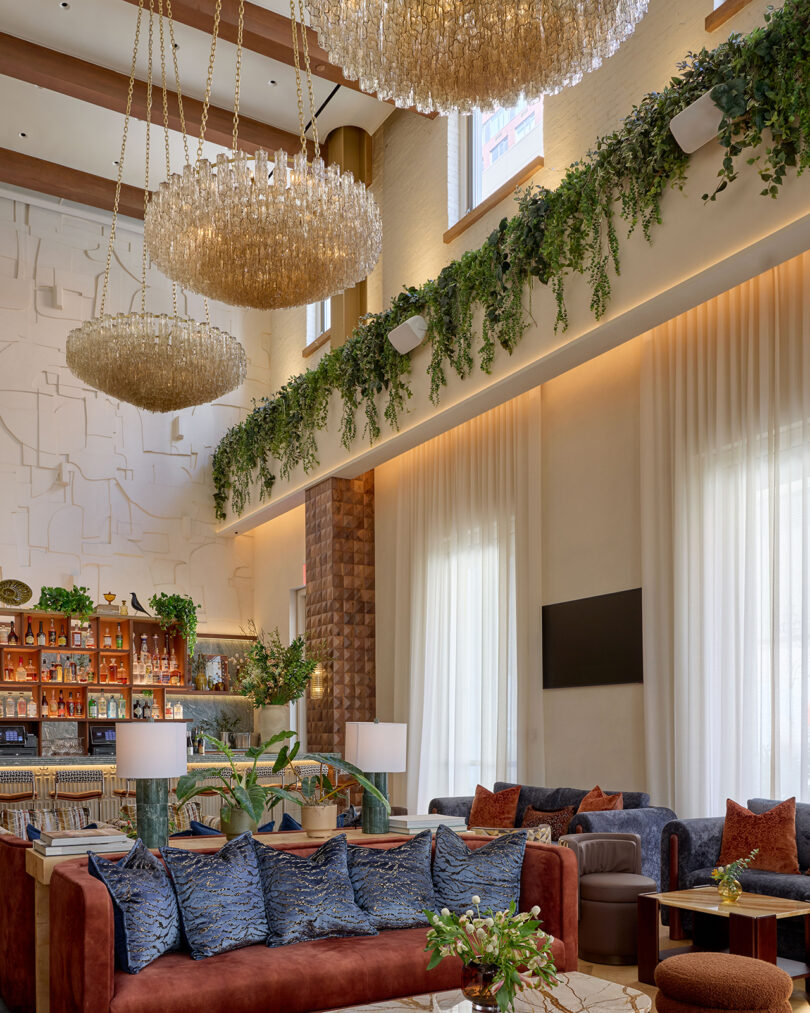
- Biophilic Elements: Verdant greenery is encased in elevated linear planters that run the length of the lobby, improving air quality and providing a visual connection to nature.
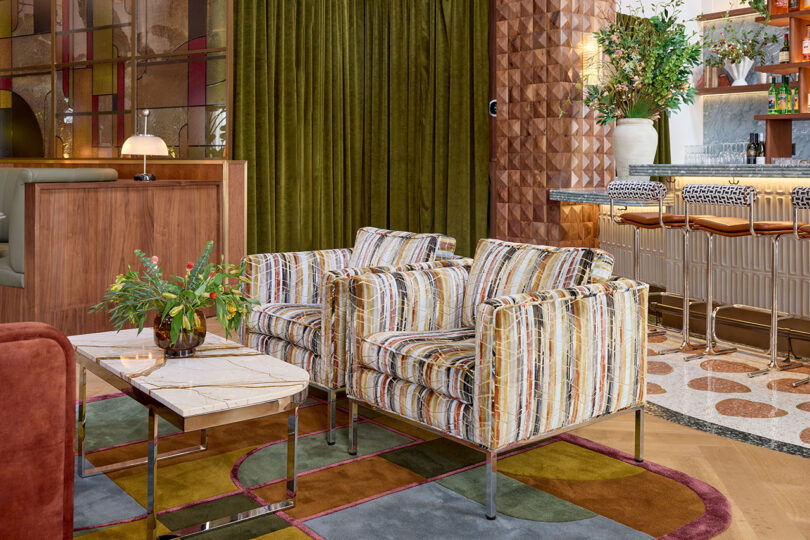
- Curated Accents: Playful rugs and polished vintage accents are layered throughout the space, creating the feel of a curated private residence rather than a commercial lobby.
The Cocktail Lounge: A Transitional Nightlife Anchor
The rear of the lobby transitions into a sophisticated cocktail lounge, anchored by soaring structural columns encased in diamond-patterned woodwork. This space is designed to be a "chameleon environment," shifting its atmosphere as the day progresses. By day, the lounge is bright and airy, illuminated by a large Venetian chandelier and natural light reflecting off a ripple-pattern plaster relief on the walls.
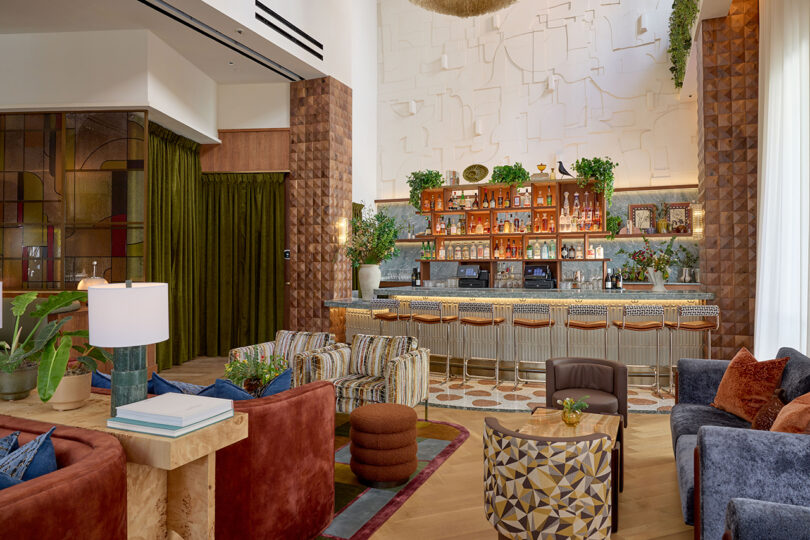
As evening approaches, the space transforms into a "sultry, dimly lit haunt." Key design features in this area include:
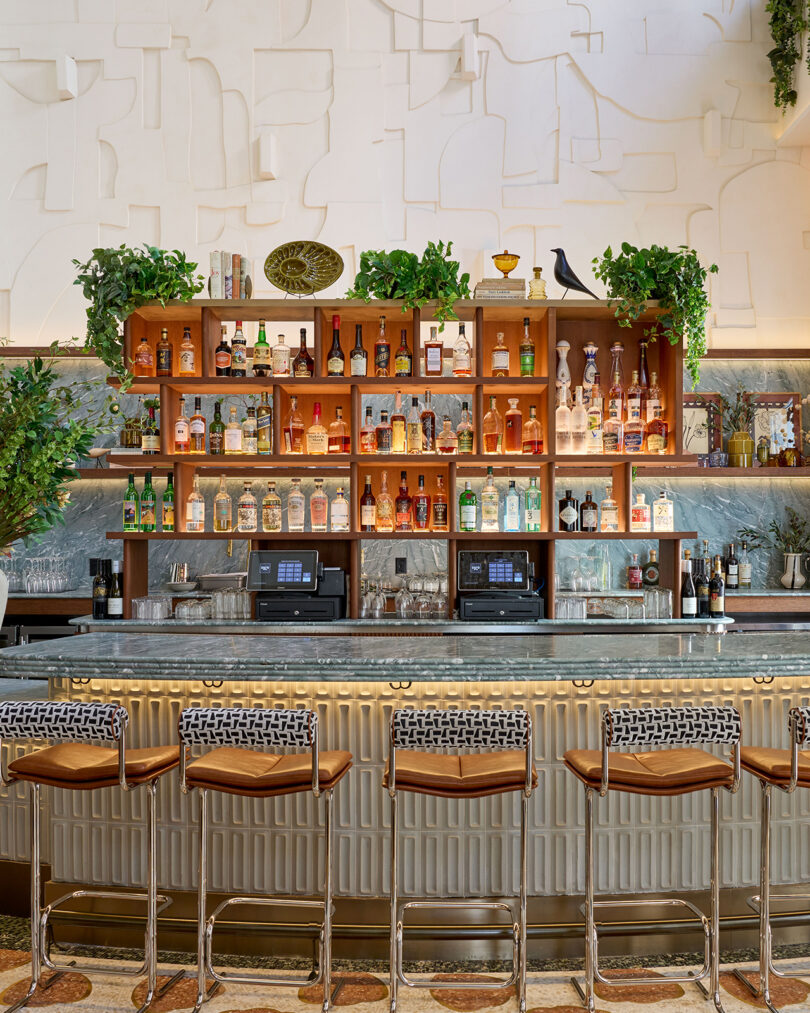
- Verde Antigua Marble: The main bar features a large slab of this distinctively green-veined marble, providing a durable and high-impact focal point.
- Design Pedigree: The bottle shelving is inspired by the work of Charlotte Perriand, while the banquettes are accented by iconic Sergio Mazza Alfa lamps.
- Murano Glass: Subtle sconces inspired by Venetian glass-blowing traditions provide warm, directed lighting that enhances the "nostalgic drama" of the space.
The cocktail lounge also serves as a historical echo of the neighborhood’s past, specifically referencing the legendary Palladium nightclub that once stood nearby. This romantic, dramatic flair connects the modern Hyatt to the storied nightlife history of the Union Square district.
Strategic Implications for the Hospitality Industry
The Hyatt Union Square project serves as a case study for the successful integration of brand standards with hyper-local design. For Hyatt, the renovation is an investment in the "lifestyle hotel" segment, which has consistently outperformed traditional mid-scale hotels in urban markets over the last five years. According to industry data, hotels that incorporate significant food and beverage (F&B) and social spaces into their lobbies see a 15% to 20% higher revenue per available room (RevPAR) from non-guest patrons compared to those with traditional layouts.
Furthermore, the emphasis on adaptive reuse reflects a growing environmental consciousness within the architectural community. By gutting and refurbishing an existing interior rather than pursuing new construction, the project reduces the carbon footprint associated with structural materials like concrete and steel.
Expert Analysis: The Shift Toward Porous Environments
Architectural critics and hospitality analysts suggest that the "porous buffer" model adopted by LEGEARD STUDIO is likely to become the standard for urban hotel developments. In cities like New York, where real estate is at a premium, the traditional model of a locked-off, guest-only lobby is increasingly viewed as an inefficient use of space.
By opening the lobby to the street, hotels can capture a portion of the local foot traffic, turning the lobby into a revenue-generating asset throughout the day. The Hyatt Union Square’s inclusion of extensive F&B options and coworking-friendly zones ensures that the space remains active from the morning coffee rush through to late-night cocktails.
Conclusion: A Future-Proofed Urban Sanctuary
The renovation of the Hyatt Union Square by LEGEARD STUDIO is more than a cosmetic update; it is a strategic realignment of the hotel’s role within the New York City landscape. Through a careful selection of materials, a deep respect for local history, and a forward-thinking approach to multifunctional space, the firm has created an environment that is both nostalgic and contemporary.
As travelers increasingly seek out authentic, locally-rooted experiences, projects like this set a new benchmark for what a hotel lobby can achieve. It is no longer just a place to lay one’s head; it is a cultural crossroads, a workspace, a social hub, and a testament to the enduring vitality of Union Square. For the residents of Lower Manhattan and the visitors who pass through its doors, the new Hyatt Union Square lobby offers a human-scale sanctuary in the heart of one of the world’s most energetic cities.
Related posts: