Palazzo Gucci Unveiled: Demna Forges a New Cultural Narrative in Florence’s Historic Heart

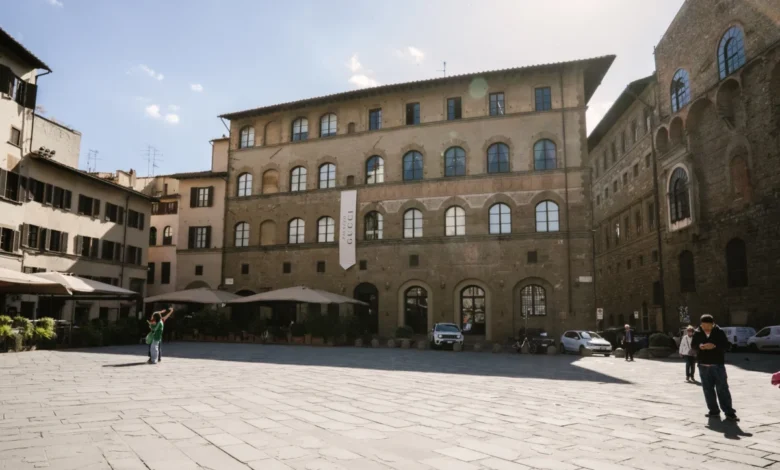
Florence, Italy – The doors of Palazzo Gucci officially opened on Monday, marking a pivotal moment in the luxury house’s storied history as artistic director Demna unveils his reinterpretation of the iconic cultural destination. Situated within the magnificent Palazzo della Mercanzia, a landmark dating back to 1337 in Florence’s Piazza della Signoria, just steps from the Uffizi Gallery, the revitalized space defines a new chapter for Gucci’s engagement with its rich heritage and the broader Italian cultural landscape. This ambitious undertaking, dubbed the "Gucci Storia" project, unfurls across the building’s first and second floors, offering visitors an immersive journey through the brand’s 105-year legacy, seen through Demna’s distinct lens. The ground floor maintains a dedicated boutique, alongside the renowned Gucci Osteria da Massimo Bottura, with the all-day café and cocktail bar, Gucci Giardino, conveniently located nearby in the square, further cementing the Palazzo’s role as a multifaceted cultural and lifestyle hub.
A Historic Landmark Reimagined
The Palazzo della Mercanzia itself carries centuries of Florentine history within its walls. Originally built in 1337 as the seat of the Merchants’ Court, it played a crucial role in the city’s powerful guild system, overseeing commerce and trade in the heart of Renaissance Florence. Its strategic location in Piazza della Signoria, adjacent to the Palazzo Vecchio and the Uffizi Gallery, places it at the epicentre of Florentine art, politics, and culture. For Gucci, a brand founded in Florence in 1921 by Guccio Gucci, establishing a permanent cultural presence in such a historically significant building underscores its deep roots in Italian craftsmanship and artistry.
This is not the first time the Palazzo has served as a testament to Gucci’s legacy. It first opened as the Gucci Museo in 2011 under then-creative director Frida Giannini, offering a curated selection of archival pieces. In 2018, Giannini’s successor, Alessandro Michele, reimagined the space as Gucci Garden, a whimsical, multi-concept venue that blended a museum, boutique, and restaurant, reflecting his eclectic and maximalist aesthetic. Demna’s latest transformation, however, represents a departure, aiming for a deeper, more analytical exploration of Gucci’s identity while embracing the building’s historical gravitas.
Demna, who transitioned to Gucci from Balenciaga in July last year, expressed his profound connection to the location. "Palazzo Gucci, to me, embodies the importance of this house in Italian culture," he stated. "It’s where I first understood this when I went to visit the Uffizi Museum. It was the first thing I saw after leaving, as I stepped onto Piazza della Signoria." This personal resonance speaks to the deliberate choice to frame Gucci’s narrative within a context that extends beyond fashion, positioning it as an integral part of Italy’s artistic and cultural heritage. The new "Gucci Storia" project is a testament to this belief, designed to convey Gucci’s role as a "cultural icon" through a thoughtfully curated sequence of immersive rooms.

Strategic Significance and Kering’s Vision
The inauguration of Palazzo Gucci holds significant strategic weight for Kering, Gucci’s parent company. Earlier this month, the Palazzo hosted a cocktail reception for analysts, investors, and the press on the eve of Kering’s Capital Markets Day. This event, led by Kering’s chief executive officer Luca de Meo and Gucci’s president and CEO Francesca Bellettini, highlighted the brand’s renewed focus and strategic direction. Gucci, historically the powerhouse of Kering’s luxury portfolio, has faced recent challenges, prompting Kering to intensify efforts to rejuvenate its performance and solidify its market position.
The investment in a grand cultural destination like Palazzo Gucci aligns with a broader industry trend where luxury brands are increasingly investing in experiential retail and cultural institutions. Brands such as Louis Vuitton (with its Foundation in Paris) and Prada (with its Fondazione Prada in Milan) have successfully established cultural outposts that serve not only as brand showcases but also as significant contributors to the artistic landscape. These spaces attract a diverse audience, including art enthusiasts, tourists, and consumers, effectively broadening brand appeal and fostering deeper engagement beyond transactional retail. For Gucci, Palazzo Gucci is expected to play a crucial role in enhancing brand perception, reinforcing its legacy, and attracting a new generation of consumers who value authenticity, heritage, and immersive experiences.
An Experiential Journey Through Time and Craft
The "Gucci Storia" project is structured as a narrative journey, with each room offering a distinct chapter in the brand’s evolution. Demna’s vision for these spaces is to create an immersive experience that marries historical fidelity with contemporary artistic expression.
1. The Thread of Time: This initial room, described as one of the most surprising, immediately sets the tone. Elaborate tapestries, a craft historically associated with Florence, line the walls, forming a visual and symbolic chronicle of Gucci’s 105-year history. Each tapestry meticulously reproduces a defining moment, beginning with founder Guccio Gucci’s formative years in London at The Savoy hotel, where he was inspired by the luggage of the elite. The chronicle then progresses through the brand’s various creative eras, depicting the contributions of its most influential designers. Tom Ford, for instance, is not physically rendered but is powerfully represented through the image of Madonna wearing his iconic light blue silk blouse and black pants at the 1995 MTV Video Music Awards, a moment that epitomized his sensual and glamorous aesthetic for Gucci. Frida Giannini’s era is evoked through Botticelli-like visuals, her long blond hair and delicate features harmonizing with Renaissance art influences. Alessandro Michele is portrayed on a horse, a nod to his whimsical romanticism and equestrian codes. The vibrant Rosso Ancora red stands out on a tapestry dedicated to Sabato De Sarno, symbolizing his fresh, modern vision. Demna himself is depicted at work, kneeling as he fits a model, with a modern gaming armchair behind him, encapsulating his fusion of traditional craftsmanship with contemporary culture. Demna elaborated on this choice: "Choosing the moments that got represented in the tapestries was about picking the defining moments in the story of Gucci. Of course, we couldn’t fit everything, but I really wanted to have this visual composition that takes you through its history like you’re looking at a Renaissance painting that’s filled with symbolism." This room was first previewed during Milan Design Week at the 16th-century Chiostri di San Simpliciano for the "Gucci Memoria" event, which concluded just before the Palazzo’s official opening.

2. La Galleria: Following "The Thread of Time," visitors enter "La Galleria," designed as a traditional portrait gallery. Here, textile-upholstered walls frame powerful visuals from "La Famiglia," Demna’s inaugural collection, which was unveiled last September and masterfully photographed by Catherine Opie. This room offers a contemporary counterpoint to the historical tapestries, showcasing Demna’s immediate impact and vision for the brand.
3. The Curated Archive: While Gucci’s official and extensive archive resides nearby in the 15th-century Palazzo Settimanni, Demna, deeply impressed by that venue during his first visit, has recreated a captivating portion of it within the Palazzo Gucci. This room features a system of drawers that display some of Gucci’s most unusual and unexpected objects. Visitors can discover items like tennis bags, shaving kits, and even a fondue set, displayed alongside singular pieces such as a black furry dog kennel and swim fins embellished with the iconic GG logo – both emblematic of Tom Ford’s era. This archive is purposefully nonlinear, designed to illustrate the sheer breadth and unexpected facets of Gucci’s design history, highlighting its versatility and enduring presence across diverse product categories.
4. The Cinema Room: This space expresses Demna’s artistic vision for Gucci through the medium of film. A monochromatic setting, encircled by a monumental velvet curtain, hosts a rotation of videos and films, offering an immersive cinematic experience that further defines the brand’s aesthetic and cultural narrative under his direction.
5. Generation Gucci: An immersive room dedicated to visual storytelling, "Generation Gucci" showcases campaign images shot by Demna through large-scale photographic compositions. This room reinforces the brand’s contemporary identity and its connection to current cultural moments through powerful visual narratives.
6. La Manifattura: This room offers a fascinating exploration of Gucci’s time-honed manufacturing and craftsmanship, juxtaposed with today’s state-of-the-art technology. It unfolds in two distinct environments. The first is rooted in Gucci’s storied Florence workshops, drawing inspiration from the Palazzo Settimanni. Here, signature bags like the Bamboo 1947, the Jackie 1961, and the Horsebit 1953 loafer are arranged within recessed niches, accompanied by their original sketches and prototypes. An original worktable, strewn with archival Gucci tools, evokes the dedication of the house’s earliest masters of craft. The second part of the room transforms into a modern laboratory, featuring robotic arms testing material resilience, capturing the spirit of innovation that defines Gucci’s ArtLab in Florence. One striking demonstration showcases how a bag remains secure on a mannequin’s shoulder, repeatedly shaken, illustrating the rigorous quality standards and technological advancements embedded in Gucci’s contemporary production.
7. La Materia (The Material): Located on the second floor, this room narrates the history of Gucci’s ready-to-wear through a series of floating mannequins. These displays feature designs spanning decades, from a vibrant flower dress dating back to the 1970s to a body-hugging python-skin skirt suit by Frida Giannini, illustrating the evolution of Gucci’s sartorial language and its adaptability across different eras.

8. La Stanza della Verità (The Room of Truth): Designed as an intriguing office space, this room draws inspiration from the legendary "Galleria Gucci" above the New York store, where in the 1980s, select guests reputedly received golden keys granting access to a hidden sanctuary. Visitors are invited to engage interactively with the objects in the space – picking up a vintage telephone that rings, or flipping through clips of old newspapers featuring articles on the Gucci family. The intention is to explore the rich tapestry of gossip, anecdotes, and dramatic events that have surrounded Gucci throughout its history. Demna acknowledged the brand’s often-sensational past: "As you know, there’s a lot that’s said about Gucci’s past that we don’t always talk about. It’s quite dramatic, quite spicy. People have made movies, books. Sometimes fact and fiction have become one. We made this kind of office space that’s filled with clues that tie back to some of those crazy moments that may or may not have happened, but each person might reach a different conclusion based on their interpretation, and that’s the beauty of it." This room encourages personal reflection and interpretation of the brand’s complex narrative.
9. L’Oracolo (The Oracle): The final room adds a touch of sci-fi and playfulness. In a blinding white monochromatic alcove, a mysterious column takes on the role of an oracle. An interactive interface allows visitors to explore responses from three broad classifications, including "Off the Record." One reporter, for example, received a note stating, "the first Gucci store devoted to clothing did not open until 1972." Demna described "L’Oracolo" as "meant to be a moment of surprise. You can either leave with a fun message or a new piece of information that’s randomized. There’s something quite fun about not knowing what you’ll get." It serves as a lighthearted, yet informative, conclusion to the immersive experience.
Broader Impact and Future Outlook
The opening of Palazzo Gucci signifies more than just a new retail or museum space; it represents a strategic recalibration for the brand under Demna’s artistic direction. By anchoring its narrative in such a historically significant Florentine palazzo, Gucci is reaffirming its deep cultural ties and positioning itself as a guardian of Italian heritage while simultaneously projecting a forward-looking vision. This move is crucial for a brand of Gucci’s stature, which seeks to balance its opulent past with the demands of contemporary luxury consumers who increasingly seek authentic stories and meaningful experiences.
The Palazzo Gucci is poised to become a significant cultural draw, contributing to Florence’s already robust tourism economy, particularly in the luxury segment. It offers a unique blend of fashion, art, and history that appeals to a global audience. For Kering, a successful reimagining of Gucci’s cultural footprint could translate into renewed brand desirability and, ultimately, improved financial performance, especially as the luxury market continues to evolve towards experiential engagement. When asked about the potential future paths Palazzo Gucci might take, Demna responded coyly, "You’ll just have to wait and see what we come up with." This hint suggests that the "Gucci Storia" project is not a static installation but a dynamic platform, ready to evolve and surprise, much like the brand itself. With Demna at the helm, Palazzo Gucci promises to be a continuously unfolding narrative, bridging centuries of history with the cutting edge of contemporary luxury.