Sepideh Moafi on Breaking Barriers in ‘The Pitt’ and Finding Her Roots on Stage

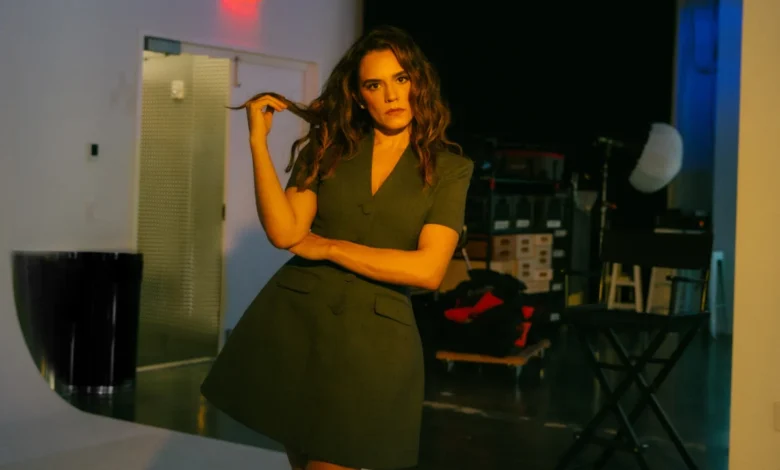
More than a week has passed since the critically acclaimed second season finale of HBO’s medical drama, "The Pitt," aired, yet actor Sepideh Moafi continues to receive an overwhelming influx of messages from viewers. Moafi, who joined the hit series for its sophomore season as the enigmatic Dr. Baran Al-Hashimi, brought to life a character whose complexities unfolded gradually, culminating in the revelation of her seizure disorder during the season’s concluding episodes. This nuanced portrayal has resonated deeply with audiences, particularly those navigating similar health challenges.
Dr. Baran Al-Hashimi: A Catalyst for Visibility and Empathy
Moafi’s depiction of Dr. Al-Hashimi has transcended typical medical drama tropes, creating a powerful platform for discussing chronic conditions. Speaking from her New York apartment via Zoom, Moafi expressed her profound gratitude for the public’s response. "I’ve been so beautifully overwhelmed by the number of messages I’ve been getting from people who carry chronic conditions or chronic illnesses and deal with seizure disorders, and the kind of visibility that this role brings," she shared. The impact of such representation cannot be overstated, especially in a media landscape where chronic illnesses are often either dramatized inaccurately or entirely absent.
According to a 2022 report by the Centers for Disease Control and Prevention (CDC), approximately 6 in 10 adults in the U.S. live with at least one chronic disease, and 4 in 10 adults have two or more. Seizure disorders, including epilepsy, affect millions globally, yet nuanced portrayals in mainstream media remain relatively rare. Moafi’s commitment to authenticity in her role aimed to bridge this gap, offering a reflection of reality that many viewers found both validating and empowering.
Beyond the immediate impact of raising awareness for seizure disorders, Moafi also emphasized another crucial facet of her character: Dr. Al-Hashimi’s background as a humanitarian doctor working in conflict zones. "The thing that was important to me going in was creating visibility for a type of health care worker, a type of doctor that travels abroad and works in conflict zones, humanitarian doctors," Moafi stated. This aspect of the character speaks to a broader, often underrepresented narrative of medical professionals dedicated to serving vulnerable populations in challenging environments.
The confluence of these elements — a brilliant doctor managing a chronic condition while serving in high-stakes humanitarian contexts — forged a character that is both inspiring and deeply human. "But to have this kind of reaction and visibility for people who have been managing this condition their whole lives has been so just incredibly potent and beautiful. It’s why I do what I do and why I want to do this, is to make people feel like their stories are reflected on screen or on stage and make people feel less alone and people feel seen," Moafi articulated, highlighting the core motivation behind her artistic endeavors.
A Career Defined by Depth and Purpose

Sepideh Moafi, 40, has steadily built a career characterized by nuanced performances in thought-provoking series. Prior to "The Pitt," she garnered acclaim for her roles in "The Deuce," HBO’s exploration of the porn industry in 1970s New York, and "The L Word: Generation Q," a contemporary continuation of the groundbreaking series about queer women. These roles often placed her in complex narratives, showcasing her versatility and commitment to character development.
Interestingly, Moafi initially resisted the call to audition for the first season of "The Pitt." Her disinterest stemmed from a long-standing aversion to medical dramas, a genre she had never found personally resonant. "It never resonated with me. And also, I don’t have the best associations with hospitals," she explained. "I don’t want to spend more time in the hospital than I’ve had to. I was just clear that it was not my world and that’s not what I wanted." This candid admission underscores a common sentiment among actors who seek roles that align with their personal experiences or offer unique narrative challenges.
However, a shift occurred when Moafi watched the inaugural season of "The Pitt." She quickly realized that the series deviated significantly from the conventional medical drama format. Unlike traditional procedurals focused solely on diagnoses and treatments, "The Pitt" delved deeper into the personal lives, ethical dilemmas, and emotional tolls experienced by its medical professionals. "And then I watched the show and I was like, ‘Oh, OK, this is not your typical [medical show],’" she recalled, recognizing the show’s potential for greater thematic exploration.
Moafi hopes that Dr. Al-Hashimi’s journey throughout the season has had a broader inspiring effect, extending beyond those who directly identify with her medical condition. The character’s gradual unraveling and the eventual understanding of her hidden struggles serve as a powerful metaphor for the unseen burdens many carry. "She makes so much more sense at the end of this 15-hour shift. I hope that we carry that curiosity and that realization into our lives every day and the way that we treat each other, because we’re all caring so much, and there’s so much behind the surface that we don’t reveal," Moafi reflected. "I hope we go a little gentler with each other and with ourselves." This sentiment encapsulates the show’s underlying message of empathy and the importance of looking beyond superficial appearances.
Personal History Informing Professional Artistry
A significant factor drawing Moafi to the role of Dr. Al-Hashimi was the character’s background as a humanitarian doctor. This aspect resonated deeply with Moafi’s own personal history and lifelong commitment to humanitarian causes. Moafi was born in a refugee camp in Germany, a direct consequence of her parents being forced to flee Iran in the tumultuous years following the 1979 revolution. Her family eventually found asylum in the United States when she was an infant, providing her with the opportunity to build a new life.
This formative experience, though lived vicariously through her parents’ narratives, has indelibly shaped Moafi’s worldview and her artistic choices. "Even though I grew up in the States, my family’s history and that background and how I came into the world has obviously colored the lens in which I see the world and relate to the world, how it’s my own privilege, because it really is luck. Why were we given the opportunity to restart and rebuild?" she pondered. This profound understanding of chance and privilege fuels her dedication to advocacy.
Since her teenage years, Moafi has been actively involved with the International Rescue Committee (IRC), a global humanitarian aid organization that responds to the world’s worst humanitarian crises and helps people to survive, recover, and rebuild their lives. The IRC was founded in 1933 at the call of Albert Einstein and provides emergency aid, long-term assistance, and resettlement support to refugees and displaced populations worldwide. Their work spans over 40 countries and 20 U.S. cities, addressing issues from conflict and disaster relief to education, health, and economic empowerment.

"That’s something that’s lived inside of me my entire life. I was moved by the work that the IRC did and does, working to give life-saving humanitarian aid to people living in conflict, struck by humanitarian disaster, but also helping people resettle and rebuild their lives around the world, those who are granted asylum," Moafi elaborated. This deep personal connection to the struggles of refugees and the vital work of humanitarian organizations made the character of Dr. Al-Hashimi not just a role, but a continuation of Moafi’s personal mission to foster understanding and compassion.
Navigating the Demands of "The Pitt" Set
Stepping onto the set of an established series for its second season presented its own unique set of challenges and opportunities. Moafi admitted to experiencing a mix of intimidation and excitement as the new addition to the cast. The medical environment itself was a significant hurdle. "First of all, walking into this role where I’m the only other day shift attending opposite Dr. Robby, Noah Wyle, who spent a lot of his career playing a doctor, and me not knowing anything about the world from a doctor’s perspective…that was incredibly intimidating," Moafi recounted. Noah Wyle’s iconic portrayal of Dr. John Carter on NBC’s "ER" for over a decade set a high bar for medical authenticity, adding pressure to Moafi’s performance.
However, experience and a robust support system proved invaluable. "But the nice thing about getting older in your life and having more experience in your career is that you realize you fully throw yourself in and you have to trust that you’re supported," she noted. The production of "The Pitt" ensured that actors were well-equipped for their roles, providing an "army of doctors and nurses who were on set at all times." This constant access to medical professionals allowed Moafi to accurately portray the intricate procedures and intense realities of a hospital environment, ensuring a high degree of verisimilitude.
Beyond the technical aspects, Moafi emphasized the importance of collaboration and self-reliance. "I had so many resources, so many friends and people that I met because of this role. And you just throw yourself into the work head first and do everything you can and trust your process, trust your own instincts and my expertise as an actor, and then just know that I’m supported in this and that I need to ask for help when I need it," she explained. This blend of individual effort and collective support fostered an environment where creativity and accuracy could thrive. The experience, while initially daunting, ultimately proved to be a source of growth and confidence. "So there was something overwhelming and intimidating, but also reassuring and confidence boosting about being on that set," she concluded.
A Return to the Stage: "New Born" with Hugh Jackman and Marianna Gailus
Having successfully navigated the complexities of television production, Moafi is now channeling her renewed confidence back to the stage, her acknowledged "comfort zone." She is currently starring in the play "New Born" at the Minetta Lane Theater in New York, a production that runs from May 8 through June 8. This engagement marks a significant return to her theatrical roots, offering a different kind of artistic challenge and fulfillment.
"New Born" is a unique theatrical experience, featuring three distinct monologues penned by the acclaimed British playwright Ella Hickson. Moafi shares the stage with two other formidable talents: Oscar-nominated actor Hugh Jackman, known globally for his work in film and theater, and the accomplished Marianna Gailus. The monologue format dictates a largely individual rehearsal process, allowing each actor to delve deeply into their character’s narrative.

Despite the solo nature of much of the preparation, Moafi fondly recalled the vibrant energy of reconnecting with the New York theater community upon her return from filming "The Pitt" in Los Angeles. "I showed up and it was one of those glorious New York moments where you’re just all in the room and creative energy is just exploding through the room," she described, illustrating the unique camaraderie and synergy inherent in live theater. The initial read-through of the play was particularly memorable. "We read the play and there were all these little serendipitous things that happened. And I was like, ‘stick a fork in me, I’m so content,’" she expressed, conveying the profound satisfaction of artistic collaboration and the magic of live performance.
The Broader Impact: Authentic Storytelling and Advocacy
Sepideh Moafi’s current trajectory exemplifies the growing demand for authentic and impactful storytelling across all media. Her work in "The Pitt" highlights the critical need for nuanced portrayals of chronic illness and the often-overlooked heroism of humanitarian aid workers. In an era where audiences seek to see themselves and their diverse experiences reflected on screen, actors like Moafi play a pivotal role in bringing these narratives to life with integrity and empathy.
The entertainment industry is increasingly recognizing its power to influence public perception and foster greater understanding. By showcasing characters like Dr. Baran Al-Hashimi, who embody both professional excellence and personal vulnerability, shows like "The Pitt" contribute to destigmatizing conditions such as seizure disorders and shed light on the dedication of individuals working in high-stakes humanitarian fields. This kind of representation not only provides validation for affected communities but also educates broader audiences, potentially inspiring more compassionate societal interactions.
Moafi’s personal journey, from a refugee camp to a successful acting career, underscores the profound impact of individual stories and the resilience of the human spirit. Her active involvement with organizations like the International Rescue Committee seamlessly blends her professional artistry with her personal advocacy. Through her work, both on screen and on stage, Moafi continues to champion stories that matter, fostering connections, building empathy, and making people feel seen and less alone. Her dedication to her craft and her commitment to social impact position her as a significant voice in contemporary entertainment, promising continued contributions to meaningful and resonant narratives.