Global Shipping Navigates Dual Crises: Hormuz Resilience Contrasts Red Sea Disruption as Geopolitical Tensions Reshape Trade Routes

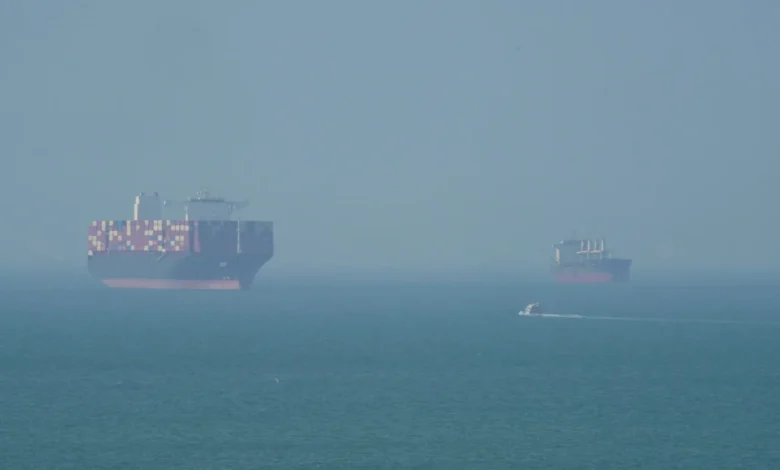
While Iran’s intensified threats against shipping in the strategically vital Strait of Hormuz have sent ripples through energy markets and escalated freight rates since the emergence of heightened geopolitical tensions, global schedule reliability across maritime shipping remarkably improved in the weeks following this disruption. This outcome presents a stark contrast to the persistent global drag witnessed at the onset of the Red Sea crisis, revealing divergent impacts on the intricate web of international trade.
According to comprehensive data released by maritime shipping analysis firm Sea-Intelligence, global schedule reliability in March 2026 demonstrated a notable improvement of 3.9 percentage points from the preceding month. This positive trajectory not only reversed earlier trends but also surpassed normal pre-pandemic seasonal baselines, which were meticulously tracked from 2011 to 2019. During this historical nine-year period, the average sequential increase in reliability from February to March typically hovered around 1.2 percentage points. The recent data, therefore, indicates an additional 2.7-percentage-point structural improvement, signaling a robust and perhaps unexpected recovery amidst ongoing geopolitical volatility.
The Red Sea Crisis: A Protracted Global Drag
The narrative unfolding in the Red Sea, however, painted a significantly different and far more challenging picture for worldwide schedule reliability. Beginning in November 2023 and intensifying into January 2024, the region became a focal point of maritime insecurity. During this measured period, baseline averages typically experienced a decline of 7.7 percentage points from November to January. Compounding this seasonal downturn, an additional 2.6 percentage points of structural drag further suppressed reliability, indicating a severe and sustained disruption to established shipping patterns.
The root cause of this pronounced decline lay in the actions of Iran-aligned Houthi militants in Yemen. From November 2023, these militants initiated a series of aggressive attacks on commercial ships traversing the Red Sea, ostensibly in solidarity with Palestinians amid the ongoing Israel-Hamas conflict. These escalating assaults, involving drones, missiles, and attempts to board vessels, created an untenable security environment for international shipping. Major ocean carriers, facing an unacceptable level of risk to their crews, vessels, and cargo, were compelled to make a critical strategic decision: to forgo passage through the Suez Canal—a cornerstone of global maritime logistics—and instead reroute their extensive fleets around southern Africa’s Cape of Good Hope.
This mass diversion, a monumental logistical undertaking, instantly introduced a substantial temporal penalty. For goods originating in Asia and destined for either Europe or the U.S. East Coast, transit times were extended by an estimated 10 to 14 days. This considerable increase in journey duration not only inflated fuel costs and operational expenses but also threw myriad service schedules into disarray, creating a cascading effect of delays across the global supply chain. Ports experienced unpredictable arrival times, leading to congestion, equipment imbalances, and a general erosion of schedule predictability.
Contrasting Disruptions: Hormuz’s "Hard Volume Shock" vs. Red Sea’s "Transit Time Penalty"
Alan Murphy, CEO of Sea-Intelligence, articulated the fundamental difference between the two crises in a recent update. "At the global aggregate level, the Red Sea crisis created a measurable drag on global schedule reliability. Conversely, the Hormuz disruption has not yet registered as a global negative event," Murphy stated. This distinction is crucial for understanding the varied responses and outcomes.
The Red Sea crisis, by compelling diversions around the Cape of Good Hope, primarily imposed a "transit time penalty." Vessels continued their journeys, albeit on significantly longer routes, leading to delays and schedule inconsistencies but not a complete cessation of service to specific regions. The challenge was managing extended lead times and the knock-on effects across interconnected schedules.
In contrast, the Hormuz disruption, characterized by Iran’s threats and heightened military presence, created what Murphy termed a "hard volume shock." Faced with what was perceived by carriers as an impassable strait—whether due to explicit blockades, the threat of seizure, or prohibitive insurance costs—ocean carriers did not merely hold vessels in indefinite anchorage awaiting a resolution. Instead, a decisive and rapid response emerged: they overwhelmingly chose to abandon the blocked network entirely. This resulted in a near-total collapse in vessel arrivals to the Middle East through the Persian Gulf, effectively cutting off a vital artery for regional trade. The speed and decisiveness of this withdrawal, while devastating for regional logistics, prevented a protracted global ripple effect similar to the Red Sea’s transit delays.
Localized Fallout and Supply Chain Adaptations
The immediate impacts of the Hormuz disruption were largely localized, concentrating on the neighboring countries in the Gulf and the transshipment hubs that suddenly became primary offloading points. As carriers abandoned the Persian Gulf routes, they were forced to abruptly discharge their pipeline cargo, originally destined for the Middle East, at the nearest viable and accessible hubs outside the immediate blockade zone. This included major ports on India’s bustling west coast, such as Nhava Sheva and Mundra, as well as Colombo in Sri Lanka.
The sheer volume of this "dumped cargo"—massive, unplanned discharges—swiftly overwhelmed the physical yard space and operational capacities of these transit hubs. This sudden influx generated severe landside bottlenecks, creating localized schedule reliability crises on otherwise unrelated trade lanes that utilized the same transshipment hubs in their service strings. While the direct global impact on schedule reliability remained mitigated, the strain on specific regional logistics networks was intense, highlighting the interconnectedness of global trade infrastructure.
Industry Responses: Forging New Paths and Strengthening Regional Resilience
In the face of these unprecedented challenges, the container shipping industry has demonstrated remarkable adaptability, particularly in developing landside operational solutions to circumvent maritime blockades and congestion. CMA CGM, one of the world’s leading container shipping companies, has been at the forefront of this strategic shift, leveraging integrated logistics solutions to maintain cargo flow in the Persian Gulf region.
CMA CGM recently finalized a significant agreement with AD Ports Group, a prominent enabler of trade, logistics, and industry in the UAE. This partnership aims to extend CMA CGM’s operational reach far beyond their existing shared terminal at the UAE’s Khalifa Port. The deal grants the French ocean carrier multiple inland and gateway routing options, establishing a robust multimodal network across the UAE and into the wider Middle East region. The partners plan to anchor CMA CGM’s ocean-borne cargo flows across AD Ports’ consolidated inland intermodal network, which comprises strategically located railroad-linked container depots, dry ports, and cargo depots. This expansive network significantly extends trade corridor optionality, reaching the critical borders of Saudi Arabia and Oman.
Jesper Stenbak, Regional Director for the Middle East Gulf, Indian Subcontinent, and Indian Ocean of CMA CGM Group, underscored the importance of this collaboration: "By linking maritime services more directly to inland cargo flows, this partnership supports more efficient routing, stronger supply chain resilience and improved service reach for our customers." This initiative represents a proactive approach to mitigating future maritime disruptions by creating redundant, land-based pathways for cargo, thereby enhancing the overall robustness of the regional supply chain.
This strategic move by CMA CGM follows similar adaptive measures by other major players. Hapag-Lloyd, for instance, had previously decided to utilize third-party feeder services to pick up and move goods at Gulf ports, which were then transported via land. These initiatives collectively underscore a broader industry trend towards investing in comprehensive intermodal solutions, diversifying transport options, and enhancing regional logistical hubs to build greater resilience against geopolitical shocks.
Project Freedom: A Diplomatic and Military Tightrope Walk
Amidst the ongoing tensions in the Strait of Hormuz, a significant geopolitical initiative, dubbed "Project Freedom," emerged from the Trump administration. On Thursday, reports from the Wall Street Journal indicated that the administration was aiming to restart its operation designed to guide commercial ships through the perilous Strait of Hormuz, an initiative originally announced by President Donald Trump.
President Trump had first unveiled "Project Freedom" on a Monday, with the stated aim of ensuring safe passage for international shipping. Under this initial phase, the U.S. military provided direct escort for two American-flagged ships, notably including a Maersk-owned vehicle carrier, through the critical passage. This visible demonstration of naval power was intended to deter potential aggression and reassure commercial vessels.
However, only two days later, the operation was abruptly put on hold, a decision made without extensive public elaboration at the time. Official statements merely alluded to requests from Pakistan and other countries, suggesting that the pause was intended to facilitate negotiations aimed at de-escalating the broader conflict and working towards an end to the "war in Iran."
The WSJ report subsequently shed more light on the complexities behind this decision. It revealed that the administration had originally scrapped the plans primarily due to significant diplomatic pressure and logistical challenges posed by key regional allies. Specifically, Saudi Arabia and Kuwait reportedly imposed restrictions on the U.S. use of their military bases. Both Middle Eastern nations had conveyed deep concerns to the Trump administration over the potential for Iranian retaliatory attacks on Gulf states, expressing fears that a U.S. military escort operation could inadvertently draw them into a wider regional conflict. Compounding their anxiety was a perceived lack of sufficient American protection should such attacks materialize, leading to their reluctance to fully support the escort mission from their territories.
According to the report, defense officials indicated to the WSJ that any resumption of Project Freedom would involve a refined strategy. This new approach would entail the U.S. directing commercial ships through a narrow, pre-identified path that had been meticulously cleared of mines. This designated corridor would then be safeguarded under the robust protection of American warships and aircraft, aiming to provide a secure transit for vessels while minimizing the broader regional footprint and associated risks. The delicate balance between asserting freedom of navigation and avoiding wider conflict remains a paramount consideration in this complex geopolitical endeavor.
Broader Implications and the Future of Maritime Security
The dual crises in the Red Sea and the Strait of Hormuz underscore the increasing fragility of global maritime supply chains in an era of heightened geopolitical instability. The contrasting outcomes—a protracted global drag from the Red Sea crisis versus a localized but intense disruption in Hormuz that saw global reliability improve by March 2026—offer critical lessons for governments, shipping companies, and logistics providers.
Economic Impacts: Both crises have exerted upward pressure on freight rates and insurance premiums, contributing to inflationary pressures across various economies. The extended transit times from the Red Sea diversions translate directly into higher fuel consumption, increased operational costs, and delays in inventory replenishment, ultimately affecting consumer prices. While the Hormuz disruption’s global impact was contained, the localized bottlenecks in key transshipment hubs still generated significant costs and delays for regional trade, with potential ripple effects on global supply chains for specific commodities.
Geopolitical Stability: The militarization of critical maritime choke points, whether through Houthi attacks or Iranian threats, highlights the urgent need for diplomatic solutions and robust international cooperation to ensure freedom of navigation. "Project Freedom," despite its diplomatic hurdles, symbolizes the commitment of major powers to protect vital trade arteries. However, the reluctance of regional allies to fully support such operations underscores the delicate balance of power and the complex web of alliances and rivalries in the Middle East.
Supply Chain Evolution: The events of late 2023 and early 2024 (Red Sea) and the preceding Hormuz disruptions are accelerating an ongoing transformation in supply chain strategies. Companies are increasingly prioritizing resilience and redundancy over mere efficiency. This includes:
- Diversification of Sourcing: Reducing reliance on single regions or suppliers.
- Nearshoring and Friendshoring: Shifting production closer to consumer markets or to politically aligned countries.
- Investment in Intermodal and Multimodal Transport: Developing robust land-sea-air networks to offer alternative routes.
- Increased Inventory Buffers: Holding larger stockpiles to absorb supply shocks, reversing decades of just-in-time practices.
- Advanced Data Analytics: Utilizing real-time data to anticipate disruptions and optimize rerouting decisions.
The shipping industry’s rapid adaptation, exemplified by CMA CGM’s and Hapag-Lloyd’s landside initiatives, showcases a proactive approach to mitigating future risks. The ability of the global shipping network to absorb the Hormuz "volume shock" and demonstrate an improvement in reliability by March 2026, while still grappling with the Red Sea’s "transit time penalty," speaks to both the inherent resilience of the system and the varying nature of threats it faces.
Ultimately, the future of global trade hinges on navigating this complex interplay of economic pressures, technological advancements, and an increasingly volatile geopolitical landscape. The contrasting experiences in the Red Sea and the Strait of Hormuz serve as powerful reminders that while some disruptions may be managed and even overcome with innovative solutions, others may necessitate more profound and lasting shifts in how goods traverse the world’s oceans.