The Seductive Promise and Complex Reality of Compostable Fashion: A Deeper Look into the "Soilpunk" Vision.

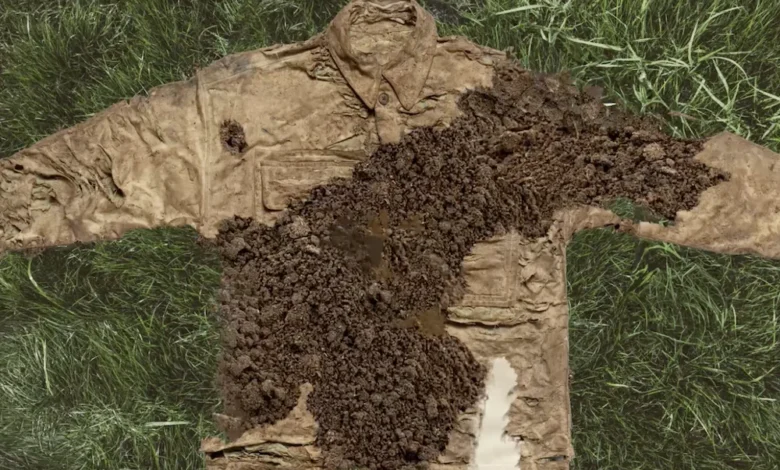
A handful of pioneering brands are now venturing into the realm of fashion that promises a return to the earth, a concept dubbed "soilpunk." This vision, where garments and footwear decompose to enrich the soil, offers a compelling antidote to the global textile waste crisis. However, as analyst and researcher Fru Bekefi meticulously details in her recent report, the practical implementation of compostable fashion is fraught with challenges, ranging from certification gaps and consumer confusion to the inherent limitations of home composting. This exploration delves beyond the marketing allure, examining what genuine compostable fashion entails and the formidable journey required to realize its regenerative potential.
The Allure of a Full Circle: From Wardrobe to Garden
The imagery is undeniably comforting: a worn-out garment, once a cherished companion, is lovingly cut into strips and integrated into a home compost pile. Over time, it transforms into nutrient-rich soil, feeding a vibrant garden. This dream stands in stark contrast to the grim reality of fast fashion’s environmental footprint—mountains of discarded textiles accumulating in places like Accra, Ghana, and Chile’s Atacama Desert. In an era increasingly defined by dire warnings of irreversible climate tipping points and widespread eco-anxiety, the concept of composting resonates deeply, offering a tangible process of alchemy that transforms waste into value and instills a sense of hope and agency. This growing appreciation for natural cycles has seen a small but influential group of designers, material innovators, and visionary brands begin to explore "soilpunk" circularity, questioning whether this idyllic vision can withstand rigorous scrutiny in practice.
The philosophical underpinnings of "soilpunk" are rooted in a broader societal awakening to the critical importance of soil health and regenerative practices. Emerging from niche art, design, and cultural movements, soilpunk champions a profound reverence for the earth’s living systems. This ethos aligns with a significant cultural shift where composting is evolving from a mundane chore into a form of cultural currency. Recent legislative changes, such as mandatory food waste separation in major urban centers like New York and across France, underscore this mainstream adoption. Publications like Town and Country magazine have even playfully declared the arrival of "status composting," signaling a shift in societal values. As fears regarding biodiversity loss and food insecurity intensify, so too does our collective appreciation for soil’s life-sustaining properties, celebrated through art exhibitions, specialized tarot decks, and even experimental music tracks inspired by the earth’s hidden sounds.
A Deeper Dive into Market Momentum and Industry Challenges
Despite the encouraging surge in hopeful visions and incremental advancements, the fashion industry remains largely entrenched in legacy systems that resist rapid transformation. The sector finds itself in a precarious limbo, attempting to reconcile the relentless pursuit of growth, the imperative to satisfy consumer demands, and the urgent need to mitigate its substantial environmental and social harms. This complex interplay of conflicting interests makes systemic change stubbornly difficult.
However, the themes of circularity and regeneration are gaining traction, partly driven by governmental efforts to shift the burden of end-of-life product management from taxpayers to businesses. Legislation such as the European Union’s Extended Producer Responsibility (EPR) directives are compelling brands to reconsider their entire product lifecycle, from design to disposal. This regulatory pressure, coupled with heightened consumer awareness of textile waste—globally, an estimated 92 million tons of textile waste are generated annually, with approximately 87% either landfilled or incinerated—has created fertile ground for brands to signal their regenerative intentions through initiatives like compostable collections.
Sarah Housley, a prominent design futurist and author, observes, "Compostable fashion is having an extended moment because consumers have become acutely aware of the dismal rates of textile recycling. They are actively seeking alternatives that still feel ecologically responsible. The idea that your clothing can truly return to the earth is profoundly irresistible, and brands find it equally appealing. While achieving widespread textile recycling demands daunting systemic change—which brands can influence only to a certain extent—compostable designs might appear to be a more ‘crackable’ challenge."
Indeed, several brands have launched pilot projects and collections. Under Armour, in collaboration with Unless Collective, unveiled a "regenerative sportswear collection" during Milan Design Week in April 2025, with the evocative tagline ‘Make Good Dirt.’ This small pilot offered a tantalizing glimpse into a near-future where athletic gear, once worn beyond repair, could simply be buried in a backyard. Similarly, the material science startup Cell Sense, founded by designer Aradhita Parasrampuria, is pioneering soil-compatible solutions by working with living systems to create compostable biodesigned embellishments. Their jade-like bioluminescent beads, designed to last 15 years, can reportedly decompose in kitchen compost within a mere four weeks, offering a tangible solution to microplastic pollution from traditional adornments. Stella McCartney has also advanced its S-Wave sneaker line, collaborating with Balena to develop BioCir Flex soles made from cinnamon industry waste, imbuing the shoes with an earthy fragrance and designing them for industrial composting as a last resort.
Navigating the Complexities: Science, Standards, and Skepticism
While the "soilpunk" vision captivates, its practical execution is far from straightforward. The scientific and logistical hurdles are substantial, often obscured by the simplicity of the marketing narrative.
The Material Science of Decomposition: Beyond Natural Fibers
The foundation of compostable fashion rests on the careful selection of materials. As Becca Willcox, ratings analyst at Good On You, clarifies, "The most reliably compostable fabrics are generally known to be organic cotton, linen, kapok, hemp, organic bamboo, jute, wool, and certain man-made cellulosic fibers like viscose and Lenzing Tencel." However, even these natural fibers come with significant caveats. If they have been dyed with synthetic or toxic chemicals, or treated with non-compostable finishes, their ability to safely decompose into nutrient-rich soil is compromised. Furthermore, garments featuring functional or decorative trims such as zippers, buttons, sequins, or even synthetic stitching must have these components entirely removed before composting, adding a layer of complexity for the consumer.
The efficacy of composting itself is highly dependent on environmental conditions. "The conditions in home composting systems are notoriously variable in terms of temperatures, moisture levels, and the specific microbial communities present," Willcox explains. "Without the precise conditions, textiles may take considerably longer to break down than anticipated, potentially far exceeding the breakdown rates observed under controlled test conditions. Simply ‘leaving and forgetting’ items will not necessarily lead to rapid decomposition." Industrial composting facilities, which operate at higher, controlled temperatures and humidity levels, offer a more reliable environment for complete and timely degradation, but access to such facilities remains limited for most consumers.
Compostable vs. Biodegradable: A Critical Distinction
A fundamental challenge in consumer education lies in clarifying the often-misunderstood terms "compostable" and "biodegradable." These terms are not interchangeable, and their misuse can lead to significant environmental harm. "Compostable" implies that a material will break down into organic matter within a specified timeframe under specific conditions (either home or industrial), leaving no toxic residue. "Biodegradable," however, simply means a material can decompose through natural processes over an unspecified period. This lack of a defined timeline and conditions has led to widespread greenwashing. Consequently, the European Union now prohibits the unvalidated use of "biodegradable" in marketing claims, with member states like France and Belgium implementing outright bans.
The persistence of seemingly benign natural fibers can be surprising. A recent paper in iScience, co-authored by Fashion Revolution co-founder Carry Somers, revealed that cotton accounted for over 70% of the 150-year fiber record found in sediment from a UK lake historically fed by textile mills. This highlights that even 100% cotton, if not in the right environment, can persist for generations. Asha Singhal, director of the Nature of Fashion Initiative at the Biomimicry Institute, underscored this point to Vogue Business, stating, "Biodegradation is not just about the material itself; it profoundly depends on the surrounding ecosystem—from temperature and moisture to the presence of the correct microbes." Simply discarding a pure cotton t-shirt into an unsuitable environment offers no guarantee of its intended return to nature.
The Shadow of Greenwashing and Certification Gaps
The inherent visual appeal and seductive convenience promised by compostable fashion make it fertile ground for performative corporate environmentalism. Brands often leverage striking imagery of products decomposing to capture consumer attention, risking the perception that these are mere "innovation halos" rather than genuine, scalable solutions. As Housley cautions, "If the fantasy fails to live up to expectations or evolve from one-off collections into more mature propositions, consumers might rightfully grow skeptical."
Furthermore, verifying a brand’s compostability claims, especially for home composting, is challenging due to a significant lack of widespread and robust certification schemes. While certifications like OK compost HOME by TÜV AUSTRIA and Cradle to Cradle (C2C) offer some guidance, they have limitations. TÜV’s certification, for instance, often validates raw fibers rather than finished garments, which typically include dyes, finishes, and trims. C2C-certified products may guarantee compostability, but even the organization acknowledges that textiles are currently "most likely" to be recycled into new products rather than composted. This absence of clear, universally recognized standards for finished garments leaves a substantial "composting literacy" gap, as consumers struggle to differentiate between home and industrially compostable items and understand the specific requirements for each.
Operational Hurdles: Infrastructure, Logistics, and Behavior Change
Beyond the material science and certification complexities, the successful integration of compostable fashion into a circular economy hinges on overcoming significant operational and behavioral hurdles.
The End-of-Life Challenge: Consumer Responsibility
For compostable products to deliver on their promise, consumers must engage in specific end-of-life behaviors. However, the current fashion culture is largely driven by convenience, and expecting widespread adoption of new, often complex, disposal rituals is a major challenge. The anecdotal feedback from consumers interviewed by Fru Bekefi reveals widespread hesitation, primarily centered on the lack of suitable infrastructure ("Where would I compost it? No suitable composting facilities") and concerns about product durability ("How long will it last after washing?").
This highlights a critical barrier: even with genuinely compostable products, without accessible and clear disposal pathways, they risk ending up in landfills, negating their environmental benefit. As Housley aptly observes, "There’s a huge amount of behavior change for brands to engineer into place. For example, providing the envelope and label at point-of-purchase and then incentivizing customers to return the product to them to dispose of professionally."
Brands Engineering Circularity: Take-Back Schemes and Partnerships
Some forward-thinking brands are attempting to bridge this gap by proactively designing for the end-of-life stage. Underwear brand Kent, for instance, has pioneered the "Compost Club," the fashion industry’s first take-back program for composting discarded garments into fertilizer. Relaunching in summer 2026, the program allows US-based customers to purchase a shipping label and return kit for $5. Once their washed briefs are cut up and returned, they receive a $10 credit, and the textiles are sent to a community composting organization in Southern California. This model not only diverts waste but also supports local food ecosystems. Housley praises this initiative, noting, "It’s a really strong use case because this is an item that people replenish frequently, that can only have its lifetime of use extended a certain amount, and that has no resale value and very little reuse or recycling potential."
Footwear presents another prime, albeit complex, candidate for compostable design. An estimated 90% of the 23.8 billion pairs of shoes produced annually end up in landfill or are incinerated, primarily due to their intricate construction involving multiple glued layers of foam, rubber, mesh, and synthetic leather, making them nearly impossible to recycle. Initiatives like Fashion For Good’s "Closing the Footwear Loop," launched in February 2026 with partners like adidas, Zalando, Inditex, and Target, are tackling these challenges. While prioritizing improved recycling, one research stream actively explores bio-based polymers for soles to phase out fossil fuel-derived materials. Stella McCartney’s S-Wave Sport trainers, developed in partnership with Balena, are a notable development in this regard, designed for durability and industrial composting as a last resort through Balena’s global network.
However, even these innovative programs face scaling challenges. The lack of explicit disposal instructions on Stella McCartney’s website for their S-Wave sneakers, for example, underscores the need for comprehensive "service design" alongside product innovation. While customers might infer that a return to a store or by post is an option, as with their "Close the Loop parka," clear guidance is paramount. The iterative nature of pioneering infrastructure and service design at a meaningful scale means that individual brands must shoulder the burden of engineering consumer behavior change, often running counter to a deeply ingrained culture of convenience.
Broader Implications and the Path Forward
Compostable fashion, while currently niche and experimental, holds significant potential to catalyze broader systemic change within the fashion industry.
Policy and Industry Alignment for Systemic Change
The increasing focus on Extended Producer Responsibility (EPR) legislation globally is a crucial driver. Policymakers are recognizing the need to internalize the environmental costs associated with product end-of-life, pushing brands towards more circular models. This regulatory pressure, combined with growing consumer demand for transparency and sustainability, creates a powerful impetus for innovation in materials and disposal systems. Industry bodies like the Ellen MacArthur Foundation and Fashion Revolution consistently advocate for systemic change, emphasizing that individual brand efforts, while commendable, must be supported by broader infrastructure and policy frameworks to achieve true impact. These organizations often stress that composting must be viewed as part of a hierarchy of waste management, prioritizing reduction and reuse before considering recycling and then composting.
Economic and Environmental Trade-offs
The development of compostable fashion involves substantial R&D investments in new materials, non-toxic dyes, and innovative manufacturing processes. Brands must also consider the economic implications of establishing take-back schemes, including logistical costs and consumer incentives. However, the long-term environmental benefits—reduced landfill waste, mitigation of microplastic pollution, and the creation of valuable soil amendments—can outweigh these initial costs. Furthermore, the ability to close material loops domestically could reduce reliance on global waste streams and associated carbon emissions from transportation. The economic viability of compostable solutions will improve as economies of scale are achieved and as the regulatory landscape increasingly penalizes linear models.
The Tipping Point for Transformative Change
Research from the University of Pennsylvania in 2018 suggested that a critical mass of approximately 25% of a population is all it takes for a small, vocal minority to catalyze significant social change and shift norms. The curious and committed early adopters of compostable fashion could represent this minority, provided that the underlying infrastructure and industry systems evolve to meet their demands and expectations. If these pioneers are consistently let down by confusing claims or a lack of practical disposal options, their skepticism could quickly turn into widespread disillusionment, undermining the entire movement.
A Complementary, Not Sole, Solution
It is crucial to recognize that compostable fashion is not a panacea for the industry’s environmental woes; rather, it is a targeted and intentional strategy that should complement, not replace, reuse and recycling efforts. As Willcox advises, "Composting isn’t always the solution with the lowest impact. You are completely destroying the fiber rather than extending the lifespan of clothing, while failing to cut the demand for new items. Composting is most suited for items that can’t be reused, such as underwear or socks."
Its enormous potential lies in specific apparel categories where reuse or recycling is difficult or undesirable: replacing seductive but toxic embellishments, or transforming materials that are no longer fit for their original purpose (e.g., intimate apparel, heavily soiled items, footwear components) into a valuable resource. The future success of compostable design hinges on robust, clear certification, accessible industrial composting infrastructure, and concerted efforts to educate and empower consumers to participate effectively.
The promise of metamorphosis—the idea that an object or material can become something new and beneficial through decomposition—is what makes compostable design so compelling. In a truly regenerative fashion future, we might indeed witness our garments returning to the earth, contributing to thriving ecosystems in our own gardens and beyond, but this future requires a concerted, multi-stakeholder effort to bridge the gap between seductive vision and complex reality.