Fresh Produce Industry Fights Cyclospora Outbreak with Transparency as Consumer Trust Wanes

Lettuce growers and salad chains nationwide are proactively launching extensive consumer education campaigns, aiming to unequivocally assure the public of the safety of their products amidst a pervasive cyclospora outbreak that has afflicted thousands across the United States. This strategic pivot towards enhanced transparency comes as federal investigations continue to grapple with identifying the definitive source of the widespread illness, leaving consumers navigating a landscape of uncertainty and prompting a significant shift in buying behaviors.
The Cyclospora Threat: A Microscopic Adversary
The current health crisis is attributed to Cyclospora cayetanensis, a microscopic parasite that, when ingested, causes cyclosporiasis, an intestinal illness. Symptoms typically include watery diarrhea, loss of appetite, weight loss, abdominal cramps, nausea, and fatigue. The incubation period averages about one week, and unlike many foodborne pathogens, Cyclospora is not spread directly from person to person. It is commonly associated with contaminated food or water, often fresh produce that has come into contact with fecal matter containing the parasite. The Centers for Disease Control and Prevention (CDC) reports that since May 1, the U.S. has recorded over 4,173 laboratory-confirmed cases of cyclosporiasis. While some initial reports, per the CDC, linked cases to iceberg lettuce in nine states, the investigation has been complicated by mixed messaging from health officials regarding specific suppliers.
Historically, cyclospora outbreaks have been challenging to trace due to the parasite’s resilience and the complex, often international, supply chains of fresh produce. Past outbreaks have been linked to various imported and domestic produce items, including raspberries, basil, cilantro, and salad mixes. The parasite is notoriously resistant to common disinfection methods like chlorine, and the only surefire way to kill it in produce, according to the CDC, is to cook it to a temperature of at least 158 degrees Fahrenheit – a less-than-ideal solution for salad greens. This inherent difficulty in eradication and tracing amplifies public health concerns and the subsequent industry response. Adding another layer of complexity, the CDC scaled back its tracking of cyclospora in 2025, which, in the current 2026 context, could hinder comprehensive data collection and outbreak management efforts.
A Chronology of Uncertainty and Industry Reaction
The timeline of the current outbreak underscores the dynamic and often confusing nature of food safety crises. Reports of cyclosporiasis cases began to mount in early May, gradually drawing national attention as numbers escalated.
- July 17: Taylor Farms, a major produce supplier, voluntarily issued a recall of iceberg lettuce following preliminary federal investigations that suggested a link to the multi-state cyclospora outbreak.
- July 17: Fast-food giant Taco Bell, which contracts with Taylor Farms, promptly announced the removal of Taylor Farms lettuce from its menu items as a precautionary measure.
- July 18: The U.S. Food and Drug Administration (FDA) initially stated that a sample of iceberg lettuce from Taylor Farms had tested positive for Cyclospora cayetanensis. However, the agency later retracted this statement, declaring the result a "false positive," a development that further muddled public understanding and trust in official pronouncements.
- July 22: Officials identified a new cluster of 72 cyclosporiasis cases, but critically, did not specify a source, perpetuating the ambiguity surrounding the outbreak’s origin and potential scope.
More than a month into the outbreak, federal officials are still engaged in exhaustive investigations to pinpoint the definitive source of the illness. This protracted uncertainty has created a vacuum that unaffected produce brands and lettuce growers are now actively filling with proactive, trust-building campaigns designed to unequivocally distance their products from the ongoing health scare.
Pioneering Transparency: Brands Lead the Charge
The response from leading produce brands highlights a strategic shift towards radical transparency, leveraging direct communication channels to reassure an anxious public. As Andy Barr, an expert in public relations and crisis communications, aptly puts it, this is "a classic case of reputation spreading faster than contamination." He explains that many consumers, hearing news of a general lettuce outbreak, naturally worry, "which is why unaffected brands are moving quickly to separate their supply chains from the story."
Gotham Greens: Highlighting Controlled Environment Agriculture
New York-based Gotham Greens, a pioneer in controlled environment agriculture (CEA), swiftly responded to consumer inquiries by taking to social media. On platforms like Facebook, Threads, and Instagram, the company explicitly stated that its products, grown in indoor hydroponic greenhouses, are not affected by the cyclospora outbreak. Jodi Genshaft, Gotham Greens’ Vice President of Marketing, articulated the company’s motivation: an "increase in questions from consumers" leading to over 1,300 messages via social media and email.
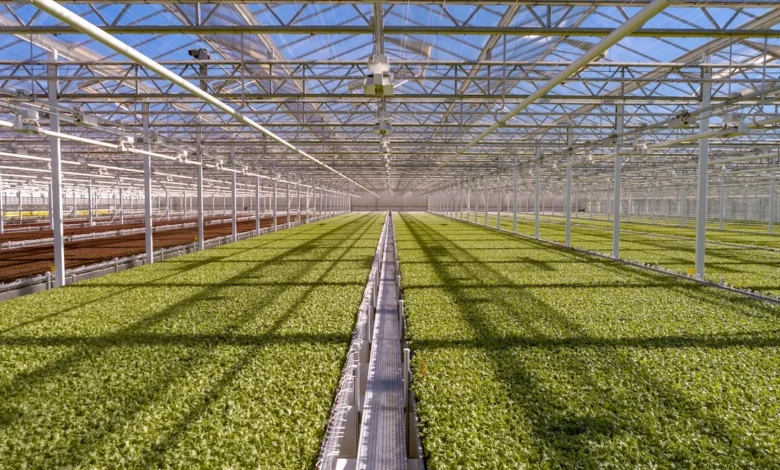
Gotham Greens’ messaging emphasizes the intrinsic safety advantages of its cultivation methods. The company grows greens and herbs, along with salad kits, dressings, dips, and cooking sauces, in indoor hydroponic greenhouses across nine U.S. states. Genshaft highlighted that their products "don’t encounter soil, dirt, manure or chemical washing agents," environments commonly associated with cyclospora contamination in field-grown produce. Furthermore, Gotham Greens employs independent testing to monitor its water supply, a critical control point for preventing parasitic contamination.
The company’s proactive communication has yielded impressive results. From July 9-19, Gotham Greens reported an astounding surge of over 800% in website traffic compared to the preceding 10 days, alongside double-digit growth in social media engagement. Genshaft expressed the company’s hope that this messaging will "restore confidence in fresh produce" and cultivate trust among both loyal and new customers. "We believe that consumers deserve to know how and where their food is grown," she stated, adding, "Giving people greater transparency into how their food is produced empowers them to make better, safer and more informed decisions for themselves and their families." Consumer reactions have been overwhelmingly positive, with one Threads user commenting, "Bought some today and it was so fresh! I am a first time customer, and you immediately became my preferred brand," and another on Facebook stating, "You just earned yourself another customer. Going out tomorrow to find your greens." Collectively, Gotham Greens’ posts about the outbreak have garnered more than 9,000 likes across various platforms.
Little Leaf Farms: CEO-Led Personal Assurance
Similarly, Little Leaf Farms, headquartered in Massachusetts with greenhouses also in Pennsylvania, adopted a highly personalized approach to consumer reassurance. The company published a detailed post about its lettuce cultivation process and, notably, released three Instagram videos featuring its CEO and founder, Paul Sellew. In these videos, Sellew, wearing a hairnet and standing amidst rows of pristine lettuce in a greenhouse, meticulously explains the company’s growing process. He underscores why Little Leaf Farms’ lettuce does not require washing before consumption, boldly stating, "I eat it every day unwashed, and it’s perfectly fine."
Sellew elaborated on the company’s stringent safety protocols in an interview, explaining that Little Leaf Farms utilizes treated rainwater and human-quality drinking water for irrigation, ensuring the leaves remain dry throughout the process. This controlled environment ensures their product "is separate and distinct from the field product, which is where, historically, all these food safety incidents have come from." In its 10-year history, Little Leaf Farms proudly asserts, "We’ve never had a food safety incident."
Despite his self-professed aversion to social media, Sellew recognized its indispensable role in the current climate. "Many people get their information from social media," he acknowledged. "For us, it’s an opportunity to educate people about our process. We welcome the scrutiny. We want people to know what we’re doing." The public has responded favorably, with the brand’s education-related posts accumulating over 77,000 likes on Instagram. A grateful user commented, "I definitely appreciate you being transparent about how your lettuce is grown. People are scared and are depriving themselves of fruits and vegetables because they are unsure of the source they’re receiving them from."
Sweetgreen: Corporate Communication and Monitoring
Fast-casual salad chain Sweetgreen also moved swiftly to address customer concerns. On July 17, the company published a statement, followed by posts on X (formerly Twitter) and emails to its customer base. "Our food has not been identified in connection with the current cyclospora outbreak," the brand declared, assuring customers that its food safety experts "continue to monitor the situation closely" and are in "close contact with our suppliers to determine whether any ingredients in our supply chain have been identified as part of the investigation. To date, none have been."
Economic Fallout and Shifting Consumer Behavior
Despite proactive communication from many brands, the pervasive uncertainty has already begun to impact the wider food industry, particularly businesses reliant on fresh produce. Public relations expert Andy Barr emphasized the challenge for companies potentially linked to the outbreak, which face "transparency and being seen to take rapid action." However, for brands not implicated, the objective is equally critical: they "recognize that customer confidence can quickly fall across an entire industry. Their comms objective isn’t to defend themselves from blame – it’s to remove uncertainty before it changes buying behavior."
Unfortunately, buying behavior is already undergoing significant transformation. Data from Placer.ai on July 18 revealed a notable decline in foot traffic at several fast-casual restaurants specializing in salads and bowls compared to the average from January 1 to July 6. Chopt saw a 24% decrease, Chipotle a 5.9% drop, and Cava a 4.7% decline. Taco Bell, directly impacted by the initial recall, experienced a substantial 29.8% reduction in foot traffic and subsequently launched a "dollar lettuce-free deal" to stimulate sales. Sweetgreen, despite its rapid communication, also saw a comparative foot traffic drop of 4.7%.
The consumer response extends beyond fast-casual dining. Some shoppers, concerned by the lack of definitive information regarding the outbreak’s origin, are reportedly avoiding fresh fruits and vegetables altogether. Conversely, a segment of consumers is "flocking to farmers’ markets" seeking produce directly from local sources, where they perceive greater transparency and reduced risk.
Even brands like Little Leaf Farms, lauded for their proactive measures, have not been entirely immune. CEO Paul Sellew acknowledged a downturn in sales "due to the fear that is out there in the market right now." While stating they "have not been as negatively impacted as the overall category has been," he conceded, "nevertheless, it has been impacted." He expressed a common sentiment within the industry, asking, "How long will it last? We’ll see. This investigation has to come to some kind of conclusion, and as the word comes out that our product is safe to eat, hopefully, sales will recover and people will get back to their normal eating patterns."
Broader Implications for Food Safety and the Future of Agriculture
The current cyclospora outbreak serves as a stark reminder of the vulnerabilities inherent in the modern food supply chain and highlights several critical implications for food safety and the agricultural industry moving forward.
Firstly, the incident underscores the immense challenges faced by public health officials in rapidly identifying and containing foodborne outbreaks, particularly when dealing with microscopic parasites and intricate distribution networks. The initial false positive from the FDA illustrates the scientific complexities and the delicate balance between swift public warnings and accurate information dissemination. The CDC’s reduced tracking capabilities for cyclospora, while potentially a resource allocation decision, also raises questions about the nation’s preparedness for such widespread outbreaks.
Secondly, the crisis is accelerating a consumer demand for unprecedented transparency and traceability in their food. Brands like Gotham Greens and Little Leaf Farms, by openly sharing their cultivation methods and safety protocols, are setting new industry benchmarks. This emphasis on "knowing how and where your food is grown" is likely to become a lasting expectation, influencing purchasing decisions long after the current outbreak subsides. This shift could favor controlled environment agriculture (CEA) models, such as hydroponic greenhouses, which offer inherent advantages in mitigating pathogen exposure by eliminating soil contact and controlling water sources, positioning them as safer alternatives in the eyes of the consumer.
Thirdly, the economic impact on both affected and unaffected businesses reveals the fragility of consumer trust. A single outbreak, even if localized, can erode confidence across an entire industry sector, leading to significant financial repercussions. This necessitates robust crisis communication strategies, not just for damage control, but for proactive trust-building, as demonstrated by the featured brands. The industry will likely see increased investment in verifiable food safety certifications, advanced testing technologies, and clear, continuous communication channels with consumers.
Finally, the incident could serve as a catalyst for re-evaluating food safety regulations and industry standards, potentially leading to more stringent requirements for certain types of produce or cultivation methods. It may also spur further innovation in agricultural technology aimed at enhancing safety and reducing environmental risks. The current cyclospora outbreak, therefore, is not merely a transient health scare but a critical juncture that is reshaping consumer perceptions, driving industry practices, and influencing the future trajectory of fresh produce cultivation and consumption in the United States. The path to full recovery of consumer confidence will depend heavily on sustained efforts in transparency, verifiable safety, and effective communication from all stakeholders.
Related posts: