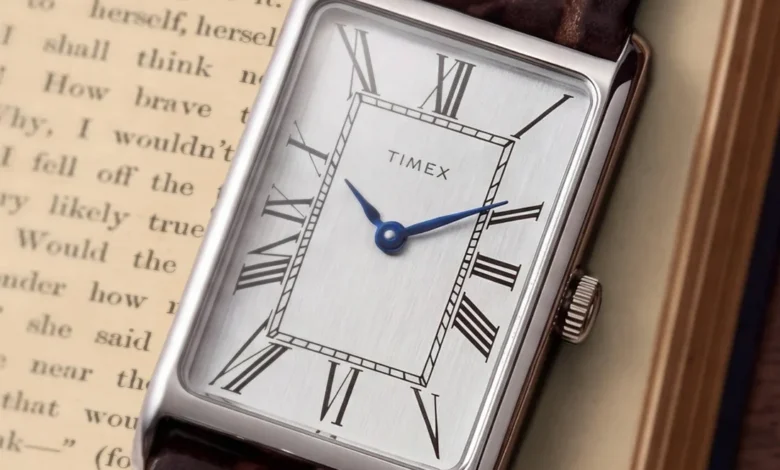
The horological market has witnessed a significant resurgence in the demand for mid-century design aesthetics, particularly the slim, rectangular dress watches that defined the aesthetic sensibilities of the 1970s. Among the most notable recent releases is the Timex 1976 Lexington Reissue. Following an initial launch that saw the timepiece sell out rapidly, the watch has returned to the retail market, currently available through the Bespoke Post storefront. This development marks a noteworthy shift in how heritage-inspired quartz timepieces are distributed and consumed in the modern era, as collectors increasingly seek accessible alternatives to high-end luxury icons.
Chronology of the 1976 Lexington Reissue
The Timex Lexington, modeled after the company’s original 1976 designs, was introduced to satisfy a growing consumer appetite for "Tank-style" watches. When it first debuted, the model experienced an immediate surge in popularity, depleting inventory within a matter of days. Market analysts suggest that this rapid sell-through was driven by a combination of the watch’s vintage-inspired design language and its aggressive price point, which positioned it as a gateway piece for those interested in the history of rectangular watch cases.
After its initial depletion at official Timex outlets, the watch remained unavailable for several months, leading to speculation regarding potential production constraints or a limited-edition manufacturing run. The recent restock via Bespoke Post confirms that inventory has been replenished. Notably, the current distribution strategy allows for acquisition without the requirement of a monthly subscription, a policy shift that expands the potential customer base to include casual observers rather than just existing members of the lifestyle-focused retail platform.
Technical Specifications and Design Philosophy
The Timex 1976 Lexington Reissue is defined by its minimalist geometry. The timepiece features a 21mm diameter case with a 36mm lug-to-lug length, measurements that reflect the smaller, more refined standards of the 1970s. With a case thickness of only 8.5mm, the watch maintains a low profile, intended to slide easily under a shirt cuff.
Key technical attributes include:
- Case Construction: A slim, rectangular stainless steel chassis.
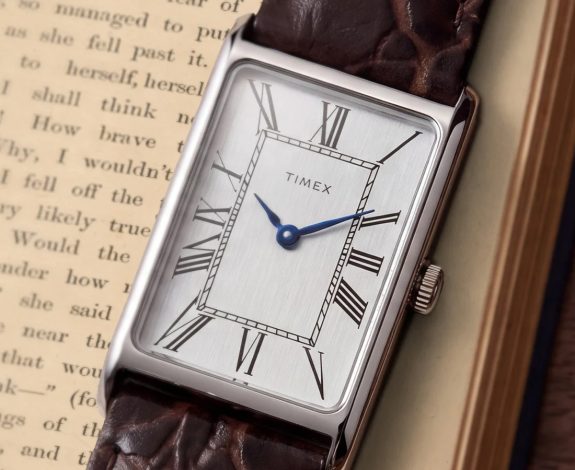
- Dial Aesthetics: A silver-tone dial enhanced with vertical brushing, providing texture that catches light at various angles.
- Indices: Elongated Roman numerals that emphasize the vertical orientation of the case.
- Hands: Metallic blue hands, a design choice often found in classic horology to provide high contrast against a silver or white dial.
- Crystal: A mineral crystal featuring a slight dome, offering a nod to the vintage acrylic crystals of the era.
- Strap Integration: The watch is equipped with a brown croc-grain leather strap featuring quick-release spring bars, facilitating user-led customization.
From an engineering perspective, the use of a reliable quartz movement allows for the ultra-slim 8.5mm profile, a feat that is significantly more difficult and expensive to achieve with mechanical automatic movements. This choice reflects a pragmatic approach to luxury design: providing the visual experience of a vintage mechanical timepiece while ensuring the accuracy and maintenance-free convenience of modern quartz technology.
Market Context: The Rise of the Accessible Dress Watch
The landscape for rectangular dress watches has been dominated for decades by the Cartier Tank. However, the price disparity between heritage luxury brands and entry-level options has created a substantial "middle market." Historically, consumers looking for a refined rectangular watch were faced with a binary choice: invest thousands of dollars in a luxury piece or settle for low-quality, fashion-forward alternatives that lacked historical pedigree.
The current market is shifting. Brands such as Bulova have successfully occupied the $200–$250 price bracket, offering quartz-driven rectangular models that bridge the gap between mass-market and high-end horology. Furthermore, boutique manufacturers like Lorier have previously demonstrated success with higher-end, automatic-movement rectangular watches priced in the $500–$600 range. The Timex Lexington sits at the base of this hierarchy at $149, effectively democratizing the aesthetic of the "power watch" that was once the standard for business professionals in the 1970s.
Broader Implications and Consumer Behavior
The decision to stock the Lexington through a platform like Bespoke Post—which functions primarily as a subscription-based lifestyle retailer—highlights an evolving strategy in the watch industry. By moving away from exclusive reliance on official company websites, brands are leveraging curated retail environments to reach consumers who may not be traditional "watch enthusiasts" but are interested in the broader lifestyle aesthetic that these pieces represent.
The demand for this specific style of watch is tied closely to the influence of popular culture. References to the "Rat-Pack" era of mid-century suiting, as well as the stylized, period-accurate costuming seen in modern television dramas like Peaky Blinders, have fueled an interest in vintage-inspired accessories. The watch is no longer viewed merely as a tool for timekeeping, but as a critical component of a "smart casual" or formal wardrobe.
Industry Analysis: The Future of Reissues
The success of the Lexington restock poses a question regarding the longevity of the "vintage reissue" trend. As major watch manufacturers dig into their archives to reproduce designs from the 1960s and 1970s, they are effectively creating a secondary market for heritage-conscious consumers. For Timex, the Lexington is a case study in how a brand can leverage its own history to maintain relevance in a market saturated with smartwatches and digital wearables.
While some purists argue that quartz movements in vintage-style cases compromise the "integrity" of the original design, the sales figures suggest otherwise. The modern consumer prioritizes reliability and price point alongside aesthetic, and the 1976 Lexington provides a balance of all three. With free shipping and returns becoming the standard expectation for online retail, the risk for the consumer to "try out" a new style is minimized, further driving the trend of purchasing watches as seasonal or occasion-specific accessories.
Conclusion
The Timex 1976 Lexington Reissue serves as a reminder that classic design remains a powerful driver of consumer interest. By successfully navigating the intersection of history, accessible pricing, and modern retail distribution, the brand has secured a position for the Lexington as a staple of the entry-level dress watch category. Whether worn daily in a professional setting or reserved for occasional formal events, the watch represents a shift toward a more deliberate, style-conscious approach to personal accessories. For those who missed the initial release, the current availability at the $149 price point represents a significant opportunity to acquire a piece of accessible horological design before inventory levels once again fluctuate.