Birks Group Reports Narrowed Annual Loss as Strategic Acquisition and Brand Growth Drive Revenue Surge

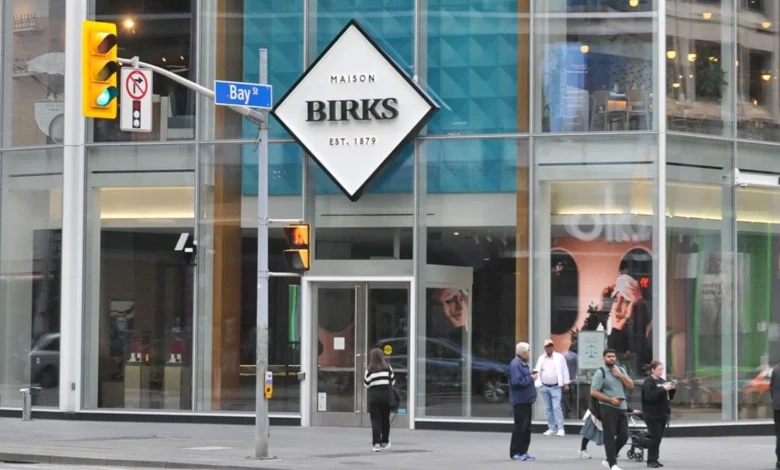
Birks Group Inc., the Montreal-headquartered luxury jewelry retailer, has reported a significant improvement in its financial health for the fiscal year ending March 28, 2026, marking a pivotal moment in its multi-year turnaround strategy. The company, which operates some of Canada’s most prestigious retail destinations, announced a substantial narrowing of its annual net loss, buoyed by a double-digit increase in sales and the successful integration of its recent acquisition of European Boutique. This financial recovery comes at a time of broader volatility in the global luxury market, suggesting that Birks’ focus on its heritage brand and strategic regional expansion is yielding tangible results.
According to the official earnings report released on Wednesday, Birks Group recorded a net loss of CAD 3.4 million (approximately $2.4 million) for the 12-month period. This figure represents a dramatic improvement over the CAD 12.8 million ($9.1 million) net loss reported in the previous fiscal year. The nearly 75% reduction in net loss indicates that the company is moving closer to sustainable profitability, driven by operational efficiencies and a more robust revenue stream.
Total sales for the fiscal year rose by 16% to reach CAD 205.4 million ($145.7 million), up from the previous year’s performance. While the acquisition of European Boutique was a primary engine for this growth, the company also saw organic strength in its existing portfolio. Comparable-store sales—a key metric for retail health that excludes the impact of new store openings or closures—increased by 2.6%. This growth was particularly notable given the inflationary pressures and shifting consumer spending habits that have impacted the Canadian retail landscape over the past year.
The Strategic Impact of the European Boutique Acquisition
The most significant driver of Birks’ revenue surge was the acquisition of European Boutique, a move that has allowed the company to consolidate its position in the high-end jewelry and timepiece market. By integrating European Boutique’s established client base and retail footprint into its own operations, Birks has been able to capture a larger share of the Ontario luxury market.
The acquisition was not merely about increasing the number of storefronts; it was a strategic move to diversify the company’s product mix and enhance its prestige. European Boutique brought with it a history of high-end service and access to exclusive luxury brands, which complemented Birks’ existing reputation as Canada’s premier jeweler. The synergy between the two entities has allowed Birks to leverage economies of scale in procurement and marketing while maintaining the boutique-style service that luxury consumers demand.
Interim CEO Niccolò Rossi di Montelera highlighted the importance of this merger in his statement to shareholders. “Our retail performance has outperformed over the prior year due to the strategic acquisition of European Boutique along with organic growth, particularly with our Birks branded jewelry,” Rossi di Montelera said. He noted that the integration process has been smooth, allowing the company to focus on "generating profitable growth."
Growth in In-House Branded Jewelry vs. Third-Party Volatility
A core component of Birks’ long-term strategy is the elevation of the "Birks" brand itself. For over a century, Birks has been synonymous with Canadian luxury, and the company is now doubling down on its own jewelry collections. This shift is financially advantageous, as in-house brands typically carry higher margins than third-party luxury goods.
During the fiscal year, sales of Birks-branded jewelry saw a notable uptick. These collections, which often draw inspiration from Canadian nature and heritage, have resonated with both domestic shoppers and international tourists. By controlling the design, manufacturing, and distribution of these products, Birks can better manage its inventory and brand narrative, insulating itself somewhat from the supply chain fluctuations and pricing mandates of external luxury houses.
However, the transition has not been without its challenges. The company reported that growth in jewelry sales was partially offset by a decline in third-party watch sales. This dip was attributed to a specific luxury brand’s exit from one of Birks’ retail locations. The high-end timepiece market is notoriously competitive and subject to the whims of brand distribution strategies. When a major watch manufacturer decides to shift toward a direct-to-consumer model or consolidates its boutique presence, retailers like Birks must adapt quickly to fill the revenue gap.
The decline in third-party watch sales serves as a reminder of the risks associated with a heavy reliance on external luxury partners. This reality has further validated Birks’ decision to prioritize its own jewelry collections and mono-brand retail environments.
Historical Context and the Evolution of the Birks Legacy
To understand Birks Group’s current trajectory, one must look at its long history. Founded by Henry Birks in Montreal in 1879, the company has survived world wars, economic depressions, and the radical transformation of the retail industry. For generations, the "Blue Box" from Birks has been a staple of Canadian gift-giving, comparable to the cultural status of Tiffany & Co. in the United States.
In recent years, however, the company has had to navigate a difficult period of restructuring. In 2017, Birks sold its U.S. subsidiary, Mayor’s Jewelers, to the Watches of Switzerland Group for approximately $104.6 million. This move was intended to reduce debt and allow the company to focus exclusively on the Canadian market. Since then, Birks has been on a journey to modernize its brand identity, renovate its flagship stores, and embrace e-commerce.
The current financial results suggest that this Canadian-centric focus is beginning to pay dividends. By concentrating its resources on key markets like Toronto, Montreal, and Vancouver, Birks is better positioned to cater to the specific needs of the Canadian luxury consumer, who often values a blend of traditional elegance and modern sustainability.
Regional Performance and the Vancouver Expansion
While the company operates across Canada, its performance is heavily influenced by regional economic hubs. The Ontario market remains a powerhouse for the group, especially with the added weight of European Boutique. However, British Columbia is set to become a major focal point for the company’s next phase of growth.
The company has officially announced plans to open a new Birks mono-brand store in Vancouver’s newly developed Oakridge Park (formerly Oakridge Centre). Scheduled to open in the fall of 2026, this location is expected to be a cornerstone of Birks’ retail strategy. Oakridge Park is currently undergoing one of the most ambitious redevelopments in North America, transforming into a massive mixed-use hub that will feature luxury residential towers, office spaces, and a high-end shopping district.
“We continue to focus on generating profitable growth in our Birks brand, including a new Birks mono-brand store, which is planned to open in the fall of 2026 in Vancouver’s newly developed Oakridge mall,” Rossi di Montelera confirmed.
The decision to open a mono-brand store—rather than a traditional multi-brand retail environment—reflects a broader trend in the luxury industry. Mono-brand stores allow a company to create a fully immersive brand experience, controlling every detail from lighting and scent to the depth of the product storytelling. For Birks, this Vancouver location will serve as a showcase for its high-jewelry collections and its "Made in Canada" heritage.
Analysis of Implications: A Path to Profitability
The narrowing of the net loss from $12.8 million to $3.4 million is a clear signal to investors that Birks is optimizing its cost structure. In a retail environment where labor costs, commercial rents, and logistics expenses have skyrocketed, managing to increase revenue by 16% while slashing losses is a significant achievement.
Several factors likely contributed to this improved bottom line:
- Inventory Management: By focusing on Birks-branded jewelry, the company likely improved its inventory turnover and reduced the need for heavy discounting.
- Synergy Savings: The integration of European Boutique likely allowed for the consolidation of back-office functions, reducing administrative overhead.
- Digital Transformation: Birks has invested heavily in its online platform, allowing it to reach customers in regions where it does not have a physical presence, thereby increasing sales without a corresponding increase in rent.
However, the "interim" status of CEO Niccolò Rossi di Montelera suggests that the company’s leadership transition is still ongoing. Rossi di Montelera, who comes from the family that controls the company (and is famously associated with the Martini & Rossi beverage empire), has provided stability during this period of acquisition and growth. The permanent leadership structure will be a key factor for investors to watch in the coming year.
Industry Outlook and the Canadian Luxury Landscape
The Canadian luxury market has shown remarkable resilience compared to other global regions. While the Chinese market has faced a slower-than-expected post-pandemic recovery and the U.S. market has seen a cooling of aspirational luxury spending, Canada has benefited from a steady influx of high-net-worth immigrants and a robust domestic appetite for fine jewelry.
Birks Group is positioning itself as the "home team" in this competitive landscape. While international giants like Cartier, Tiffany & Co., and Van Cleef & Arpels have expanded their presence in Canada, Birks maintains a unique emotional connection with Canadian consumers. Its ability to pivot between being a high-end third-party retailer and a world-class jewelry designer in its own right gives it a dual-revenue model that is rare in the industry.
Looking ahead to fiscal 2027, the company faces several headwinds, including the potential for continued volatility in the global diamond market and the ongoing challenge of securing exclusive distribution rights for high-demand Swiss timepieces. Nevertheless, with a narrowed loss, a successful acquisition under its belt, and a high-profile expansion on the horizon in Vancouver, Birks Group appears to be on its strongest footing in years.
The next 18 months will be critical as the company prepares for the Oakridge opening and continues to refine its brand identity. If the current trend of 16% revenue growth can be maintained while further trimming operational losses, Birks may soon return to the black, securing its place as a dominant force in the North American luxury sector for another century.