Capturing the Sacred: Lev L. Spiro on Photography, Wilderness, and the Celtic Concept of Thin Places

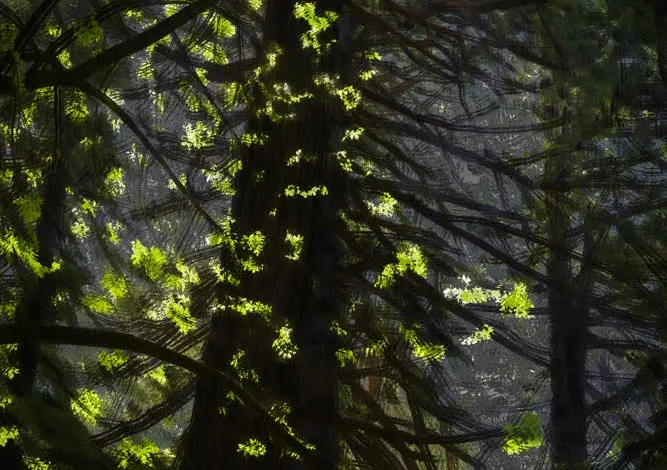
The contemporary landscape of fine-art photography is continually evolving, moving beyond mere documentation toward deeply experiential visual storytelling. At the forefront of this shift is acclaimed photographer, film, and television director Lev L. Spiro, whose work investigates the ethereal concept of "thin places"—locations rooted in Celtic spiritual traditions where the boundary between the ordinary world and the sacred dissolves. Through his critically acclaimed series, including "Thin Places" and his latest long-exposure project "Elemental," Spiro examines how natural environments evoke profound psychological and emotional responses, prompting a reevaluation of how photographers interact with the natural world.
Origins and Theoretical Framework of Thin Places
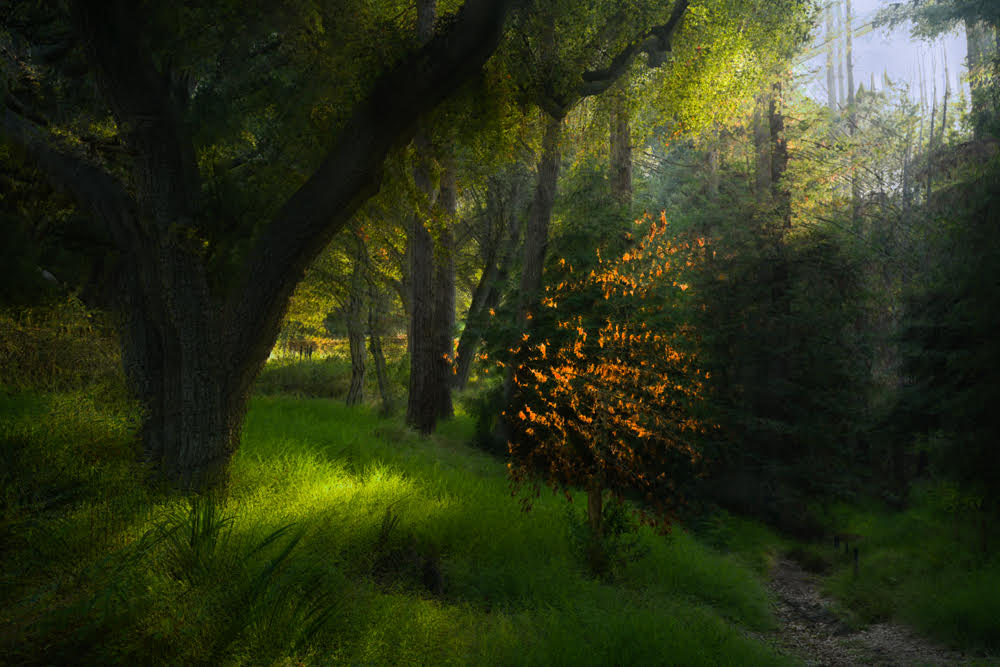
Rooted deeply in ancient Celtic spirituality, a "thin place" is traditionally defined as a geographic or atmospheric location where the veil between the physical realm and the spiritual dimension grows exceptionally delicate. While the term originates from ancient folklore, its modern application in creative and psychological contexts refers to moments of heightened awareness, awe, and transcendent connection with nature.
Spiro’s fascination with these phenomena began well before he encountered the formal terminology. Growing up, he spent his formative summers between the ages of 11 and 13 at a wilderness camp in Vermont modeled on the Outward Bound philosophy. Immersed for weeks in deep forests and rugged mountain ranges far from urban infrastructure, he experienced visceral sensations of awe. Although he lacked the vocabulary to categorize these experiences during his youth, these formative encounters laid the perceptual foundation for his artistic career.
Today, Spiro applies these early lessons to his photographic practice and educational workshops, most notably his heavily oversubscribed Santa Fe Workshops course titled "Thin Places: Photography and the Sacred in Nature." The curriculum addresses a common plateau faced by technically proficient landscape photographers: the transition from clinical documentation to emotive, expressive narration.

Pedagogical Approach: From Ordinary Seeing to Heightened Perception
In his instructional methodology, Spiro draws heavily upon the historical legacies of master photographers such as Minor White and Paul Caponigro. Central to their philosophy—and Spiro’s teaching—is the cultivation of receptivity, allowing the subject to reveal itself to the observer rather than being aggressively hunted down.
Spiro instructs his students to slow down and consciously engage all senses, registering not merely light, but movement, form, temporal shifts, color palettes, texture, and spatial relationships. This perceptual shift serves as the foundational step in transforming an image from a static description of a geographic coordinate into a conduit for emotional resonance.

Furthermore, Spiro incorporates the working philosophy of renowned photographer Sam Abell, emphasizing the discipline of allowing oneself to be "stopped" by the environment. Often, the precise catalyst for this interruption—whether a fleeting shaft of light illuminating a waterfall through dense timber or atmospheric haze catching a forest canopy—remains ambiguous in the initial moment of pause. By the time the photographer consciously registers the stimulus, transient elements such as shifting backlighting or dying breezes may have vanished. Mastering this discipline requires an acute tolerance for ephemerality, demanding that artists remain present and reactive to subtle shifts in their surroundings.
Chronology of a Creative Evolution: From "Thin Places" to "Elemental"
Spiro’s portfolio reflects a methodical progression through varying natural topographies and technical methodologies, charting a distinct trajectory in his artistic output:

- Early Wilderness Immersion (Formative Years): Extended summers in the Vermont wilderness establish the artist’s foundational connection to remote landscapes and instill an intuitive understanding of spatial transcendence.
- The "Thin Places" Series: Focused primarily during the liminal hours of the day—specifically two hours following sunrise and two hours preceding sunset—this body of work captures evocative, natural lighting conditions that accentuate the spiritual resonance of forests, glens, and hidden groves.
- The "Elemental" Series: Representing a technical evolution, this ongoing project utilizes rigorous long-exposure techniques. By incorporating heavy neutral density (ND) filters ranging from six to ten stops, Spiro deliberately slows down time within the frame, capturing the continuous movement of running water and shifting cloud formations.
Technical Challenges and the Paradox of Spontaneity
Despite careful planning, Spiro notes an inherent paradox in photographing thin places: while specific series like "Elemental" require meticulous technical preparation—including tripods, specialized lenses, and precise neutral density filtration—the most profound visual discoveries frequently occur by accident.
Spiro frequently encounters environments that directly contradict his intended daily shooting parameters. Navigating these moments requires abandoning preconceived artistic objectives to accommodate unforeseen visual stimuli. This fluidity mirrors the primary lesson imparted to his students: true artistic growth requires shedding rigid expectations to remain sufficiently open to the environment.

Ethical Considerations and Conservation in Sacred Spaces
As interest in wilderness photography and experiential tourism surges globally, questions regarding environmental stewardship and respect for sacred geography have come to the forefront. Spiro maintains a strict ethical framework regarding the locations he visits, operating under the foundational principle of "leave no trace."
Because thin places frequently intersect with lands holding profound historical, cultural, or spiritual significance for Indigenous communities and local populations, contemporary landscape photographers face heightened responsibilities. Spiro emphasizes that the primary interaction occurs between the individual and the ecosystem, dictating that practitioners must prioritize physical preservation and cultural sensitivity over the pursuit of commercial imagery. The only permissible impact on these fragile ecosystems, he maintains, should be the capture of light through a camera lens.

Market Reception and Broader Implications for Fine-Art Photography
The unprecedented demand for Spiro’s workshops—which have repeatedly sold out with extensive waitlists—points to a broader cultural and artistic trend. Contemporary audiences and practitioners alike are increasingly fatigued by hyper-processed, hyper-realistic digital landscape photography that prioritizes pin-sharp technical perfection over emotional depth.
The resonance of the "thin places" concept suggests a collective desire for art that fosters psychological grounding, introspection, and spiritual reconnection with the natural world. By demonstrating that the sacred is not bound to monumental vistas or exotic travel destinations, but rather emerges through sustained attention, curiosity, and emotional availability, Spiro’s work offers a transformative blueprint for the future of environmental and landscape photography.