Robert Irwin Champions Authentic Wildlife Photography Amidst AI Revolution

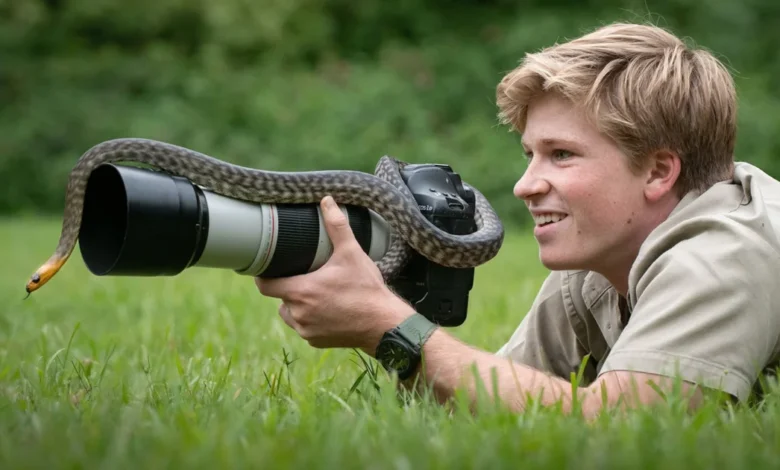
Renowned conservationist, television presenter, and wildlife photographer Robert Irwin has recently voiced strong opinions regarding the burgeoning field of artificial intelligence (AI) and its potential impact on the photography industry. In an in-depth interview with Parade magazine, Irwin, who has become a prominent figure in conservation and media since his early involvement with Australia Zoo, elaborated on his lifelong passion for photography, his recent successes including a winning performance on Dancing With the Stars, and his critical perspective on AI-generated imagery.
Irwin, now 22 years old, has continued to expand his multifaceted career, yet he remains steadfastly dedicated to his photographic pursuits. He described photography not merely as a hobby, but as a foundational element of his identity. "This has been a passion project of mine and ours for a very long time," Irwin stated, emphasizing its formative influence on his life and character. "A lot of people might not realize this, but there’s this part of my life that’s been really probably the most formative part of my life and really created the person I am today, which is photography."
This deep personal connection to the craft informs his concerns about the rapid advancements in AI technology, particularly its intersection with photography. Irwin expressed apprehension not only about the potential devaluation of artistic skill but also about the broader societal implications of AI. "As with any advancement in technology, I think we sometimes forget about the environmental destruction that it can cause," he remarked, pivoting to the photographic realm. "I can definitely speak through, pun intended, the lens of photography."
His core argument against AI in photography centers on its potential to dilute the appreciation for genuine, captured moments. "With AI, I think not only does it take away from the artistry of photography, but it also dilutes what is impressive," Irwin explained. "Because we’ve seen so many incredible things, we don’t realize that what is real and that’s more amazing because it’s real, you know?" He illustrated this point with hypothetical scenarios, noting how fabricated images, such as an "eagle riding the elephant or whatever ridiculousness it is that people genuinely think is real," can overshadow authentic, awe-inspiring photographs. This saturation of synthetic imagery, he believes, diminishes our capacity to recognize and value the extraordinary nature of reality.
A Lifelong Pursuit and Unseen Wonders
Irwin’s journey into photography began at a young age, inspired by the very animals his family championed. "So I picked up a camera, and I started looking at it from an artistic perspective. It just became the biggest part of my life from about age ten, all the way through my teenage years," he recounted. He sees photography as a powerful conduit for conservation, a way to share the wonders of the natural world and inspire others to protect it. "I’ve always got a camera with me. Now it’s about I know that feeling that it gave me as a kid, and I want to give other kids that feeling," Irwin said, highlighting his desire to foster a similar connection in younger generations. "I’ve spent many, many years of my life capturing nature through photography. And growing up, [it] was my kind of individual way of spreading this conservation message that I’m so passionate about."
Despite his extensive experience and frequent encounters with wildlife, Irwin revealed that his list of animals yet to be photographed in their natural habitat remains extensive. This underscores the vastness and mystery of the natural world, even for someone deeply immersed in it. "Anyone who has a passion for wildlife will tell you they have a list that’s a mile of long of what they want to see next," he noted. He specifically mentioned his unfulfilled desire to visit South America, a continent he has never explored.
His photographic aspirations are ambitious and span diverse ecosystems. "I’ve always wanted to see sloths in the wild," Irwin expressed, adding, "I’ve always wanted to go to the Galapagos. I have a love for Komodo dragons. I’ve never photographed them in the wild. That is absolutely top of my list." He also articulated a profound admiration for more elusive creatures, stating, "Obviously, snow leopards. I think as a photographer, that is the pinnacle. Polar bears! That’s another one that I’ve always wanted to see. A polar bear in the wild. I think I would just squeal with excitement if I saw one of them." These aspirations reinforce his commitment to documenting and celebrating the planet’s biodiversity through his lens.
Championing Authenticity: The Crikey! Magazine Photography Competition
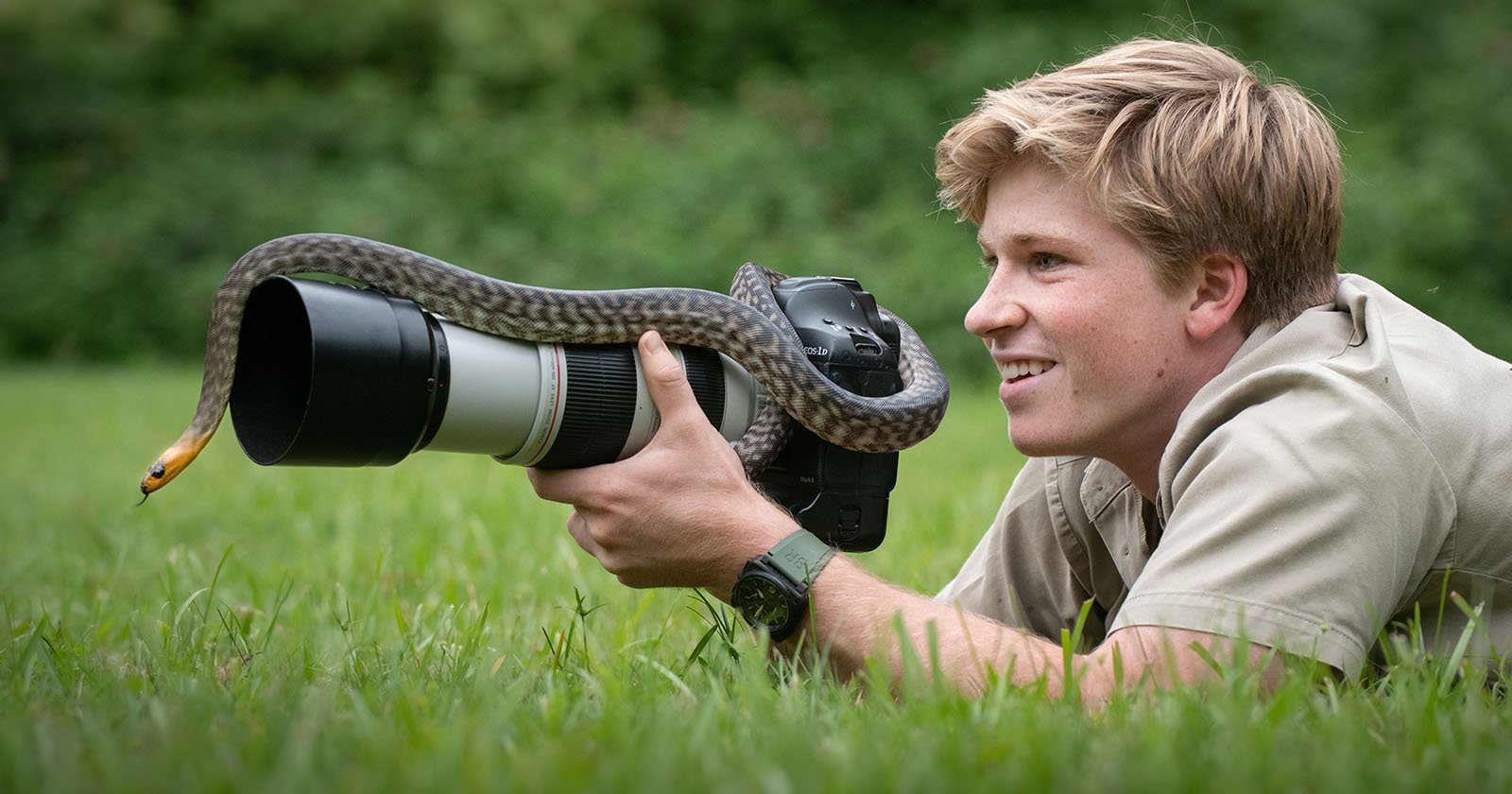
In direct opposition to the rise of AI-generated imagery, Irwin and Australia Zoo are actively promoting authentic wildlife photography through the 10th anniversary edition of the Crikey! Magazine Photography Competition. This global initiative serves as a platform for photographers to showcase their work with a focus on conservation. Entries for the competition are open until August 31, 2026.
Irwin’s vision for the competition is clear: he seeks "storytelling that shows nature as it’s intended." He emphasized the importance of capturing wildlife in its "true and raw state," without manipulation. "You’re not meddling with anything. You’re letting nature take its course, and you’re photographing it in its true and raw state," he elaborated. His conviction about the power of authentic imagery is palpable: "I don’t care how many AI photos you see. When you see a real, true representation of nature, there is a visceral feeling that hits you in the heart; you just can’t deny it. I think storytelling and art has to be authentic, and that is just so important. In wildlife photography, we need a true and authentic representation of nature." He definitively stated, "In our competition at least, there is no room for AI, that’s for sure. It ain’t happening."
The Crikey! Magazine Photography Competition aims to be inclusive, welcoming photographers of all skill levels, from beginners to seasoned professionals. "There’s a category for you to tell your story," Irwin encouraged potential participants, recognizing that every individual’s perspective and photographic journey is unique and valuable.
The Broader Implications of AI in Visual Media
Robert Irwin’s commentary touches upon a critical debate within the creative industries regarding the ethical and artistic implications of AI. While AI image generation offers unprecedented creative possibilities and can democratize certain aspects of visual content creation, it also raises significant concerns about originality, authorship, and the potential for misinformation.
The ability of AI to generate hyper-realistic images has led to a growing challenge in distinguishing between genuine photographs and synthetically created content. This blurring of lines can have profound effects on fields like photojournalism, where factual accuracy is paramount, and fine art photography, where the artist’s direct experience and vision are central. As Irwin points out, the proliferation of fabricated images can desensitize audiences to the authenticity and emotional impact of real-world photography.
Furthermore, the environmental impact of AI, as alluded to by Irwin, is an increasingly recognized concern. The computational power required to train and run sophisticated AI models consumes substantial energy, contributing to carbon emissions. While the immediate focus for many is on the creative applications, the ecological footprint of digital technologies is a growing area of research and debate.
The Crikey! Magazine Photography Competition, by explicitly excluding AI-generated entries, positions itself as a bulwark for traditional photographic integrity. It champions the value of direct observation, patience, skill, and the unique human connection between photographer and subject. This stance reflects a broader sentiment among many artists and photographers who believe that the essence of photography lies in its ability to capture and convey reality, however challenging or imperfect that reality may be.
Irwin’s advocacy for authentic wildlife photography serves as a call to action for both creators and consumers of visual media. It underscores the importance of critical engagement with images, a continued appreciation for the skill and dedication involved in capturing the natural world, and a commitment to preserving the integrity of photographic art in an era of rapid technological transformation. His message resonates beyond the realm of photography, touching upon the larger societal imperative to value authenticity and truth in an increasingly digital and often simulated world.