Khaite Embraces Intimate Craftsmanship and Unabashed Romance for Spring at the Brooklyn Navy Yard

The cavernous expanses of the Brooklyn Storehouse within the historic Brooklyn Navy Yard have increasingly become a favored canvas for New York Fashion Week’s most ambitious presentations. It was here, surrounded by raw industrial architecture and towering steel beams, that Khaite creative director Catherine Holstein unveiled her highly anticipated spring collection. For a brand that has spent the better part of a decade defining modern urban armor through sharp tailoring, heavy cashmeres, and commanding leather outerwear, the latest runway marked a distinct and deeply personal departure.
Dubbed by friends and industry insiders as the most "Catherine" collection to date, the spring lineup leaned heavily into unabashed romance, intricate handwork, and a granular focus on the intimate architecture of garments. While Holstein has previously sprinkled romantic undertones into her seasonal narratives, this collection represented a full-throttle dive into soft feminine energy and a renewed intimacy with the craft of garment making.
The Genesis of Craft: From Venice to the Atelier
The conceptual foundation of the collection originated far from the gritty industrial backdrop of Brooklyn, drawing inspiration from the timeless canals and palazzos of Venice, Italy. Specifically, Holstein pointed to the Gritti Palace—a frequent retreat for the designer and her husband—as a vital creative touchstone. The property embodies a distinct dichotomy that heavily influenced the clothing: the preservation of faded, centuries-old Venetian grandeur juxtaposed against a thriving, modern platform for contemporary art.
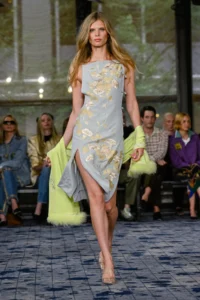
This duality translated directly into the textiles and detailing of the garments. The intricate embroideries featured prominently on the bibs of airy, robe de style-esque dresses were direct visual interpretations of Venetian motifs. However, Holstein’s commitment to artisanal craftsmanship extended far beyond surface-level ornamentation. The designer emphasized that the collection was built from the inside out, requiring countless hours of meticulous handwork that might easily go unnoticed by the casual observer.
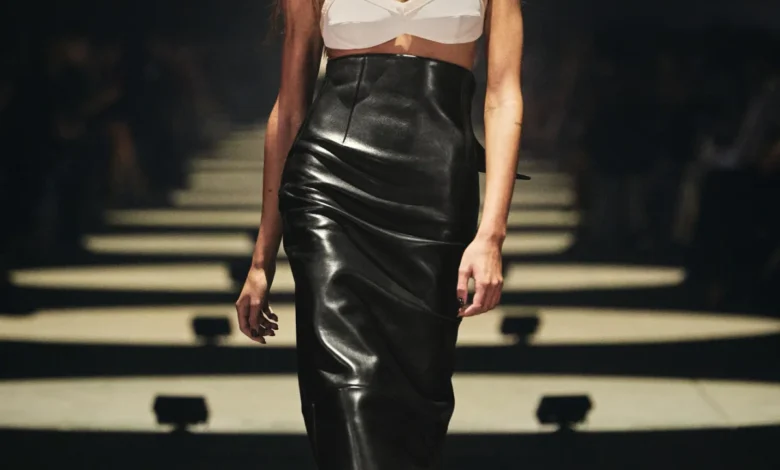
To illustrate this dedication, Holstein pointed to the collection’s opening look, worn by supermodel Kaia Gerber. Gerber strode down the runway clad in a crisp white bra and an ultra-high-waist, ultra-fitted leather skirt. While the silhouette commanded attention on its own, the true marvel of the garment lay hidden: the back featured a waist split meticulously engineered to reveal complex, entirely hand-stitched internal corsetry.
"I’m very passionate about making beautiful things and making clothing and handwork," Holstein explained backstage following the show. "For instance, Kaia’s skirt—the back of it is all done by hand, all corsetry. I wanted all these special moments that you didn’t even see, but once you open up the clothing, everything is finished by hand, everything. This is a real labor of love. Many hours went into each garment. It was really not about the silhouette; that came later."
Deconstructing the Silhouette: A Shift Away from Oversizing
The overarching aesthetic of the spring collection drew inspiration from lingerie-infused silhouettes spanning the decades between the 1920s and the 1940s. These historical references were imbued with modern twists that celebrated the tactile ceremony of getting dressed. Models drifted down the runway with exaggerated, artfully teased bedhead hair, wearing exposed bras, minidresses that appeared to be purposefully sliding off the shoulders, and roomy nightgown-meets-slip combinations that evoked the intimate sensation of garments being pulled up and over the body.
Crinoline emerged as another central structural focus, reimagined in unexpected ways. Rather than serving strictly as voluminous undergarments, crinoline was fashioned into delicate belts worn atop floral hand-embroidered dresses. It also appeared in soft peplums and waved hems that added buoyancy and movement to sheer, breezy button-up shirts and flounced skirts.
Despite the prevailing wave of softness, the collection retained Khaite’s signature edge through sharp, shrunken leather layers. These pieces—most notably petite leather jackets featuring exaggerated, high shoulders—demonstrated a deliberate pivot away from the sweeping, oversized proportions that have dominated both the brand’s previous outputs and the broader fashion landscape over recent years.
Holstein candidly attributed this silhouette evolution to personal life milestones and physical changes following years of motherhood. Having navigated the demands of raising young children over the preceding four years, the designer noted that her dressing habits had naturally defaulted to convenience. Now, emerging from that chapter and watching her body return to its pre-pregnancy state, her design instincts shifted accordingly.
"I am such a romantic at heart. It’s also the way I dress too," Holstein reflected. "I think because I’ve had babies for the last four years, I’ve been grabbing whatever and not thinking about it again. Now that I’m over that period and my body is finally going back, I was finding I wanted to shrink silhouettes a lot more. The oversize thing, for me, I’m looking to move away from."
These shrunk-down, precisely tailored leather proportions offered a counterpoint to the fluid, diaphanous slips and voluminous dresses, proving just as commanding and sensual as their oversized predecessors.
Broader Implications for the Brand and the Industry
Khaite’s spring presentation arrives at a crucial juncture for the New York-based label, which has enjoyed meteoric commercial and critical success since its founding. Known historically for anchoring the wardrobe of the modern minimalist through luxury staples, the brand’s deliberate pivot toward heightened romanticism, transparency of construction, and bespoke handwork signals a maturation of its design vocabulary.
In an industry increasingly driven by fast-paced trends and digital-first visual bites, Holstein’s deep dive into invisible interior finishes and time-consuming hand-corsetry acts as a quiet rebellion. It places a premium on tactile luxury—garments that demand physical proximity and tactile exploration to be fully appreciated.
Furthermore, the rejection of persistent overscaling in favor of sharp, body-conscious tailoring reflects a broader macro-trend bubbling up across the global fashion capitals. As consumers and designers alike seek alternatives to the ubiquitous oversized aesthetic that defined the late 2010s and early 2020s, Khaite’s introduction of shrunken, high-shoulder leather jackets and fitted silhouettes positions the brand at the vanguard of a new tailoring paradigm.
Ultimately, the spring collection successfully bridges the gap between Khaite’s established urban cool and a vulnerable, deeply personal exploration of femininity. By intertwining the architectural restraint of Venetian artistry with the raw energy of industrial Brooklyn, Holstein has delivered a collection that is both fiercely contemporary and timelessly romantic—proving that true luxury often lies in the details no one is meant to see.
Related posts: